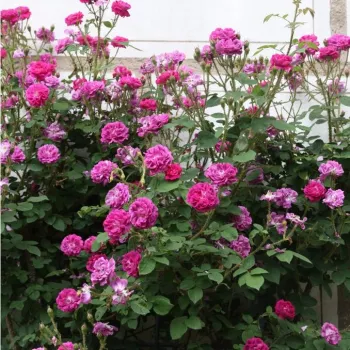
WILLIAM LOBB – deep purple historic moss rose - Laffay
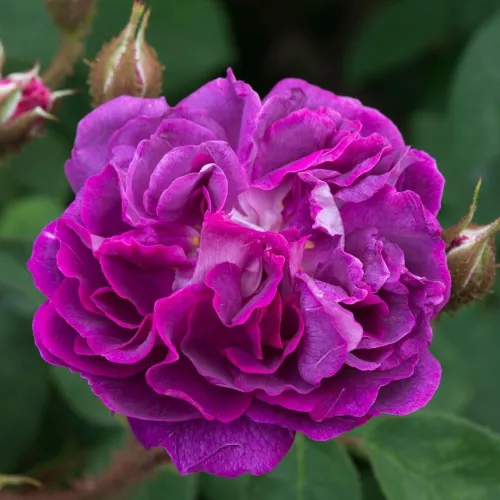
Heritage charm meets modern garden character in ‘William Lobb’, a tall, upright moss rose that deserves space in a classic British front garden or relaxed cottage mix. Its richly fragrant clusters of deep crimson‑purple, rosette flowers open once in early summer, then linger and mellow to a smoky, grey‑lilac that carries real atmosphere across the season. With generous height and a slightly arching habit, it works beautifully as a specimen or loose flowering hedge, giving reliable structure in chalky or heavier soils where good drainage can be provided and exposure to wind and rain is a consideration. Own‑root planting supports impressive longevity, as the shrub slowly builds a permanent frame of shoots, helping it to form a settled, architectural presence in the garden and rewarding patient gardeners with year‑on‑year depth of colour and scent.
Usage options
| Target area | Reasoning |
|---|
| Front‑garden focal shrub |
Tall, upright growth to around 150–230 cm creates an immediate visual anchor by a path, gate or low wall, while the smoky purple blooms and mossy buds give a timeless, historic look that suits traditional façades and railings for heritage‑minded homeowners. |
| Cottage‑style mixed border |
The once‑a‑year, early summer flowering is intense and memorable, pairing well with perennials such as windflowers and coneflowers that continue the show after the main flush, ideal for relaxed, layered borders favoured by cottage‑garden enthusiasts. |
| Loose flowering screen or hedge |
With a spread of 100–160 cm and dense prickliness, it forms an effective informal barrier that is visually soft yet functional, especially at 110–120 cm spacing, well suited to defining boundaries for privacy‑seeking garden owners. |
| Specimen in a lawn or park‑style setting |
As a solitary shrub at around 180 cm spacing, the arching habit and historic character stand out, creating a single, season‑defining feature that rewards close inspection of mossy buds and colour changes for detail‑appreciating collectors. |
| Feature near seating or terrace |
The strong, long‑lasting fragrance invites planting near benches or patios where the once‑blooming display can be fully enjoyed, turning a modest seating corner into a richly scented summer highlight for relaxation‑focused gardeners. |
| Traditional rose and shrub combinations |
Historic moss‑rose character, RHS Award of Garden Merit and adaptable own‑root growth suit it to classic rose groupings with shrubs and perennials, creating a long‑term framework in family gardens for design‑conscious beginners. |
| Raised beds on heavier soils |
Performs reliably where heavier clays are improved or raised, as long as excess moisture is managed; this supports stable, upright growth even in wetter regions with wind and rain, appealing to climate‑aware garden planners. |
| Large containers and courtyard planting |
In large containers of at least 40–50 litres, its vertical habit and dramatic colour bring historic character to paved spaces; own‑root resilience helps the plant recover from pruning and repotting, supporting long‑term pot culture for space‑limited urbanites. |
Styling ideas
- Cottage Column – Place ‘William Lobb’ at the back of a narrow border with foxgloves and hardy geraniums in front to soften its height – ideal for romantic, space‑efficient front gardens.
- Victorian Corner – Use a single shrub by a bench, with lavender and catmint at its feet, to echo period parks and draw attention to the rich scent – suited to lovers of historic atmospheres.
- Soft Screen – Plant an informal row along a path, underplanting with low grasses and anemones to veil the prickly stems and keep the focus on the purple flowers – perfect for families wanting gentle separation.
- Moody Pastels – Combine the smoky lilac tones with dusky pink roses, pale campanulas and silvery foliage for a muted, evening‑friendly palette – appealing to colour‑sensitive, design‑oriented gardeners.
- Courtyard Statement – In a 50‑litre terracotta pot, underplant with trailing thyme and violas so the tall, scented shrub rises from a soft, informal base – a strong choice for small, paved urban spaces.
Technical cultivar profile
| Attribute | Data |
|---|
| Name and registration |
Moss rose, historic shrub rose; current trade name ‘William Lobb’, also listed as a heritage moss rose by Laffay; unregistered cultivar, verified authenticity and classified as a historical rose. |
| Origin and breeding |
Historic French moss rose raised by Jean Laffay and introduced in 1855; seedling of moss‑rose lineage, recorded as a descendant of ‘Gloire des Mousseux’, continuing classic nineteenth‑century breeding. |
| Awards and recognition |
Holds the Royal Horticultural Society Award of Garden Merit (1993), indicating reliable garden performance, stable character and enduring ornamental value under typical UK cultivation conditions. |
| Growth and structural characteristics |
Upright to slightly arching shrub, around 150–230 cm high and 100–160 cm wide; moderately dense, dark green foliage with many prickles and characteristic mossy flower stalks and buds. |
| Flower morphology |
Large, double, rosette‑shaped flowers in clusters, typically 26–39 petals; once‑blooming with a substantial early summer flush, not remontant, and weak self‑cleaning so spent blooms benefit from deadheading. |
| Colour data and phenology |
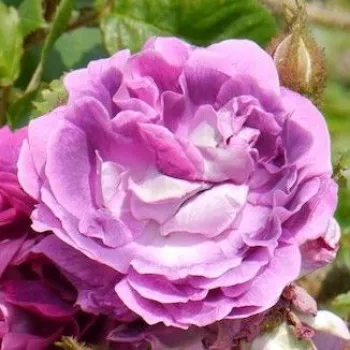
Deep crimson‑purple buds open to purple‑tinged violet, then soften to smoky greyish‑lilac and silvery tones; medium colour retention, fading faster in strong sun, with a distinctive aubergine‑lilac effect at full bloom. |
| Fragrance and aroma |
Strong, long‑lasting fragrance with a full‑bodied, rich character; scented clusters are particularly notable in still, warm weather and are best appreciated near paths, seating areas or entrances. |
| Hip characteristics |
Occasionally forms ovoid rose hips, about 14–22 mm in diameter, coloured red‑orange; hips add seasonal interest in late season where flowers have been left to set fruit. |
| Resistance and winter hardiness |
Very hardy shrub, tolerating approximately −32 to −29 °C (RHS H7, USDA 4b); moderate heat and drought tolerance once established, but susceptible to rust and other fungal diseases without regular protection. |
| Horticultural recommendations |
Best as a specimen, park shrub or loose hedge at 110–180 cm spacing; prefers well‑drained soil, copes with partial shade; benefits from disease‑aware care, pruning after flowering and thoughtful deadheading. |
WILLIAM LOBB offers historic colour, strong fragrance and structural height on a resilient own-root framework, making it a thoughtful choice for gardeners seeking a long-lived, characterful rose.