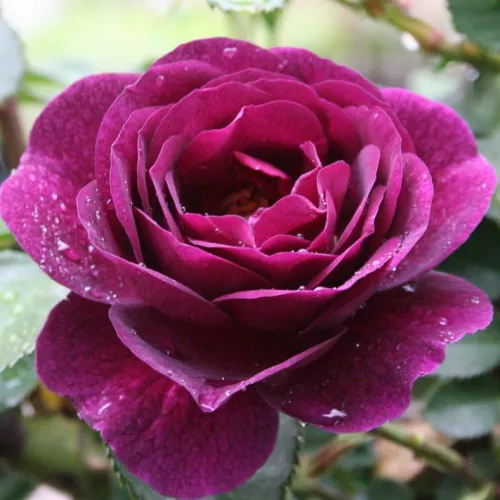
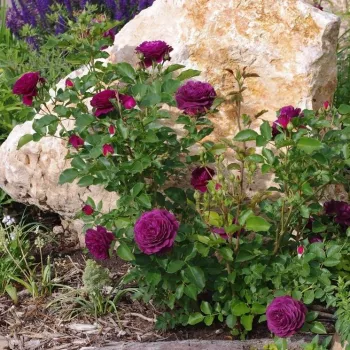
The petals are a deep, rich plum-lilac shade with a subtle smoky tone. - floribunda bedding rose - strong, clearly perceptible scented rose - citrusy, spicy
– Deep plum-lilac, velvety cluster blooms.
– Strong citrusy, spicy fragrance.
– Compact, dense bush for beds and pots.
– Sparse thorns and glossy dark foliage.
– Excellent disease resistance, hardy to H7.
– Special feature: Awarded for fragrance and garden merit in international rose trials.
Value-driven choice – Consistent quality
pharmaROSA® ORIGINAL 2-litre own-root potted rose
21,20 £
Unfortunately, we are currently unable to ship to the United Kingdom; we only deliver to countries within the European Union. For more information, please contact us!
4(6546)
WEKSMOPUR – plum-lilac bedding floribunda rose - Carruth
Velvety clusters of plum-lilac blooms make this compact floribunda an ideal choice for neat, colour-rich front gardens and low borders where you want impact without fuss. Its strong, spicy-citrus fragrance is rare in such a reliable bedding rose, bringing scented character close to the house and paths. Dense, glossy dark green foliage creates a tidy, well-dressed shrub that holds its shape with minimal attention, even in smaller plots. Bred for excellent disease resistance, it stays presentable in typical British humidity with only basic care, while own-root resilience supports a long-lived, regenerating bush that settles securely even where wind and rain regularly sweep through coastal gardens. In the first year it concentrates on roots, in the second on strong shoots, and by the third it reaches its full ornamental value, giving you a stable, easy-care feature for family gardens that prefers sun yet works well in everyday, no-nonsense borders.
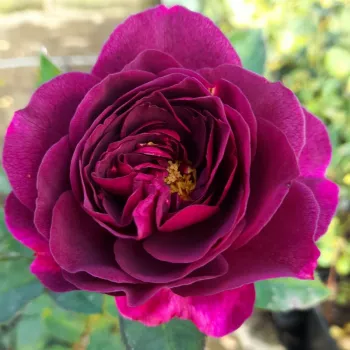
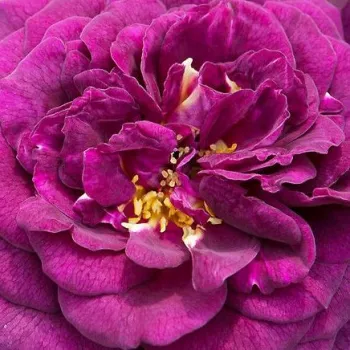
Ebb Tide shows a double flower form with 26–39 petals and a visible centre.
Ebb Tide blooms shown side by side from bud to fuller opening.
Freshly opened plum-lilac bloom of Ebb Tide.
Closed bud of Ebb Tide, a plum-purple floribunda rose.
Usage options
Target area
Reasoning
Front garden feature by the entrance
The rich plum-lilac colour and strong citrus-spicy scent stand out beautifully near paths and doorways, giving a welcoming, “proper rose” feel in a compact space. Reliable repeat flowering and good disease resistance keep it looking smart for busy homeowners.
Low bedding and edging in mixed borders
Its compact habit and 60 cm spacing suit neat, low front-of-border runs where you want structure without constant clipping. Clusters of medium-sized, double blooms knit together into a continuous band of colour, ideal for simple, tidy schemes for beginners.
Small group planting in cottage-style beds
Planted in groups of three to five, the smoky plum flowers create a deep, moody accent among traditional perennials. Own-root plants gradually form balanced bushes that age gracefully, offering long-term charm for relaxed yet dependable gardeners.
Patio and terrace containers (40–50 litres+)
In a large, well-drained container of at least 40–50 litres, its compact size, repeat bloom and strong scent make a characterful patio rose. Sparse prickles and tidy foliage make day-to-day care straightforward for compact outdoor spaces and urban balconies.
Low informal hedge along paths or drives
At around 60–85 cm high, it lines paths with uniform, fragrant colour without overwhelming the view. Regular repeat flowering and robust health mean only light pruning and deadheading; over time, own-root stability supports a durable edging for family gardens.
Easy-care rose bed for busy households
Strong disease resistance and moderate self-cleaning make it a practical choice when you want flowers more than gardening chores. With adequate watering and feeding, it settles quickly from the 2-litre pot and performs reliably for time-pressed families.
Accent rose in clay or challenging soils with drainage
Once planted into improved, free-draining spots or raised beds, own-root vigour and a compact frame help it establish securely despite heavier soils, reducing the risk of failures and replacements for cautious, value-conscious buyers.
Cut flowers from a small garden bed
Clustered, double blooms on sturdy stems provide short-stemmed, strongly scented cuts for the house. Regular picking encourages more flowers, so even a modest bed can supply vases through the season, pleasing fragrance-loving home arrangers.
Styling ideas
Cottage Harmony – Combine with soft pink roses and blue catmint for a relaxed, traditional border where the plum-lilac blooms add depth – ideal for lovers of romantic cottage gardens.
Front-Door Focus – Flank the entrance with two large containers of this rose underplanted with white lobelia, giving a scented, formal welcome – suited to homeowners wanting instant kerb appeal.
Moody Mix – Pair with dark-leaved heucheras and silver foliage such as Artemisia to highlight the velvety petals in contemporary beds – appealing to design-conscious small-garden owners.
Family-Friendly Edge – Use in a low row along a lawn or path, backed with dwarf asters for late colour, to keep borders tidy yet playful – perfect for busy families wanting easy structure.
Patio Perfume – Plant in a 50-litre tub with trailing thyme and compact grasses for texture around the base, bringing fragrance right to seating areas – great for urban gardeners with limited space.
Technical cultivar profile
Parameter
Data
Name and registration
Floribunda bed rose, registered as WEKsmopur, marketed as Weksmopur Bedding rose WEKsmopur, with American Rose Society exhibition name ‘Ebb Tide’, bush rose; fragrant floribunda.
Origin and breeding
Bred by Thomas F. Carruth (USA, 2001) for Weeks Wholesale Rose Grower Inc.; complex parentage including ‘Sweet Chariot’, ‘Blue Nile’, ‘Stephen’s Big Purple’ and Rosa soulieana derivatives; introduced 2006.
Awards and recognition
Certificate of Merit at the National Rose Trial Garden of Australia in 2005 and Most Fragrant Rose at the Rose Hills International Rose Trials in the United States in 2011.
Growth and structural characteristics
Compact, bushy plant 60–85 cm high and 50–70 cm wide, with dense, glossy dark green foliage and sparse prickles; medium self-cleaning so deadheading improves appearance and flowering continuity.
Flower morphology
Double, cup-shaped floribunda blooms with 26–39 petals and a velvety texture, produced in clusters of one to five per stem; large flower size in the 7–10 cm range and strong remontant repeat flushes.
Colour data and phenology
Deep plum-lilac petals with a subtle smoky tone; RHS 59A outer and 71A inner; colour deepens in cooler weather and fades somewhat in strong sun, with flowers darkening elegantly towards the petal edges.
Fragrance and aroma
Strong, clearly perceptible scent with a distinctive citrusy, spicy character; fragrance intensity makes it suitable for planting near seating, entrances and paths where close-up enjoyment is a priority.
Hip characteristics
Forms moderate quantities of spherical hips, 12–16 mm in diameter, in orange-red shades RHS 28B–30B, adding late-season interest if spent flowers are not removed after the main flowering period.
Resistance and winter hardiness
Good overall disease resistance, with strong performance against powdery mildew, black spot and rust; winter hardy to approximately –21 to –18 °C, corresponding to RHS H7 and USDA zone 6b, Swedish zone 3.
Horticultural recommendations
Best in full sun with regular watering in dry spells; recommended spacing 60 cm in mass plantings, 50 cm in hedges, 100 cm as specimen; suitable for beds, edging, large containers and cutting.
WEKsmopur offers richly coloured, strongly fragrant, compact bedding displays on a healthy, own-root bush that settles for the long term, making it a thoughtful choice if you want dependable character in a modest space.
Detailed product attributes
Product Identification Data
Product Name:
WEKSMOPUR – plum-lilac bedding floribunda rose - Carruth
Product Type:
pharmaROSA® ORIGINAL - 2-litre own-root potted rose
Meaning of Cultivar Name:
The term "Ebb Tide" refers to the ebb (the receding sea), alluding to the cultivar’s characteristic deep, undulating purple-violet colour.
Competition and Show Awards:
Certificate of Merit – National Rose Trial Garden of Australia (2005); Most Fragrant Rose – Rose Hills International Rose Trials, United States (2011)
Pollinator Attraction:
Double, 26–39‑petalled flowers with visible stamens are moderately attractive to pollinators, since flower form (simple/semi-double/double) and stamen accessibility influence their attractiveness.
Pollinator-Friendly Rating:
Its double flowers moderately attract pollinators, so it is at most partially pollinator-friendly.
Our product is a rose grown with pharmaROSA®’s unique cultivation technology!
2-litre, own-root, potted rose.
With a shoot system appropriate to the season.
With a root system that thoroughly permeates the growing medium.
Quality compliant with the requirements of the E.N.A. (European Nurserystock Association).
Supplied in unique packaging that prevents damage.
Can be planted during frost-free periods.
True-to-variety rose bush with a unique identifier.
The pharmaROSA® own-root potted rose is a well-rooted plant that supports reliable establishment when planted and cared for properly, so it can be planted whenever the soil is not frozen.
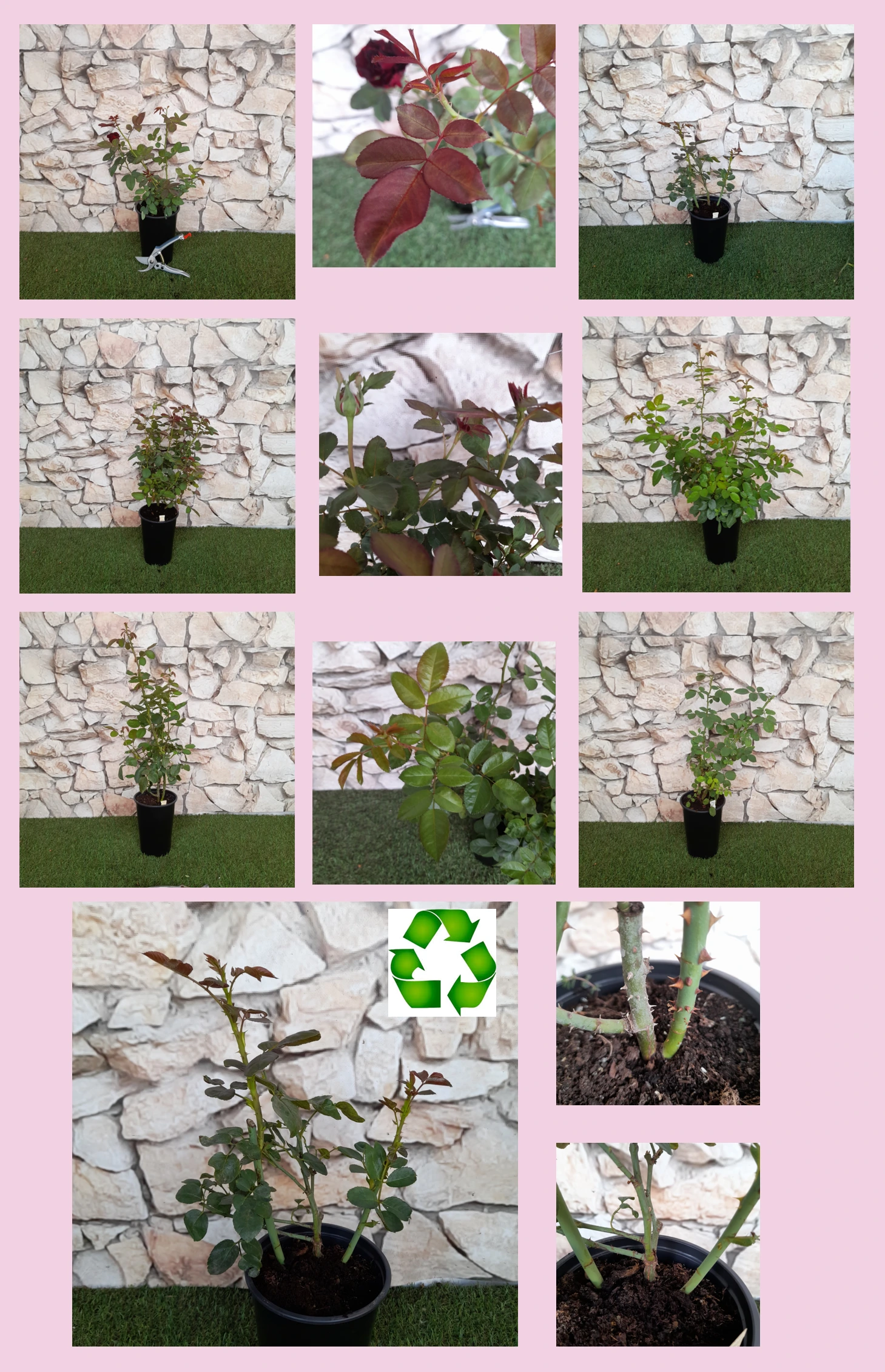
Crop overview: several varieties and growth stages in a short crop section.Shoot system: intensive growth of fresh basal shoots on a young plant.Root system: demonstration of a vigorous root system permeating the growing medium, by removing the pot.Balance: mature plant with root system and shoots in harmony with each other.
Information about the videos
The video series is not a “seasonal showcase”; it illustrates the essence of pharmaROSA® own-root cultivation in a tangible way: how the plant is built up, what the root system is like and how the shoot system regenerates. The recordings were therefore made at different times and with plants at various stages of development, so mixed foliage levels and differing stages of growth may appear in the videos. They are not a ‘sample’ of the batch dispatched, but a visual explanation of how the technology works. The current condition of the rose available to order — typical for the given period and similar to what you can expect to receive in the parcel — is shown in the upper part of the product page.
Pages for private customers Garden roses for the family garden, with minimal care → ORIGINAL® Premium garden roses – instant impact, a truly showpiece garden → EXTRA® Pages for professionals and private customers Roses for public spaces – large areas, sustainable maintenance → NATURAL® Roses for projects – hedge and row planting, fast implementation → RAPID® For professional partners only Production – propagation material for garden roses, wholesale → NEONATAL®
Company details
PharmaRosa Ltd. Company registration number: 01-09-717479 VAT number: 13075314-2-43 Plant health registration no.: HU130721 Bank account (IBAN): HU85117631891388688400000000 BIC (SWIFT): OTPVHUHB Bank name: OTP Bank Nyrt.