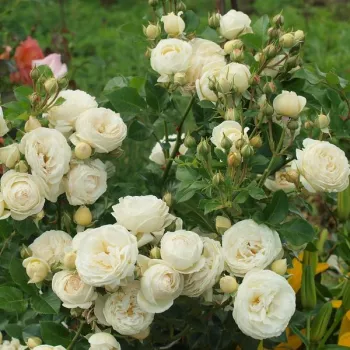
Delicate creamy shade with greenish tones. - hybrid tea rose - strong, long lasting scented rose - sweet-fruity, rose character, subtle peppery background
– Strong, long lasting sweet-fruity fragrance
– Elegant cream flowers with greenish tones
– Remontant flowering with generous repeats
– Low maintenance, resistant to main diseases
– Hardy to around –26 °C, reliable in cold
– Special feature: Colour shifts from lemon‑vanilla to refined cream with beige-edged petals over time.
Thoughtful packaging – Everyday elegance
pharmaROSA® ORIGINAL 2-litre own-root potted rose
19,30 £
Unfortunately, we are currently unable to ship to the United Kingdom; we only deliver to countries within the European Union. For more information, please contact us!
3.5(5509)
Mancera hybrid tea rose – pharmaROSA® ORIGINAL 2-litre own-root
Cream blooms of elegance and fragrance make Mancera an easy centrepiece for small beds, front gardens and around‑the‑house borders, even where soil stays heavy after rain and needs careful drainage management. Its bushy habit and reliable remontant flowering give you repeated displays of softly shaded vanilla‑lemon cream roses that hold their colour well through the season. As an own‑root plant, Mancera settles steadily into your garden, forming a balanced, long‑lived bush; with patient care it will move from root building in the first year, to stronger top growth in the second, and by the third year deliver its full ornamental impact.
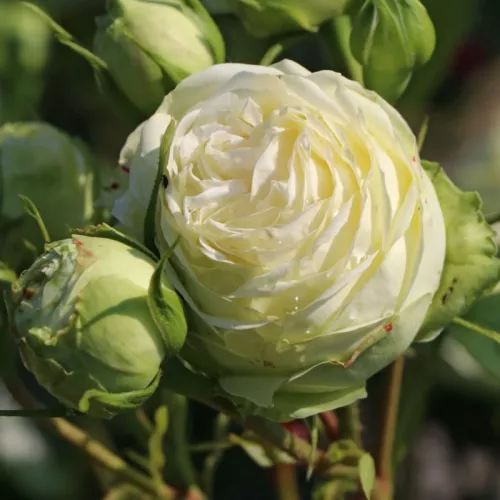
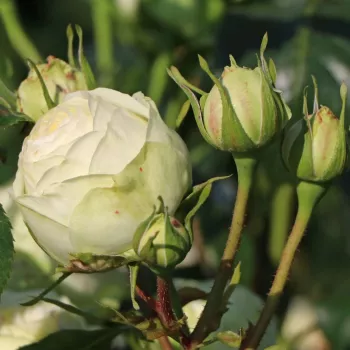
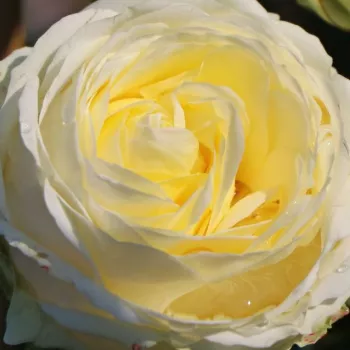
Mancera in different opening phases, from bud to full bloom.
Closed bud of Mancera, showing a greenish-white to light cream tone.
Mancera shows a double, rosette-shaped bloom with a full centre.
Mancera hybrid tea rose shown in several opening stages.
Usage options
Target area
Reasoning
Front garden focal point by the path or gate
Mancera’s upright, bushy habit and generous large blooms create a clear visual anchor near an entrance without needing complex pruning or staking, giving a composed, welcoming feel for beginners.
Small mixed border in a family garden
The mid‑green glossy foliage and softly shaded cream flowers combine easily with perennials and grasses, providing tidy structure and continuity of form through the season for style‑conscious homeowners.
Compact rose bed with repeat display
With remontant flowering and a reliable second flush, Mancera offers a steady rhythm of blooms from early summer into autumn, supporting plans for a consistently colourful yet manageable space for busy gardeners.
Cottage‑style planting with fragrant emphasis
The strong, long‑lasting sweet‑fruity scent with a classic rose character brings a traditional cottage‑garden atmosphere, ideal around seating areas where fragrance is a main priority for romantic sensibilities.
Low‑intervention rose area for time‑pressed owners
High resistance to powdery mildew, black spot and rust means less spraying and fewer remedial tasks, so the plants stay presentable with basic care and seasonal feeding for urban professionals.
Long‑term structural shrub in a small plot
Own‑root growth allows the bush to regenerate from its base, maintaining shape and flowering quality over many years, even after harder pruning or weather damage, reassuring for long‑view planners.
Raised bed or improved heavy‑soil border
Mancera’s robust framework and reliable constitution cope well where beds need thoughtful drainage and shelter from persistent wind and rain along exposed streets, practical for coastal residents.
Informal hedge or repeated accent planting
Regular spacing builds a coherent line of rounded bushes with coordinated colour and scent, creating a gentle boundary or rhythm in the garden while still remaining easy to trim and manage for design‑focused beginners.
Styling ideas
COTTAGE ELEGANCE – Combine Mancera with soft pink geraniums and catmint for a relaxed, old‑fashioned feel – ideal for lovers of traditional cottage gardens.
EVENING FRAGRANCE – Plant near a bench with lavender and white gaura so the strong scent and pale blooms stand out at dusk – suited to those who unwind outdoors after work.
STRUCTURED BORDER – Use a short row of Mancera as a repeating motif with box or low yew for backbone and order – for homeowners who value neat, architectural lines.
TEXTURED CONTRAST – Underplant with Hakonechloa and low heucheras so the creamy blooms rise above soft foliage textures – appealing to design‑minded gardeners seeking subtle luxury.
CONTAINER FEATURE – Grow Mancera in a 40–50 litre pot by the front door, underplanted with trailing thyme for scent at ankle level – perfect for small‑space or paved‑front properties.
Technical cultivar profile
Parameter
Data
Name and registration
Mancera hybrid tea rose, trade name Mancera Hybrid tea rose pharmaROSA®; hybrid tea group, double‑flowered garden rose for ornamental planting, registration data not publicly specified.
Origin and breeding
Hybrid tea cultivar discovered by pharmaROSA® in Germany, 2010; introduced to the market by PharmaRosa® Ltd. (Hungary) as a premium own‑root potted rose for garden use.
Growth and structural characteristics
Bushy shrub 95–130 cm high, 80–110 cm spread, moderately dense, glossy mid‑green foliage; moderately thorny stems, suitable for beds, borders, low informal hedges and repeated planting.
Flower morphology
Large, double blooms (26–39 petals), rosette form, typically borne in clusters of 3–5 flowers per stem; remontant habit with a generous second flush, offering sustained decorative effect.
Colour data and phenology
Cream flowers with greenish and soft lemon‑vanilla tones; newly opened buds show pale lemon centres, fading through greenish cream to uniform cream, with slightly beige petal edges towards senescence.
Fragrance and aroma
Strong, long‑lasting scent with a sweet‑fruity, classic rose character and a subtle peppery nuance; best appreciated near paths, terraces, seating and entrances where air circulation carries the perfume.
Hip characteristics
Produces small quantities of hips, typically 10–16 mm across; hips are not a dominant ornamental feature but may provide modest seasonal interest and potential food for local wildlife in late season.
Resistance and winter hardiness
Good disease resistance, rated resistant to powdery mildew, black spot and rust; winter hardy to approximately −26 to −23 °C (RHS H7, USDA 5b), suitable for most exposed UK garden situations.
Horticultural recommendations
Low maintenance; plant 55–65 cm apart for hedges or massing, 100 cm as specimens; prefers well‑drained soil, regular watering in dry spells, and light annual pruning to renew flowering shoots.
Mancera Hybrid tea rose pharmaROSA® offers repeat creamy blooms, strong fragrance and low‑input reliability on a regenerative own‑root framework, making it a thoughtful, long‑term choice for your garden.
Detailed product attributes
Product Identification Data
Product Name:
MANCERA – cream-coloured tea-hybrid rose - pharmaROSA®
Product Type:
pharmaROSA® ORIGINAL - 2-litre own-root potted rose
Closed Bud:
Greenish-white base with a distinct light green shade and a slight yellowish tinge at the tips.
Newly Opened Flower:
The centre is pale lemon–buttery yellow, the outer petal whorl is greenish cream.
Full Bloom:
Soft vanilla/lemon-cream tones inside, with petals fading outwards to a greenish-white.
Before Fading:
The yellowish and greenish tones soften, fading into a uniform cream colour, with the edges possibly slightly beige.
Colour Fading Description:
As it opens, the soft lemon–vanilla hue fades through a greenish cream to a uniform cream, the edges becoming slightly beige at the end.
Our product is a rose grown with pharmaROSA®’s unique cultivation technology!
2-litre, own-root, potted rose.
With a shoot system appropriate to the season.
With a root system that thoroughly permeates the growing medium.
Quality compliant with the requirements of the E.N.A. (European Nurserystock Association).
Supplied in unique packaging that prevents damage.
Can be planted during frost-free periods.
True-to-variety rose bush with a unique identifier.
The pharmaROSA® own-root potted rose is a well-rooted plant that supports reliable establishment when planted and cared for properly, so it can be planted whenever the soil is not frozen.
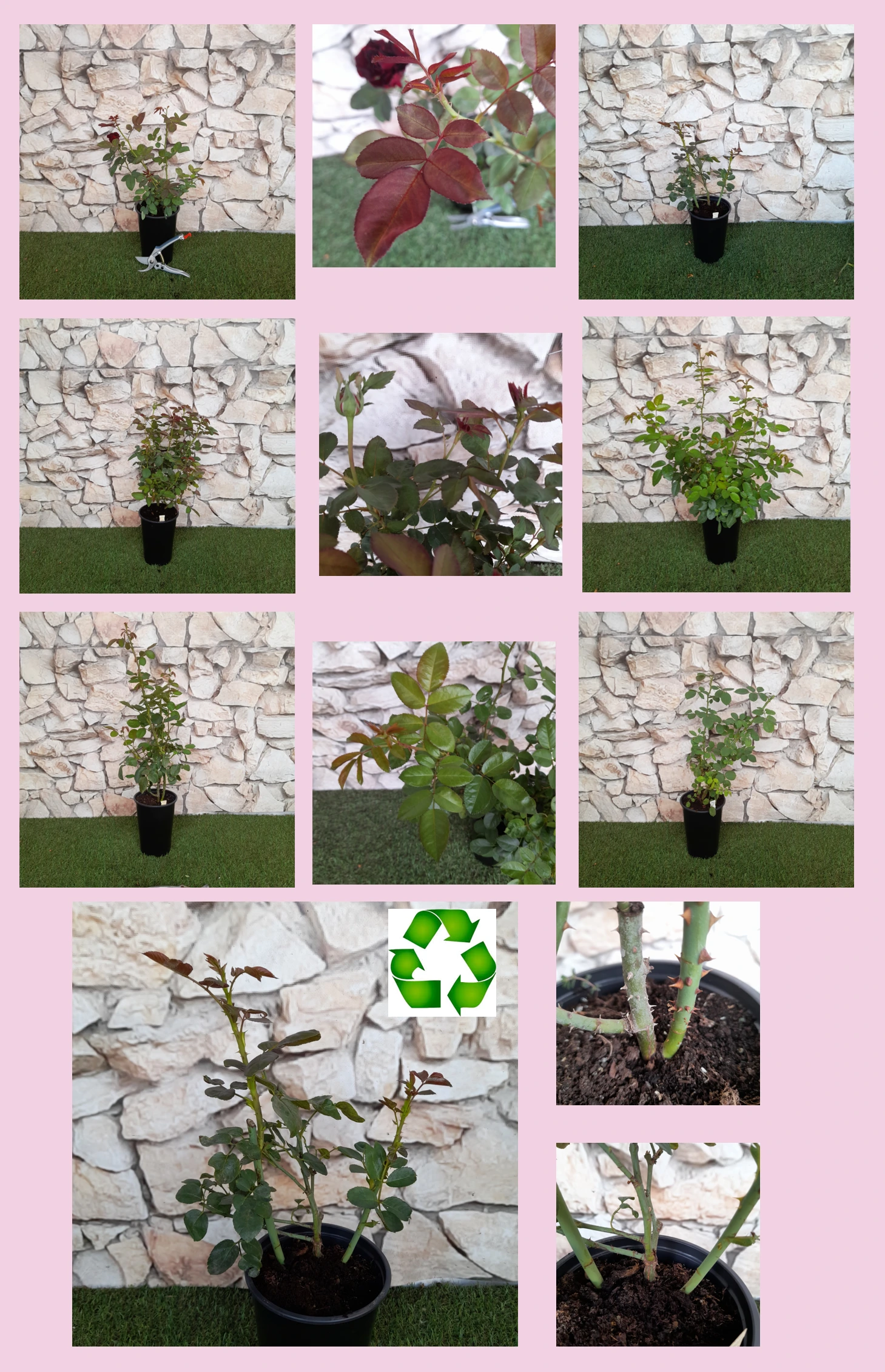
Crop overview: several varieties and growth stages in a short crop section.Shoot system: intensive growth of fresh basal shoots on a young plant.Root system: demonstration of a vigorous root system permeating the growing medium, by removing the pot.Balance: mature plant with root system and shoots in harmony with each other.
Information about the videos
The video series is not a “seasonal showcase”; it illustrates the essence of pharmaROSA® own-root cultivation in a tangible way: how the plant is built up, what the root system is like and how the shoot system regenerates. The recordings were therefore made at different times and with plants at various stages of development, so mixed foliage levels and differing stages of growth may appear in the videos. They are not a ‘sample’ of the batch dispatched, but a visual explanation of how the technology works. The current condition of the rose available to order — typical for the given period and similar to what you can expect to receive in the parcel — is shown in the upper part of the product page.
Pages for private customers Garden roses for the family garden, with minimal care → ORIGINAL® Premium garden roses – instant impact, a truly showpiece garden → EXTRA® Pages for professionals and private customers Roses for public spaces – large areas, sustainable maintenance → NATURAL® Roses for projects – hedge and row planting, fast implementation → RAPID® For professional partners only Production – propagation material for garden roses, wholesale → NEONATAL®
Company details
PharmaRosa Ltd. Company registration number: 01-09-717479 VAT number: 13075314-2-43 Plant health registration no.: HU130721 Bank account (IBAN): HU85117631891388688400000000 BIC (SWIFT): OTPVHUHB Bank name: OTP Bank Nyrt.