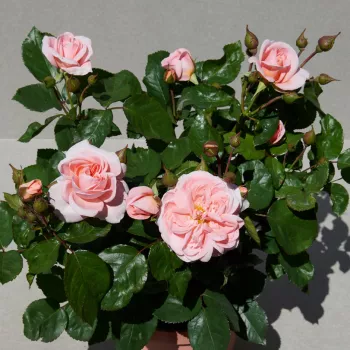
WARVICK™ – pink flowerbed floribunda rose
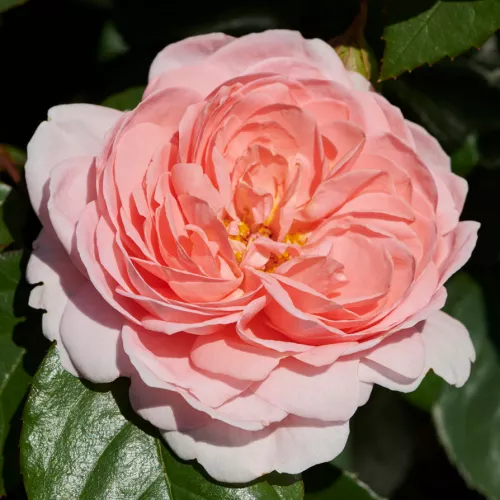
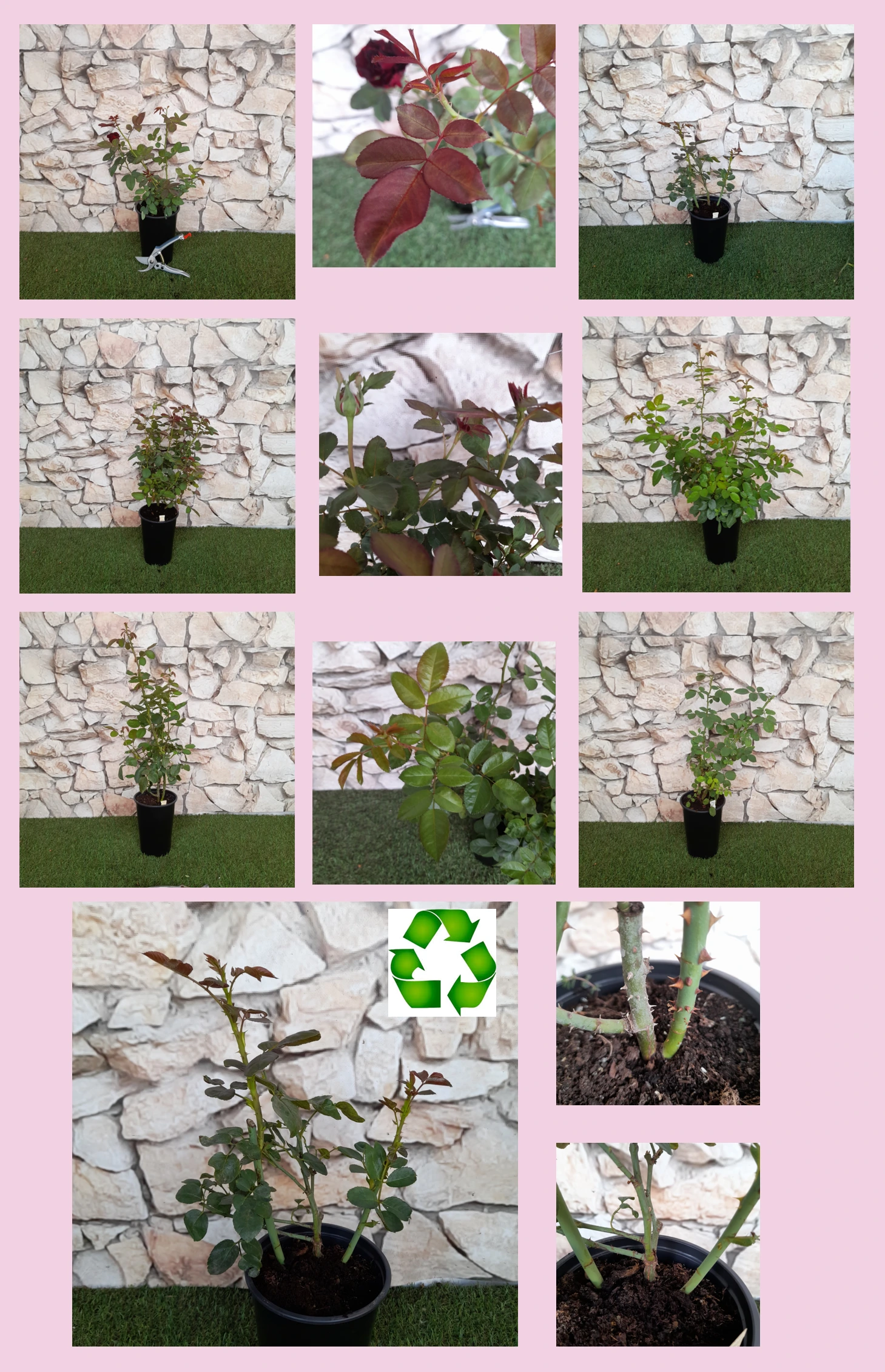
Effortless borders and front gardens gain an instant cottage-style charm with WARVICK™, whose bushy, compact habit and glossy foliage keep planting schemes looking orderly and well composed. Its large, cupped blooms open in soft peach-pink then fade to powdered pastel tones, giving repeated waves of colour through the season with only moderate pruning and feeding. The mild, fruity fragrance suits everyday family use, while own-root planting supports a long-lived, easily maintained structure that settles securely even in breezier, rain-exposed gardens near the coast. In a 2-litre own-root format, it is simple to establish in beds, borders or a 40–50 litre container, giving you dependable performance as it moves from early rooting to fuller top growth and, in time, complete ornamental coverage of its allotted space.
Usage options
| Target area |
Reasoning |
| Front garden feature bed |
The bushy, compact structure and glossy dark foliage help you keep a neat, inviting front garden with minimal shaping, while the soft pink colour range blends easily with existing planting and paving – ideal for design-conscious beginners. |
| Cottage-style mixed border |
Repeated flushes of large, cupped blooms in peach-pink tones give reliable colour through the season, interweaving naturally with perennials and grasses to create a classic, relaxed cottage feel that still stays tidy for busy gardeners. |
| Low-maintenance family bed |
Moderate care needs and a manageable mature size make it straightforward to look after alongside everyday life; basic feeding, watering and a simple annual prune are usually enough to maintain healthy flowering for time-poor homeowners. |
| Own-root long-term rose area |
As an own-root floribunda, the shrub develops its permanent framework in place, regrowing strongly from the base after pruning or weather damage and supporting a stable, long-lived display that suits forward-planning gardeners. |
| 40–50 litre terrace container |
In a sufficiently large pot with good drainage, the compact spread and upright habit make an attractive, easy-to-manage focal point, giving repeated flowering at eye level without demanding complex care from balcony and terrace owners. |
| Small group planting (3–5 plants) |
Planting in small drifts allows the even height and width to knit together into a coherent, low hedge-like band of colour, ideal where you want a simple, structured solution rather than intricate schemes, suiting practical-minded households. |
| Borders in exposed or coastal gardens |
The well-rooting own-root form and bushy habit help the plant anchor and adapt reliably in sites with frequent rain and wind, providing a stable ornamental presence that appeals to weather-aware coastal gardeners. |
| Cutting for informal indoor displays |
The extra-large, cupped blooms with gentle, fruity perfume are well suited to short-stemmed jugs or cottage-style vases, allowing you to bring seasonal colour indoors without needing a dedicated cutting patch, ideal for decor-focused owners. |
Styling ideas
- Soft-edged front path – line a curving path with WARVICK™ and low perennials such as Geranium 'Rozanne' to create a welcoming, flower-rich approach – for homeowners who like a gentle, traditional entrance.
- Cottage trio – group three shrubs in a triangle with airy grasses like Stipa tenuissima behind to form a full, informal mound of pink and movement – for those seeking a classic cottage look with simple maintenance.
- Pastel terrace pot – plant one shrub in a 40–50 litre container with trailing summer bedding in harmonising pinks and creams – for urban balcony and patio users wanting reliable colour in limited space.
- Family-friendly border – mix WARVICK™ with tough, low-care perennials in a narrow side border to keep the house foundations softened yet tidy – for busy families who prefer straightforward planting plans.
- Subtle cutting corner – place a small group near the back door so scented stems are easy to snip for indoor jugs – for aesthetic-focused gardeners who enjoy effortless home-grown arrangements.
Technical cultivar profile
| Parameter |
Data |
| Name and registration |
Floribunda shrub rose from the Castle® collection; registered as POUlcas072, traded as Warvick™ Castle®; bedding floribunda type for borders and smaller beds. |
| Origin and breeding |
Bred in Denmark in 2021 by L. Pernille and Mogens Nyegaard Olesen for Poulsen Roser A/S, introduced by the same company; parentage not publicly disclosed. |
| Growth and structural characteristics |
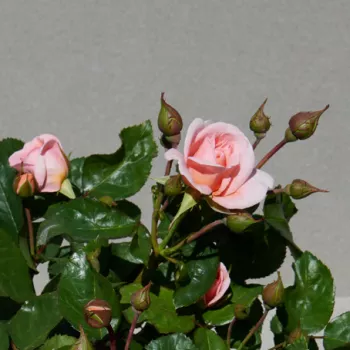
Bushy, compact shrub 65–95 cm high and 55–85 cm wide, with dense, dark green glossy foliage and moderate thorns, forming a rounded, well-filled shape in beds and borders. |
| Flower morphology |
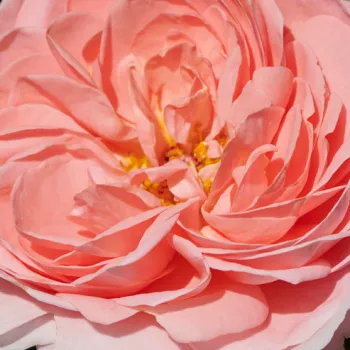
Extra-large, cupped clusters of 3–5 blooms per stem; 26–39 petals give a fully double effect, repeating strongly with a particularly abundant second flush in suitable conditions. |
| Colour data and phenology |
Pink bloom with warm peach influence; buds peach-salmon, opening coral-peach then fading through light peach-pink to pale powder pink, outer petals becoming pastel, almost whitish-pink by the end. |
| Fragrance and aroma |
Mild, fresh, fruity rose scent, noticeable at close range without being overpowering; suitable for small gardens, seating areas and cut stems where a gentle fragrance is preferred. |
| Hip characteristics |
Due to its fully double flower form, rose-hip production is usually limited; where hips form, they are small, ellipsoidal, 10–14 mm across and orange-red in colour. |
| Resistance and winter hardiness |
Hardy to approximately –21 to –18 °C (RHS H7, USDA 6b, Swedish zone 3); disease resistance moderate, with typical susceptibility levels to powdery mildew, black spot and rust. |
| Horticultural recommendations |
Suited to borders, beds, containers and terraces; plant 40–75 cm apart depending on effect; medium maintenance, needing routine feeding, watering and occasional plant protection where disease pressure is high. |
WARVICK™ offers compact, bushy growth, generous repeat flowering and gentle fragrance on a resilient own-root shrub, making it a dependable choice for long-lived, low-fuss colour in family gardens and smaller spaces.