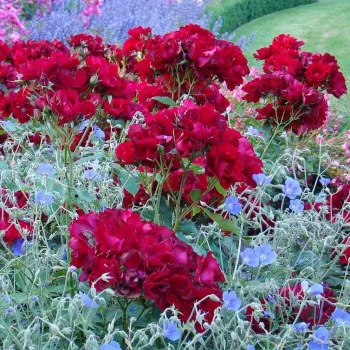
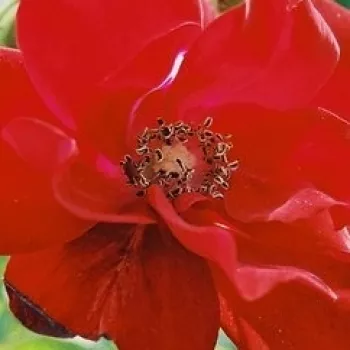
Vivid, rich blood‑red shade with a velvety, deep appearance. - flowerbed shrub rose - light, restrained-scented rose - delicate, light in character
– Rich, velvety dark-red cluster blooms.
– Good repeat flowering through the season.
– Upright shrub with dense, glossy foliage.
– Reliable winter hardiness to RHS H7.
– Forms small, decorative red hips.
– Special feature: Bronze medal winner at Baden‑Baden 1982.
Long-lasting plant – Expert knowledge
pharmaROSA® ORIGINAL 2-litre own-root potted rose
18,70 £
Unfortunately, we are currently unable to ship to the United Kingdom; we only deliver to countries within the European Union. For more information, please contact us!
4(6034)
Ville d'Ettelbruck – dark red bedding shrub rose – Lens
Velvety clusters of blood‑red blooms give Ville d’Ettelbruck an immediately striking presence in typical British front gardens and cottage‑style beds, while its upright, medium‑tall habit keeps borders looking orderly rather than unruly. This own‑root shrub settles in steadily – roots first, then strong shoots, then full garden impact over the first three years – and with only medium maintenance needs it suits busy gardeners who want reliable colour rather than constant tasks. Semi‑double flowers offer accessible pollen for visiting pollinators, and a light fragrance adds a gentle ambience without overwhelming seating areas. Its dense, glossy foliage and solid framework support a long ornamental life, and it copes well with typical UK conditions, including wetter, windier spells in more exposed or coastal districts, given reasonable drainage. Whether you prefer formal edging or relaxed cottage mixes, this rose provides dependable structure and colour with straightforward care.
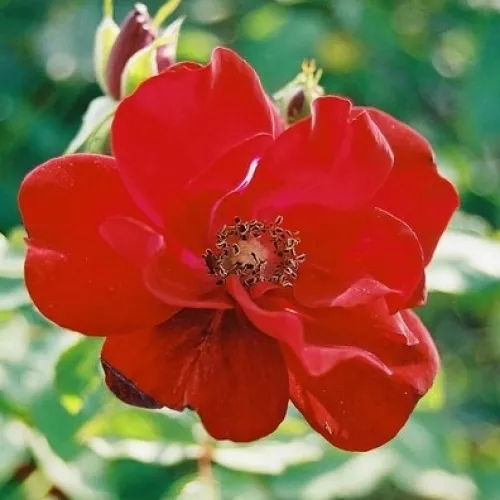
Freshly opened bloom of Ville d’Ettelbruck in rich blood-red tones.
Ville d’Ettelbruck, a dark-red bedding shrub rose in full bloom.
Usage options
Target area
Reasoning
Front garden feature shrub
The upright, medium‑tall habit and dense, glossy foliage create an immediate focal point near the front door, with rich red clusters that stand out against brickwork and paving, giving structure without complex pruning for the time‑pressed homeowner.
Small bedding groups (1–5 plants)
Planted in a short row or loose triangle at 60–90 cm spacings, the uniform dark‑red clusters read as a coherent block of colour, ideal for modest‑sized gardens that need strong, repeat flowering from just a few plants for the style‑conscious beginner.
Mixed cottage border
Semi‑double crimson flowers mix naturally with perennials such as calamint or dwarf asters, while the dark green foliage acts as a backdrop, allowing classic cottage combinations without fussy maintenance for lovers of relaxed, traditional planting.
Low informal hedge or boundary
At 110–150 cm high, planted about 50 cm apart, it forms a loosely clipped flowering line to edge drives or separate spaces, giving seasonal screening and colour without the rigidity or pruning demands of formal hedging for busy family‑garden owners.
Urban and exposed sites
Its sturdy, upright framework and medium thorniness help it anchor well and stand up to wind, and it tolerates heat if watered in dry spells, so it performs reliably even in more open, breezy streetscapes and coastal fringes for practical urban‑plot gardeners.
Pollinator‑friendly rose area
The semi‑double, cluster‑flowered blooms expose stamens, providing accessible pollen that encourages bee visits, especially if you avoid over‑deadheading and allow some flowers to age naturally, suiting wildlife‑aware garden enthusiasts.
Long‑term structural planting
As an own‑root shrub, it rebuilds from the base if cut back hard and ages evenly, giving a long service life with stable flowering performance, ideal where you want a durable, low‑fuss rose backbone for succession‑minded garden planners.
Large container on patio or terrace
In a 40–50 litre pot with good drainage, its upright form, repeat dark‑red clusters and medium maintenance needs give season‑long colour beside seating areas, offering an easy, movable solution where borders are limited for space‑conscious patio‑rose users.
Styling ideas
Front‑door welcome – Place one shrub by the path with low lavender or calamint at its feet to soften the base, creating a smart but inviting entrance – ideal for house‑proud front‑garden owners.
Cottage trio – Plant three in a loose triangle with dwarf Michaelmas daisies behind and nepeta in front for a long‑season red‑blue‑purple mix – perfect for lovers of traditional cottage borders.
Driveway rhythm – Repeat plants at regular intervals along a drive or path, underplanting with low groundcovers for a continuous ribbon of red through summer – suited to those wanting easy structure.
Patio focal pot – Grow one in a 40–50 litre container and pair with trailing thyme or violas for colour at different heights – a good option for balcony, courtyard, or terrace gardeners.
Wildlife‑minded bed – Combine with airy calamints and other nectar plants, deadheading lightly so some clusters age into red hips for autumn interest – appealing to nature‑focused family gardens.
Technical cultivar profile
Parameter
Data
Name and registration
Modern shrub, bed rose type; registered as LENivill, marketed as Ville d'Ettelbruck Bedding rose LENivill, with ARS exhibition name Ville d’Ettelbruck for show and listing purposes.
Origin and breeding
Bred by Louis Lens in Belgium from ‘Satchmo’ × ‘Skyrocket’; breeding completed in 1981 and introduced in 1983 by the Lens nursery group, now a classic Lens shrub for beds and borders.
Awards and recognition
Bronze medal at the Baden‑Baden International Rose Competition in 1982, recognising its ornamental value and balanced garden performance among contemporary shrub and bedding introductions.
Growth and structural characteristics
Upright modern shrub reaching about 110–150 cm high and 65–95 cm wide, with dense, moderately thorny shoots and glossy, dark green foliage giving good coverage and visual weight in plantings.
Flower morphology
Semi‑double, medium‑sized clusters, roughly 1.5–2.75 inches across, flat and open with 13–25 petals; produced in trusses with good remontant character and a notably abundant second flush.
Colour data and phenology
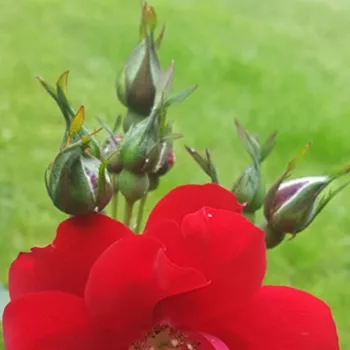
Dark blood‑red blooms, RHS 53A outside and 53B inside; buds emerge deep burgundy, then open vivid red, slightly deepening before a gentle lightening in strong sun as the flowers age.
Fragrance and aroma
Light, delicate fragrance of restrained strength, sufficient to add a subtle scented note near paths or seating areas without dominating more strongly perfumed companion roses or perennials nearby.
Hip characteristics
Forms small, spherical red hips about 8–12 mm in diameter in moderate numbers if deadheading is reduced, adding late‑season decorative interest among the dark foliage and remaining blooms.
Resistance and winter hardiness
Hardy to approximately −21 to −18 °C (RHS H7, USDA 6b), with medium disease resistance; notably resistant to black spot but only medium against powdery mildew and rust, needing occasional checks.
Horticultural recommendations
Best in sunny beds, parks, or urban plantings; plant 50–60 cm apart for hedging or massed beds, 90 cm as a specimen; water during dry spells and prune flexibly to maintain height and flowering.
Ville d'Ettelbruck offers rich dark‑red clusters, adaptable own‑root longevity and reliable repeat flowering in beds, borders or large containers, making it a thoughtful choice if you seek lasting colour with manageable care.
Detailed product attributes
Product Identification Data
Product Name:
VILLE D'ETTELBRUCK – dark red bedding shrub rose - Lens
Product Type:
pharmaROSA® ORIGINAL - 2-litre own-root potted rose
Pollinator Attraction:
Open flowers that expose the stamens—particularly single or semi‑double forms with accessible stamens rather than fully double blooms—make pollen readily available and so attract bees.
Pollinator-Friendly Rating:
Can be considered partially pollinator-friendly due to its semi-double flowers.
Our product is a rose grown with pharmaROSA®’s unique cultivation technology!
2-litre, own-root, potted rose.
With a shoot system appropriate to the season.
With a root system that thoroughly permeates the growing medium.
Quality compliant with the requirements of the E.N.A. (European Nurserystock Association).
Supplied in unique packaging that prevents damage.
Can be planted during frost-free periods.
True-to-variety rose bush with a unique identifier.
The pharmaROSA® own-root potted rose is a well-rooted plant that supports reliable establishment when planted and cared for properly, so it can be planted whenever the soil is not frozen.
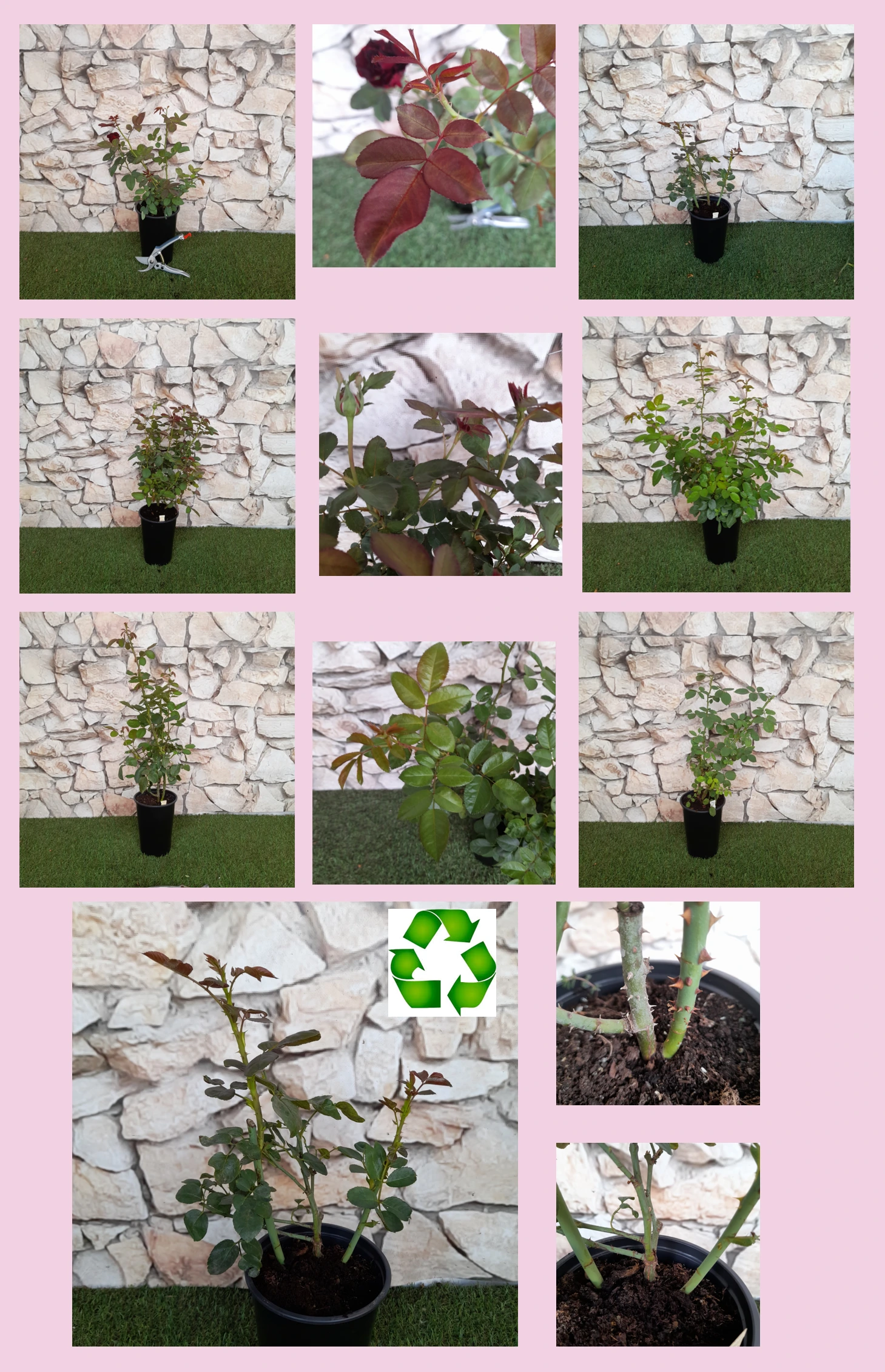
Crop overview: several varieties and growth stages in a short crop section.Shoot system: intensive growth of fresh basal shoots on a young plant.Root system: demonstration of a vigorous root system permeating the growing medium, by removing the pot.Balance: mature plant with root system and shoots in harmony with each other.
Information about the videos
The video series is not a “seasonal showcase”; it illustrates the essence of pharmaROSA® own-root cultivation in a tangible way: how the plant is built up, what the root system is like and how the shoot system regenerates. The recordings were therefore made at different times and with plants at various stages of development, so mixed foliage levels and differing stages of growth may appear in the videos. They are not a ‘sample’ of the batch dispatched, but a visual explanation of how the technology works. The current condition of the rose available to order — typical for the given period and similar to what you can expect to receive in the parcel — is shown in the upper part of the product page.
Pages for private customers Garden roses for the family garden, with minimal care → ORIGINAL® Premium garden roses – instant impact, a truly showpiece garden → EXTRA® Pages for professionals and private customers Roses for public spaces – large areas, sustainable maintenance → NATURAL® Roses for projects – hedge and row planting, fast implementation → RAPID® For professional partners only Production – propagation material for garden roses, wholesale → NEONATAL®
Company details
PharmaRosa Ltd. Company registration number: 01-09-717479 VAT number: 13075314-2-43 Plant health registration no.: HU130721 Bank account (IBAN): HU85117631891388688400000000 BIC (SWIFT): OTPVHUHB Bank name: OTP Bank Nyrt.