Hybrid tea rose

53-246-1
53-246-2

Village de Saint Yrieix

Hybrid tea rose

PANcity – Bernard Panozzo

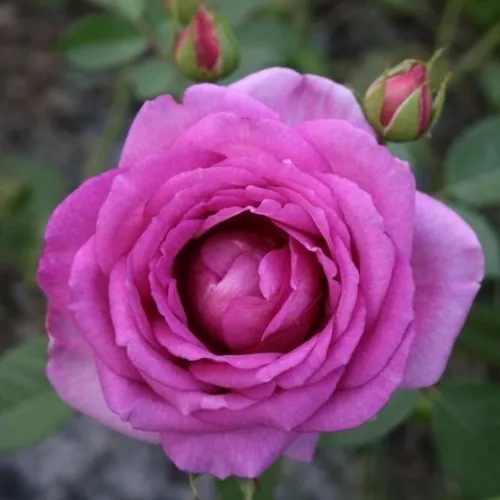
Delicate lavender-lilac tone with a subtle pink veil. - hybrid tea rose - powerful, long‑lasting scented rose - aroma description not available

– Powerful, long‑lasting fragrance for impact
– Extra‑large, cupped blooms in elegant lilac tones
– Bushy, compact habit suited to smaller spaces
Remontant variety with plentiful repeat flush
– Good winter hardiness down to –21 °C
Special feature: Colour shifts from vivid lavender‑purple to silvery, frosted lilac as the blooms mature.
Transparent processes – Future-proof garden concept
Village de Saint Yrieix
pharmaROSA® ORIGINAL 2-litre own-root potted rose
22,90 £
Unfortunately, we are currently unable to ship to the United Kingdom; we only deliver to countries within the European Union. For more information, please contact us!
4.5 (6662)
facebook   twitter

VILLAGE DE SAINT YRIEIX – lilac hybrid tea rose – PANcity

This lilac hybrid tea rose brings a quietly luxurious presence to a family garden, with tall, elegant stems and XL blooms designed for vases and borders alike. The flowers open from deep purple buds into large, cupped, double blossoms in a refined lavender‑lilac shade that slowly softens to silvery tones, giving long‑lasting interest in both mixed borders and classic rose beds. Its bushy, compact habit and dense, glossy foliage help the plant hold its shape with relatively little intervention, supporting an overall order in small front gardens and narrow side beds. Medium maintenance needs mean you can keep it healthy with a simple, regular care routine, while the powerful, long‑lasting perfume adds an atmosphere you notice each time you pass the front path or patio. As an own‑root shrub, it establishes steadily and is capable of graceful regrowth after pruning or weather damage, rewarding you with a reliable framework that matures over many seasons. In typical British conditions it copes well once settled, as long as you avoid waterlogged spots in heavy clay and give it drainage that withstands winter wet and coastal winds. Its remontant habit provides a generous second flush so borders do not look empty between peaks, supporting a sense of continuous colour through the main garden months. You can expect a natural development from root establishment, through building height and branching, to full ornamental expression over the first three seasons.


Usage options

Target areaReasoning
Front garden feature rose The tall, XL hybrid tea blooms on upright stems make this variety ideal as a focal point near an entrance, gate or front path where individual flowers can be admired close‑up. Its bushy, compact habit keeps lines tidy without complex shaping, supporting a neat frontage that still feels soft and romantic for the style‑conscious beginner.
Mixed cottage border The refined lavender‑lilac colour, softening to silvery tones, blends effortlessly with traditional cottage plants such as foxgloves, catmint and hardy geraniums, adding height and structure among looser perennials. This controlled growth habit helps keep mixed borders from feeling unruly, yet preserves the informal look valued by many homeowners.
Cutting bed for home bouquets Long, straight stems with solitary XL flowers are well suited to cutting for indoor arrangements, providing an ongoing supply of strongly scented blooms from early summer onwards. Planted in a simple row or small block, it offers dependable, florist‑style stems without specialist knowledge, appealing to fragrance‑loving gardeners.
Small group planting in front of the house Groups of three to five plants create a compact, coherent block of lilac colour that reads clearly from the pavement without overwhelming a modest space. Medium maintenance needs and a predictable bushy shape mean these groups stay presentable with straightforward seasonal care, which suits busy urban families.
Formal rose bed with simple pruning The upright, bushy growth and clear hybrid tea flower form make this cultivar easy to integrate in formal beds where clean lines are preferred but time is limited. Standard winter pruning and occasional health checks are usually sufficient, giving a long‑lived structural planting that rewards steady, basic attention from practical owners.
Border backbone in temperate UK climates With hardiness down to typical UK winter minima, it performs reliably when planted in well‑drained soil, away from prolonged waterlogging, and given shelter from the worst coastal gusts to cope better with cool, damp seasons and unsettled weather.
Season‑long flowering accent Remontant flowering with a plentiful second flush ensures colour returns after the first peak, helping to avoid flat periods in the border. By spacing plants correctly and feeding modestly, you gain a rhythm of repeat flowering that maintains visual interest from early summer through to autumn, supporting design‑minded starters.
Own‑root shrub for long‑term beds As an own‑root plant, this rose builds its framework gradually in the exact spot where it will live, recovering more consistently from pruning and winter dieback over the years. This gradual strengthening offers reassuring continuity in family gardens, where stable, low‑surprise plantings suit time‑pressed households.

Styling ideas

  • Cottage‑elegant trio – Plant three VILLAGE DE SAINT YRIEIX in a loose triangle with soft pink campanulas and white foxgloves to showcase its lavender‑lilac colour and compact form – ideal for lovers of relaxed but ordered cottage style.
  • Fragrant path edge – Line a sunny front path with widely spaced plants, underplanting with low catmint to emphasise the powerful perfume as you pass – suited to busy homeowners who want maximum scent with minimal complexity.
  • Cutting‑corner row – Create a short, straight row in a side bed, pairing with simple green shrubs so stems are easy to access for vases – perfect for beginners keen to grow reliable, long‑stemmed roses for the house.
  • Lilac focal circle – Arrange five plants in a small circle or crescent in the front lawn, backed by evergreen box or yew, to use the compact habit as a stable, long‑term feature – good for families wanting a clear, low‑maintenance centrepiece.
  • Container showcase – Grow a single plant in a 40–50 litre pot with free‑draining compost and light underplanting of trailing thyme to highlight flower size and scent on a patio – suitable for urban gardeners working with hard surfaces and balconies.

Technical cultivar profile
ParameterData
Name and registration Hybrid tea rose, commercial group Hybrid tea rose; registered as PANcity, marketed as VILLAGE DE SAINT YRIEIX – lilac hybrid tea rose – Panozzo since 2010 in consumer garden trade.
Origin and breeding Bred by Bernard Panozzo at Roseraies Panozzo, France; parentage unknown; introduced and registered in 2010 by French nurseries Pépinière Leroi and Le Star de Doué for ornamental garden use.
Growth and structural characteristics Bushy, compact hybrid tea with dense, glossy mid‑green foliage; height typically 70–90 cm with a spread of 50–70 cm, moderately thorny stems and a habit suitable for beds, borders and cutting rows.
Flower morphology Very large, double, cupped flowers with approximately 26–30 petals; solitary on stems; XL bloom size around 3.5 inches or more; remontant with a generous second flush given adequate nutrition and moisture.
Colour data and phenology Colour ranges from deep purple buds to bright purplish‑lavender newly opened flowers; soft lilac at full bloom; fades to silvery‑lilac with translucent, frosted petal edges; ARS code M, RHS 76A outer, 75B inner.
Fragrance and aroma Strongly perfumed hybrid tea rose with powerful, long‑lasting scent; fragrance character not fully documented but clearly noticeable in the garden and suitable for enjoying on paths, terraces and in cut arrangements.
Hip characteristics Sparse hip set expected due to double flowers; where present, hips are ovoid, orange‑red, approximately 12–18 mm in diameter, offering occasional late‑season interest without significant self‑seeding.
Resistance and winter hardiness Hardy to approximately −21 to −18 °C (RHS H7, Swedish zone 3, USDA 6b); disease resistance moderate to powdery mildew, black spot and rust, so routine monitoring and basic preventive care are recommended.
Horticultural recommendations Medium maintenance: benefits from regular feeding, deadheading and periodic plant protection. Space 35–65 cm depending on use; planting densities 5.7 plants/m² square or 6.5 plants/m² hexagonal for mass plantings.

VILLAGE DE SAINT YRIEIX offers XL lilac blooms, strong fragrance and a compact, long‑lived own‑root shrub that settles steadily into family gardens, making it a thoughtful choice if you want dependable roses with manageable care.
Detailed product attributes

Product Identification Data

Product Name: VILLAGE DE SAINT YRIEIX – lilac hybrid tea rose - Panozzo
Product Type: pharmaROSA® ORIGINAL - 2-litre own-root potted rose
Cultivar Authenticity: Verified:26.08.2025
Cultivar Quality Rating: premium silver
Item Number: [1303] 53-246 (14.02.2026) pharmarosa.co.uk

Name and Registration

Meaning of Cultivar Name: The name refers to the village of Saint-Yrieix‑sous‑Aixe in the Haute‑Vienne department, which holds an annual rose festival.
Cultivar Synonym: Village de Saint Yrieix Sous Aixe®; Village de Saint Yrieix®
Original Trade Name: Village de Saint Yrieix Sous Aixe®
Current Trade Name: Village de Saint Yrieix Hybrid tea rose PANcity
Rose Group: Hybrid Tea
Commercial Type: hybrid tea rose
Commercial Group: Hybrid tea rose
Exhibition Category: cut flower; exhibition tea hybrid
Collection: Hybrid tea rose

Origin and Breeding

Initial Distributor: Pépinière Leroi (France); Le Star de Doué (France)
Breeder: Bernard Panozzo
Breeding Company / Institution: Roseraies Panozzo (France)
Breeding Year: France, 2010
Parentage: unknown

Growth and Structural Characteristics

Height: 2.3-3ft (70-90 cm)
Spread: 1.6-2.3ft (50-70 cm)
Growth Habit: bushy, compact
Foliage: The variety has dense foliage; the leaves are glossy and mid‑green in colour (RHS 137A).
Prickliness: moderately thorny
Self-Cleaning Description: No information on self-cleaning.
Self-Cleaning Intensity: No data on self-cleaning strength.

Flower Morphology

Petal Count: 26-30
Flower Fullness: double-flowered
Flower Shape: cupped
Flower Size: XL (3,5 in -)
Inflorescence Type: solitary
Colour Code: ARS code: M RHS code: 76A (outer), 75B (inner)
Repeat Flowering: Remontant, with a plentiful second flowering.

Colour Data and Phenology

Colour: purple
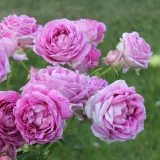
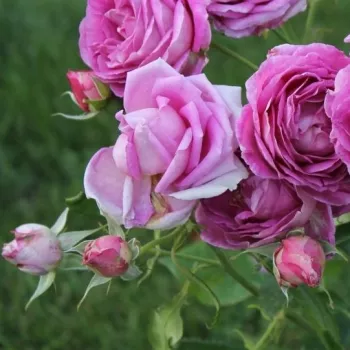
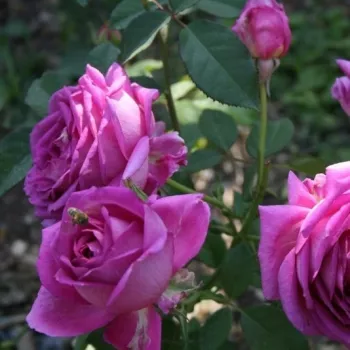
Flower Colour Description: Delicate lavender-lilac tone with a subtle pink veil.
Closed Bud: Deep purple outer petals with silvery‑tinged tips.
Newly Opened Flower: Bright purplish‑lavender base, the outer petal edges are slightly darker.
Full Bloom: Uniform soft lilac surface with a subtle rosy tint at the centre.

Before Fading: Fading silvery-lilac, translucent at the edges with a frosted tone.

Colour Fading Description: As it opens, the vivid lavender-purple softens to a silvery lilac; just before the bloom fades the margins become translucent with a frosted tone.

Fragrance and Aroma

Fragrance Strength: powerful, long‑lasting scented rose
Fragrance Character: aroma description not available
Pollinator Attraction: Double (26–30 petals) and therefore of low attractiveness to pollinators, since the double flower form often obscures or restricts access to the stamens, reducing nectar and pollen availability.
Pollinator-Friendly Rating: Its densely double flowers usually enclose the stamens, so it attracts pollinators only to a limited extent; primarily an ornamental variety.

Hip Characteristics

Hip Shape: egg-shaped
Hip Colour: orange-red
Hip Comment: Rose hip formation is expected to be sparse due to the double flowers; the hips are 12–18 mm in diameter, ovoid, orange-red.

Resistance and Hardiness

Hardiness (°C): -21–-18 °C
Heat and Drought Tolerance Description: No data are available on heat–drought tolerance.
Disease Resistance: moderate
  • powdery mildew – moderate
  • black spot – moderate
  • rust – moderate

Horticultural Recommendations

Recommended Planting Distance: for mass planting 40 cm, for hedging 35 cm, as a solitary specimen 65 cm
Planting Density: in square planting 5,7 plants/m², in hexagonal arrangement 6,5 plants/m²
Maintenance Requirement: Maintenance requirement medium; occasionally requires plant protection treatments.
Primary Uses: no data

Comments

Strengths: Transparent processes – Future-proof garden concept
Companion Plants: Hemerocallis hybrids - daylily
Lychnis alpina 'Magenta' - Alpine catchfly
Verbena hastata 'Pink Spires' - dense-flowered verbena pink
Comment: -
VILLAGE DE SAINT YRIEIX – lilac hybrid tea rose - Panozzo
Delicate lavender-lilac tone with a subtle pink veil. - hybrid tea rose - powerful, long‑lasting scented rose - aroma description not available
Online rose order - purple - hybrid tea rose - Village de Saint Yrieix - (2.3-3ft (70-90 cm))
Inflorescence: solitary Height: 2.3-3ft (70-90 cm) Flower shape: cupped Winter hardiness: 6a purple - Pépinière Leroi (France); Le Star de Doué (France) hybrid tea rose - Flower size: XL (3,5 in -) Flower size: XL (3,5 in -) - Height: 2.3-3ft (70-90 cm) Height: 2.3-3ft (70-90 cm) - Flower fullness: double-flowered Village de Saint Yrieix - Roses in the garden | pharmaROSA® Original - premium silver Bernard Panozzo

We showcase the external appearance of the roses available for online purchase from our webshop.


Which product type is right for you?


Information

In what condition do we dispatch the rose from our online webshop?

Let us ask ourselves the question: What would I like to use the rose for?
Flower? – Location? – Screening? – Fragrance? – Height? – Breeder? – Rose hip?

Rose purchasing information
Methods of payment – Delivery charges – Delivery – Complaints handling

Care guide

Our product is a rose grown with pharmaROSA®’s unique cultivation technology!

2-litre, own-root, potted rose.
With a shoot system appropriate to the season.
With a root system that thoroughly permeates the growing medium.
Quality compliant with the requirements of the E.N.A. (European Nurserystock Association).
Supplied in unique packaging that prevents damage.
Can be planted during frost-free periods.
True-to-variety rose bush with a unique identifier.

The pharmaROSA® own-root potted rose is a well-rooted plant that supports reliable establishment when planted and cared for properly, so it can be planted whenever the soil is not frozen.


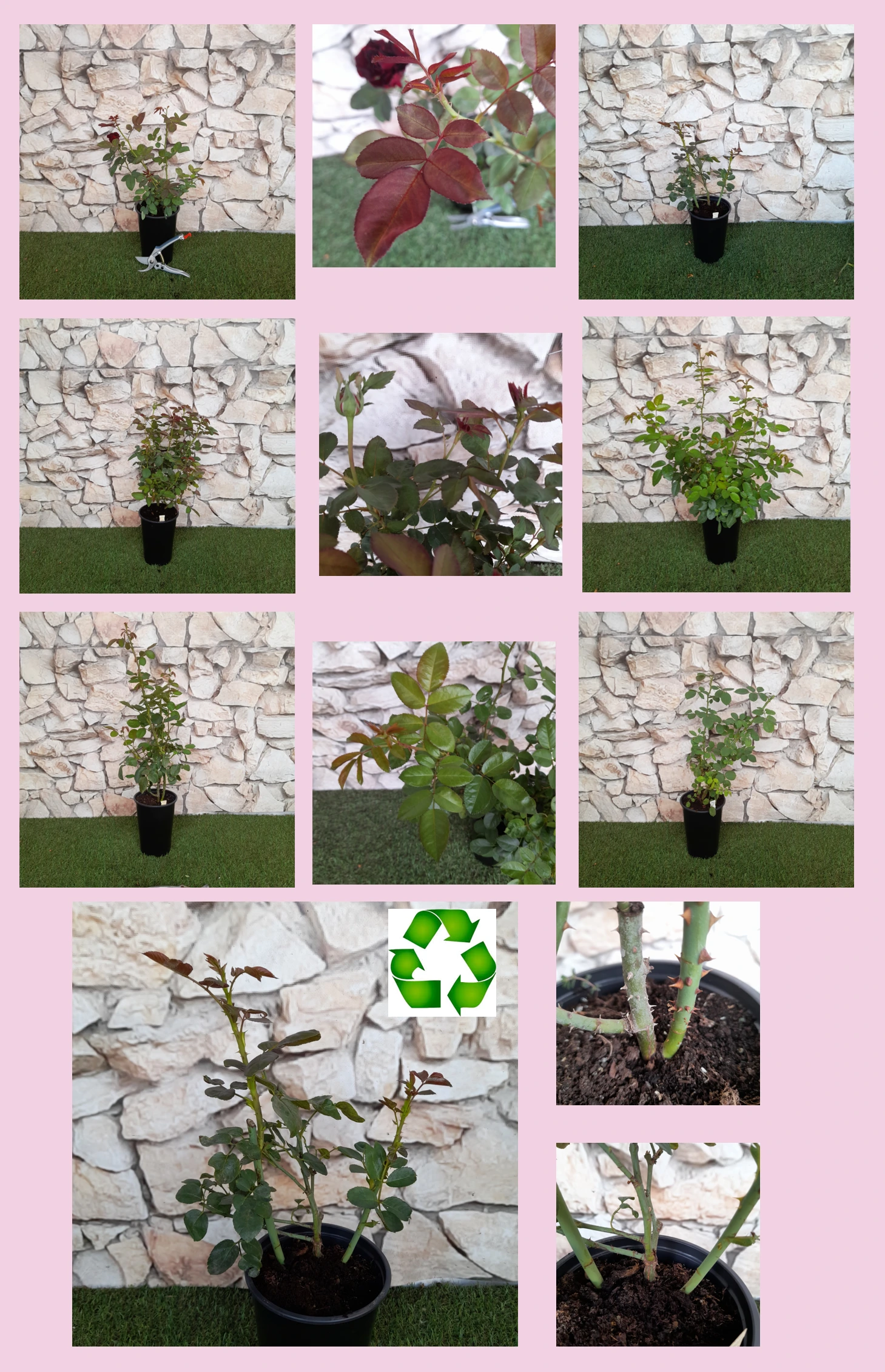
Crop overview: several varieties and growth stages in a short crop section.
Shoot system: intensive growth of fresh basal shoots on a young plant.
Root system: demonstration of a vigorous root system permeating the growing medium, by removing the pot.
Balance: mature plant with root system and shoots in harmony with each other.

Information about the videos
The video series is not a “seasonal showcase”; it illustrates the essence of pharmaROSA® own-root cultivation in a tangible way: how the plant is built up, what the root system is like and how the shoot system regenerates. The recordings were therefore made at different times and with plants at various stages of development, so mixed foliage levels and differing stages of growth may appear in the videos. They are not a ‘sample’ of the batch dispatched, but a visual explanation of how the technology works. The current condition of the rose available to order — typical for the given period and similar to what you can expect to receive in the parcel — is shown in the upper part of the product page.

pharmarosa.compharmarosa.atpharmarosa.czpharmarosa.depharmarosa.ropharmarosa.sipharmarosa.skpharmarosa.hrpharmarosa.itpharmarosa.frpharmarosa.grpharmarosa.bepharmarosa.dkpharmarosa.nlpharmarosa.iepharmarosa.plpharmarosa.lupharmarosa.ptpharmarosa.espharmarosa.bgpharmarosa.ltpharmarosa.sepharmarosa.lvpharmarosa.eepharmarosa.fipharmarosa.rudarinarose.co.uk

Product types

Pages for private customers
Garden roses for the family garden, with minimal care  → ORIGINAL®
Premium garden roses – instant impact, a truly showpiece garden  → EXTRA®
Pages for professionals and private customers
Roses for public spaces – large areas, sustainable maintenance  → NATURAL®
Roses for projects – hedge and row planting, fast implementation  → RAPID®
For professional partners only
Production – propagation material for garden roses, wholesale  → NEONATAL®

Company details

PharmaRosa Ltd.
Company registration number: 01-09-717479
VAT number: 13075314-2-43
Plant health registration no.: HU130721
Bank account (IBAN):
HU85117631891388688400000000
BIC (SWIFT): OTPVHUHB
Bank name: OTP Bank Nyrt.