Historic Rose

52-533-1
52-533-2

Veilchenblau

Historic rose

- – Hermann Kiese

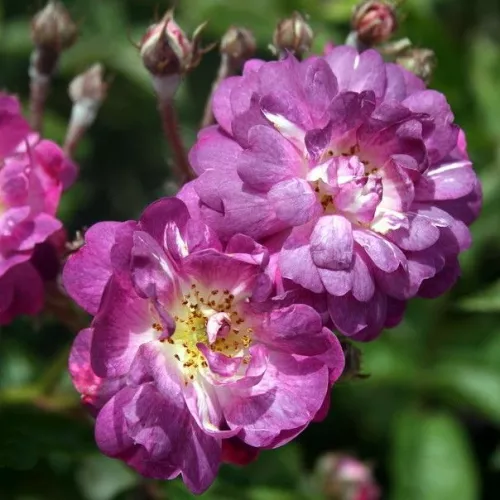
Bright crimson purple shade, paler in the centre. - historic - rambler, climbing - trailing rose - mild, subtle-scented rose - sweetly spicy

– Historic rambler with RHS Award of Garden Merit.
– Abundant lilac‑purple clusters, charming colour fade.
– Vigorous climber, ideal for walls and pergolas.
– Hardy to around −30 °C, suitable for cold areas.
– Attractive to bees thanks to open, semi‑double blooms.
Special feature: Tolerates poorer soils and partial shade, creating romantic cascades even in tougher spots.
Soil-friendly approach – Streamlined forms
Veilchenblau
pharmaROSA® ORIGINAL 2-litre own-root potted rose
19,20 £
Unfortunately, we are currently unable to ship to the United Kingdom; we only deliver to countries within the European Union. For more information, please contact us!
4.5 (6405)
facebook   twitter

Veilchenblau – historic violet-blue rambler for pergolas and walls

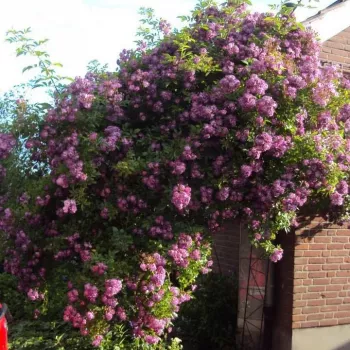
Historic charm meets effortless coverage in ‘Veilchenblau’, a classic rambler that clothes pergolas, arches, fences and house walls with clouds of lilac‑purple clusters. Its semi‑shade tolerance makes it ideal for British side passages or north‑east aspects, while the airy, open flowers are a summer magnet for pollinators. Once established, its own‑root structure provides long‑term stability and reliable regrowth after pruning, helping the plant adapt to your local soil and care routine. In the first year it concentrates on roots, the second on new framework, and by the third you enjoy its full ornamental effect. Awarded the RHS Award of Garden Merit, this mid‑green, glossy‑foliaged rambler offers season‑long visual interest, self‑cleans reasonably well and copes with typical UK rainfall and breezes in a well‑drained, raised‑bed or border setting.


Usage options

Target area Reasoning
Family pergola or arbour Perfect where you want a traditional, flower‑laden pergola without constant fussing: the long, flexible canes quickly create a vaulted canopy, while own‑root resilience supports decades of steady structure for busy beginners
Front‑garden house wall or fence Trains easily along horizontal wires to soften bare brick or timber with a once‑a‑year display, then neat foliage for the rest of the season, giving dependable coverage and kerb appeal with only occasional tying‑in for time‑pressed homeowners
Cottage‑style mixed border backdrop Provides a romantic, violet‑blue curtain behind perennials and shrubs; semi‑shade tolerance lets it perform on less sunny boundaries, while its historic character blends naturally with classic cottage palettes cherished by style‑conscious gardeners
Large structure or mature tree scrambling The long, climbing shoots can be guided into large shrubs or small trees to create a soft, woodland‑edge feel; once roots are established, framework growth becomes more generous year by year for patient garden planners
Pollinator‑friendly family seating area Flat, semi‑double blooms offer accessible pollen, drawing bees close to patios and seating spots during the flowering flush, so you enjoy both movement and gentle fragrance around shared outdoor spaces for wildlife‑minded families
Smaller urban gardens with partial shade Performs reliably on walls and fences that only receive part‑day sun, making vertical colour possible where beds are limited, while one main flowering period keeps aftercare simple for space‑limited city gardeners
Low‑input long‑term rose feature Own‑root growth ages into a stable, replaceable framework that can be pruned hard if needed and will reshoot from the base, supporting decades of ornamental value with modest routine care for long‑view homeowners
Raised beds or improved clay borders Suited to well‑drained, improved soils where you can keep the root zone from sitting wet; once settled, it copes well with typical UK rainfall and wind exposure, making a reliable vertical accent for practical planners

Styling ideas

  • Pergola cascade – Train canes over a timber or metal pergola, underplant with meadow sage and ornamental grasses for a drifting, romantic canopy – for lovers of soft, enveloping garden rooms
  • Storybook frontage – Let it fan across a front‑door wall above clipped box or low lavender, echoing classic village cottages – for those seeking traditional British kerbside charm
  • Woodland edge – Allow stems to weave through a small ornamental tree, with dogwoods and ferns beneath for layered seasonal interest – for gardeners creating a naturalistic, semi‑shaded corner
  • Family bee walk – Run it along a boundary with salvias and herbs at the base to form a buzzing corridor near paths – for parents encouraging children to notice pollinators
  • Courtyard screen – Use on a sturdy trellis at the back of a large 50‑litre container grouping, with bluebeard and pots of thyme in front – for urban owners wanting privacy and colour in tight spaces

Technical cultivar profile
Characteristic Data
Name and registration Veilchenblau historic rambler, commercial type running climber; ARS exhibition name Veilchenblau; unregistered cultivar, verified identity for pharmaROSA ORIGINAL 2‑litre own‑root stock.
Origin and breeding Bred by Hermann Kiese in Germany, 1909; parentage ‘Turner’s Crimson Rambler’ × ‘Souvenir de Brod’; introduced by Johann Christoph Schmidt as a vigorous violet‑blue historic rambler.
Awards and recognition Holds the Royal Horticultural Society Award of Garden Merit (RHS AGM, 1993), indicating reliable garden performance, good ornamental value and sound health under typical UK growing conditions.
Growth and structural characteristics Strong climbing rambler with 4–6 m height and 2–4 m spread, dense mid‑green glossy foliage, slightly prickly stems, and medium self‑cleaning, with spent flower clusters sometimes persisting on the plant.
Flower morphology Semi‑double, flat flowers in large, showy clusters; each bloom small (0.5–1.5 in) with 13–20 petals, produced once per season in a heavy flush, ideal for covering larger supports in early summer.
Colour data and phenology Crimson‑purple buds open lilac with whitish centres; ARS colour M, RHS 79A outer, 75B inner; tones quickly weather to bluish‑grey in sun, creating a distinctive violet‑blue effect over the flowering period.
Fragrance and aroma Mild, sweetly spicy scent noticeable at close range during peak bloom; not overpowering, but adds a gentle historic rose atmosphere around seating areas and along frequently used paths in the garden.
Hip characteristics Occasional small spherical hips, 5–9 mm across, brownish‑red when mature; form after flowering on some clusters and may offer modest seasonal interest and incidental food for birds in autumn.
Resistance and winter hardiness Hardy to approximately −32 to −29 °C (USDA 4b, RHS H7, Swedish zone 5); medium resistance to powdery mildew, black spot and rust, best in a well‑ventilated, not overly humid position.
Horticultural recommendations Ideal for arbours, pergolas, walls and fences; plant 1.8–3.3 m apart depending on use; tolerates poorer soils if drained; suitable for partial shade; medium maintenance, with higher care in enclosed city courtyards.

Veilchenblau offers romantic historic colour, generous vertical coverage and long‑lived own‑root reliability, making it a thoughtful choice if you want a characterful rambler that quietly earns its place over time.
Detailed product attributes

Product Identification Data

Product Name: VEILCHENBLAU – purple historic rambler, running-climbing rose - Kiese
Product Type: pharmaROSA® ORIGINAL - 2-litre own-root potted rose
Cultivar Authenticity: Verified:15.06.2025
Item Number: [40] 52-533 (14.02.2026) pharmarosa.co.uk

Name and Registration

Meaning of Cultivar Name: The name means 'violet-blue' in German.
Cultivar Synonym: Bleu-Violet; Blue Rambler; Blue Rosalie; Violet Blue
Original Trade Name: Veilchenblau
Current Trade Name: Veilchenblau Historic rose Kiese
Rose Group: Rambler, Historical roses, Climber, Hybrid Multiflora, Polyantha
Commercial Type: historic - rambler, climbing - trailing rose
Commercial Group: Historical rose
Exhibition Category: exhibition rambler; large-area surface-covering climbing rose
Collection: Historic rose

Origin and Breeding

Initial Distributor: Johann Christoph Schmidt (Germany)
Registration Year: unregistered variety
Breeder: Hermann Kiese
Breeding Company / Institution: unknown / no data
Breeding Year: Germany, 1909
Parentage: ‘Turner’s Crimson Rambler’ × ‘Souvenir de Brod’

Awards and Honours

Horticultural Ratings and Recommendations: RHS Award of Garden Merit (1993)
Competition and Show Awards: Royal Horticultural Society – Award of Garden Merit (1993)

Growth and Structural Characteristics

Height: 13.1-19.7ft (400-600 cm)
Spread: 6.6-13.1ft (200-400 cm)
Growth Habit: climbing
Foliage: The variety has dense foliage. Its leaves have a glossy surface and a mid‑green colour.


Prickliness: slightly prickly
Self-Cleaning Description: The petals of spent flowers mostly fall off, while the remnants of the clusters often remain on the plant.
Self-Cleaning Intensity: self-cleaning: medium

Flower Morphology

Petal Count: 13-20
Flower Fullness: semi-double-flowered
Flower Shape: flat
Flower Size: S (0,5-1,5 in)
Inflorescence Type: clustered
Colour Code: ARS code: M RHS code: 79A (outer), 75B (inner)
Repeat Flowering: Non-remontant; blooms once.

Colour Data and Phenology

Colour: purple
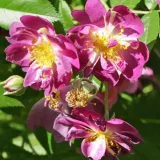
Flower Colour Description: Bright crimson purple shade, paler in the centre.
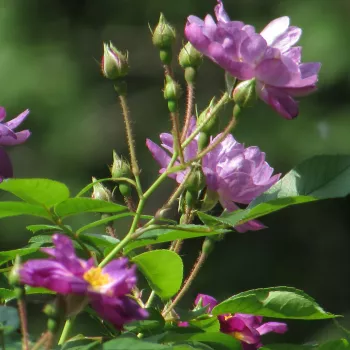
Closed Bud: Deep crimson‑purple surface with a subtle dark purple hue.
Newly Opened Flower: Lighter purple-lilac petals with delicate pink-lilac tips.
Full Bloom: Pastel lilac–blue-lilac surface with a whitish centre.
Before Fading: Pale lilac tone with a greyish-blue tinge.
Colour Fading Description: In heat and strong sunlight it lightens rapidly, fading from purplish to bluish-grey.

Fragrance and Aroma

Fragrance Strength: mild, subtle-scented rose
Fragrance Character: sweetly spicy
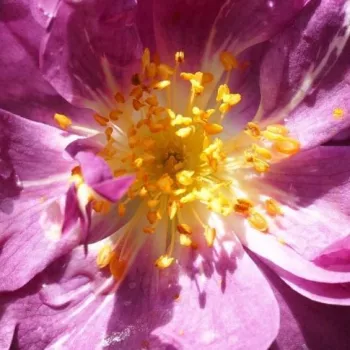
Pollinator Attraction: Semi-double flowers open flat and the exposed stamens make the pollen readily accessible, attracting pollinators.
Pollinator-Friendly Rating: Its semi-double, open-centred flowers with easily accessible stamens attract bees, so it is pollinator-friendly.

Hip Characteristics

Hip Shape: spherical
Hip Colour: brownish-red
Hip Comment: Occasionally occurring, 5–9 mm in diameter, spherical, brownish-red rose hip.

Resistance and Hardiness

Hardiness (°C): -32–-29 °C
Heat and Drought Tolerance Description: Tolerates heat well; requires watering during prolonged drought.
Disease Resistance: medium
  • powdery mildew – medium
  • black spot – medium
  • rust – medium

Horticultural Recommendations

Recommended Planting Distance: for mass planting 210 cm, for hedging 180 cm, as a solitary specimen 330 cm
Planting Density: in square planting 0,23 plants/m², in hexagonal arrangement 0,26 plants/m²
Partial Shade Tolerance: suitable for partial shade
Maintenance Requirement: Maintenance requirement medium; easily kept in a well‑ventilated position, but in enclosed, humid urban courtyards expect a need for plant protection.
Primary Uses: arbour, pergola, wall, fence

Comments

Strengths: Soil-friendly approach – Streamlined forms
Companion Plants: Salvia nemorosa - meadow sage Cornus sericea 'White Gold' - silky dogwood Caryopteris x clandonensis - bluebeard shrub
Comment: Tolerates poorer soil well.
VEILCHENBLAU – purple historic rambler, running-climbing rose - Kiese
Bright crimson purple shade, paler in the centre. - historic - rambler, climbing - trailing rose - mild, subtle-scented rose - sweetly spicy
Online rose purchase - purple - historic - rambler, climbing - trailing rose - Veilchenblau - (13.1-19.7ft (400-600 cm))
Inflorescence: clustered Height: 13.1-19.7ft (400-600 cm) Flower shape: flat Winter hardiness: 6b purple - Johann Christoph Schmidt (Germany) historic - rambler, climbing - trailing rose - Flower size: !- Flower size: !- - Height: 13.1-19.7ft (400-600 cm) Height: 13.1-19.7ft (400-600 cm) - Flower fullness: semi-double-flowered Veilchenblau - Roses in the garden | pharmaROSA® Original - standard Hermann Kiese

We showcase the external appearance of the roses available for online purchase from our webshop.


Which product type is right for you?


Information

In what condition do we dispatch the rose from our online webshop?

Let us ask ourselves the question: What would I like to use the rose for?
Flower? – Location? – Screening? – Fragrance? – Height? – Breeder? – Rose hip?

Rose purchasing information
Methods of payment – Delivery charges – Delivery – Complaints handling

Care guide

Our product is a rose grown with pharmaROSA®’s unique cultivation technology!

2-litre, own-root, potted rose.
With a shoot system appropriate to the season.
With a root system that thoroughly permeates the growing medium.
Quality compliant with the requirements of the E.N.A. (European Nurserystock Association).
Supplied in unique packaging that prevents damage.
Can be planted during frost-free periods.
True-to-variety rose bush with a unique identifier.

The pharmaROSA® own-root potted rose is a well-rooted plant that supports reliable establishment when planted and cared for properly, so it can be planted whenever the soil is not frozen.


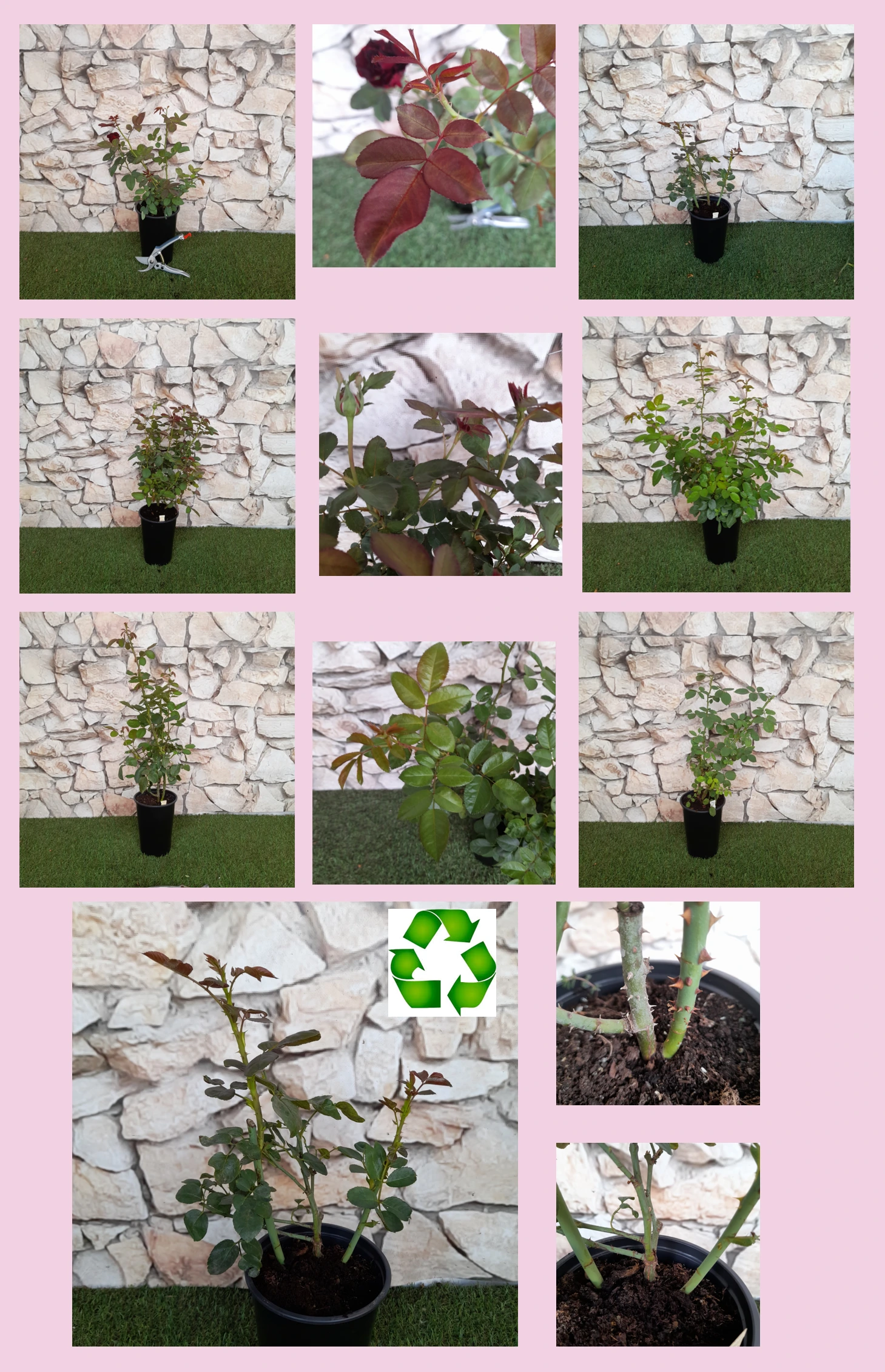
Crop overview: several varieties and growth stages in a short crop section.
Shoot system: intensive growth of fresh basal shoots on a young plant.
Root system: demonstration of a vigorous root system permeating the growing medium, by removing the pot.
Balance: mature plant with root system and shoots in harmony with each other.

Information about the videos
The video series is not a “seasonal showcase”; it illustrates the essence of pharmaROSA® own-root cultivation in a tangible way: how the plant is built up, what the root system is like and how the shoot system regenerates. The recordings were therefore made at different times and with plants at various stages of development, so mixed foliage levels and differing stages of growth may appear in the videos. They are not a ‘sample’ of the batch dispatched, but a visual explanation of how the technology works. The current condition of the rose available to order — typical for the given period and similar to what you can expect to receive in the parcel — is shown in the upper part of the product page.

pharmarosa.compharmarosa.skpharmarosa.ropharmarosa.depharmarosa.co.ukpharmarosa.sipharmarosa.czpharmarosa.atpharmarosa.plpharmarosa.frpharmarosa.hrpharmarosa.espharmarosa.bepharmarosa.nlpharmarosa.iepharmarosa.grpharmarosa.bgpharmarosa.lvpharmarosa.ltpharmarosa.lupharmarosa.rufrancescarose.itpharmarosa.dkpharmarosa.ptpharmarosa.sepharmarosa.eepharmarosa.fi

Product types

Pages for private customers
Garden roses for the family garden, with minimal care  → ORIGINAL®
Premium garden roses – instant impact, a truly showpiece garden  → EXTRA®
Pages for professionals and private customers
Roses for public spaces – large areas, sustainable maintenance  → NATURAL®
Roses for projects – hedge and row planting, fast implementation  → RAPID®
For professional partners only
Production – propagation material for garden roses, wholesale  → NEONATAL®

Company details

PharmaRosa Ltd.
Company registration number: 01-09-717479
VAT number: 13075314-2-43
Plant health registration no.: HU130721
Bank account (IBAN):
HU85117631891388688400000000
BIC (SWIFT): OTPVHUHB
Bank name: OTP Bank Nyrt.