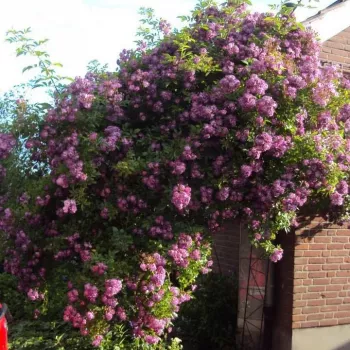
Veilchenblau – historic violet-blue rambler for pergolas and walls
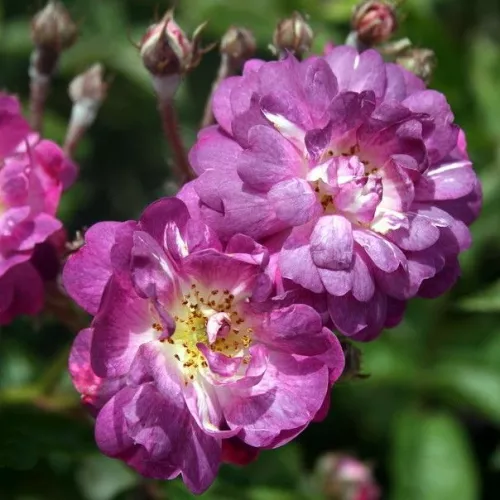
Historic charm meets effortless coverage in ‘Veilchenblau’, a classic rambler that clothes pergolas, arches, fences and house walls with clouds of lilac‑purple clusters. Its semi‑shade tolerance makes it ideal for British side passages or north‑east aspects, while the airy, open flowers are a summer magnet for pollinators. Once established, its own‑root structure provides long‑term stability and reliable regrowth after pruning, helping the plant adapt to your local soil and care routine. In the first year it concentrates on roots, the second on new framework, and by the third you enjoy its full ornamental effect. Awarded the RHS Award of Garden Merit, this mid‑green, glossy‑foliaged rambler offers season‑long visual interest, self‑cleans reasonably well and copes with typical UK rainfall and breezes in a well‑drained, raised‑bed or border setting.
Usage options
| Target area |
Reasoning |
| Family pergola or arbour |
Perfect where you want a traditional, flower‑laden pergola without constant fussing: the long, flexible canes quickly create a vaulted canopy, while own‑root resilience supports decades of steady structure for busy beginners |
| Front‑garden house wall or fence |
Trains easily along horizontal wires to soften bare brick or timber with a once‑a‑year display, then neat foliage for the rest of the season, giving dependable coverage and kerb appeal with only occasional tying‑in for time‑pressed homeowners |
| Cottage‑style mixed border backdrop |
Provides a romantic, violet‑blue curtain behind perennials and shrubs; semi‑shade tolerance lets it perform on less sunny boundaries, while its historic character blends naturally with classic cottage palettes cherished by style‑conscious gardeners |
| Large structure or mature tree scrambling |
The long, climbing shoots can be guided into large shrubs or small trees to create a soft, woodland‑edge feel; once roots are established, framework growth becomes more generous year by year for patient garden planners |
| Pollinator‑friendly family seating area |
Flat, semi‑double blooms offer accessible pollen, drawing bees close to patios and seating spots during the flowering flush, so you enjoy both movement and gentle fragrance around shared outdoor spaces for wildlife‑minded families |
| Smaller urban gardens with partial shade |
Performs reliably on walls and fences that only receive part‑day sun, making vertical colour possible where beds are limited, while one main flowering period keeps aftercare simple for space‑limited city gardeners |
| Low‑input long‑term rose feature |
Own‑root growth ages into a stable, replaceable framework that can be pruned hard if needed and will reshoot from the base, supporting decades of ornamental value with modest routine care for long‑view homeowners |
| Raised beds or improved clay borders |
Suited to well‑drained, improved soils where you can keep the root zone from sitting wet; once settled, it copes well with typical UK rainfall and wind exposure, making a reliable vertical accent for practical planners |
Styling ideas
- Pergola cascade – Train canes over a timber or metal pergola, underplant with meadow sage and ornamental grasses for a drifting, romantic canopy – for lovers of soft, enveloping garden rooms
- Storybook frontage – Let it fan across a front‑door wall above clipped box or low lavender, echoing classic village cottages – for those seeking traditional British kerbside charm
- Woodland edge – Allow stems to weave through a small ornamental tree, with dogwoods and ferns beneath for layered seasonal interest – for gardeners creating a naturalistic, semi‑shaded corner
- Family bee walk – Run it along a boundary with salvias and herbs at the base to form a buzzing corridor near paths – for parents encouraging children to notice pollinators
- Courtyard screen – Use on a sturdy trellis at the back of a large 50‑litre container grouping, with bluebeard and pots of thyme in front – for urban owners wanting privacy and colour in tight spaces
Technical cultivar profile
| Characteristic |
Data |
| Name and registration |
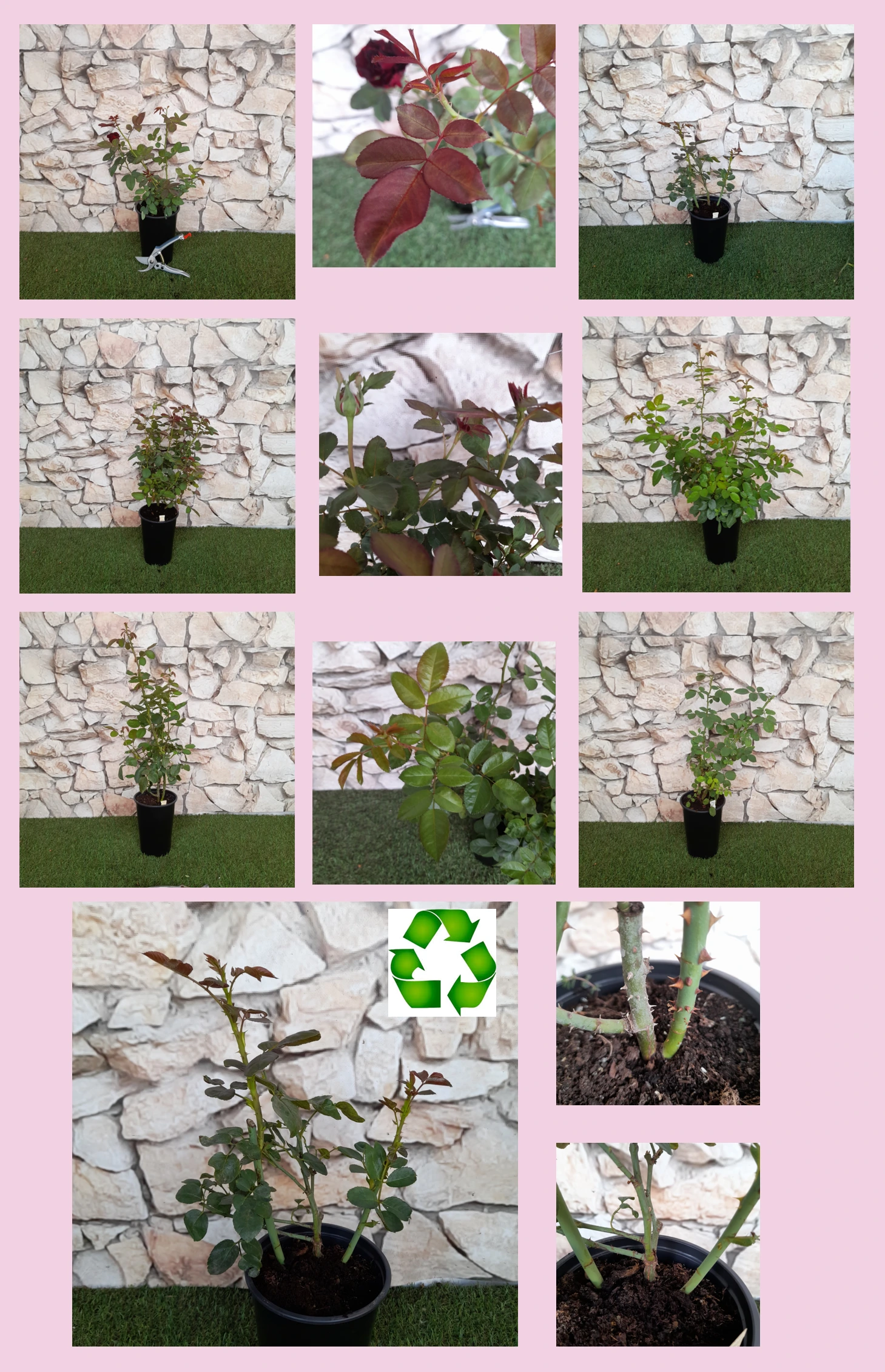
Veilchenblau historic rambler, commercial type running climber; ARS exhibition name Veilchenblau; unregistered cultivar, verified identity for pharmaROSA ORIGINAL 2‑litre own‑root stock. |
| Origin and breeding |
Bred by Hermann Kiese in Germany, 1909; parentage ‘Turner’s Crimson Rambler’ × ‘Souvenir de Brod’; introduced by Johann Christoph Schmidt as a vigorous violet‑blue historic rambler. |
| Awards and recognition |
Holds the Royal Horticultural Society Award of Garden Merit (RHS AGM, 1993), indicating reliable garden performance, good ornamental value and sound health under typical UK growing conditions. |
| Growth and structural characteristics |
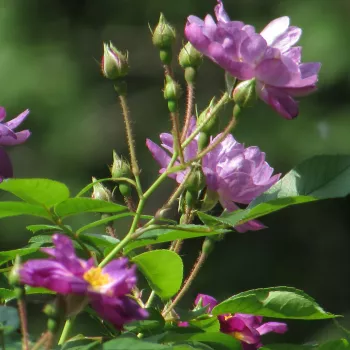
Strong climbing rambler with 4–6 m height and 2–4 m spread, dense mid‑green glossy foliage, slightly prickly stems, and medium self‑cleaning, with spent flower clusters sometimes persisting on the plant. |
| Flower morphology |
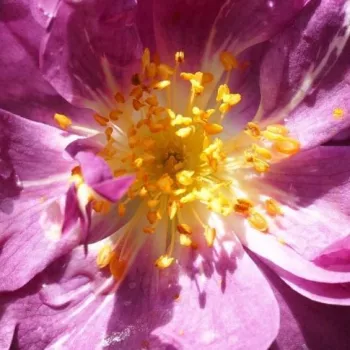
Semi‑double, flat flowers in large, showy clusters; each bloom small (0.5–1.5 in) with 13–20 petals, produced once per season in a heavy flush, ideal for covering larger supports in early summer. |
| Colour data and phenology |
Crimson‑purple buds open lilac with whitish centres; ARS colour M, RHS 79A outer, 75B inner; tones quickly weather to bluish‑grey in sun, creating a distinctive violet‑blue effect over the flowering period. |
| Fragrance and aroma |
Mild, sweetly spicy scent noticeable at close range during peak bloom; not overpowering, but adds a gentle historic rose atmosphere around seating areas and along frequently used paths in the garden. |
| Hip characteristics |
Occasional small spherical hips, 5–9 mm across, brownish‑red when mature; form after flowering on some clusters and may offer modest seasonal interest and incidental food for birds in autumn. |
| Resistance and winter hardiness |
Hardy to approximately −32 to −29 °C (USDA 4b, RHS H7, Swedish zone 5); medium resistance to powdery mildew, black spot and rust, best in a well‑ventilated, not overly humid position. |
| Horticultural recommendations |
Ideal for arbours, pergolas, walls and fences; plant 1.8–3.3 m apart depending on use; tolerates poorer soils if drained; suitable for partial shade; medium maintenance, with higher care in enclosed city courtyards. |
Veilchenblau offers romantic historic colour, generous vertical coverage and long‑lived own‑root reliability, making it a thoughtful choice if you want a characterful rambler that quietly earns its place over time.