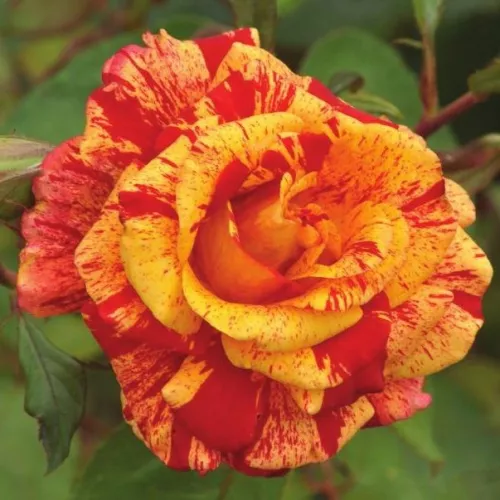
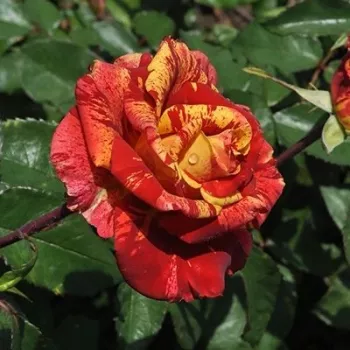
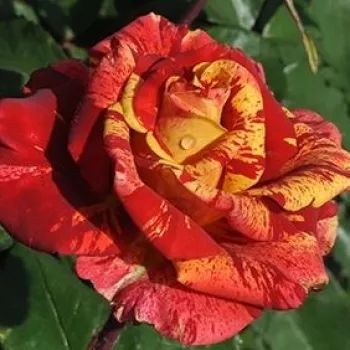
On a dark velvety red background, a vivid lemon-yellow and creamy-white pattern creates a lively marbled effect. - hybrid tea rose - very weak, barely perceptible scented rose - rosy character
– Striking red-yellow marbled hybrid tea blooms.
– Upright, medium shrub for borders and specimens.
– Reliable repeat flowering with abundant second flush.
– Good winter hardiness to USDA zone 6b.
– Resistant to black spot, moderate overall health.
– Special feature: Autumn display of neat orange‑red hips when not deadheaded.
Responsible plant selection – Long lifespan
pharmaROSA® ORIGINAL 2-litre own-root potted rose
21,20 £
Unfortunately, we are currently unable to ship to the United Kingdom; we only deliver to countries within the European Union. For more information, please contact us!
3.5(5379)
VALENTINA™ – red-yellow hybrid tea rose - Tanjga
Colour is the star with this hybrid tea, its marbled red‑and‑yellow blooms bringing lively impact to front gardens and mixed borders while coping well with typical British weather, including spells of wind and rain near exposed, breezy sites; its medium upright growth fits easily into small beds, yet a single plant also works as a refined specimen close to a path or entrance, where the repeat flowering can be appreciated from late spring onwards; as an own‑root rose it builds a stable, long‑lived framework that regenerates reliably after pruning, giving you dependable structure with only moderate care, and over the first three years you will see roots establish, shoots strengthen and then full ornament settle into your garden picture.
Freshly opened Valentina™ bloom with crimson-red petals and lemon-yellow brush strokes.
Usage options
Target area
Reasoning
Front garden focal point
The striking marbled red and yellow flowers give instant kerbside presence in even a modest space, allowing one plant to read clearly from the pavement without overpowering the frontage; ideal for those who want eye-catching colour with straightforward care for the busy homeowner.
Small mixed border
The upright, medium-sized shrub fits neatly between perennials and low evergreens, providing reliable vertical shape and repeat blooms that thread colour through the season without constant attention for the relaxed gardener.
Specimen near seating or paths
Remontant flowering means you can enjoy fresh, well-formed hybrid tea blooms several times through the season at close quarters, rewarding simple pruning and feeding with a long display for the keen observer.
Classic cottage-style group
Plant in a loose group of three to five for a cottage feel: the distinctive bicolour flowers repeat through summer while the own-root habit gradually forms a balanced, durable stand for the cottage-garden enthusiast.
Cutting patch in a family garden
Solitary, medium-sized flowers on upright stems lend themselves to informal cutting, giving you characterful, striped stems for small vases without needing a dedicated cutting garden for the home flower arranger.
Long-term structural planting
As an own-root plant it matures into its position, building a resilient framework that responds well to periodic rejuvenation pruning, so beds keep their shape and colour year after year for the future-focused gardener.
Border with challenging exposure
The medium, not over-tall habit and moderately dense foliage help it stand up to breezier, rain-prone sites where more lax roses can sprawl, making it a reassuring choice where wind and wet weather are regular visitors for the coastal or open-site owner.
Feature with seasonal hips
If spent blooms are left after late summer, the plant produces small orange-red hips that extend interest into autumn, adding texture and colour when flowers are fewer and borders start to quieten for the seasonal interest seeker.
Styling ideas
Doorway welcome – Place a single VALENTINA™ by the front path, underplanted with low catmint to soften the base and draw the eye to the bicolour blooms – perfect for house-proud owners who want simple, inviting impact.
Cottage trio – Plant a group of three in a small bed with airy hare’s-ear and traditional perennials, letting the striped flowers repeat through summer – ideal for lovers of relaxed, cottage-style borders.
Contemporary accent – Combine VALENTINA™ with compact New Zealand flax in a clean-lined bed, using its upright form and vivid colour as a sharp contrast – suited to urban gardeners after low-fuss structure and drama.
Family cutting corner – Dedicate a sunny spot where a few plants provide stems for the vase, interplanted with herbs so tending and picking becomes a shared activity – great for families wanting a simple, productive feature.
Seasonal rhythm – Mix VALENTINA™ with long-flowering perennials and ornamental grasses so roses, companions and autumn hips create a flowing year-round scene – for gardeners who value evolving but undemanding borders.
Technical cultivar profile
Parameter
Data
Name and registration
Hybrid tea rose from the Freska® collection; registered as BOZvalfre, marketed as Valentina™ Freska® BOZvalfre, a medium hybrid tea shrub suited to both garden and cutting use.
Origin and breeding
Bred by Biljana Božanić Tanjga at PhenoGeno Roses, Serbia; introduced commercially in 2017 with own-root production supporting reliable establishment in typical UK family gardens.
Growth and structural characteristics
Upright, medium-height shrub 65–95 cm tall and 50–70 cm wide, with moderately dense, slightly glossy dark green foliage and moderate prickliness, forming a tidy, manageable outline in beds.
Flower morphology
Semi-double, cup-shaped blooms with 17–25 petals, borne mainly solitary on stems; medium flower size around 1.5–2.75 inches, remontant with an abundant second flush in suitable conditions.
Colour data and phenology
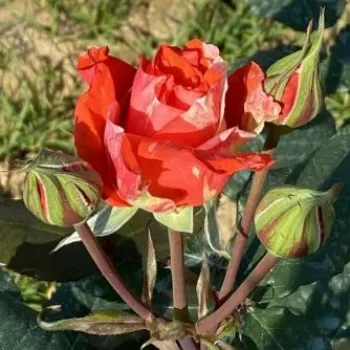
Dark velvety red base overlaid with lemon-yellow and creamy-white striping, buds deep carmine-red with yellow strokes; colour lightens to raspberry-pink and cream as flowers open and age.
Fragrance and aroma
Very weak fragrance with a light rosy character only barely perceptible at close range; grown primarily for its unusual marbled colour effect and flower form rather than scent intensity.
Hip characteristics
If deadheading is omitted late in the season it sets small ellipsoid orange-red hips, 8–12 mm in diameter, providing additional autumn interest without overwhelming the plant.
Resistance and winter hardiness
Hardy to approximately –21 to –18 °C (RHS H7, USDA 6b, Swedish zone 3); black spot resistant with moderate susceptibility to powdery mildew and rust, requiring occasional protective care.
Horticultural recommendations
Best in full sun with well-drained soil; space 50–90 cm depending on use, 2.8–3.2 plants/m² for mass planting; suitable for borders, specimens and cutting where moderate maintenance is acceptable.
VALENTINA™ offers distinctive marbled blooms, reliable repeat flowering and a steady own-root framework that rewards modest care over many years, making it a thoughtful choice if you are planning a long-lived, characterful rose feature.
Detailed product attributes
Product Identification Data
Product Name:
VALENTINA™ – red-yellow hybrid tea rose - Tanjga
Product Type:
pharmaROSA® ORIGINAL - 2-litre own-root potted rose
Flower Colour Description:
On a dark velvety red background, a vivid lemon-yellow and creamy-white pattern creates a lively marbled effect.
Closed Bud:
Deep carmine-red globose bud with narrow butter-yellow stripes along the sides.
Newly Opened Flower:
The outer petal margin is crimson red, with vivid lemon-yellow brush strokes running towards the centre.
Full Bloom:
Fully open, the flower has a velvety cherry-red ground colour, variegated with irregular pastel-yellow and white stripes.
Before Fading:
The red hue softens to raspberry pink, and the yellow surfaces fade to creamy white.
Colour Fading Description:
As the bloom opens, the deep‑red ground colour lightens to raspberry‑pink, the yellow markings fade to creamy white and the marbled effect remains.
Hip Comment:
In autumn it bears ornamental, moderately abundant, 8–12 mm in diameter, ellipsoid orange‑red rose hips if the spent flowers are not removed.
Our product is a rose grown with pharmaROSA®’s unique cultivation technology!
2-litre, own-root, potted rose.
With a shoot system appropriate to the season.
With a root system that thoroughly permeates the growing medium.
Quality compliant with the requirements of the E.N.A. (European Nurserystock Association).
Supplied in unique packaging that prevents damage.
Can be planted during frost-free periods.
True-to-variety rose bush with a unique identifier.
The pharmaROSA® own-root potted rose is a well-rooted plant that supports reliable establishment when planted and cared for properly, so it can be planted whenever the soil is not frozen.
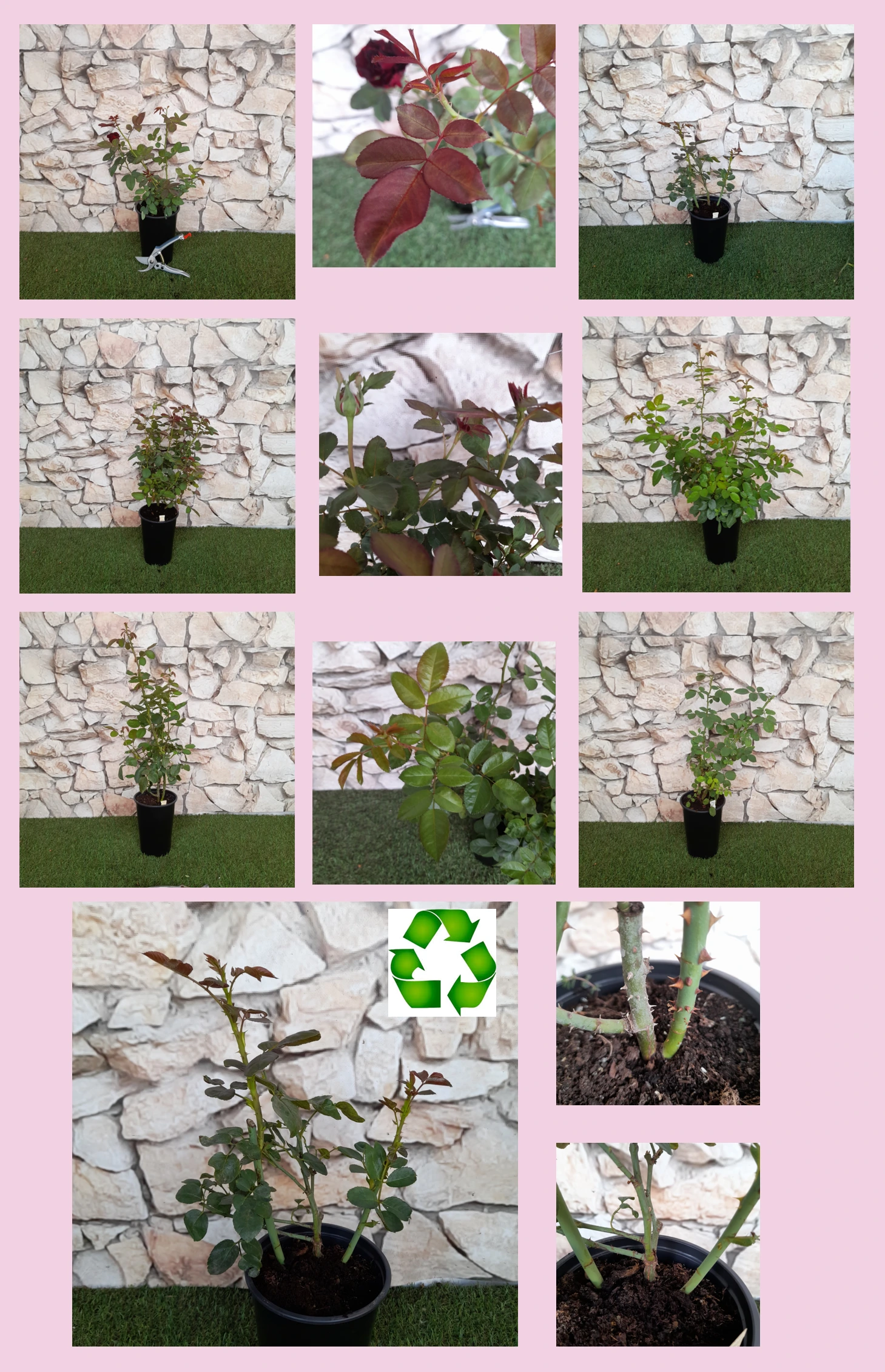
Crop overview: several varieties and growth stages in a short crop section.Shoot system: intensive growth of fresh basal shoots on a young plant.Root system: demonstration of a vigorous root system permeating the growing medium, by removing the pot.Balance: mature plant with root system and shoots in harmony with each other.
Information about the videos
The video series is not a “seasonal showcase”; it illustrates the essence of pharmaROSA® own-root cultivation in a tangible way: how the plant is built up, what the root system is like and how the shoot system regenerates. The recordings were therefore made at different times and with plants at various stages of development, so mixed foliage levels and differing stages of growth may appear in the videos. They are not a ‘sample’ of the batch dispatched, but a visual explanation of how the technology works. The current condition of the rose available to order — typical for the given period and similar to what you can expect to receive in the parcel — is shown in the upper part of the product page.
Pages for private customers Garden roses for the family garden, with minimal care → ORIGINAL® Premium garden roses – instant impact, a truly showpiece garden → EXTRA® Pages for professionals and private customers Roses for public spaces – large areas, sustainable maintenance → NATURAL® Roses for projects – hedge and row planting, fast implementation → RAPID® For professional partners only Production – propagation material for garden roses, wholesale → NEONATAL®
Company details
PharmaRosa Ltd. Company registration number: 01-09-717479 VAT number: 13075314-2-43 Plant health registration no.: HU130721 Bank account (IBAN): HU85117631891388688400000000 BIC (SWIFT): OTPVHUHB Bank name: OTP Bank Nyrt.