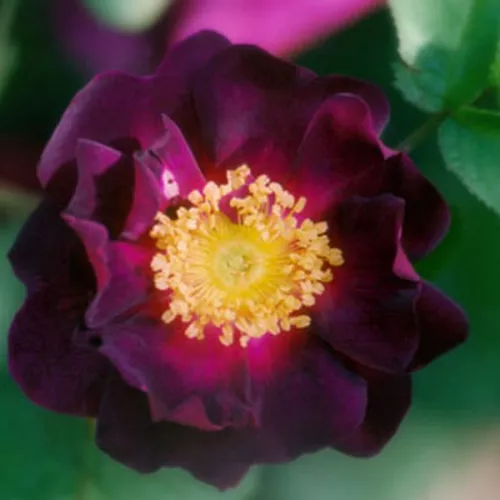
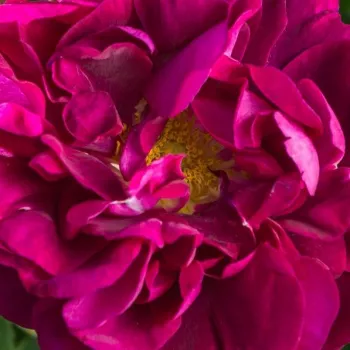
Deep, velvety crimson red shade with a subtle purple tone. - historic, gallica rose - very strongly scented, long-lasting rose - classic, rose-like character
– Awarded RHS Award of Garden Merit.
– Deep, velvety crimson‑purple historic blooms.
– Strong, classic rose fragrance, long lasting.
– Hardy to around –30 °C, suitable for cold sites.
– Bushy, dense shrub ideal for borders or hedges.
– Special feature: 19th‑century gallica classic from Thomas Rivers, admired for its dramatic, almost black‑purple tones.
Responsible gardening – Style in the garden
pharmaROSA® ORIGINAL 2-litre own-root potted rose
19,30 £
Unfortunately, we are currently unable to ship to the United Kingdom; we only deliver to countries within the European Union. For more information, please contact us!
4(6299)
Tuscany Superb – purple historic Gallica rose – Rivers
Historic charm meets practical reliability in Tuscany Superb, a venerable Gallica shrub rose that earns its place in today’s family gardens through deep, velvety crimson‑purple blooms and a fragrance of classic intensity. Once‑flowering in early summer, it delivers a concentrated season of colour that partners effortlessly with traditional perennials, while its bushy, upright structure suits modest beds, front gardens and cottage‑style schemes. On its own roots this rose settles deeply, building longevity and stable ornamental value as it matures. With winter hardiness suited to exposed British sites and the ability to handle cool, damp weather and occasional strong winds, it copes well where gardens are open to the elements. Plant it where you can enjoy its colour close up, give it a little seasonal care, and it will reward you year after year as foliage and framework strengthen from roots in year one, to top growth in year two, and full display by year three, offering enduring presence and period character in even a small domestic plot.
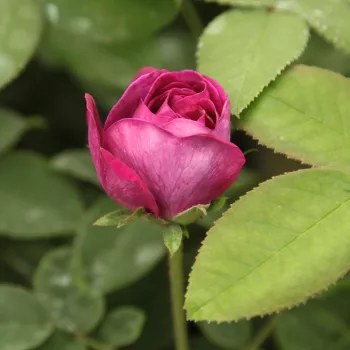
Closed bud of Tuscany Superb, a historic gallica rose.
Freshly opened bloom of Tuscany Superb, showing rich crimson-purple petals with a velvety sheen.
Closed bud of Tuscany Superb, showing the dark maroon-crimson colouring at the tip.
Usage options
Target area
Reasoning
Front garden focal shrub
Planted as a single specimen near the gate or front path, Tuscany Superb provides a concentrated burst of early‑summer colour and strong perfume, giving a traditional welcome without demanding intricate pruning or specialist shaping – ideal for beginners.
Small cottage‑style border
Its bushy habit and dense foliage form a leafy backdrop for foxgloves, hardy geraniums and campanulas, so you can create a classic cottage effect with simple underplanting and straightforward yearly care – ideal for style‑focused homeowners.
Seasonal flowering hedge
At 80–120 cm spacing, it forms a low, informal hedge that bursts into richly coloured bloom once a year, then holds a green, privacy‑giving wall of foliage for the rest of the season, needing only light annual trimming – ideal for family gardens.
Feature in a historic‑themed bed
As a genuine nineteenth‑century Gallica, it anchors a small historical planting with authentic flower form and colour, yet behaves as a straightforward shrub that adapts well as an own‑root plant over time – ideal for garden history enthusiasts.
Mixed border with shrubs and perennials
Used with hydrangeas, clematis and ornamental grasses, its once‑a‑year flowering becomes a highlight within a longer‑season display, allowing the rest of the planting to carry the show while the rose structure quietly endures – ideal for busy gardeners.
Partial‑shade side garden
Tolerating partial shade, it can brighten a side return or north‑east facing strip with deep colour and strong scent, while its robust framework stands up to damp, breezy conditions common in such spots – ideal for urban homeowners.
Large container on terrace or patio
In a generous 40–50 litre container with good drainage, Tuscany Superb can be enjoyed close to seating areas, and its once‑flowering habit means simple after‑bloom deadheading and light pruning are usually sufficient – ideal for balcony and patio users.
Low‑input long‑term specimen
Once established on its own roots, it develops a durable framework and returns each year with reliable flowering, provided you give seasonal feeding and disease checks in climates with cool summers and frequent rain – ideal for long‑term planners.
Styling ideas
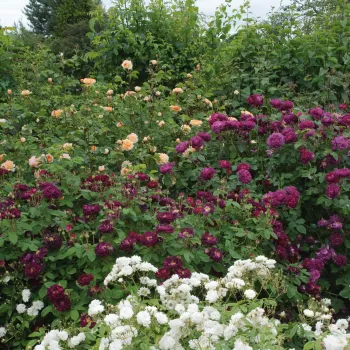
Cottage‑border jewel – Pair with foxgloves, delphiniums and hardy geraniums to evoke an old‑world cottage look in a compact border – perfect for romantically minded home gardeners.
Historic vignette – Combine with clipped box, lavender and a traditional obelisk for clematis to highlight its nineteenth‑century character – suited to lovers of period gardens.
Fragrant entrance – Flank a front path with two shrubs underplanted with low catmint or alchemilla for a scented approach – ideal for households wanting impact from the street.
Textured shade mix – In partial shade, set behind Japanese sedge and white climbing hydrangea for layered foliage and a single, dramatic flush of colour – for gardeners working with side passages.
Patio feature pot – Grow in a large classic container with trailing thyme and compact heucheras to enjoy colour and scent at seating height – excellent for terrace and small‑courtyard owners.
Technical cultivar profile
Parameter
Data
Name and registration
Tuscany Superb is a historic Gallica shrub rose, registered and exhibited under this name; it belongs to the Historical rose group and is sold as a verified, true‑to‑type cultivar.
Origin and breeding
A spontaneous sport or seedling of ‘Tuscany’, introduced by Thomas Rivers & Son in Sawbridgeworth, United Kingdom, in 1837, representing classic early Victorian rose breeding.
Awards and recognition
Holds the Royal Horticultural Society Award of Garden Merit, indicating reliable performance in UK conditions and ornamental value worthy of inclusion in general gardens.
Growth and structural characteristics
Forms a bushy, upright shrub 100–150 cm high and 80–120 cm wide, with dense, mid‑green matt foliage, heavily thorned stems and moderately self‑cleaning spent blooms.
Flower morphology
Semi‑double, flat blooms of medium size, typically 17–25 petals in tight clusters, flowering once per season, creating a pronounced but concentrated early‑summer display.
Colour data and phenology
Deep velvety crimson with purple tones, RHS 60A–60B, darkening to smoky purple‑black; colour fades in strong sun, especially in heat, but remains rich in cooler weather.
Fragrance and aroma
Very strongly scented with a classic old‑rose character, the perfume is intense and long‑lasting during the main flowering period, best appreciated when planted close to paths or seating.
Hip characteristics
Hip set is generally light; where formed, it produces occasional small, spherical red hips around 12–18 mm across, adding a modest seasonal accent after flowering.
Resistance and winter hardiness
Hardy to approximately −29 to −32 °C (RHS H7, USDA 4b, Swedish zone 5); disease resistance is weak, so regular monitoring and treatment for black spot and rust are advisable.
Horticultural recommendations
Best in borders, low hedges or as a specimen; allow 80–170 cm spacing, provide good air circulation, balanced feeding and consistent, preventative disease care for best performance.
Tuscany Superb offers rich historic colour, powerful fragrance and a durable own-root shrub that settles in for years of reliable early-summer display, making it a thoughtful choice for gardeners who value character and longevity.
Pollinator Attraction:
Semi-double flowers with 17–25 petals moderately attract pollinators, as flower form (simple/semi-double/double) and the accessibility of the stamens influence their attractiveness.
Pollinator-Friendly Rating:
Semi-double flowered variety; it attracts pollinators poorly and can therefore be considered at most limitedly pollinator-friendly.
Our product is a rose grown with pharmaROSA®’s unique cultivation technology!
2-litre, own-root, potted rose.
With a shoot system appropriate to the season.
With a root system that thoroughly permeates the growing medium.
Quality compliant with the requirements of the E.N.A. (European Nurserystock Association).
Supplied in unique packaging that prevents damage.
Can be planted during frost-free periods.
True-to-variety rose bush with a unique identifier.
The pharmaROSA® own-root potted rose is a well-rooted plant that supports reliable establishment when planted and cared for properly, so it can be planted whenever the soil is not frozen.
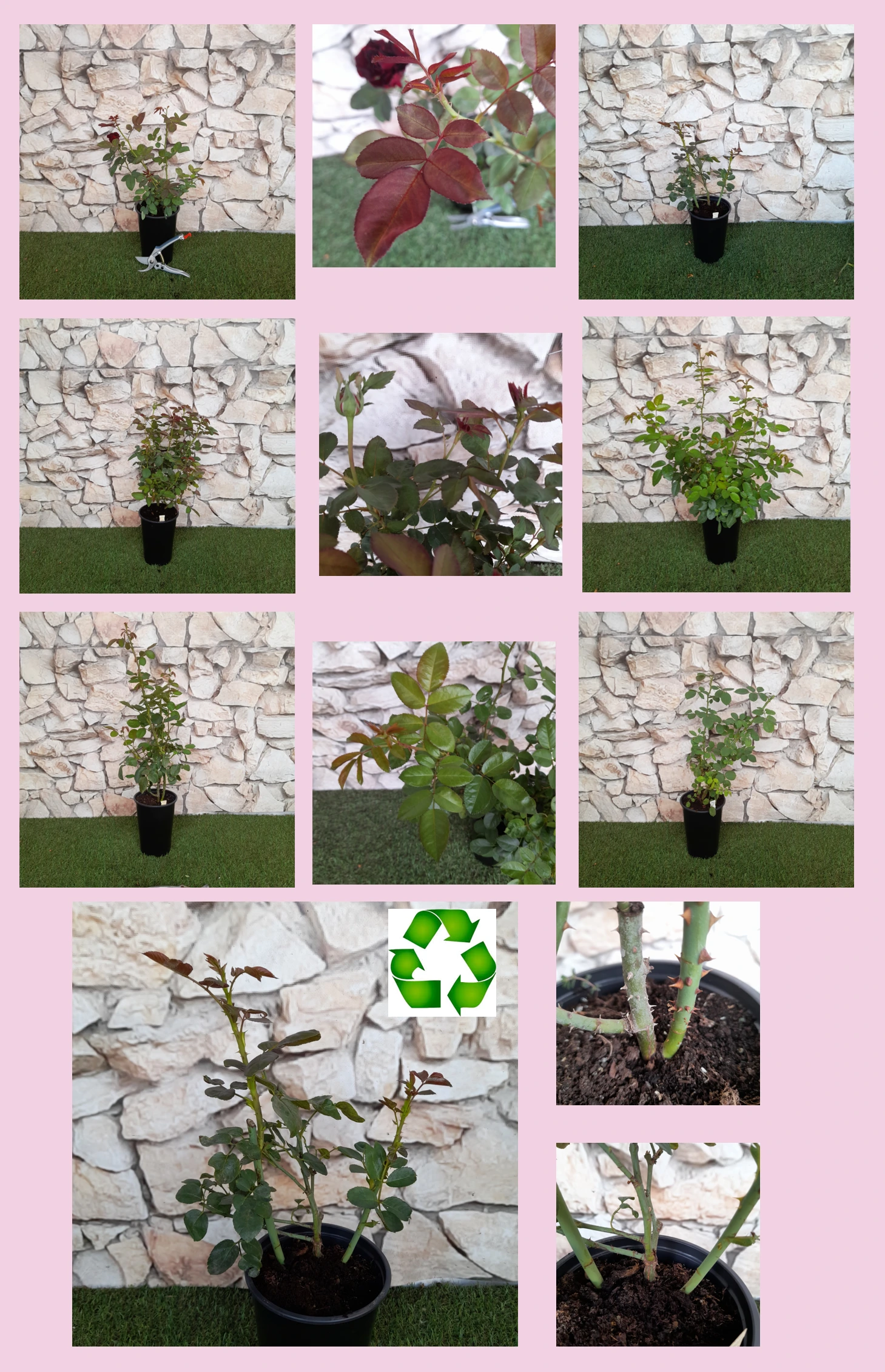
Crop overview: several varieties and growth stages in a short crop section.Shoot system: intensive growth of fresh basal shoots on a young plant.Root system: demonstration of a vigorous root system permeating the growing medium, by removing the pot.Balance: mature plant with root system and shoots in harmony with each other.
Information about the videos
The video series is not a “seasonal showcase”; it illustrates the essence of pharmaROSA® own-root cultivation in a tangible way: how the plant is built up, what the root system is like and how the shoot system regenerates. The recordings were therefore made at different times and with plants at various stages of development, so mixed foliage levels and differing stages of growth may appear in the videos. They are not a ‘sample’ of the batch dispatched, but a visual explanation of how the technology works. The current condition of the rose available to order — typical for the given period and similar to what you can expect to receive in the parcel — is shown in the upper part of the product page.
Pages for private customers Garden roses for the family garden, with minimal care → ORIGINAL® Premium garden roses – instant impact, a truly showpiece garden → EXTRA® Pages for professionals and private customers Roses for public spaces – large areas, sustainable maintenance → NATURAL® Roses for projects – hedge and row planting, fast implementation → RAPID® For professional partners only Production – propagation material for garden roses, wholesale → NEONATAL®
Company details
PharmaRosa Ltd. Company registration number: 01-09-717479 VAT number: 13075314-2-43 Plant health registration no.: HU130721 Bank account (IBAN): HU85117631891388688400000000 BIC (SWIFT): OTPVHUHB Bank name: OTP Bank Nyrt.