TRADITION 95 ® – red climbing rose – Kordes
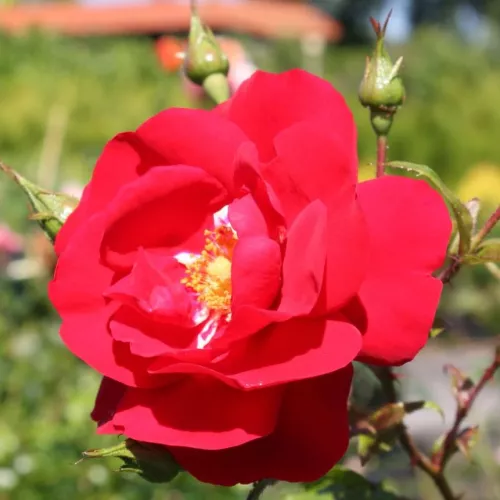
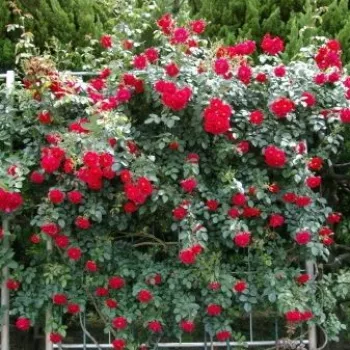
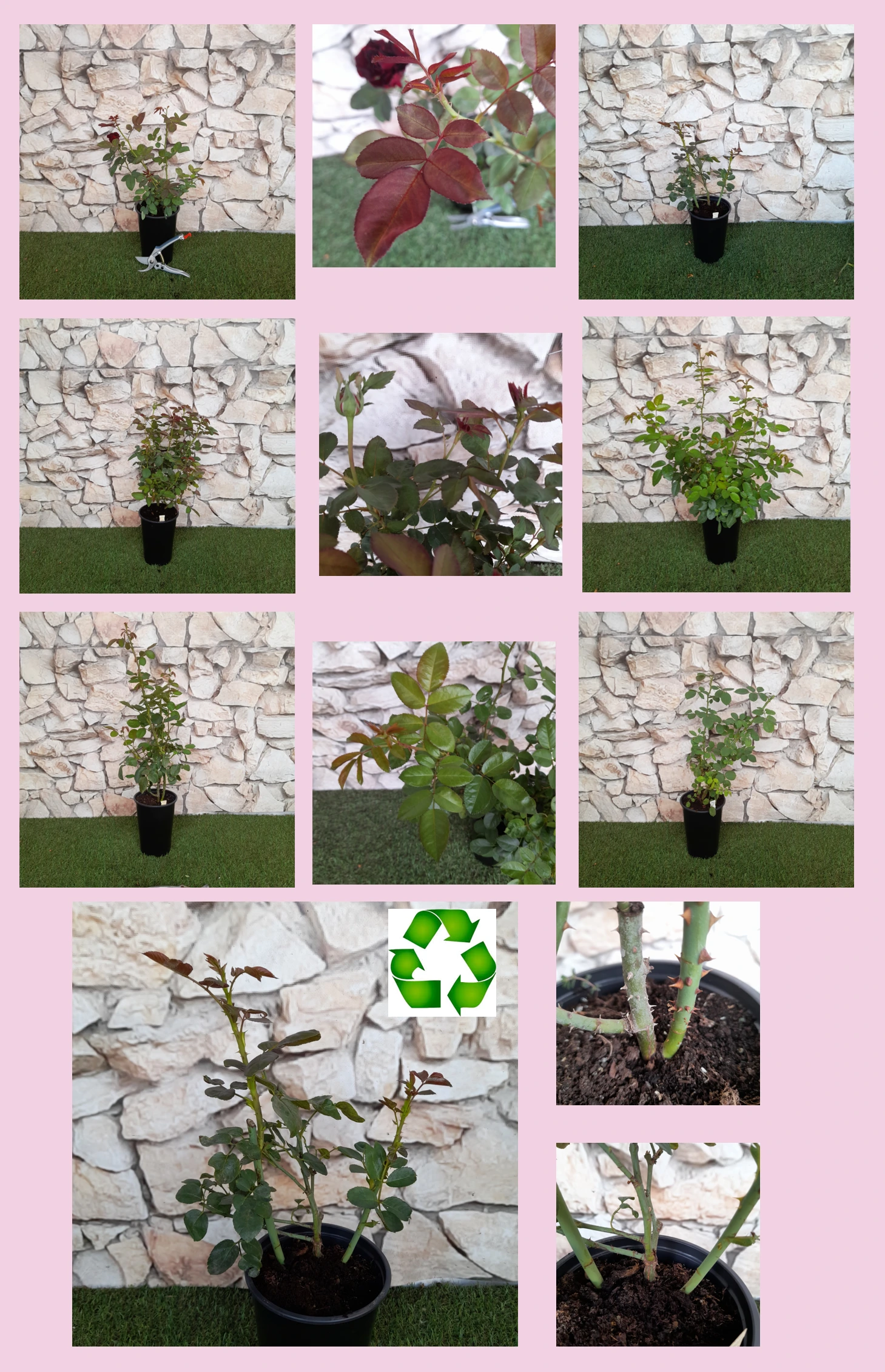
Climbing arches, walls and fences become instantly more romantic with Tradition 95®, a richly red large-flowered climber that repeats generously through the season. Its semi-double, cup-shaped blooms open to reveal golden stamens, offering gentle fragrance and welcome interest for bees, while the colour holds attractively even in bright summer sun. Bred by Kordes and recognised with the RHS Award of Garden Merit, this variety combines proven reliability with moderate disease resistance and sturdy growth that stands up well in breezier, wetter spots near the coast. As an own-root plant, it matures into a naturally balanced framework with longevity, responding well to simple pruning and light training, so you can enjoy a refined yet easy-care display without complicated rose know-how. Establishing first below ground, then in height, it typically gives roots in year one, structure in year two and full ornamental impact from year three onwards.
Usage options
| Target area |
Reasoning |
| Front-garden rose arch |
Ideal for creating a welcoming entrance, this tall climber reaches around 2.4–3.8 m, giving you enough height to train over a standard rose arch. Its repeat flowering and vivid red clusters provide reliable colour along the path with only moderate pruning and tying-in each year, suiting time-pressed front-garden owners and beginners. |
| House wall or warm fence |
Against a sunny south or west-facing wall, Tradition 95® forms a structured framework with moderately dense, glossy foliage that shows off the red blooms beautifully. Own-root growth builds up steadily over the years, so once the main canes are in place, maintenance is largely limited to thinning and shortening laterals, fitting busy homeowners. |
| Pergola or walkway frame |
The long, climbing shoots span posts and cross-beams effectively, giving hanging clusters of flowers at head height. Semi-double blooms with exposed stamens bring gentle movement and a touch of wildlife value as bees visit, while moderate disease resistance keeps care routine and manageable for urbanites. |
| Small cottage-style border backdrop |
Used along the back of a narrow border, this rose provides a vertical accent without taking excessive ground space, allowing classic companions such as coneflowers or airy gypsophila in front. Its generous second flush keeps the cottage mix colourful into late summer, even where gardening time is limited for stylists. |
| Screening on a garden boundary |
Planted at intervals along a boundary fence or wire support, the plant’s 100–160 cm spread and dark green foliage create a decorative screen, softening hard edges. Moderate care needs and own-root resilience mean that, once established, it copes well with typical clay or chalk soils in family gardens for planners. |
| Feature specimen near patio seating |
As a single specimen near a terrace or seating area, the semi-double, cup-shaped blooms can be appreciated close up, with their mild, slightly sweet scent adding an understated layer of atmosphere. The manageable maintenance and long flowering season make it an attractive choice for relaxed evening use by hosts. |
| Pollinator-friendly focal point |
The open, semi-double flowers expose stamens that are accessible to bees, making this rose a decorative yet functional element in wildlife-aware planting. Repeating flushes provide nectar opportunities from early summer onwards, fitting gardens where visual effect and ecological awareness are both valued by naturalists. |
| Coastal or wind-exposed family garden |
With a robust climbing habit and flexible canes that can be tied to supports, Tradition 95® is well suited to training on sheltered structures in breezier, rain-washed locations where sturdy, weather-tolerant roses are preferred. Once its framework is built, annual tidy-ups are usually enough for pragmatists. |
Styling ideas
- Cottage Archway – Train Tradition 95® over a metal or timber arch, underplanting with gypsophila and coneflowers for a soft, romantic entrance – ideal for lovers of traditional cottage gardens.
- Crimson Backdrop – Use it along a sunny fence behind mixed perennials, letting the rich red clusters form a vertical backdrop to pastel borders – suited to design-conscious family gardeners.
- Patio Feature – Grow it on a sturdy obelisk in a 40–50 litre container near seating so semi-double blooms, fragrance and bee activity can be enjoyed up close – perfect for small urban spaces.
- Structured Screen – Space plants along a wire-trained boundary to create a flowering screen that softens views without much fuss – good for homeowners wanting privacy with colour.
- Pergola Walkway – Guide canes along a pergola to arch overhead, pairing with airy ornamental grasses beneath for movement and a modern, easy-care look – appealing to busy style-focused gardeners.
Technical cultivar profile
| Characteristic |
Data |
| Name and registration |
Large-flowered climbing rose; registered as KORkeltin, marketed as Tradition 95 ® Climbing rose KORkeltin, with Tradition™ accepted as the American Rose Society exhibition name. |
| Origin and breeding |
Bred by Tim-Hermann Kordes (W. Kordes’ Söhne) in Germany, 1995; introduced 1998. Parentage not recorded, selected for ornamental performance and suitability as an exhibition climbing rose. |
| Awards and recognition |
Holds the RHS Award of Garden Merit (2001). Also distinguished in international trials: Belfast Certificate of Merit (1998), Kortrijk Silver Medal (2000), The Hague Bronze Medal (2001) and Gold Medal (2003). |
| Growth and structural characteristics |
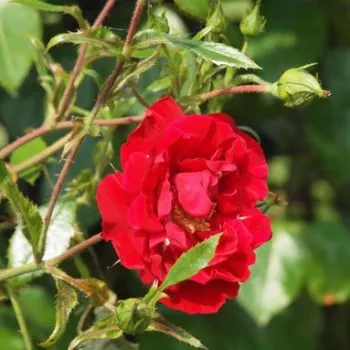
Vigorous climbing growth, typically 2.4–3.8 m high with 1.0–1.6 m spread. Moderately dense, glossy dark green foliage on densely thorned shoots; requires support and tying for best framework formation. |
| Flower morphology |
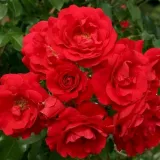
Semi-double, cup-shaped flowers with around 13–25 petals, produced in clusters on laterals. Large-flowered type (approx. 2.75–3.95 in across), remontant with a generous second flowering period in season. |
| Colour data and phenology |
Even, radiant red petals: buds dark crimson; newly opened blooms vivid scarlet with paler edges; full bloom deep red; later a muted purplish-red. Colour holds moderately well without marked fading in strong sunlight. |
| Fragrance and aroma |
Mild, slightly sweet rose fragrance, noticeable at close range rather than at distance. Semi-double flower form leaves stamens visible, contributing to partial pollinator friendliness and garden biodiversity interest. |
| Hip characteristics |
Produces moderately abundant spherical red hips, typically around 13–17 mm in diameter. Hips extend decorative interest into autumn and may offer incidental wildlife value where not all spent blooms are removed. |
| Resistance and winter hardiness |
Rated H7 with approximate hardiness between −21 and −18 °C (USDA 6b, Swedish zone 3). Disease resistance is moderate to main foliar problems, requiring occasional monitoring and standard preventive care. |
| Horticultural recommendations |
Best on supports such as arches, pergolas, walls or fences. Suitable for mass planting or hedging at 140–150 cm, single specimens at about 270 cm, in full sun or partial shade with basic pruning and cleaning. |
TRADITION 95 ® offers rich red repeat flowering, an award-backed, reliable climbing habit and the steady, long-lived performance of an own-root rose, making it a thoughtful choice for structures you wish to enjoy for many years.