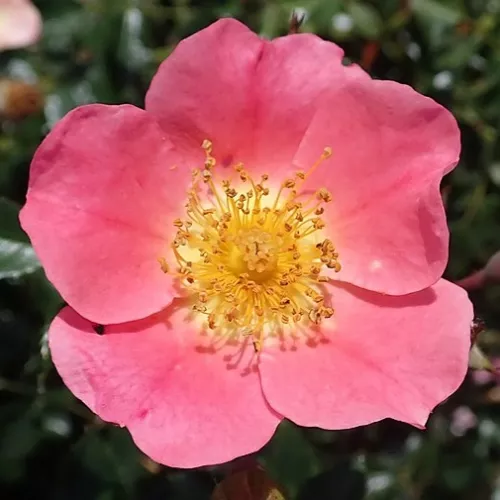
Topolina® NektarGarten® groundcover rose – KORpifleu
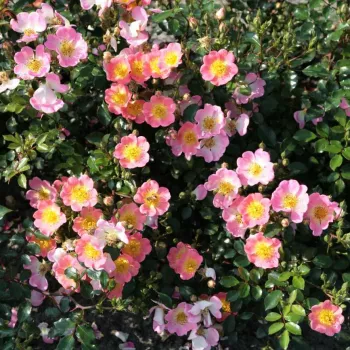
Topolina brings effortless colour to compact British gardens, forming a low, spreading carpet of tidy foliage and cheerful single blooms that attract bees and other pollinators through the season. Its self-cleaning flowers help keep borders neat with minimal deadheading, while its proven ADR-level health ensures a reliable, long-lived planting that copes steadily with damp, disease-prone UK summers. As an own-root plant it settles in steadily for decades of use, building up a secure structure below ground and a balanced, compact shrub above. Ideal beside paths, drives and cottage-style front gardens, it covers soil naturally, reducing bare patches and helping with moisture management in wetter spells and during humidity-heavy periods. Suitable for beginners, it takes readily after planting, asking only basic watering and an occasional light trim. Over time you will see a gentle progression: first strong rooting, then bushing out, and by the third year a fully developed ornamental carpet of dependable colour, pollinator-friendly flowers and glossy foliage that fits effortlessly into everyday family gardens.
Usage options
| Target area |
Reasoning |
| Front garden groundcover under windows |
Its low, spreading habit stays below sill height while creating a continuous sheet of pink, keeping the view open from indoors. Self-cleaning flowers reduce the need to deadhead, ideal for low-fuss front gardens for the busy homeowner. |
| Cottage-style mixed borders |
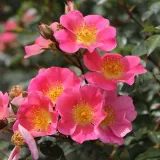
The pastel to mid-pink blooms with golden centres blend naturally with traditional perennials and shrubs, providing a soft edging that repeats flower through summer. Clustered single blooms support bees, suiting wildlife‑minded cottage gardeners for the nature-lover. |
| Small urban beds and edging strips |
Compact spread and glossy, dense foliage give instant structure in narrow beds beside paths and drives, helping to suppress weeds and cover difficult soil. Low maintenance needs suit those without time or storage for complex tools for the city gardener. |
| Gentle slope and bank stabilisation |
The spreading root system and close foliage help knit lighter slopes together, reducing bare soil and visual erosion while requiring only occasional shaping. This works especially well on sunny banks that are hard to mow for the practical planner. |
| Low-hedge effect along paths or driveways |
Planted in rows at hedge spacing, Topolina® forms a soft, flowering line that guides the eye and edges paths without creating a hard barrier. Its moderate prickliness also gently discourages shortcutting across borders for the family household. |
| Containers and large patio planters |
In a 40–50 litre or larger container, its arching stems trail slightly over the rim, giving a relaxed yet tidy look on patios and terraces. Reliable repeat blooming brings colour where in-ground planting is limited for the balcony-owner. |
| Pollinator-friendly family play spaces |
The single, open flowers with golden stamens offer easy access for bees and hoverflies, adding movement and interest that children can watch close up. Its low height keeps stings away from faces while enriching small wildlife-friendly corners for the young family. |
| Low-care mass planting in public or shared spaces |
ADR-level disease resistance and good heat and drought tolerance reduce the need for spraying and intensive upkeep, useful for communal gardens. It copes well with typical urban conditions, even in more humid, fungus-prone sites for the estate manager. |
Styling ideas
- Soft-edged path ribbon – Plant a sinuous ribbon of Topolina® along front-garden paths, weaving between paving and lawn for a relaxed cottage feel – ideal for owners wanting charm without formal hedging.
- Pastel rock garden drift – Use loose drifts on a sunny rockery or gravel bed, pairing with low grasses and silver foliage to contrast the pink and golden eye – suited to gardeners who like informal, naturalistic planting.
- Patio showcase planter – In a single large 50 litre terracotta pot, underplant with trailing thyme and low violas for a long-season patio focal point – perfect for small-terrace dwellers seeking impact from one container.
- Wildlife-friendly cottage mix – Combine Topolina® with clematis and herbaceous perennials such as hardy geraniums to build a layered, pollinator-rich border – appealing to those who want bees and colour together.
- Neat driveway edging – Line both sides of a short drive with evenly spaced plants to create a low, colourful frame that still allows car doors to open easily – good for practical families who value tidy, resilient planting.
Technical cultivar profile
| Property |
Data |
| Name and registration |
Groundcover shrub rose, registered as KORpifleu; marketed as Topolina® NektarGarten® KORpifleu. ARS exhibition name Topolina; belongs to the NektarGarten® collection of pollinator-friendly roses. |
| Origin and breeding |
Bred by Tim-Hermann Kordes at W. Kordes’ Söhne, Germany, from unnamed seedlings; breeding year 1998, registration year 2014, introduced after 2014 by W. Kordes’ Söhne. |
| Awards and recognition |
Holds the prestigious German ADR award (2010), indicating strong garden performance, health, winter hardiness and low maintenance under no-spray trial conditions across multiple test sites. |
| Growth and structural characteristics |
Low, spreading groundcover shrub 30–55 cm high and 40–70 cm wide, with dense, glossy dark green foliage and moderate prickles. Self-cleaning habit; spent blooms usually fall without needing deadheading. |
| Flower morphology |
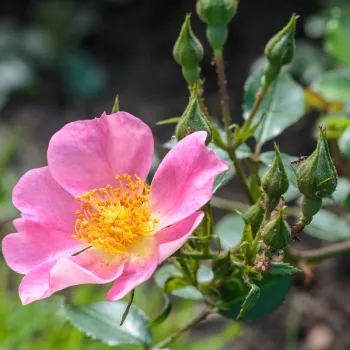
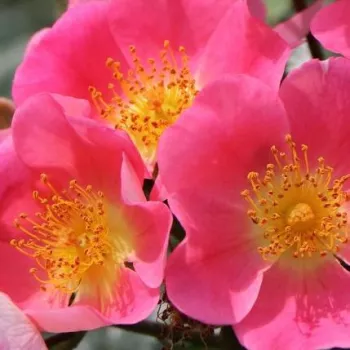
Small, single, cluster-flowered blooms 0.5–1.5 inches across, generally 5–12 petals. Flat, open flower form shows prominent stamens. Remontant, with especially abundant second flush in favourable conditions. |
| Colour data and phenology |
Overall pink flowers: buds deep pink; newly opened blooms pastel pink with a strong yellow eye and golden stamens. Mid-pink outer petals, paler inside; colour holds reasonably, lightening slightly in strong sun. |
| Fragrance and aroma |
Considered virtually scentless, making it suitable where strong fragrance might be unwelcome. Visual and ecological value focused on colour, texture and pollinator attraction rather than on aromatic qualities. |
| Hip characteristics |
Hip formation is generally sparse; where present, hips are small, spherical, red, about 6–10 mm diameter, adding discreet late-season interest without dominating the plant’s overall appearance in the border. |
| Resistance and winter hardiness |
Excellent disease resistance to black spot, powdery mildew and rust; suitable for low-spray or no-spray gardens. Winter hardy to approximately −26 to −23 °C (RHS H7, USDA 5b), coping reliably with cold snaps. |
| Horticultural recommendations |
Best for groundcover, borders, edging, slopes, rock gardens, urban plantings and containers. Thrives in sun to partial shade; low maintenance, with light pruning and watering, suitable for beginners and busy gardeners. |
Topolina® NektarGarten® KORpifleu offers easy-care groundcover colour, strong disease resistance and long-lived own-root reliability, making it a thoughtful choice for relaxed, tidy family gardens.