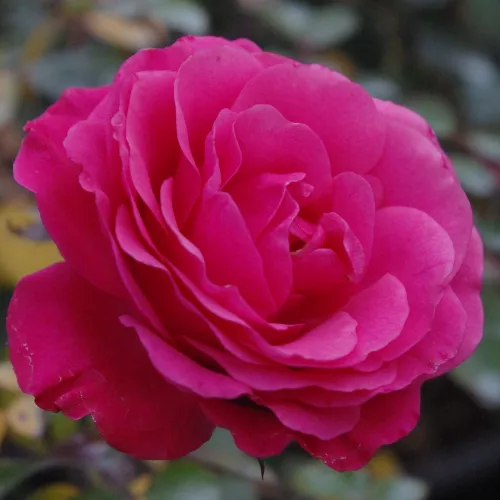
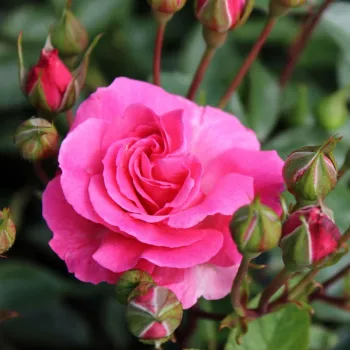
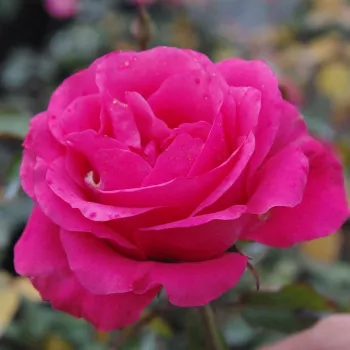
Uniform, saturated deep pink shade. - flowerbed, floribunda, rose - mild, restrained-scented rose - light, discreet character
– Deep pink clusters give vibrant summer colour.
– Bushy, upright habit suits borders and beds.
– Reliable repeat flowering through the season.
– Moderate disease resistance, winter-hardy to H7.
– Versatile choice for parks, hedges, containers.
– Special feature: Semi-double blooms offer a classic floribunda look with light, discreet fragrance.
Wildlife-friendly garden design – Low maintenance
pharmaROSA® ORIGINAL 2-litre own-root potted rose
17,60 £
Unfortunately, we are currently unable to ship to the United Kingdom; we only deliver to countries within the European Union. For more information, please contact us!
5(7318)
TOM TOM™ – deep pink bedding floribunda rose - Lindquist
Dependable and quietly showy, TOM TOM™ is a compact floribunda that slips easily into small British front gardens, coping well even where soils need improved drainage after rainstorms and windy spells. Its bushy, upright habit and medium height make it naturally tidy, ideal for low borders and around-the-house beds where you want structure without fuss. Clusters of deep pink, semi-double blooms repeat through the season, creating reliable colour with only modest deadheading. As an own-root shrub it establishes steadily for long-term longevity, developing a balanced, stable framework that suits family gardens. Plant once, then watch roots, shoots and finally full garden impact build over the first three years, bringing relaxed, cottage-style charm to everyday spaces.
Tom Tom™ in closed bud stage, showing a dark, velvety deep pink surface.
Tom Tom™ showing a freshly opened deep pink flower.
Usage options
Target area
Reasoning
Small front-garden flowerbed
The compact, bushy habit (about 60–90 cm high) forms a neat, upright bush that sits comfortably under windows or along short paths. Repeating deep pink clusters give a dependable focal point without dominating the space, suiting beginners.
Low, easy-care border edging
Measured spread of 45–65 cm and moderate maintenance needs make this variety well suited to edging mixed borders where you want a defined line of colour. Occasional deadheading and basic feeding are enough to keep the border looking ordered for busy-owners.
Classic cottage-style mixed planting
Semi-double, deep pink flowers blend naturally with cottage perennials, working well in groups of three to five along a path or near a sitting area. Reliable repeat flowering supports that long, relaxed display much loved by cottage-gardeners.
Urban beds and municipal-style corners
Originally bred as a bedding rose, it performs reliably in structured group plantings at 45 cm spacing, filling gaps with medium-height, upright bushes. The floribunda habit offers continuous impact without complex care, ideal for town-gardeners.
Part-shaded side garden or passage
Suitable for partial shade, this rose flowers steadily where many others underperform, such as east- or west-facing strips beside the house. This makes it particularly useful in narrow, overlooked spaces often owned by small-plotters.
Containers and large patio pots
Its moderate size and upright framework make it a good candidate for large containers of at least 40–50 litres, where roots have space to stabilise and support long-term growth from its own-root system, rewarding patient patio-gardeners.
Family garden wildlife corner
Semi-double blooms and modest hip production provide some seasonal interest for birds and insects, adding a soft wildlife note without turning the area untidy. The light fragrance and manageable size suit relaxed, shared spaces for families.
Weather-exposed front border
The bushy, well-anchored shrub copes capably with typical coastal and suburban winds, provided soil is reasonably drained after prolonged wet periods, giving a stable, long-lived planting line that reassures cautious new-gardeners.
Styling ideas
Neat frontage trio – Plant three TOM TOM™ in a shallow arc beneath a bay window, underplant with low Delosperma for contrast – ideal for homeowners wanting a tidy but not formal frontage.
Cottage path edging – Line one side of a garden path with a short row, interspersed with Coreopsis grandiflora for soft yellow-and-pink harmony – perfect for lovers of relaxed cottage character.
Patio feature pot – Grow a single plant in a 50-litre terracotta pot with trailing ice plant around the rim – suited to balcony or courtyard gardeners short on border space.
Family play-lawn border – Use a loose group of five along a lawn edge, backed by small evergreen hollies for year-round structure – good for families wanting colour without complex pruning.
Urban corner uplift – Brighten an overlooked corner by pairing TOM TOM™ with compact grasses and resilient perennials in a small bed – tailored for busy city gardeners after dependable colour.
Technical cultivar profile
Parameter
Data
Name and registration
Floribunda bedding rose, registered cultivar name ‘Tom Tom’, commercial name TOM TOM™. Belongs to the bed rose group and used mainly as an exhibition floribunda and bush rose.
Origin and breeding
Bred by E. J. Lindquist in the United States in 1957 from ‘Improved Lafayette’ × ‘Floradora’, introduced by Howard Rose Co. and originating from Hemet Wholesale, California.
Growth and structural characteristics
Bushy, upright floribunda with moderately dense, dark green, slightly glossy foliage. Grows to around 60–90 cm in height with a 45–65 cm spread and is moderately thorny overall.
Flower morphology
Semi-double, cup-shaped cluster flowers with 17–25 petals and a large bloom size of about 7–10 cm. Recurrent flowering provides a generous second flush on floribunda-style trusses.
Colour data and phenology
Deep pink blooms, RHS 58B outer and 58C inner petals, opening from dark velvety buds. Colour may pale slightly in heat, remaining more intense in cooler conditions across repeat flushes.
Fragrance and aroma
Light, discreet fragrance with mild intensity, offering a gentle scent without dominating nearby seating areas. Semi-double flowers moderately attract pollinators but are not a primary nectar source.
Hip characteristics
Produces moderate quantities of small, spherical hips, approximately 7–11 mm in diameter, with a red tone around RHS 44A, contributing an additional note of late-season ornamental interest.
Resistance and winter hardiness
Hardy to about −21 to −18 °C (RHS H7, USDA 6b, Swedish zone 3). Shows moderate disease resistance overall, with good black spot resistance but only moderate tolerance to mildew and rust.
Horticultural recommendations
Suited to borders, edging, group and container planting in urban or park settings. Needs medium maintenance, with regular watering in drought and periodic pest and disease monitoring and control.
TOM TOM™ offers compact structure, deep pink repeat flowering and reliable performance from an own-root plant that matures into a stable, long-lived shrub, making it a sound choice for understated, easy-going gardens.
Detailed product attributes
Product Identification Data
Product Name:
TOM TOM™ – deep pink bedding floribunda rose - Lindquist
Product Type:
pharmaROSA® ORIGINAL - 2-litre own-root potted rose
Pollinator Attraction:
Semi-double, 17–25-petalled flowers moderately attract pollinators, because the semi-double bloom form and reduced stamen accessibility limit their appeal to foraging insects.
Pollinator-Friendly Rating:
Attracts pollinators moderately, so it can be considered at most partially pollinator-friendly.
Our product is a rose grown with pharmaROSA®’s unique cultivation technology!
2-litre, own-root, potted rose.
With a shoot system appropriate to the season.
With a root system that thoroughly permeates the growing medium.
Quality compliant with the requirements of the E.N.A. (European Nurserystock Association).
Supplied in unique packaging that prevents damage.
Can be planted during frost-free periods.
True-to-variety rose bush with a unique identifier.
The pharmaROSA® own-root potted rose is a well-rooted plant that supports reliable establishment when planted and cared for properly, so it can be planted whenever the soil is not frozen.
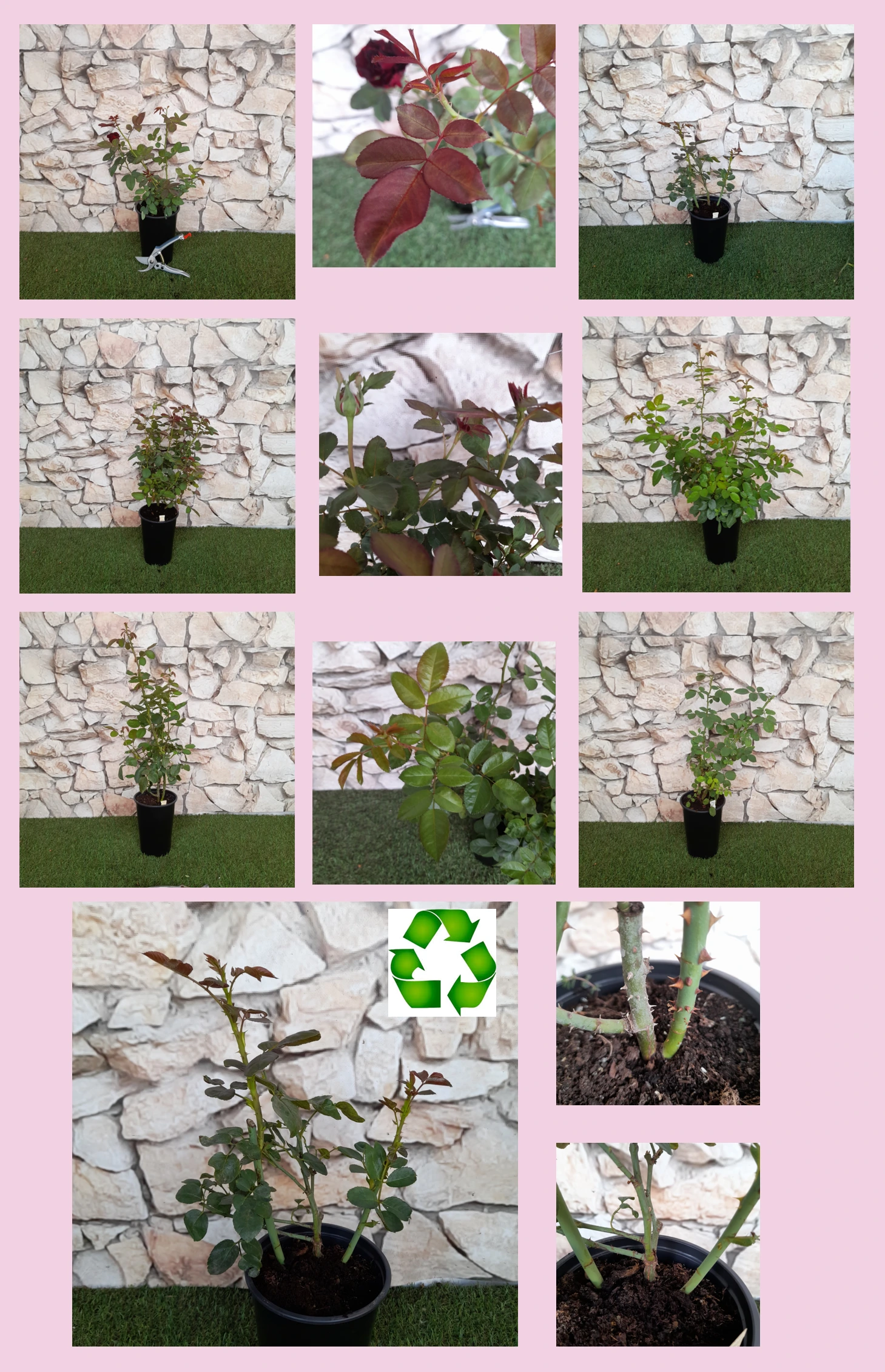
Crop overview: several varieties and growth stages in a short crop section.Shoot system: intensive growth of fresh basal shoots on a young plant.Root system: demonstration of a vigorous root system permeating the growing medium, by removing the pot.Balance: mature plant with root system and shoots in harmony with each other.
Information about the videos
The video series is not a “seasonal showcase”; it illustrates the essence of pharmaROSA® own-root cultivation in a tangible way: how the plant is built up, what the root system is like and how the shoot system regenerates. The recordings were therefore made at different times and with plants at various stages of development, so mixed foliage levels and differing stages of growth may appear in the videos. They are not a ‘sample’ of the batch dispatched, but a visual explanation of how the technology works. The current condition of the rose available to order — typical for the given period and similar to what you can expect to receive in the parcel — is shown in the upper part of the product page.
Pages for private customers Garden roses for the family garden, with minimal care → ORIGINAL® Premium garden roses – instant impact, a truly showpiece garden → EXTRA® Pages for professionals and private customers Roses for public spaces – large areas, sustainable maintenance → NATURAL® Roses for projects – hedge and row planting, fast implementation → RAPID® For professional partners only Production – propagation material for garden roses, wholesale → NEONATAL®
Company details
PharmaRosa Ltd. Company registration number: 01-09-717479 VAT number: 13075314-2-43 Plant health registration no.: HU130721 Bank account (IBAN): HU85117631891388688400000000 BIC (SWIFT): OTPVHUHB Bank name: OTP Bank Nyrt.