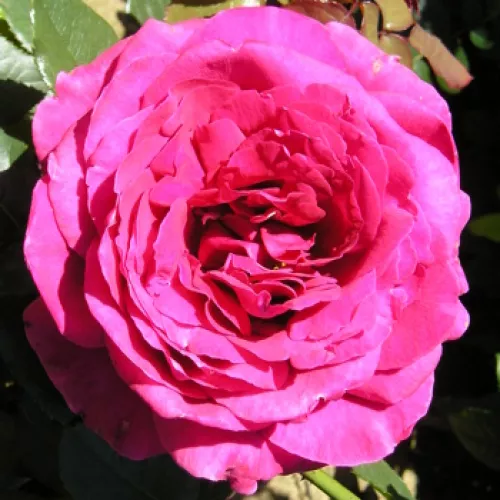
Vivid fuchsia–magenta pink petals with a deep raspberry-red tone. - hybrid tea rose - very strongly scented, garden-filling rose - scent description not available
– Elegant dark-pink Thomas Barton blooms
– Very double, cup-shaped flowers for cutting
– Strong, garden-filling fragrance
– Upright growth, ideal as a specimen
– Excellent resistance to major rose diseases
– Special feature: Awarded Monza Gold Medal and Glasgow Fragrance Award.
Customer-centric focus – Climate-conscious choice
pharmaROSA® ORIGINAL 2-litre own-root potted rose
19,30 £
Unfortunately, we are currently unable to ship to the United Kingdom; we only deliver to countries within the European Union. For more information, please contact us!
3.5(5756)
Thomas Barton PERFUMELLA® MEIhirvin – deep pink hybrid tea rose
Elegant and richly fragrant, Thomas Barton PERFUMELLA® MEIhirvin brings exhibition-quality hybrid tea blooms into everyday gardens with reassuringly low-care reliability. Bred by Meilland for long-lasting, very double flowers, it repeats generously through summer, providing a steady rhythm of colour for classic British borders and front gardens. Its upright, compact growth and glossy foliage help keep beds looking orderly without complicated pruning, while its strong disease resistance is an asset in humid, fungus-prone seasons. As an own-root plant it settles in securely and endures for the long term, slowly building a stable framework that responds well to simple, once-a-year shaping. With adequate watering in dry spells and sensible drainage on heavy soils exposed to rain and wind, it will reward you with years of structure, colour and subtly maturing presence.
Freshly opened bloom of Thomas Barton in vivid fuchsia-magenta pink.
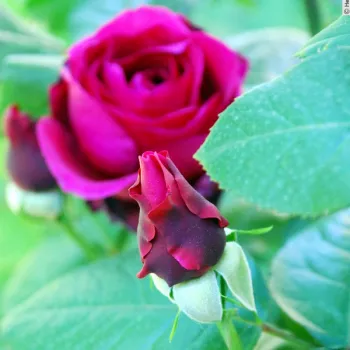
Closed bud of Thomas Barton, a deep pink hybrid tea rose.
Usage options
Target area
Reasoning
Front garden focal point
Planted as a solitary specimen near the entrance, its upright habit and large, double, raspberry-pink blooms create an immediate, classic welcome with minimal maintenance needs for busy homeowners who prefer straightforward planting – ideal for the style-conscious beginner.
Small mixed border in family gardens
Used in a short run of 3–5 plants, it forms a tidy, moderately dense line of glossy foliage and repeat flowers that slot neatly between perennials and shrubs, giving an easy, cohesive structure without complex design work – well suited to the time-pressed gardener.
Cottage-style rose and perennial mix
Its deep pink, very double blooms pair beautifully with looser perennials, softening paths and terraces while still reading as a “proper rose”, and the own-root longevity means the border matures gracefully over the years – reassuring for long-term-minded homeowners.
Cutting patch for home bouquets
As an exhibition-type hybrid tea, it produces long, straight stems with single, high-centred flowers ideal for vases, allowing regular cutting for the house without spoiling the overall look of the bush – a pleasure for fragrance-loving households.
Low-input rose bed for beginners
Strong resistance to black spot, powdery mildew and rust, combined with modest pruning needs, makes it suitable for simple rose beds where you prefer reliable flowering and healthy foliage over intensive care, giving confidence to the new or uncertain gardener.
Around-the-house ornamental planting
Positioned along paths, patios or sunny walls, the compact 75–105 cm height keeps views clear while the strong, garden-filling scent rewards everyday use of these spaces, with routine deadheading as the main task – convenient for busy urban residents.
Large container on terrace or driveway
Grown in a substantial 40–50 litre pot with regular watering, it offers a movable column of colour and scent that can flank doors or seating areas, particularly valuable where borders are limited or paving dominates – helpful for small-space gardeners.
Exposed but well-drained beds
Once established on its own roots, its sturdy framework and healthy foliage cope well in open, breezy UK sites, provided soil drains reasonably even on heavier clays with raised beds or improved structure for wetter, wind-prone gardens – practical for coastal-influenced owners.
Styling ideas
Entrance Classic – Plant a single Thomas Barton by the front path with a backdrop of clipped evergreen box or yew to frame its deep pink blooms and scent – for lovers of traditional, orderly facades.
Cottage Ribbon – Run three roses along a low picket fence and weave through airy perennials such as nepeta and hardy geraniums to soften the line – for those seeking relaxed charm with reliable flowering.
Rosy Terrace – Place one rose in a 50-litre terracotta pot beside outdoor seating, underplanted with low lavender or thyme for scent layering – for flat dwellers or patio-focused families.
Cutting Corner – Group four plants in a sunny square near the shed or greenhouse, leaving easy access for snipping long stems for indoor arrangements – for home florists wanting dependable, garden-grown stems.
Structured Mix – Alternate Thomas Barton with compact shrubs such as Cornus sericea ‘White Gold’ and Viburnum opulus in a shallow arc to blend formal rose colour with year-round shrub structure – for gardeners designing balanced, low-fuss borders.
Technical cultivar profile
Name and registration
Hybrid tea rose, registered as MEIhirvin, marketed as Thomas Barton PERFUMELLA® MEIhirvin; exhibition hybrid tea category, ARS exhibition name Thomas Barton, premium silver quality rating.
Origin and breeding
Bred by Alain A. Meilland, Meilland International, France; breeding completed 1987, registered 1988 and introduced 1991 through Meilland Richardier, with parentage recorded as unknown.
Awards and recognition
Monza Gold Medal 1987 highlighting overall garden and exhibition quality, plus Glasgow Fragrance Award 1995 confirming its very strong, garden-filling scent performance in temperate climates.
Growth and structural characteristics
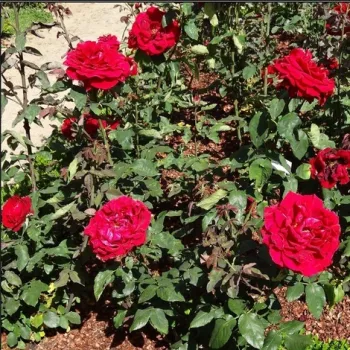
Upright bush reaching 75–105 cm in height and spread, with moderately dense, glossy medium-green foliage and moderate prickliness; forms a well-proportioned, compact structure suitable for borders and containers.
Flower morphology
Large, cup-shaped hybrid tea blooms, 2.75–3.95 inches across, very double with 40+ petals, borne mostly singly on stems; remontant habit gives a strong second flush after the main summer flowering.
Colour data and phenology
Vivid fuchsia-magenta to deep raspberry-pink flowers; buds dark burgundy-crimson, colouring softens to raspberry-rose with a slight lilac veil as they age; ARS dark pink, RHS 60B outer and 53A inner petal zones.
Fragrance and aroma
Very strongly scented hybrid tea with garden-filling perfume; fragrance character not fully described, but confirmed as intense enough to be award-winning and noticeable in typical family garden settings.
Hip characteristics
Hip set generally low due to regular deadheading; when present, hips are small, spherical, 12–18 mm diameter, red RHS 44A, and of limited ornamental significance compared with the continuous flowering display.
Resistance and winter hardiness
Rated resistant to powdery mildew, black spot and rust; hardy to approximately −15 to −12 °C (RHS H6, Swedish Zone 2, USDA 7b), with moderate heat and drought tolerance if watered during extended dry periods.
Horticultural recommendations
Best in full sun with good drainage; recommended spacings 55–100 cm depending on use, plant 2.5–2.9 per m² for massing; low maintenance, own-root plants suit borders, hedging, containers and cutting gardens.
Thomas Barton PERFUMELLA® MEIhirvin offers richly scented, exhibition-quality blooms on a healthy, low-maintenance, long-lived own-root plant; an excellent choice if you would like a refined yet forgiving garden rose.
Detailed product attributes
Product Identification Data
Product Name:
THOMAS BARTON – deep pink hybrid tea rose - Meilland
Product Type:
pharmaROSA® ORIGINAL - 2-litre own-root potted rose
Closed Bud:
Dark burgundy–crimson, velvety surface, with a deeper tone at the edges.
Newly Opened Flower:
Vivid fuchsia–magenta pink petals, with a more intense raspberry colour in the centre, slightly darkening towards the outer edges.
Full Bloom:
Uniform mid-deep raspberry pink, the edge of the outer petal zone cooler, slightly purplish.
Before Fading:
The pink lightens, fading to a raspberry–rose shade with a delicate purplish veil.
Colour Fading Description:
As the flower opens, the mid–deep raspberry-pink gradually fades to a lighter raspberry–rosy shade with a delicate lilac veil.
Pollinator Attraction:
Its very double, high‑centred blooms (double form) with stamens that are not readily accessible mean it attracts few pollinators.
Pollinator-Friendly Rating:
The very double, cup-shaped flowers enclose the stamens, so it is primarily an ornamental variety.
Hip Comment:
Hip formation is negligible due to the regular removal of double flowers and spent blooms; occasionally spherical, red (RHS 44A) hips 12–18 mm in diameter may form.
Our product is a rose grown with pharmaROSA®’s unique cultivation technology!
2-litre, own-root, potted rose.
With a shoot system appropriate to the season.
With a root system that thoroughly permeates the growing medium.
Quality compliant with the requirements of the E.N.A. (European Nurserystock Association).
Supplied in unique packaging that prevents damage.
Can be planted during frost-free periods.
True-to-variety rose bush with a unique identifier.
The pharmaROSA® own-root potted rose is a well-rooted plant that supports reliable establishment when planted and cared for properly, so it can be planted whenever the soil is not frozen.
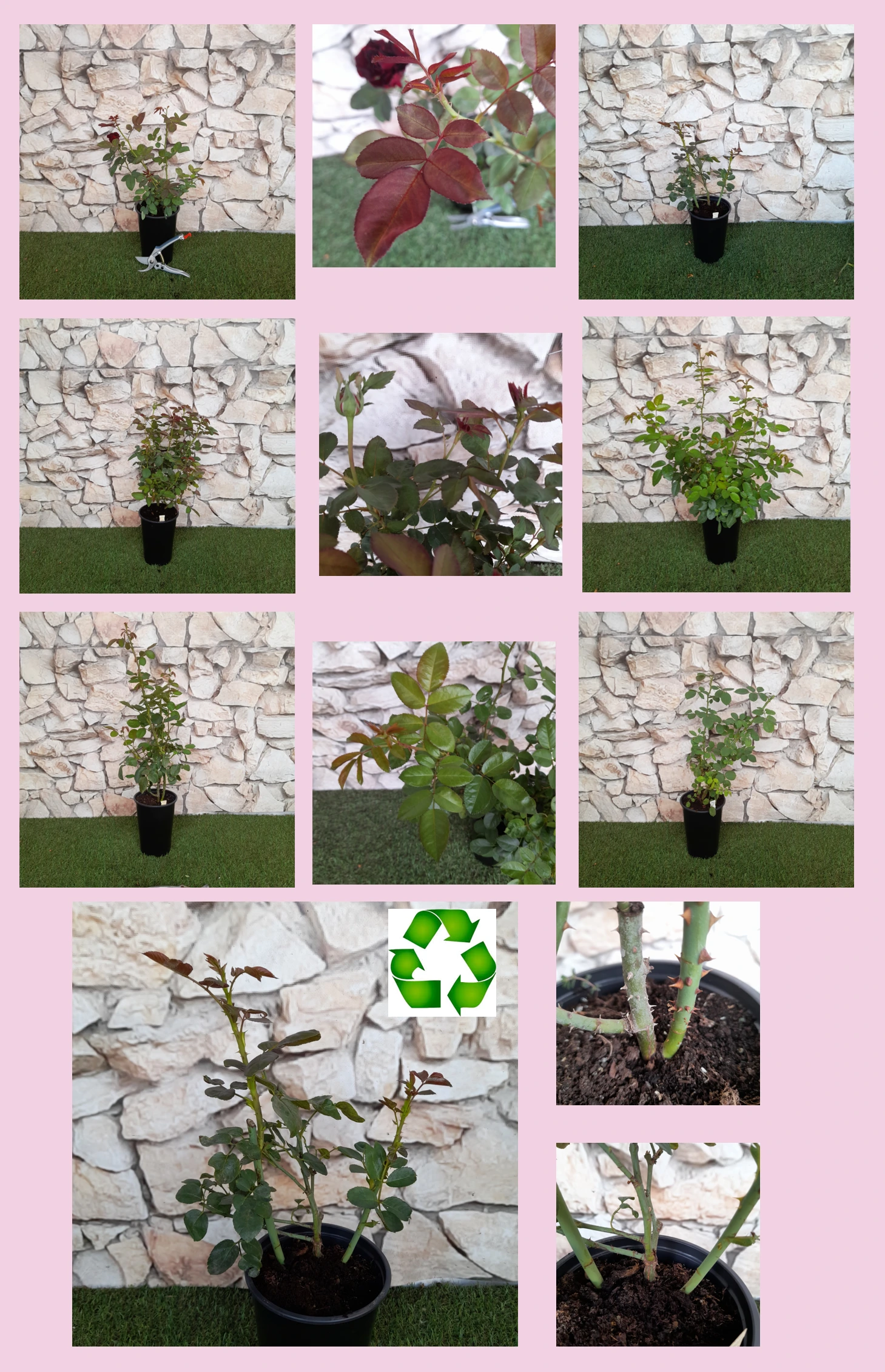
Crop overview: several varieties and growth stages in a short crop section.Shoot system: intensive growth of fresh basal shoots on a young plant.Root system: demonstration of a vigorous root system permeating the growing medium, by removing the pot.Balance: mature plant with root system and shoots in harmony with each other.
Information about the videos
The video series is not a “seasonal showcase”; it illustrates the essence of pharmaROSA® own-root cultivation in a tangible way: how the plant is built up, what the root system is like and how the shoot system regenerates. The recordings were therefore made at different times and with plants at various stages of development, so mixed foliage levels and differing stages of growth may appear in the videos. They are not a ‘sample’ of the batch dispatched, but a visual explanation of how the technology works. The current condition of the rose available to order — typical for the given period and similar to what you can expect to receive in the parcel — is shown in the upper part of the product page.
Pages for private customers Garden roses for the family garden, with minimal care → ORIGINAL® Premium garden roses – instant impact, a truly showpiece garden → EXTRA® Pages for professionals and private customers Roses for public spaces – large areas, sustainable maintenance → NATURAL® Roses for projects – hedge and row planting, fast implementation → RAPID® For professional partners only Production – propagation material for garden roses, wholesale → NEONATAL®
Company details
PharmaRosa Ltd. Company registration number: 01-09-717479 VAT number: 13075314-2-43 Plant health registration no.: HU130721 Bank account (IBAN): HU85117631891388688400000000 BIC (SWIFT): OTPVHUHB Bank name: OTP Bank Nyrt.