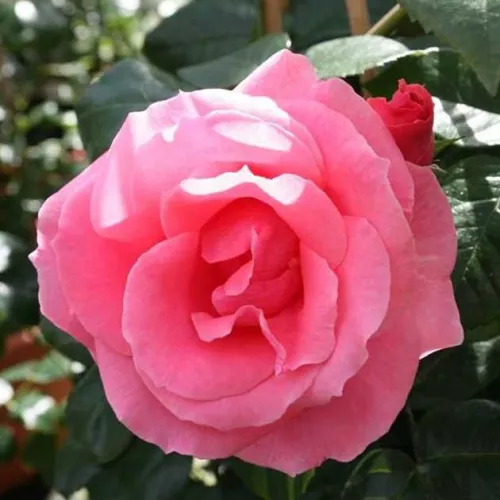
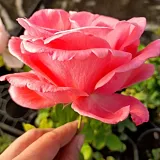
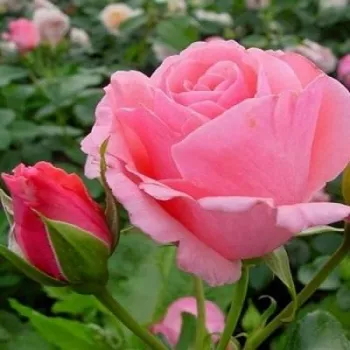
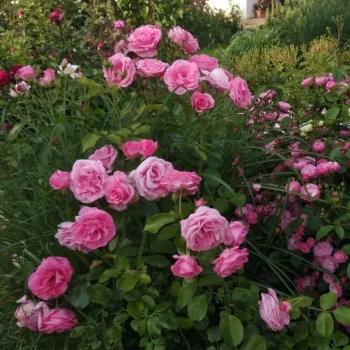
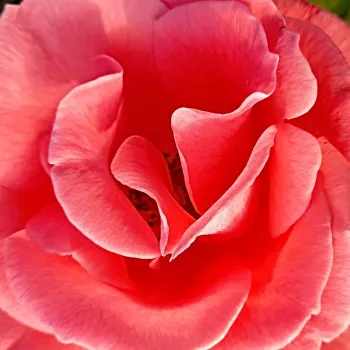
Full mid-deep pink with a subtle coral undertone. - climber, climbing rose - strong, pronounced-scented rose - fruity, sweet-scented
– Strong, fruity fragrance for scented arches
– Abundant mid‑pink blooms in elegant clusters
– Vigorous climber for arches, walls and fences
– Good heat and drought tolerance in summer
– Glossy dark foliage for lush vertical cover
– Special feature: Remontant climber with notably rich second flush of flowers.
Unfortunately, we are currently unable to ship to the United Kingdom; we only deliver to countries within the European Union. For more information, please contact us!
4(6100)
Tanklewi® climbing rose TANklewi
With its generous, mid-pink blooms and strong, fruity fragrance, Tanklewi® offers a classic climbing rose look that suits arches, house walls and cottage-style front gardens without demanding complicated care. This large-flowered climber repeats well through the season, giving a long display of full, cup-shaped flowers for relaxed summer colour. Glossy, dark foliage provides a handsome backdrop, helping the plant look tidy even between flushes and making it easy to integrate into small family gardens. Own-root plants settle steadily, building a durable framework that responds well to basic pruning and simple training. In most UK gardens you can rely on its strong root system to cope with exposed spots where winds drive in showers, provided the soil is not waterlogged and drains freely. Over time you can expect a well-furnished wall or arch: year one building roots, year two throwing stronger shoots, and from year three onwards reaching full ornamental impact. Its height of around 2.5–4 m allows you to create vertical structure even in modest plots, using just one or two plants for a striking, long-lived feature.
Closed bud of Lawinia®, showing the rose’s medium-deep pink colour.
Tanklewi® shows its soft mid-pink blooms at full opening.
Usage options
Target area
Reasoning
Rose arch at a front-garden entrance
Reaching 2.5–4 m with good repeat flowering, this rose quickly clothes a standard arch, framing gateways or paths with soft pink flowers and scent through summer, ideal when you want a welcoming feature with manageable care for the occasional gardener homeowners
Pergola or walk-through arbour
The climbing habit and dense, glossy foliage create a leafy ceiling that filters light while clusters of mid-pink blooms hang down at eye level, giving structure and seasonal shade without complex pruning for those who prefer simple, once-a-year shaping busy gardeners
South- or west-facing house wall
Trained on wires, Tanklewi® forms a flat, flowered curtain, its strong roots anchoring the plant securely while it copes with exposed, showery conditions as long as the soil is improved to avoid waterlogging, suiting properties in breezier British neighbourhoods urban families
Fence line or boundary screen
Planted at 1.9–2 m intervals, the vigorous, leafy growth knits into a soft, green-pink screen that breaks up hard boundaries, providing privacy and seasonal interest without needing strict hedge-style clipping, just light tying-in and dead-heading when convenient privacy-seekers
Standalone specimen on an obelisk
Used singly with a sturdy obelisk, its cup-shaped, double blooms and strong fragrance become a focal point in a small border, giving height and romance in limited space while the own-root plant thickens gradually for long-term reliability with modest input beginner gardeners
Classic cottage-style mixed border
The soft mid-pink flowers blend easily with perennials such as bearded iris, scabious and airy baby’s breath, creating a relaxed, layered cottage look, while repeat flowering keeps colour coming back without frequent replanting or complex seasonal redesigns cottage-garden lovers
Cutting corner for scented stems
Large, double, long-stemmed clusters offer strongly scented blooms for the vase; regular cutting doubles as light pruning, encouraging new flowering shoots so you enjoy both garden display and indoor fragrance with one straightforward routine through summer flower arrangers
Large container on terrace or patio
Grown in a 40–50 litre container with a strong support, Tanklewi® brings vertical colour and perfume to paved spaces; its own-root character makes it more resilient to occasional stress and easier to rejuvenate if cut back harder after a few seasons balcony and patio owners
Styling ideas
Cottage Archway – Train Tanklewi® over a simple metal arch and underplant with Gypsophila and low catmint for a soft, romantic entrance – ideal for cottage-garden lovers seeking classic charm.
Pastel Pergola – Combine this pink climber on a pergola with pale clematis and white foxgloves to create a cool, airy tunnel of flowers – suited to homeowners wanting gentle summer shade and fragrance.
Formal Feature – Grow as a single specimen on an obelisk within a small circular bed edged with box or lavender for a neat yet traditional focal point – perfect for beginners who still like a structured look.
Soft Screen – Plant along a fence with bearded iris and scabious in front to blur boundaries while keeping a relaxed outline – good for families wanting privacy without a high-maintenance hedge.
Patio Column – In a 50 litre pot with a slim trellis, let the climber form a flowered column flanking a seating area – designed for balcony and terrace users seeking vertical colour in limited space.
Technical cultivar profile
Parameter
Data
Name and registration
Climbing rose, large-flowered climber; registered as TANklewi, marketed as Tanklewi® climbing rose, exhibition name ‘Lawinia’, exhibition climbing rose category.
Origin and breeding
Bred by Mathias Tantau Jr., Rosen Tantau, Germany; parentage undocumented; bred, registered and introduced in 1980, initially distributed by Rosen Tantau in Europe.
Growth and structural characteristics
Strong climbing habit, typically 2.5–4 m high and 1.5–2.6 m wide; moderately thorny canes with dense, glossy, dark green leaves forming a substantial framework when properly supported.
Flower morphology
Large, double, cup-shaped blooms with 26–39 petals; cluster-flowering on laterals; remontant with particularly abundant second flush; suitable for cutting and decorative display on supports.
Colour data and phenology
Mid-deep pink with subtle coral undertone; buds richer and slightly raspberry-toned, opening baby pink then fading to softer pastel shades; colour retention moderate with gentle lightening at petal edges.
Fragrance and aroma
Pronounced, strong fragrance with fruity, sweet rose character; double blooms moderately accessible to pollinators, prioritising ornamental and sensory impact over nectar availability.
Hip characteristics
Occasional spherical hips, 10–15 mm across, orange-red (RHS 42A); mainly ornamental interest in late season, not a heavy hip-forming variety under normal dead-heading regimes.
Resistance and winter hardiness
Winter-hardy to about −21 to −18 °C (RHS H7, USDA 6b); good heat tolerance with watering in prolonged drought; black spot resistance good, powdery mildew and rust of medium susceptibility.
Horticultural recommendations
Best on supports such as arches, pergolas, walls or fences at 1.9–3.2 m spacing; partial shade tolerant; medium maintenance with periodic plant protection and dead-heading for optimum display.
Tanklewi® climbing rose TANklewi offers abundant scented pink flowers, reliable repeat bloom and a durable own-root framework that matures gracefully, making it a thoughtful choice if you wish to invest in a long-term garden feature.
Pollinator Attraction:
Its double blooms are moderately attractive to pollinators, because fully double flower forms often reduce stamen accessibility compared with simple or semi-double types.
Pollinator-Friendly Rating:
Double-flowered: because its blooms largely cover the stamens, its pollinator-friendliness is limited; primarily an ornamental variety.
Our product is a rose grown with pharmaROSA®’s unique cultivation technology!
2-litre, own-root, potted rose.
With a shoot system appropriate to the season.
With a root system that thoroughly permeates the growing medium.
Quality compliant with the requirements of the E.N.A. (European Nurserystock Association).
Supplied in unique packaging that prevents damage.
Can be planted during frost-free periods.
True-to-variety rose bush with a unique identifier.
The pharmaROSA® own-root potted rose is a well-rooted plant that supports reliable establishment when planted and cared for properly, so it can be planted whenever the soil is not frozen.
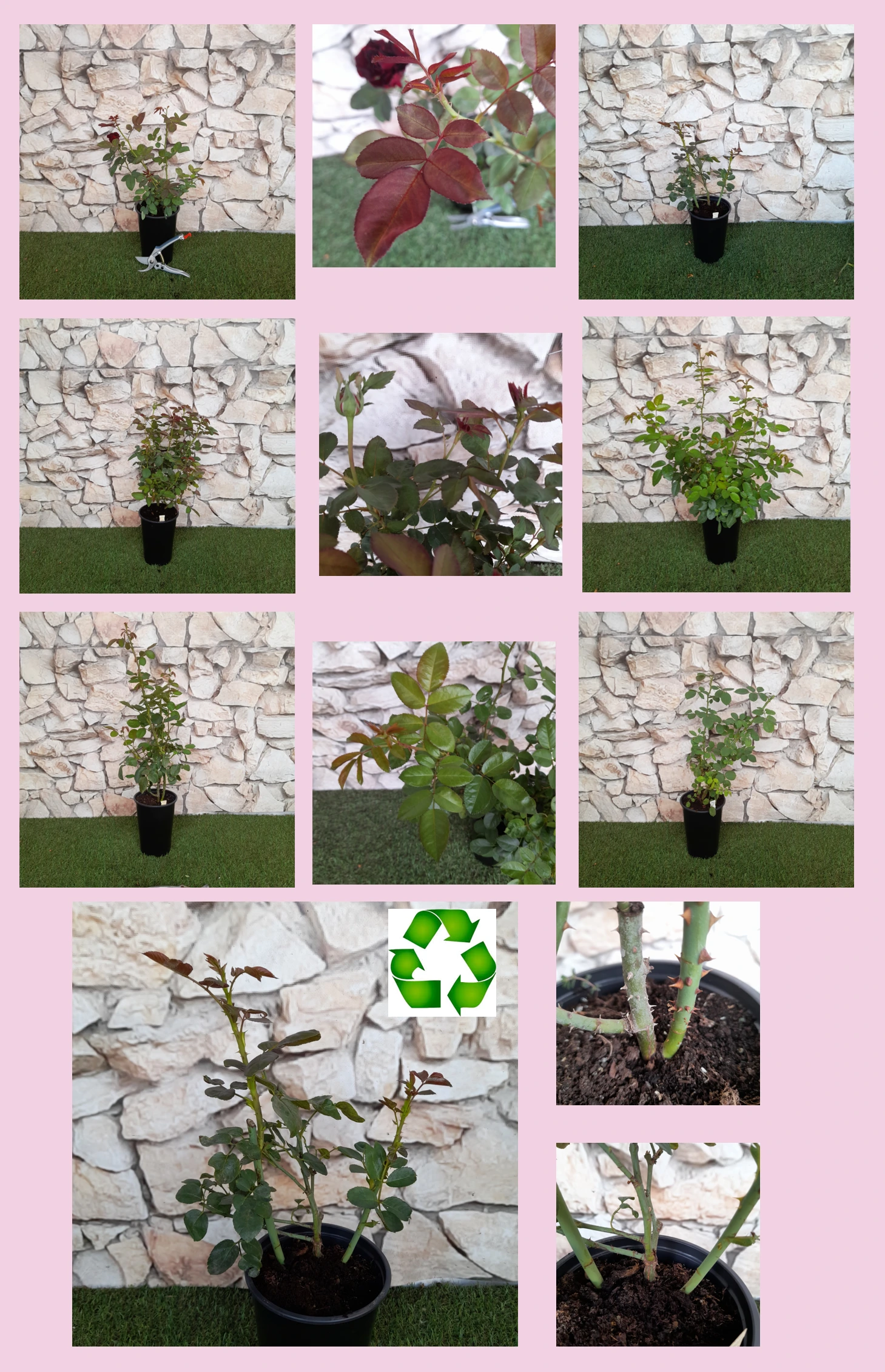
Crop overview: several varieties and growth stages in a short crop section.Shoot system: intensive growth of fresh basal shoots on a young plant.Root system: demonstration of a vigorous root system permeating the growing medium, by removing the pot.Balance: mature plant with root system and shoots in harmony with each other.
Information about the videos
The video series is not a “seasonal showcase”; it illustrates the essence of pharmaROSA® own-root cultivation in a tangible way: how the plant is built up, what the root system is like and how the shoot system regenerates. The recordings were therefore made at different times and with plants at various stages of development, so mixed foliage levels and differing stages of growth may appear in the videos. They are not a ‘sample’ of the batch dispatched, but a visual explanation of how the technology works. The current condition of the rose available to order — typical for the given period and similar to what you can expect to receive in the parcel — is shown in the upper part of the product page.
Pages for private customers Garden roses for the family garden, with minimal care → ORIGINAL® Premium garden roses – instant impact, a truly showpiece garden → EXTRA® Pages for professionals and private customers Roses for public spaces – large areas, sustainable maintenance → NATURAL® Roses for projects – hedge and row planting, fast implementation → RAPID® For professional partners only Production – propagation material for garden roses, wholesale → NEONATAL®
Company details
PharmaRosa Ltd. Company registration number: 01-09-717479 VAT number: 13075314-2-43 Plant health registration no.: HU130721 Bank account (IBAN): HU85117631891388688400000000 BIC (SWIFT): OTPVHUHB Bank name: OTP Bank Nyrt.