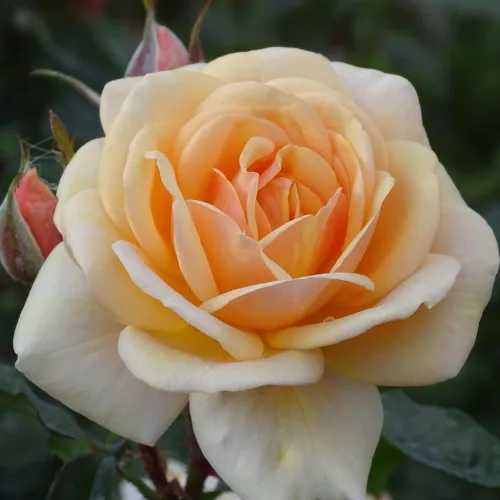
Delicate, light honey-yellow base colour with a subtle peachy hue. - floribunda bedding rose - mild, restrained-scented rose - light, sweet fragrance
– Elegant honey-yellow blooms with peach sheen.
– Bushy, upright habit for structured plantings.
– Reliable repeat flowering all season.
– Proven health: ADR status, good disease resistance.
– Tolerates heat and drought remarkably well.
– Special feature: Awarded Rose of the Year 2020 in the United Kingdom, with multiple international gold medals.
Soil-conserving approach – Thoughtful planning
pharmaROSA® ORIGINAL 2-litre own-root potted rose
19,10 £
Unfortunately, we are currently unable to ship to the United Kingdom; we only deliver to countries within the European Union. For more information, please contact us!
3.5(5404)
SWEET HONEY ® – honey-yellow bedding floribunda rose - Kordes
With its honey-yellow blooms and award-winning performance, Sweet Honey ® is designed for easy-care family gardens where you want reliable colour without complex routines. This compact, bushy structure fits naturally into front gardens, small beds and cottage-style borders, creating a neat, upright feature that stays tidy as it grows. It repeat-flowers generously from early summer, giving long-lasting coverage of soft, high-centred rosettes that shed spent petals cleanly, keeping the planting looking fresh with minimal effort. Bred for modern disease resistance and proven in trials, it copes well with typical British conditions, from cool, damp spells to exposed sites with brisk coastal breezes. In a 2-litre own-root form it settles in quickly and builds a durable framework over time, so you can expect an attractive, long-lived display with only straightforward pruning and feeding. Planted into decent soil with reasonable drainage, it will anchor well, grow steadily and reward you with dependable, low-fuss flowering year after year.
Closed bud of Sweet Honey ®, showing a pale yellow surface with a soft peach-coloured tip.
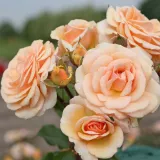
Sweet Honey ® with a light, sweet fragrance.
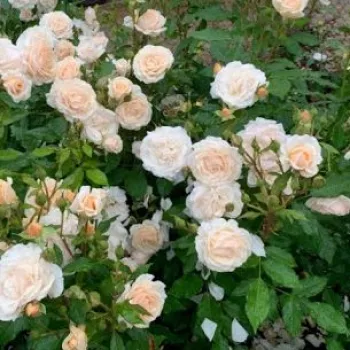
Sweet Honey ® in late shade, with a softer honey-yellow tone.
Usage options
Target area
Reasoning
Front garden focal rose
The compact, upright habit and dense, glossy foliage make Sweet Honey ® ideal for smart front gardens where you want order without fuss. Its bushy structure forms a well-shaped shrub that does not sprawl onto paths, yet has enough height to be seen from the street, supporting an easy-care, tidy look for aesthetics-focused beginners.
Small bedding groups (1–5 plants)
Planted in small groups, the abundant, repeat-flowering clusters quickly knit together into a coherent block of colour. The very double, high-centred blooms give a refined floribunda effect that reads as “finished” even in modest spaces, so you can achieve impact in town gardens and small plots with limited planting decisions for hobby gardeners.
Cottage-style mixed border
The soft honey-yellow flowers with a hint of peach sit comfortably among perennials and grasses without clashing, echoing the warm tones of traditional cottage schemes. Its reliable remontant flowering threads colour through the season between earlier and later perennials, helping to bridge gaps and simplify planning for lovers of classic front-garden style.
Low-maintenance family flowerbed
Good disease resistance, self-cleaning blooms and moderate maintenance needs make this cultivar suitable where gardening time is limited. Routine feeding and a once-yearly prune are usually enough for stable performance, supporting the kind of “plant it and it works” bed that busy households prefer for straightforward success.
Informal low hedge or edging
At typical hedge spacing, the bushy, upright habit and dark green foliage form a softly defined line that stays attractive even between flushes of bloom. The plants fill out from the base on their own roots, so gaps close steadily and the hedge maintains its shape long term with only light annual trimming for homeowners seeking structure with minimal effort.
Patio or terrace container (40–50+ litres)
In a large, stable container this variety develops a solid root system and upright framework that copes well with heat, provided watering is consistent. The plentiful flower clusters bring a refined floribunda look to patios, while the light, sweet fragrance adds subtle enjoyment near seating areas, appealing to urban gardeners wanting reliable potted roses.
Weather-exposed or coastal gardens
Good overall robustness, firm petals and healthy foliage mean Sweet Honey ® keeps its ornamental value even when exposed to wind and showers. Its proven resilience in trials translates into dependable garden performance where conditions are less sheltered, which reassures those gardening in breezier, more challenging suburban and coastal settings.
Long-term rose area or renewal planting
The own-root form lets each plant adapt gradually to local soil and care, building a balanced bush that regenerates well from lower shoots over time. With sensible feeding and pruning, you can expect a stable, repeat-flowering stand that remains attractive for many years, which suits gardeners planning durable, low-fuss rose features.
Styling ideas
Honeyed-border – combine Sweet Honey ® with soft blues like Caryopteris ‘Grand Bleu’ and airy grasses for a relaxed yet orderly front border – ideal for homeowners who want calm, cohesive colour.
Patio-centrepiece – plant one rose in a 50–60 litre terracotta pot, underplant with low thyme or creeping campanula to soften the rim – suited to urban balcony and terrace gardeners.
Cottage-ribbon – run a loose line along a path, interspersed with catmint and lavender for an informal, fragrant cottage look – perfect for lovers of traditional British front gardens.
Family-bed – place 3–5 plants in a small bed with easy perennials such as hardy geraniums and salvias to give colour all summer – good for busy families wanting simple upkeep.
Mixed-hedge – alternate Sweet Honey ® with compact shrubs like Lonicera nitida ‘Maigrün’ to create a soft, textural boundary – attractive to beginners wanting structure without rigid formality.
Technical cultivar profile
Characteristic
Data
Name and registration
Floribunda bedding rose; bush rose exhibition floribunda. Registered as KORmecaso, marketed as Sweet Honey ® Bedding rose KORmecaso; ARS exhibition name Sweet Honey.
Origin and breeding
Bred by Tim-Hermann Kordes (Germany, 2004) for W. Kordes’ Söhne; introduced 2015 with parentage undisclosed, representing a modern floribunda line selected for garden reliability.
Awards and recognition
Rose of the Year 2020 in the United Kingdom and ADR certified in 2015, with additional gold and other awards from international rose trials including Baden-Baden, Belfast, Courtrai, Lyon and Paris.
Growth and structural characteristics
Bushy, upright shrub 85–115 cm high and 55–85 cm wide, with dense, dark green glossy foliage and moderate prickliness; spent blooms mostly fall naturally for a clean, well-presented plant.
Flower morphology
Large, very double, high-centred blooms with 40+ petals, borne in corymbose clusters. Remontant with a strong second flush, providing season-long flowering on well-grown plants in average garden conditions.
Colour data and phenology
Delicate honey-yellow with subtle peach tones: creamy yellow buds, warmer peach centres when opening, then slightly paler in strong sun while retaining good overall colour stability in cooler conditions.
Fragrance and aroma
Light, sweet fragrance of mild intensity; pleasant at close range without dominating seating areas. Heavily double flowers reduce pollen access, so this is primarily an ornamental variety rather than a pollinator plant.
Hip characteristics
Hip set is usually low due to the very double flowers, though occasional small spherical orange-red hips 8–12 mm in diameter may develop late in the season, adding a discreet decorative touch.
Resistance and winter hardiness
Good general disease resistance, especially to black spot and rust, with moderate powdery mildew tolerance. Hardy to approximately –23 to –21 °C (RHS H7; USDA 6a; Swedish Zone 3) under normal garden practice.
Horticultural recommendations
Best in sunny positions with reasonable drainage; suitable for beds, mass planting, hedging and large containers. Requires regular feeding, seasonal pruning and monitoring to sustain flowering and foliage quality.
SWEET HONEY ® offers soft honey-yellow colour, bushy upright growth and award-backed reliability on a durable own-root plant, making it a thoughtful choice if you want a long-lived, easy-going rose for your garden.
Competition and Show Awards:
Rose of the Year – United Kingdom (2020); Gold and other awards at international rose competitions in Baden-Baden; Belfast; Courtrai; Lyon; Paris
Pollinator Attraction:
Heavily double, tightly closed flowers render the stamens poorly accessible, which reduces attractiveness to and the frequency of visits by pollinating insects.
Pollinator-Friendly Rating:
Its very double flowers conceal the stamens; primarily an ornamental cultivar
Our product is a rose grown with pharmaROSA®’s unique cultivation technology!
2-litre, own-root, potted rose.
With a shoot system appropriate to the season.
With a root system that thoroughly permeates the growing medium.
Quality compliant with the requirements of the E.N.A. (European Nurserystock Association).
Supplied in unique packaging that prevents damage.
Can be planted during frost-free periods.
True-to-variety rose bush with a unique identifier.
The pharmaROSA® own-root potted rose is a well-rooted plant that supports reliable establishment when planted and cared for properly, so it can be planted whenever the soil is not frozen.
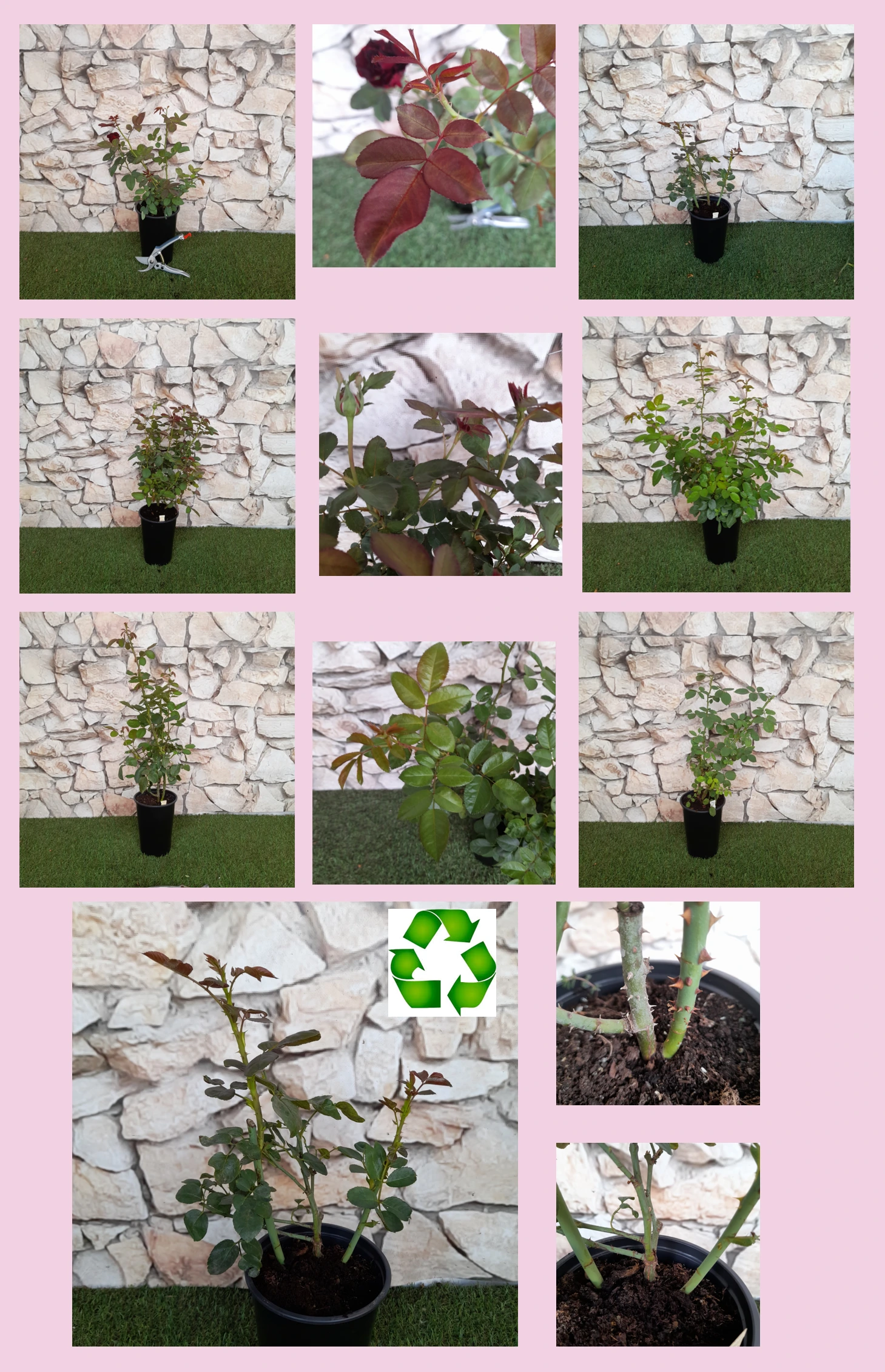
Crop overview: several varieties and growth stages in a short crop section.Shoot system: intensive growth of fresh basal shoots on a young plant.Root system: demonstration of a vigorous root system permeating the growing medium, by removing the pot.Balance: mature plant with root system and shoots in harmony with each other.
Information about the videos
The video series is not a “seasonal showcase”; it illustrates the essence of pharmaROSA® own-root cultivation in a tangible way: how the plant is built up, what the root system is like and how the shoot system regenerates. The recordings were therefore made at different times and with plants at various stages of development, so mixed foliage levels and differing stages of growth may appear in the videos. They are not a ‘sample’ of the batch dispatched, but a visual explanation of how the technology works. The current condition of the rose available to order — typical for the given period and similar to what you can expect to receive in the parcel — is shown in the upper part of the product page.
Pages for private customers Garden roses for the family garden, with minimal care → ORIGINAL® Premium garden roses – instant impact, a truly showpiece garden → EXTRA® Pages for professionals and private customers Roses for public spaces – large areas, sustainable maintenance → NATURAL® Roses for projects – hedge and row planting, fast implementation → RAPID® For professional partners only Production – propagation material for garden roses, wholesale → NEONATAL®
Company details
PharmaRosa Ltd. Company registration number: 01-09-717479 VAT number: 13075314-2-43 Plant health registration no.: HU130721 Bank account (IBAN): HU85117631891388688400000000 BIC (SWIFT): OTPVHUHB Bank name: OTP Bank Nyrt.