Surprise Party™ bedding rose JELroganor
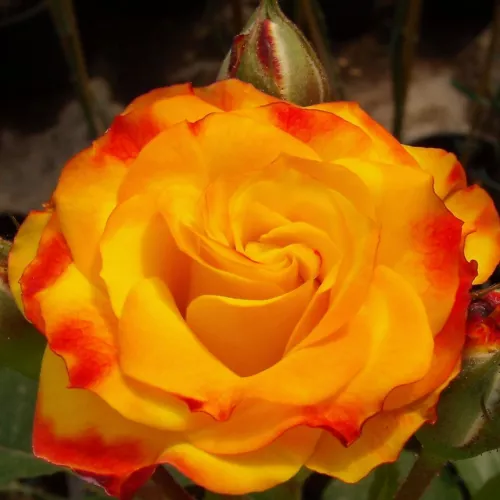
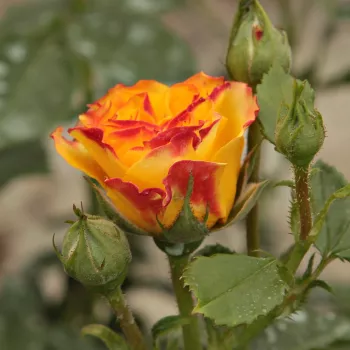
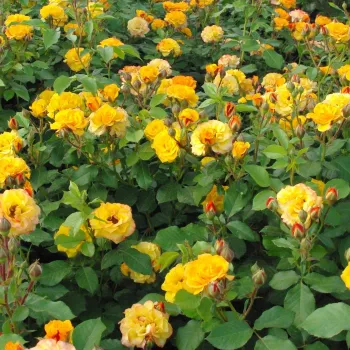
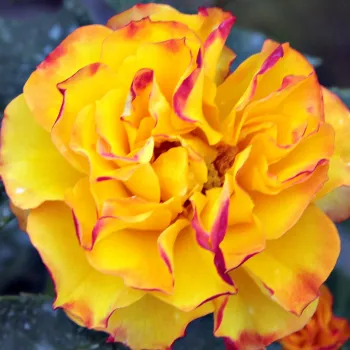
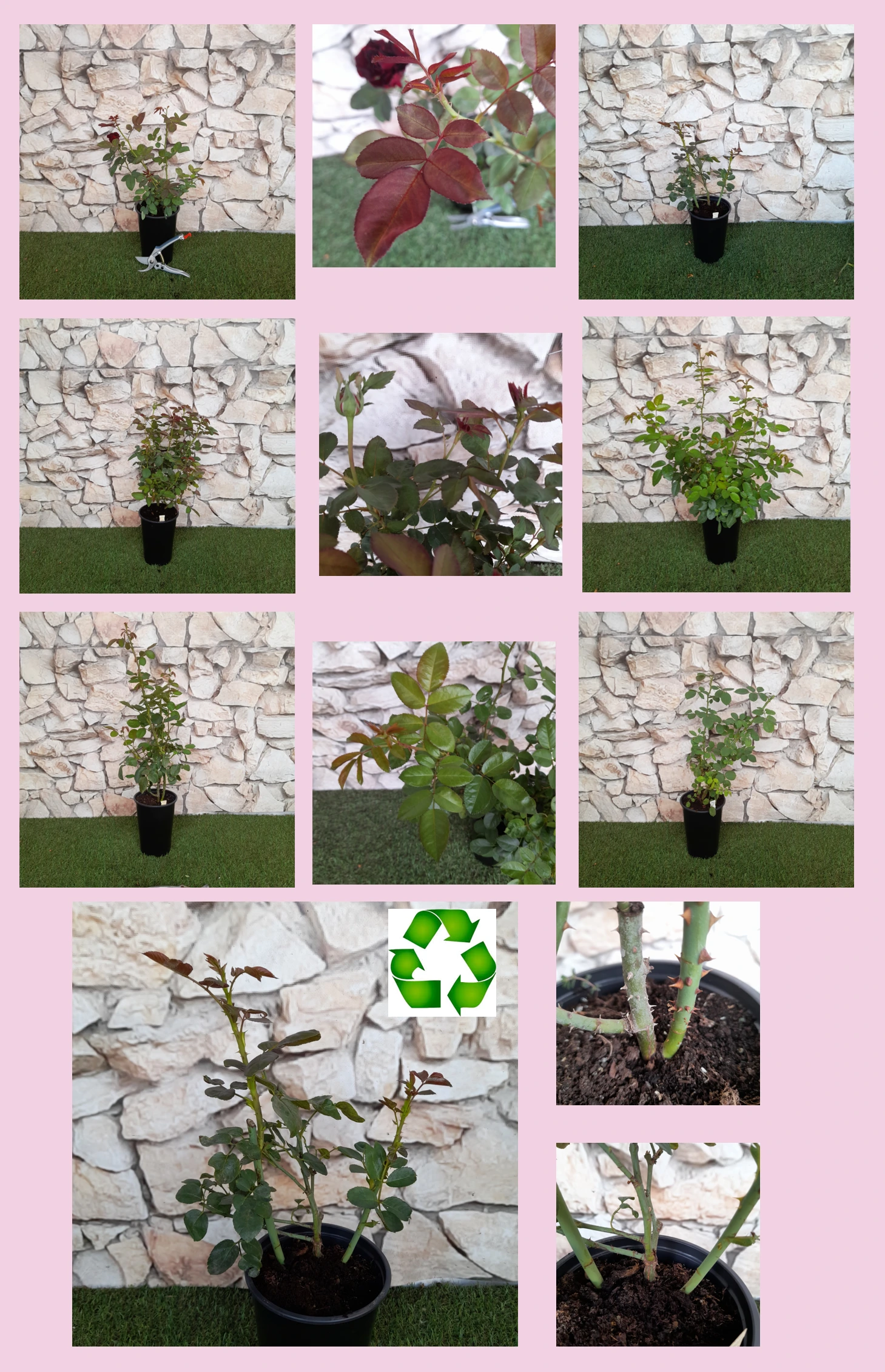
Easy-care floribunda for colourful beds and family gardens, Surprise Party™ brings a lively mix of scarlet and golden-yellow blooms that change as they open, creating a continuous celebratory effect even in coastal sites with frequent rain and wind. Its compact, bushy form and glossy foliage suit small front borders and around-the-house planting, with reliably low maintenance thanks to its strong disease resistance. As an own-root plant it settles in gradually, offering a reassuring development from root-building, to leafy growth, to full ornamental value over the first three years. Well-rooted in a 2-litre pot, it is straightforward to plant and manage, ideal for busy or beginner gardeners who want dependable colour rather than complex horticulture, and also rewarding for more experienced rose enthusiasts planning longer-term rose schemes.
Usage options
| Target area |
Reasoning |
| Front garden bedding |
The neat floribunda habit forms a low, bushy line of colour that works perfectly along drives or paths, keeping a tidy look without specialist pruning knowledge; strong disease resistance helps beds stay attractive between simple annual trims, ideal for beginners. |
| Small mixed borders |
Clusters of bicoloured flowers stand out among perennials and ornamental grasses, while the compact spread (around 80–120 cm) fits typical UK borders without overwhelming neighbours; this makes planning colour schemes simpler for style-conscious owners. |
| Cottage-style planting |
The ever-changing red and golden tones echo classic cottage borders, pairing well with lady’s mantle, cranesbills and dwarf irises for a soft, romantic feel, yet with lower maintenance than many traditional roses, suiting cottage-garden lovers. |
| Low-maintenance rose beds |
Reliable resistance to black spot, mildew and rust reduces spraying and remedial work, so once planted and mulched, routine care focuses mainly on watering in dry spells, appealing to time-poor gardeners. |
| Decorative containers (40–50 L+) |
In a large pot of at least 40–50 litres with good drainage, the bushy shape and repeat flowering bring a long season of colour to patios and paved front gardens, providing a strong focal point for urban spaces. |
| Mass planting and edging |
Regular 80–90 cm spacing creates a continuous, colourful edging strip, useful for driveways or path borders where a uniform, easy-care look is desired; simple annual pruning keeps lines crisp, helping organised planners. |
| Cutting for small arrangements |
The small but very full blooms, held in clusters, can be cut as short stems for posies and table vases, bringing the changing red-and-gold tones indoors with minimal effort, enjoyable for home-decor enthusiasts. |
| Weather-exposed family gardens |
Good general resilience, compact branching and solid disease resistance give dependable structure and colour even where wind and rain are frequent in British gardens, requiring only basic feeding and watering from practical homeowners. |
Styling ideas
- Cottage-curve border – Sweep Surprise Party™ along a gently curving front path with lady’s mantle and cranesbills softening the edge – ideal for cottage-style romantics.
- Patio focal container – Plant a single rose in a 50–60 litre terracotta pot with low silver herbs around the rim – perfect for balcony and courtyard gardeners.
- Colour-block bed – Use small groups of 3–5 plants for a bold scarlet-and-gold block beside a lawn – suited to those wanting strong impact with little upkeep.
- Family-friendly edging – Line a play-lawn or seating area with widely spaced bushes underplanted with dwarf iris – good for families wanting order without formality.
- Front-door welcome – Pair one or two container-grown plants with seasonal bedding in matching tones by the entrance – appealing to house-proud hosts.
Technical cultivar profile
| Property |
Data |
| Name and registration |
Surprise Party™ bedding rose JELroganor, floribunda bed rose, ARS exhibition name Charisma; registered cultivar JELroganor, commercial floribunda bedding type used mainly for decorative garden planting. |
| Origin and breeding |
Bred by Robert G. Jelly in the United States in 1968 from ‘Gemini’ × ‘Zorina’; introduced and distributed by Conard-Pyle (Star Roses) in 1977, with US plant patent PP 4 173 granted the same year. |
| Awards and recognition |
Recipient of the Portland Gold Medal in 1976 and an All-America Rose Selections award in 1978, reflecting proven garden performance, ornamental value and reliability under trial conditions in varied climates. |
| Growth and structural characteristics |
Bushy, medium-height shrub, typically 80–110 cm tall with 80–120 cm spread; dense, mid-green, glossy foliage and moderate prickliness, forming a compact, rounded structure suited to beds and borders. |
| Flower morphology |
Small, very full cupped blooms (0.5–1.5 in) with over 40 petals, borne in clustered inflorescences; remontant, with plentiful repeat flowering providing several flushes across the main growing season. |
| Colour data and phenology |
Bicoloured red-yellow flowers, ARS rb, RHS 46A and 14B; buds red-tipped with golden bases, opening warm red then predominantly scarlet with golden-yellow inner tones, lightening slightly in strong sun. |
| Fragrance and aroma |
Mild, restrained scent with a fresh, fruity character rather than a heavy perfume; blooms are primarily ornamental, their very double structure and hidden stamens offering limited value for pollinating insects. |
| Hip characteristics |
Produces rose hips only sparsely; small spherical fruits about 8–12 mm in diameter, dark red at maturity, adding occasional discreet seasonal interest rather than being a dominant ornamental feature. |
| Resistance and winter hardiness |
Rated resistant to powdery mildew, black spot and rust; hardy to approximately -21 to -18 °C (RHS H7, USDA 6b, Swedish Zone 3), with good overall garden resilience and moderate heat tolerance. |
| Horticultural recommendations |
Best in full sun with average garden soil and good drainage; low maintenance once established, though flowers self-clean poorly and benefit from deadheading, plus irrigation during prolonged dry periods. |
Surprise Party™ bedding rose JELroganor offers vivid, ever-changing colour, reliable disease resistance and a compact habit as a long-lived own-root plant, making it a thoughtful choice if you seek dependable, easy-care roses for your garden.