Super Excelsa – crimson-red climbing rambler rose – HELexa
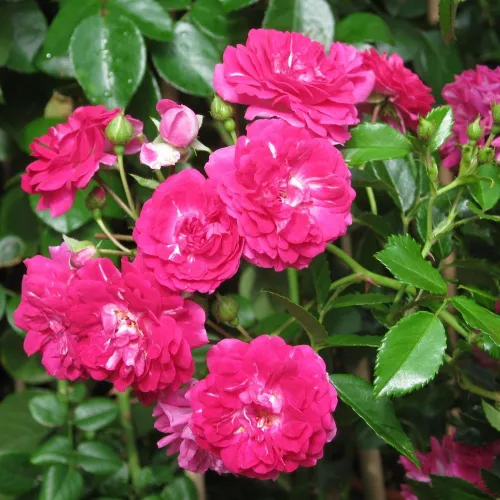
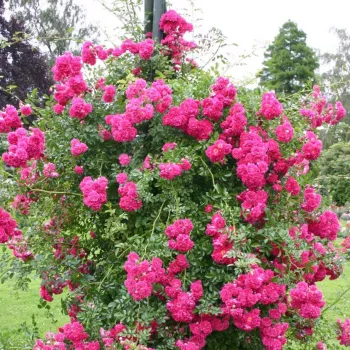
Transform plain walls, fences or arches into a cascading curtain of small, bright crimson flowers with Super Excelsa, a classic climbing rambler chosen for its reliable performance and admired RHS Award of Garden Merit. Its dense, dark green foliage and freely branching, arching canes create a luxuriant, romantic effect, while the once-a-year midsummer flowering is so spectacular that it becomes a highlight of the garden calendar. Well suited to typical British plots, it copes steadily with exposed spots where strong breezes and summer showers test lesser roses, offering adaptable coverage on pergolas, arches and house walls. Semi-double, cluster-flowering blooms provide a gently naturalistic look that combines easily with cottage-style perennials, and the own-root form gives a enduring framework that matures gracefully over many years. Expect a reassuring development: strong root establishment in the first year, taller, fuller shoots in the second, and by the third summer, its full ornamental value as a generous, flower-laden climber. With modest care and occasional deadheading, Super Excelsa forms a stable, long-lived feature that becomes part of the structure of your garden.
Usage options
| Target area |
Reasoning |
| Front-garden wall or house facade |
Use Super Excelsa to clothe a plain brick or rendered wall, training its vigorous climbing growth on tensioned wires or trellis for an impressive summer display of crimson clusters. Dense foliage gives good coverage while its once-a-year flush limits ongoing pruning to a simple annual tidy, ideal if you want a striking yet low-input feature by the front door or along the drive, particularly for the busy urban garden owner. |
| Pergola, arch or walkway |
Its long, flexible canes and arching habit are perfect for draping over pergolas and arches, creating a tunnel of colour and shade in midsummer. Plant at the base of a structure and guide shoots along rails or overhead beams; over time the own-root plant builds a permanent framework that can be renewed from the base if needed, supporting a long-lived, immersive flowering passage for the cottage-garden enthusiast. |
| Garden fence or boundary screening |
On timber or wire-mesh fences, Super Excelsa forms a thick, leafy screen that softens boundaries and adds privacy. Its medium maintenance needs mainly involve tying in new shoots and an annual prune, while the once-a-season flowering means you can plan around a single peak show. This makes it an effective choice where you want reliable coverage but limited ongoing work, suiting the time-conscious homeowner. |
| Rose pillar, obelisk or sturdy post |
Train a single plant around an obelisk, pillar or strong post to create a vertical accent that draws the eye without taking much ground space. The plant’s moderate spread and dense foliage build into a generous column of crimson and green that fits comfortably into small to medium borders, offering structure and seasonal drama for the aesthetics-focused beginner. |
| Mixed cottage-style border backdrop |
Planted at the back of a mixed border and supported on a discreet frame, Super Excelsa gives height and a romantic, cottage-garden feel with its small, semi-double clusters. Combine with perennials such as salvias, catmints or hardy geraniums to carry colour before and after its main flush, letting the rose provide the dramatic midsummer highlight for the lover of classic borders. |
| Partially shaded side return or north-east aspect |
With its suitability for partial shade, Super Excelsa can brighten side passages, garage walls or north-east facing fences where many roses struggle. While flowering will be strongest with some direct sun, it will still offer useful coverage and seasonal colour where space is tight and conditions cooler, making awkward corners feel intentional for the practical small-garden owner. |
| More exposed or breezy UK sites |
Super Excelsa’s robust growth and dependable performance help it cope on open, breezier plots where regular summer rain and wind can batter less sturdy roses, providing steady coverage and a reliable flush even in challenging, changeable British conditions that often combine gusts with passing showers for the coastal and hill-edge gardener. |
| Naturalistic, wildlife-friendly corner |
Allow the plant more freedom over a rustic fence or into a supporting shrub to create a relaxed, naturalistic look. Its semi-double blooms are moderately attractive to pollinators, and the occasional small orange-red hips add late-season interest, blending well with informal planting schemes that appeal to the nature-conscious garden owner. |
Styling ideas
- Crimson curtain – Train Super Excelsa along a white-painted trellis for a vivid crimson-and-white contrast, underplanting with lavender or catmint to soften the base – ideal for fans of crisp, classic front gardens.
- Cottage arch – Cover a metal or wooden arch with Super Excelsa and edge the path with old-fashioned pink geraniums and foxgloves – perfect for those seeking a romantic, cottage-style entrance.
- Living boundary – Use along a fence with Cornus ‘Midwinter Fire’ and woodland sage in front so winter stems and summer flowers share the same line – suited to gardeners who want year-round interest from one structural feature.
- Pergola retreat – Let the rose tumble over a seating-area pergola, combining it with fragrant lilac nearby so spring scent leads into midsummer colour – for homeowners creating a calm, seasonal relaxation space.
- Vertical focal point – Spiral canes around a sturdy obelisk in a large border and mix with blues and whites for contrast, such as salvias and daisies – appealing to design-conscious gardeners who like strong focal accents.
Technical cultivar profile
| Parameter |
Data |
| Name and registration |
Super Excelsa (HELexa) is a large-flowered climbing rambler rose, registered as HELexa and marketed as Super Excelsa Climbing rose HELexa; exhibition name Super Excelsa in climbing classes. |
| Origin and breeding |
Bred by Karl Hetzel, Germany, introduced in 1986, from a cross of ‘Excelsa’ × unknown pollen donor, continuing the Excelsa line with improved performance for garden and exhibition use. |
| Awards and recognition |
Holds the Royal Horticultural Society Award of Garden Merit (AGM), indicating proven garden performance, reliability and ornamental value under UK growing conditions when reasonably well grown. |
| Growth and structural characteristics |
Vigorous climbing habit reaching about 220–340 cm high and 190–310 cm wide, with moderately thorny canes and dense, glossy, dark green foliage forming a substantial, leafy framework on supports. |
| Flower morphology |
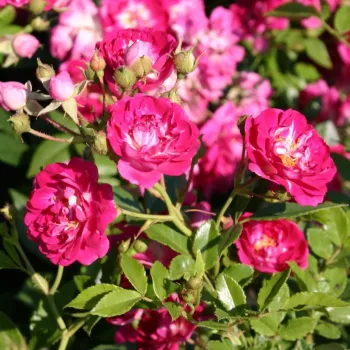
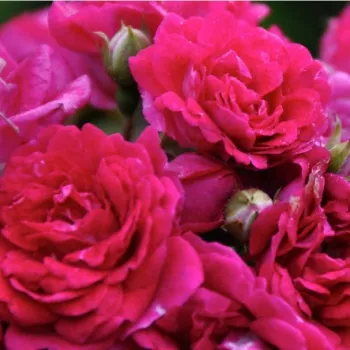
Small, semi-double, cup-shaped blooms, 13–25 petals, borne in clusters on lateral shoots; non-remontant with one main flowering period, supported by moderate self-cleaning and benefiting from deadheading. |
| Colour data and phenology |
Crimson-red flowers with a narrow white centre; colour may lighten or lean to purplish in strong sun, with reddish and creamy tones as blooms age, giving a lively, variegated effect across the trusses. |
| Fragrance and aroma |
Very weak fragrance with a delicate, soft character; scent is barely perceptible in most conditions, so this cultivar is chosen primarily for visual impact and massed colour rather than perfume. |
| Hip characteristics |
Occasionally produces small, spherical orange-red hips, about 6–10 mm across, providing modest late-season interest and an additional textural note among the darkening autumn foliage. |
| Resistance and winter hardiness |
Hardy to around −32 to −29 °C (RHS H7; USDA 4b; Swedish zone 5), with medium resistance to powdery mildew, black spot and rust; benefits from good air circulation and attentive basic care. |
| Horticultural recommendations |
Best on walls, fences, pergolas, arches or obelisks; plant at 230–240 cm intervals, 400 cm for specimens. Suitable for partial shade; ensure support, regular tying-in, and irrigation in prolonged dry spells. |
Super Excelsa Climbing rose HELexa offers a spectacular once-a-year crimson display, vigorous structural coverage and a long-lived own-root framework that settles into the garden over time, making it a thoughtful choice for lasting vertical colour.