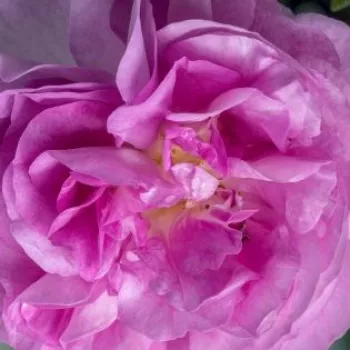
LOLIT – pink-lilac climbing rose – pharmaROSA® ORIGINAL
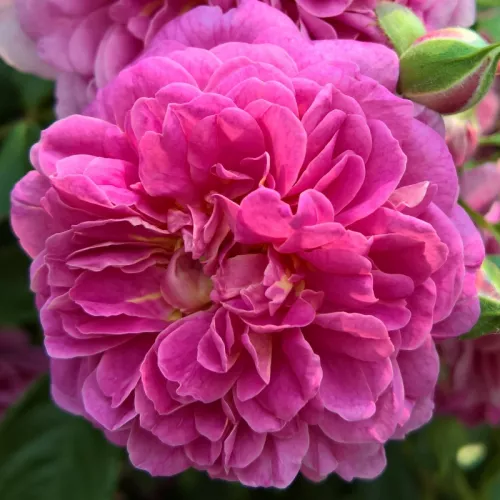
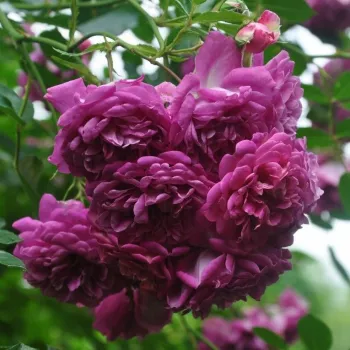
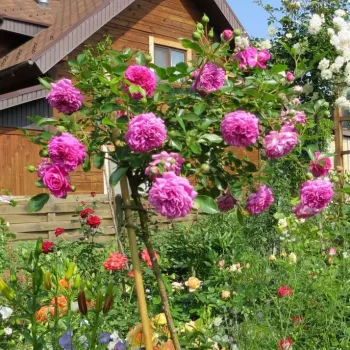
With its raspberry-pink to lilac rosettes and medium, sweet scent, LOLIT offers an easy way to bring romantic vertical colour into a typical British family garden, even where soils are heavy and drainage sometimes needs extra attention. This upright climber builds a dense, dark green framework that trains readily onto arches, pergolas or fences, giving long-lasting seasonal structure without demanding elaborate care. Over time, its own-root growth offers dependable longevity, steady renewal and reassuring stability in mixed plantings. Medium maintenance needs and moderate disease tolerance keep routine jobs straightforward, while remontant flowering provides attractive repeat flushes through the season. The flowers shift gently from raspberry-pink to soft mauve-lilac, creating relaxed cottage charm that works well with traditional front-garden schemes. In most settings you can focus on simple tying-in and occasional deadheading, letting the plant follow its natural development arc: first consolidating roots, then building strong shoots, and by the third year reaching its full ornamental impact with balanced coverage and reliable colour.
Usage options
| Target area |
Reasoning |
| Front-garden rose arch by the entrance path |
LOLIT’s upright habit and 3.9–6.6 ft height make it easy to train over a standard arch, giving a welcoming tunnel of colour without overwhelming a modest front garden. Repeat flowering in raspberry-pink to lilac tones keeps the entrance looking cared-for between basic trims and tying-in, ideal where time is limited but you still want a soft, romantic approach. A good choice for appearance-focused beginners. |
| Pergola or seating-area frame in a family garden |
The dense, dark green foliage forms a leafy canopy that brings shade and privacy around a terrace or seating corner, while the medium, sweet fragrance adds a gentle background scent rather than overpowering the space. As an own-root climber it thickens and rejuvenates from the base over the years, so the structure remains well clothed with minimal replacements or replanting. Suited to relaxed, long-term homeowners. |
| Fence or boundary greening in small plots |
LOLIT’s 90–160 cm spread allows you to clothe ordinary panel fencing or wire supports with layered raspberry-pink rosettes that fade to mauve-lilac, softening hard boundaries in compact gardens. Medium maintenance and moderate disease resistance mean routine checks and occasional sprays generally suffice, even where air movement is reduced. This is particularly practical for busy urban gardeners. |
| Feature climber on a cottage-style house wall |
The colour shift from vivid raspberry-pink buds to powdery rose-grey echoes traditional cottage borders and pairs well with perennials such as Geranium ‘Rozanne’ or variegated weigela. On a sunny wall it builds a stable vertical framework that, once established, only needs seasonal pruning adjustments to maintain form and flowering. Well suited to lovers of informal, classic cottage-gardens. |
| Climber for gates and garden entrances |
Trained up a gate post or small arch, LOLIT creates a clear focal point without needing complex pruning skills: simple tying-in of new shoots and light shaping keep the structure tidy. Its repeat blooming ensures the entrance remains attractive through the main season, even if you only manage occasional deadheading sessions. A reassuring option for time-pressed families. |
| Mixed border backdrop with shrubs and perennials |
Because LOLIT flowers on an upright, relatively compact climbing framework, it can sit comfortably at the back of a mixed border, threading its pink-lilac rosettes among shrubs or long-flowering perennials. The own-root habit lets it adapt gradually to local soil and care, forming a balanced backdrop that can be refreshed by pruning without fear of losing flowering wood. Ideal for design-conscious border planners. |
| Screening for patios and overlooked seating areas |
Planted along trellis or light framework, LOLIT’s dense foliage and repeating blooms create a soft screen that improves privacy and reduces the sense of being overlooked. Its medium disease resilience and straightforward pruning mean you can maintain this living screen with a simple yearly tidy and occasional checks, even in humid, wind-exposed corners typical of many UK plots. A practical solution for suburban neighbours. |
| Large container or planter for paved spaces |
In a 40–50 litre or larger container with good drainage, LOLIT can be trained onto an obelisk or narrow trellis, bringing vertical colour to patios or small courtyards where borders are limited. Consistent watering and feeding support its repeat-flowering, while own-root vigour helps it recover well if growth is occasionally checked by dry spells, a useful trait where watering routines are not always perfect. Well matched to busy urban owners. |
Styling ideas
- Archway – Plant a pair of LOLIT roses at the base of a simple metal arch, letting raspberry-pink rosettes frame the path; suits homeowners wanting a welcoming entrance focus.
- Pergola – Train LOLIT loosely over a wooden pergola with shade-tolerant perennials beneath, using its fragrance and soft colour to define a relaxed seating area for family use.
- Cottage-mix – Combine LOLIT on a wall with Geranium ‘Rozanne’ and dwarf weigela below, echoing lilac and pink tones for an easy, traditional cottage look that rewards light care.
- Screening – Run LOLIT along trellis panels to soften neighbouring views, relying on its repeat flowering and dense foliage for privacy in compact, overlooked urban gardens.
- Container – Grow LOLIT in a 50 litre tub with an obelisk, pairing with trailing groundcover honeysuckle to drape over the rim, ideal for paved spaces without planting beds.
Technical cultivar profile
| Parameter |
Data |
| Name and registration |
LOLIT – pink-lilac climbing rose, pharmaROSA ORIGINAL own-root climber from the Climbing rose collection; current trade name Lolit Climbing rose pharmaROSA, with other formal registration data not available. |
| Origin and breeding |
Discovered by pharmaROSA and bred in Germany in 2006, with parentage not recorded; introduced commercially by PharmaRosa Ltd. Hungary, with exact registration and introduction years not documented. |
| Growth and structural characteristics |
Medium-sized climber with upright growth, 120–200 cm high and 90–160 cm spread, forming dense, glossy, dark green foliage on moderately thorny stems suitable for arches, pergolas and fence training. |
| Flower morphology |
Medium-sized, double, rosette-shaped blooms with 26–39 petals produced mainly in clusters; remontant habit gives an abundant second flush, though some spent blooms may need manual deadheading. |
| Colour data and phenology |
Raspberry pink with lilac tinge, ARS OB, RHS 24A–23A; buds deep fuchsia-raspberry, opening mid-deep raspberry with mauve sheen, then softening through mauve-lilac to powdery rose-grey as blooms age. |
| Fragrance and aroma |
Medium-strength, sweet, peachy fragrance typical of well-scented garden roses; noticeable around seating areas or paths without being overpowering, adding sensory interest on warm, still days. |
| Hip characteristics |
Forms small numbers of ovoid rose hips, 8–12 mm diameter, orange-red RHS 34A; hips add discreet seasonal interest in late season but are generally secondary to the ornamental flowering display. |
| Resistance and winter hardiness |
Rated to approximately −21 to −18 °C, RHS H7, USDA zone 6b, Swedish zone 3; disease resistance medium overall with moderate susceptibility to powdery mildew, black spot and rust under pressure. |
| Horticultural recommendations |
Best on supports such as pergolas, arches, gates, fences and walls; medium maintenance with occasional pest and disease checks; recommended spacings from 140–250 cm depending on hedge, mass or solitary use. |
LOLIT – pink-lilac climbing rose – pharmaROSA® combines repeat flowering, manageable size and adaptable structure with the long-term reliability of an own-root climber, making it a thoughtful choice if you seek lasting vertical colour with modest effort.