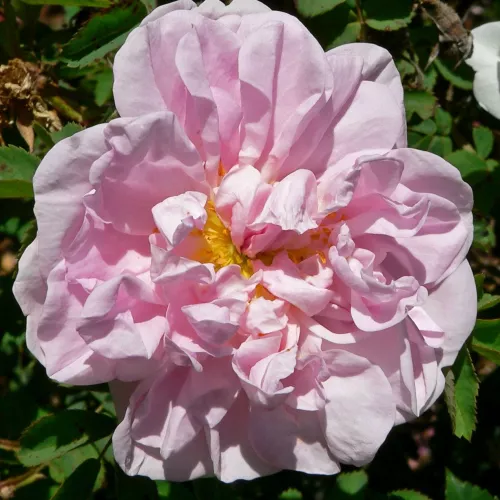
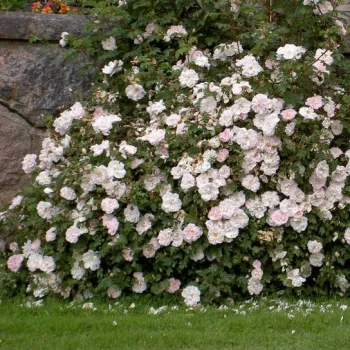
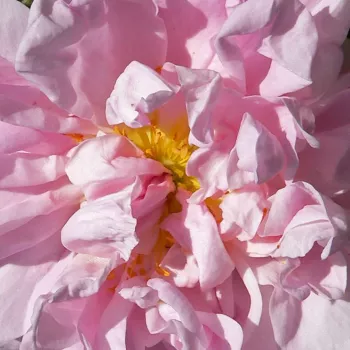
Uniform soft pastel pink with a tone leaning towards white. - wild rose - very strong, garden-filling fragrance rose - deep, damask-scented
– Silky, pale pink rosettes with vintage charm.
– Very strong, deep damask fragrance.
– Exceptionally winter-hardy down to –37 °C.
– Tolerates heat, moderate drought and shade.
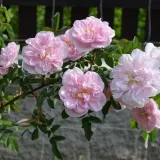
– Ideal for low‑maintenance, informal hedges.
– Special feature: Historic 1830s rose with RHS Award of Garden Merit and recommended by several historic rose gardens.
Eco-friendly garden design – Low maintenance
pharmaROSA® ORIGINAL 2-litre own-root potted rose
18,70 £
Unfortunately, we are currently unable to ship to the United Kingdom; we only deliver to countries within the European Union. For more information, please contact us!
3.5(5173)
STANWELL PERPETUAL – pale pink wild rose – Brown
Fragrant and softly romantic, STANWELL PERPETUAL brings old-fashioned charm to the family garden with its very double, pale pink rosettes and notably rich damask perfume. This historic shrub forms a bushy, spreading hedge or specimen with dense grey‑green foliage that looks natural yet tidy, suiting classic front gardens where you want impact without fuss. It is reliably hardy to severe cold and copes well with summer warmth, needing only basic care to thrive and flower repeatedly through the season. Its good self-cleaning means most spent blooms drop away on their own, helping you keep borders presentable even when time is short. As an own-root shrub it builds long-lived structure and regenerates well, giving a stable, maturing presence in your planting. In sun or light shade, the pastel flowers mix beautifully with cottage favourites, from daisies to low shrubs, and respond well to simple pruning approaches. In typical British conditions it handles sun, breeze and moisture changes confidently, offering a reassuringly reliable choice if you are new to roses. Ideal where you prefer a naturalistic, relaxed border feel over formality, it will gradually settle in, with roots establishing first, then stronger shoots, and by the third year reaching its full ornamental effect. Throughout this steady development, it remains easy to live with in the average home garden.
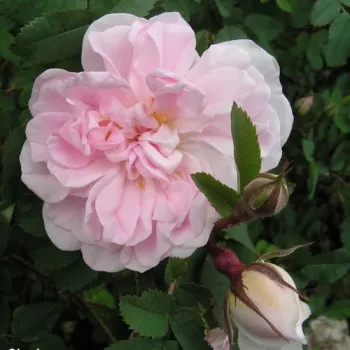
Closed bud of Stanwell Perpetual in creamy pink tones.
Stanwell Perpetual in the late flowering stage, with pale pink blooms fading toward white.
Usage options
Target area
Reasoning
Feature shrub in a small front garden
The bushy, spreading habit and dense grey‑green foliage make a single plant a graceful focal point near the front door or bay window, giving traditional cottage character without tight clipping or complicated shaping – ideal for beginners.
Informal flowering hedge along a boundary
Planted at hedge spacing, it forms a relaxed, thorny barrier with repeated flushes of pastel blooms, combining privacy, seasonal interest and security while needing only occasional height control – reassuring for busy owners.
Mixed cottage border with perennials and shrubs
The soft pale pink flowers and vintage rosette form blend naturally with herbaceous perennials and low shrubs, giving a romantic backdrop that looks full and established after a few seasons without intricate border design – perfect for cottage-garden lovers.
Low-maintenance family garden planting
Good self-cleaning and medium maintenance needs mean fewer deadheading rounds and a generally tidy look, so you can keep play spaces and seating areas attractive with straightforward watering and feeding – well suited to family gardeners.
Part-shaded side return or north-east aspect
Its tolerance of partial shade allows planting where many roses sulk, such as side paths or between houses, giving flower and fragrance in spots that might otherwise stay bare, a comfort for urban homeowners.
Cold-exposed or windswept positions
Exceptional winter hardiness and a tough shrub frame let it cope with exposed, breezy corners and temperature swings, so it settles well even where other roses struggle to overwinter reliably – helpful for coastal gardeners.
Large container on patio or terrace (40–60 litres)
In a generous pot it builds a compact, flowering shrub that can be moved or re-sited as the garden evolves, with own-root growth supporting long-term resilience and renewal in container culture – attractive for balcony-owners.
Traditional rose and shrub bed in front of the house
Historic character, strong fragrance and repeat flowering give classic British front gardens a settled, established look, while own-root plants gradually adapt to local soil and moisture, coping with changeable sun, breeze and rainfall – reassuring for style-conscious beginners.
Styling ideas
Front-door welcome – Position STANWELL PERPETUAL by a path with lavender and low St John’s-wort for a gently scented, evergreen-edged approach – ideal for homeowners who like a tidy entrance with minimal upkeep.
Cottage ribbon – Run a loose row along a picket fence, underplanting with dwarf Michaelmas-daisies and hardy geraniums for layered summer colour – suited to those creating a soft, traditional cottage-garden feel.
Romantic hedge – Combine several plants as an informal hedge, weaving in spring bulbs at the base to extend the season of interest – perfect for families wanting privacy and charm without strict formality.
Patio centrepiece – Grow it in a 40–60 litre terracotta pot, surrounding the base with trailing thyme or bacopa to soften the rim – a good option for small-plot or terrace gardeners needing moveable structure.
Heritage corner – Pair this historic rose with old-fashioned shrubs such as weigela and mock orange to build a scented, nostalgic nook – ideal for enthusiasts who appreciate period atmosphere in a modern garden.
Technical cultivar profile
Parameter
Data
Name and registration
Stanwell Perpetual – botanical hybrid with Hybrid Perpetual, Damask and Spinosissima background; current trade name Stanwell Perpetual Botanical rose Brown; unregistered cultivar in formal registers.
Origin and breeding
Bred by C. Brown around 1834 in the United Kingdom; parentage Rosa spinosissima × ‘Quatre Saisons’; introduced by Lee Nursery, England, in 1838 and associated with Hammersmith–Stanwell.
Awards and recognition
Holds the RHS Award of Garden Merit and is recommended by several historic rose gardens, confirming its long-term garden reliability and ornamental value under typical British growing conditions.
Growth and structural characteristics
Bushy, spreading shrub 80–130 cm high and 120–200 cm wide, densely thorned with matt grey‑green foliage and good self-cleaning, forming an informal, natural-looking structure suitable for hedges and specimen use.
Flower morphology
Medium-sized, very double rosette flowers with more than 40 petals, carried in clusters; remontant with a lighter second flush, providing several waves of blossom across the growing season in average conditions.
Colour data and phenology
Pale, pastel pink tending towards white; buds creamy pink, opening powder-pink then fading to porcelain white with pink centre, colour softening quickly in strong sun but staying slightly richer in cooler weather.
Fragrance and aroma
Very strong, deep damask fragrance that carries well in still air; ideal for planting near paths, seating or doors where the classic perfume can be appreciated throughout peak flowering periods.
Hip characteristics
Rose-hip production generally low due to very double blooms; occasional small spherical hips 10–16 mm across may develop, maturing to dark purplish-black tones that add subtle late-season interest.
Resistance and winter hardiness
Rated RHS H7 and hardy approximately to −37 to −34 °C, with good tolerance of heat and moderate drought; disease resistance medium, with typical susceptibility to powdery mildew, black spot and rust in damp seasons.
Horticultural recommendations
Suited to specimen, hedging, beds, parks and urban green spaces; prefers full sun or partial shade, moderate maintenance, and spacing from 90 to 165 cm depending on hedge, group or solitary planting layout.
STANWELL PERPETUAL offers fragrant historic charm, reliable hardiness and easy-going self-maintenance as an own-root shrub, making it a thoughtful choice if you would like a long-lived, characterful rose in your garden.
Detailed product attributes
Product Identification Data
Product Name:
STANWELL PERPETUAL – pale pink wild rose - Brown
Product Type:
pharmaROSA® ORIGINAL - 2-litre own-root potted rose
Meaning of Cultivar Name:
The name combines the village name Stanwell and the meaning of the word "Perpetual", namely that it is continuously flowering.
Cultivar Synonym:
Rosa pimpinellifolia ’Stanwell Perpetual’; Rosa spinosissima ’Stanwell Perpetual’
Hip Comment:
Rose‑hip formation is expected to be limited due to the double flowers; occasionally spherical, dark purplish‑black hips 10–16 mm in diameter may appear.
Our product is a rose grown with pharmaROSA®’s unique cultivation technology!
2-litre, own-root, potted rose.
With a shoot system appropriate to the season.
With a root system that thoroughly permeates the growing medium.
Quality compliant with the requirements of the E.N.A. (European Nurserystock Association).
Supplied in unique packaging that prevents damage.
Can be planted during frost-free periods.
True-to-variety rose bush with a unique identifier.
The pharmaROSA® own-root potted rose is a well-rooted plant that supports reliable establishment when planted and cared for properly, so it can be planted whenever the soil is not frozen.
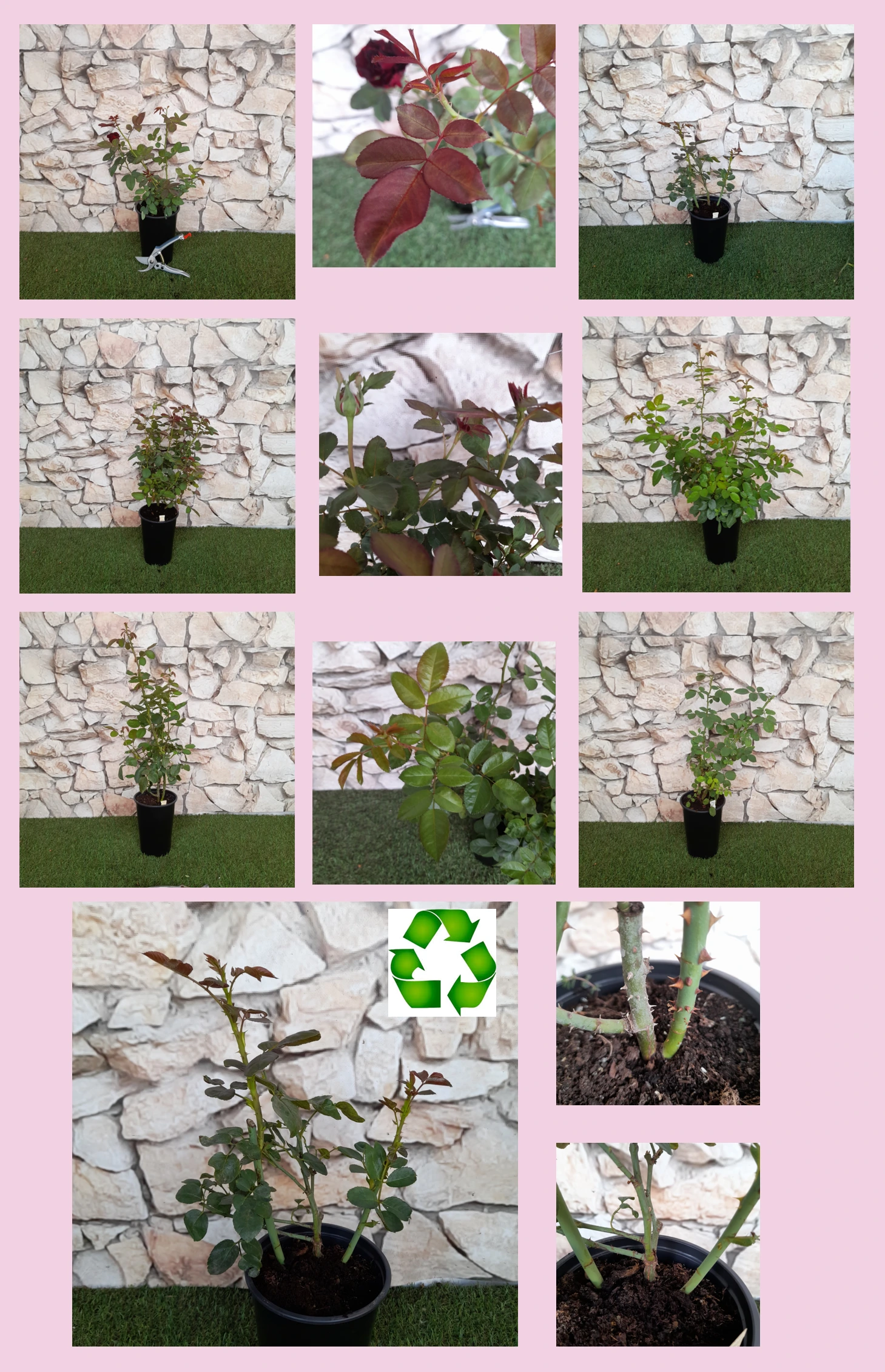
Crop overview: several varieties and growth stages in a short crop section.Shoot system: intensive growth of fresh basal shoots on a young plant.Root system: demonstration of a vigorous root system permeating the growing medium, by removing the pot.Balance: mature plant with root system and shoots in harmony with each other.
Information about the videos
The video series is not a “seasonal showcase”; it illustrates the essence of pharmaROSA® own-root cultivation in a tangible way: how the plant is built up, what the root system is like and how the shoot system regenerates. The recordings were therefore made at different times and with plants at various stages of development, so mixed foliage levels and differing stages of growth may appear in the videos. They are not a ‘sample’ of the batch dispatched, but a visual explanation of how the technology works. The current condition of the rose available to order — typical for the given period and similar to what you can expect to receive in the parcel — is shown in the upper part of the product page.
Pages for private customers Garden roses for the family garden, with minimal care → ORIGINAL® Premium garden roses – instant impact, a truly showpiece garden → EXTRA® Pages for professionals and private customers Roses for public spaces – large areas, sustainable maintenance → NATURAL® Roses for projects – hedge and row planting, fast implementation → RAPID® For professional partners only Production – propagation material for garden roses, wholesale → NEONATAL®
Company details
PharmaRosa Ltd. Company registration number: 01-09-717479 VAT number: 13075314-2-43 Plant health registration no.: HU130721 Bank account (IBAN): HU85117631891388688400000000 BIC (SWIFT): OTPVHUHB Bank name: OTP Bank Nyrt.