Delicate ivory base colour with a subtle buttery tint. - park rose - strong, long-lasting scented rose - muscat-like character
– Abundant repeat flowering over a long season.
– Strong, long‑lasting muscat‑like fragrance.
– Ivory white clusters with a soft buttery tint.
– Hardy shrub rose, RHS Award of Garden Merit.
– Dense, glossy foliage forms a graceful hedge.
– Special feature: Versatile for beds, hedges or pergolas, even in partial shade.
Refined flower colours – Thoughtfully curated range
pharmaROSA® ORIGINAL 2-litre own-root potted rose
18,70 £
Unfortunately, we are currently unable to ship to the United Kingdom; we only deliver to countries within the European Union. For more information, please contact us!
3(4896)
PROSPERITY – white park rose - Pemberton
Prosperity brings classic, ivory-white clusters and a cottage feel to family gardens, forming a bushy shrub that works beautifully in beds, along paths or as a relaxed hedge. Its fragrance is richly muscat-like and long-lasting, so even brief time outdoors is rewarded with scent. This own-root plant settles securely, building a strong framework for years of flowering with minimal intervention and dependable health. Over time it becomes a well-anchored shrub that copes well with breezy, rainy weather and heavier soils where good drainage is ensured. Flowering generously in early summer, then again later, it offers abundant flushes of small, cup-shaped blooms that age gracefully on the bush. You can prune flexibly for a lower front-garden shrub or a taller, screening shape, and it is equally at home in traditional borders, informal hedges, or as a specimen near a seating area. Given steady moisture and basic feeding it develops roots in the first year, then stronger shoots by the second, with full ornamental value unfolding from the third season onward.
Prosperity in full bloom, showing ivory-white semi-double flowers.
Prosperity shows dense, glossy dark green foliage.
Usage options
Target area
Reasoning
Front garden feature shrub
Forms a bushy, upright shrub with slightly nodding flower heads, giving a soft, welcoming look beside drives or front paths without dominating a small space. Reliable repeat flowering and tidy growth make it easy to live with for beginners.
Informal flowering hedge
Height of 130–200 cm and dense, glossy foliage make it well suited to loose, flowering boundaries, softening fences or dividing areas in a family garden while still letting light through. Plant at around 110 cm spacing for a relaxed line that suits homeowners.
Small mixed border in cottage style
Medium-sized, ivory clusters blend effortlessly with perennials and cottage favourites, creating a classic, layered border without complex planning. The refined, steady colouring makes it easy to coordinate with other plants, ideal for visually driven gardeners.
Specimen near seating or terrace
Its strong, muscat-like scent and repeat flushes of creamy-white blooms are best appreciated up close, so a single shrub near a bench or patio works very well, offering fragrance, structure and seasonal interest for relaxed evenings.
Flower bed in urban or family gardens
Medium maintenance with good disease balance suits busy owners who can manage occasional grooming and basic feeding but want steady result for the effort. Own-root growth builds a long-lived base, reassuring for long-term-minded buyers.
Large container on terrace (40–50 L+)
Can be kept in a robust 40–50 litre or larger container, giving height, scent and charm where borders are limited. Regular watering and feeding support repeat flowering, making it a practical choice for compact spaces used by families.
Pergola edge or low arch support
The bushy habit with slightly arching, flower-laden stems can be guided around a light support or low arch, softening structures without demanding precise training, a forgiving approach appreciated by time-pressed owners.
Mixed planting on heavier garden soils
Establishes a sturdy, well-rooted shrub that copes with typical British conditions, including exposed, rainy sites, provided drainage is reasonable and watering is managed during longer dry spells, which reassures cautious new gardeners.
Styling ideas
Classic-cream hedge – plant in a loose line with box or low lavender in front to frame paths or drives, creating a soft, scented boundary – ideal for homeowners who want structure with gentle cottage character.
Cottage-mix border – weave between pink lupins, blue catmint and soft grasses so the ivory clusters tie the colours together – suited to cottage-garden lovers who prefer relaxed, romantic planting.
Patio-centrepiece – grow one plant in a 50–60 litre clay pot with underplanting of trailing thyme or lobelia to bring scent and height onto a terrace – perfect for small-plot and balcony gardeners.
Entrance-focus – flank a front door or gate with a pair, underplanted with spring bulbs, for year-round welcome and summer fragrance – a good choice for style-conscious urban households.
Soft-screen corner – group three shrubs in a triangle to gently screen a seating area, combining with taller perennials for layered privacy – best for families seeking calm, semi-private garden spots.
Technical cultivar profile
Parameter
Data
Name and registration
Hybrid Musk shrub rose ‘Prosperity’, unregistered variety used under this traditional name; part of the Park – shrub rose group, sold as a premium own-root garden rose.
Origin and breeding
Bred in the United Kingdom by Rev. Joseph Hardwick Pemberton around 1919, from ‘Marie-Jeanne’ × ‘Perle des Jardins’; introduced commercially in 1921 via Hazlewood Bros., Australia.
Awards and recognition
Holds the RHS Award of Garden Merit, confirming dependable garden performance, sound health and ornamental value under typical UK conditions when given reasonable care and siting.
Growth and structural characteristics
Medium to tall shrub reaching about 130–200 cm in height and 100–160 cm spread, with bushy, upright growth and arching, flower-laden stems, moderately thorny and densely foliated.
Flower morphology
Bears small, semi-double, cup-shaped flowers in corymbose clusters, each with roughly 13–25 petals, creating generous trusses that cover the shrub in main flushes and later repeats.
Colour data and phenology
Ivory-white blooms with a fine buttery tint, from rosy-cream buds to creamy centres; colour holds well, with subtle pink edging in cooler weather and soft fading to snow-white tones.
Fragrance and aroma
Distinct, strong and long-lasting scent with a muscat-like character; attractive at close quarters around paths, seating and entrances, though flowers are only moderately attractive to pollinators.
Hip characteristics
Produces rose hips only sparingly, generally tiny fruits around 0–5 mm in diameter, so decorative hip display is limited and energy tends to remain focused on vegetative growth and flowering.
Resistance and winter hardiness
Hardy to about −21 to −18 °C (RHS H7, USDA 6b), with good tolerance of UK winters; moderate overall disease resistance with good powdery mildew resistance and fair black spot control.
Horticultural recommendations
Suited to beds, hedges and specimens at 110–200 cm spacing; prefers fertile, well-drained soil, regular watering in prolonged drought and light annual pruning to renew flowering wood.
PROSPERITY offers repeat creamy-white flowering, rich fragrance and adaptable shrub form on a long-lived own-root plant, making it a considerate, low-fuss choice for many British gardens.
Detailed product attributes
Product Identification Data
Product Name:
PROSPERITY – white park rose - Pemberton
Product Type:
pharmaROSA® ORIGINAL - 2-litre own-root potted rose
Pollinator Attraction:
Its flowers attract pollinators only to a limited extent, since flower form (single/semi‑double/double) and the accessibility of the stamens influence how attractive and accessible the nectar and pollen are to insects.
Pollinator-Friendly Rating:
Despite its semi-double blooms, it attracts pollinators only to a limited extent
Our product is a rose grown with pharmaROSA®’s unique cultivation technology!
2-litre, own-root, potted rose.
With a shoot system appropriate to the season.
With a root system that thoroughly permeates the growing medium.
Quality compliant with the requirements of the E.N.A. (European Nurserystock Association).
Supplied in unique packaging that prevents damage.
Can be planted during frost-free periods.
True-to-variety rose bush with a unique identifier.
The pharmaROSA® own-root potted rose is a well-rooted plant that supports reliable establishment when planted and cared for properly, so it can be planted whenever the soil is not frozen.
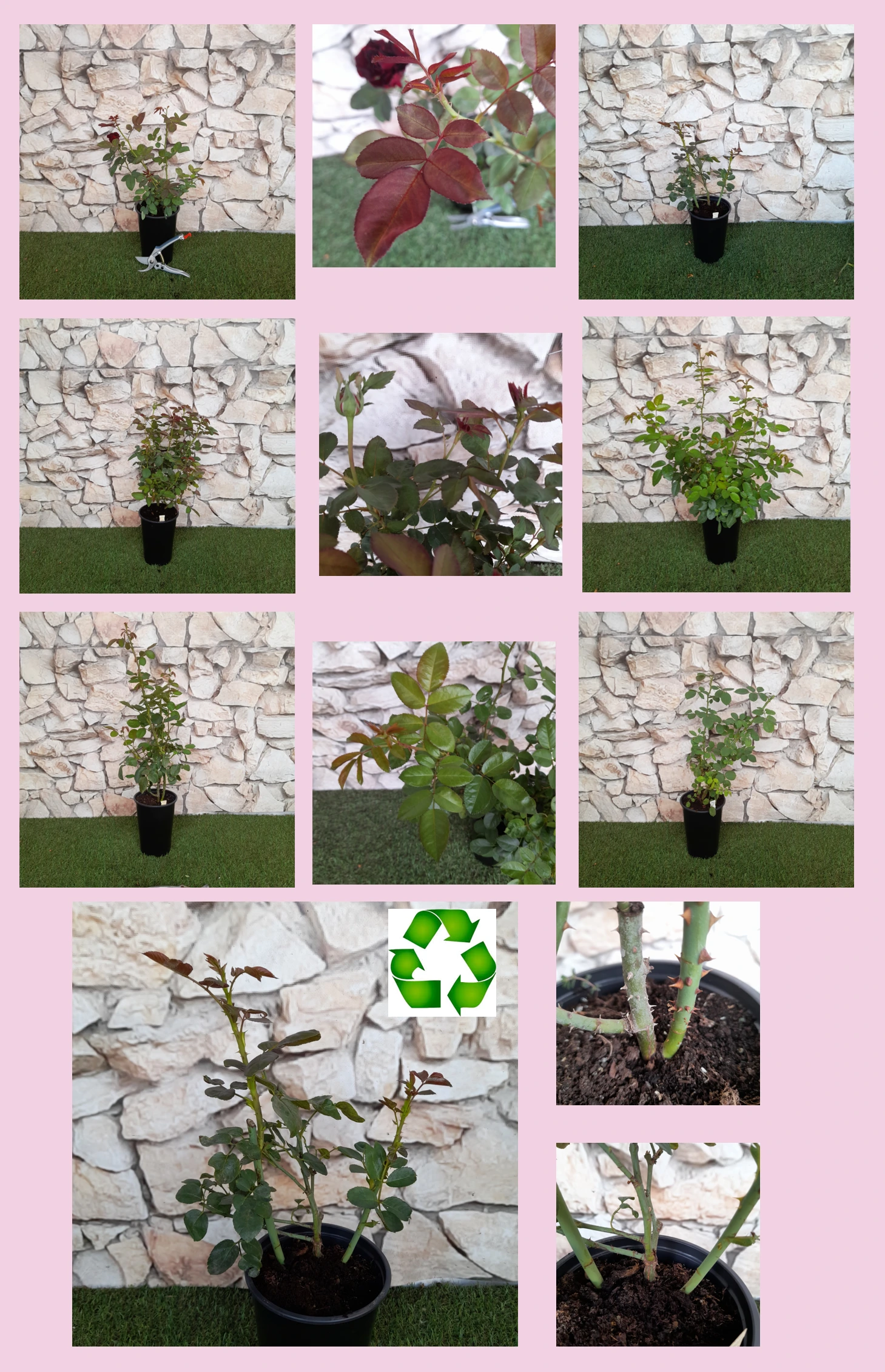
Crop overview: several varieties and growth stages in a short crop section.Shoot system: intensive growth of fresh basal shoots on a young plant.Root system: demonstration of a vigorous root system permeating the growing medium, by removing the pot.Balance: mature plant with root system and shoots in harmony with each other.
Information about the videos
The video series is not a “seasonal showcase”; it illustrates the essence of pharmaROSA® own-root cultivation in a tangible way: how the plant is built up, what the root system is like and how the shoot system regenerates. The recordings were therefore made at different times and with plants at various stages of development, so mixed foliage levels and differing stages of growth may appear in the videos. They are not a ‘sample’ of the batch dispatched, but a visual explanation of how the technology works. The current condition of the rose available to order — typical for the given period and similar to what you can expect to receive in the parcel — is shown in the upper part of the product page.
Pages for private customers Garden roses for the family garden, with minimal care → ORIGINAL® Premium garden roses – instant impact, a truly showpiece garden → EXTRA® Pages for professionals and private customers Roses for public spaces – large areas, sustainable maintenance → NATURAL® Roses for projects – hedge and row planting, fast implementation → RAPID® For professional partners only Production – propagation material for garden roses, wholesale → NEONATAL®
Company details
PharmaRosa Ltd. Company registration number: 01-09-717479 VAT number: 13075314-2-43 Plant health registration no.: HU130721 Bank account (IBAN): HU85117631891388688400000000 BIC (SWIFT): OTPVHUHB Bank name: OTP Bank Nyrt.