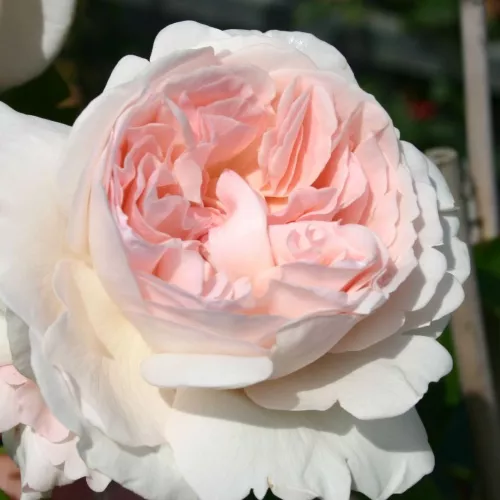
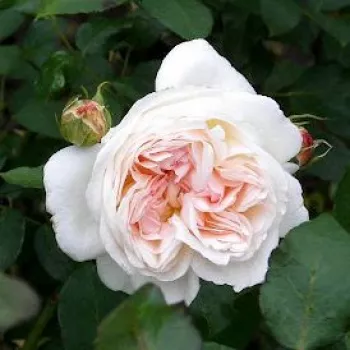
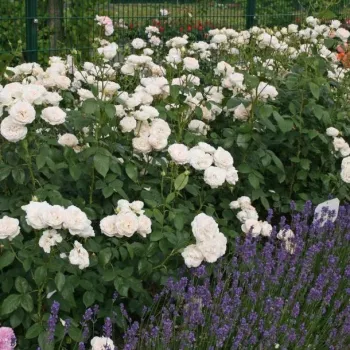
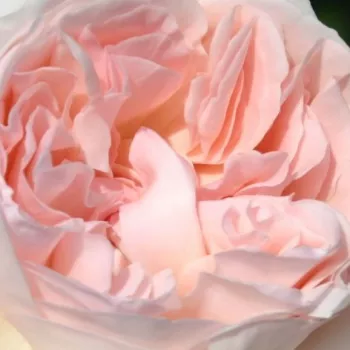
Sebastian Kneipp® hybrid tea rose – creamy‑white, strongly scented blooms
Elegant creamy‑white blooms, a reliable upright bush and strong fragrance make Sebastian Kneipp® an easy choice for front gardens and neat beds where you want impact without fuss. This hybrid tea’s dense dark foliage and disease-resistant constitution keep it looking presentable in typical British weather, even where breezes bring in extra rain and humidity can favour fungal problems. Regular flowering in clusters gives you a steady supply of long‑stemmed blooms for cutting, while its hardy nature and own‑root strength support a long garden life. Over time, roots establish, then shoots build up, and by the third season the bush reaches its full ornamental potential, fitting naturally into cottage‑style borders around the home.
Usage options
| Target area | Reasoning |
|---|
| Front garden focal point |
Used as a specimen by the path or near the door, Sebastian Kneipp® forms a tall, upright bush with large, creamy‑white blooms that read clearly from the pavement and complement traditional brick or render, ideal for visually minded beginners. |
| Small formal bed |
Planted in a group of three to five at the recommended spacing, the uniform height and regular flowering create a tidy, structured look that is easy to keep smart with simple deadheading, suiting time‑pressed homeowners. |
| Cottage‑style mixed border |
Its soft white and pearl‑pink tones blend beautifully with perennials and herbs, while the strong myrrh scent adds character among classic cottage plants without needing complex care, perfect for style‑conscious gardeners. |
| Cutting patch or cutting row |
The long, straight stems and very full hybrid tea blooms are excellent for vases and arrangements, providing reliable, scented cut flowers through the season from a modest bed, appreciated by practical flower‑loving families. |
| Low maintenance rose hedge |
In a loosely clipped line at hedge spacing, the dense foliage and good disease resistance form a visually solid boundary, with flowers repeating through summer that only need straightforward pruning, reassuring for casual gardeners. |
| Partial shade side border |
Along a house wall or side path with a few hours of sun, its tolerance of partial shade and strong colour presence still give a bright, calm effect, with routine watering the main task for busy urban owners. |
| Large container near seating |
In a 40–50 litre pot with fresh compost and regular watering, the upright habit and intense fragrance bring a refined presence to patios or balconies, requiring only light seasonal pruning for comfort‑seeking residents. |
| Weather‑exposed family garden border |
In more open, breezy plots where wet weather can linger, this variety’s strong resistance to common rose diseases supports a stable, healthy display despite damp spells and changeable conditions, suiting cautious new growers. |
Styling ideas
- Porch Welcome – Position a single bush by the front step with low evergreen edging for a crisp, classic entrance – ideal for owners who want instant elegance without complex planting schemes.
- Cottage Drift – Mix three roses with lavender, Nepeta and Brunnera for soft whites and blues flowing together – for those who love relaxed, romantic cottage borders.
- White Rose Walk – Line a narrow path with evenly spaced plants underplanted with hardy geraniums – suited to gardeners seeking a simple, repeatable layout that stays tidy.
- Patio Perfume – Grow one plant in a large container beside seating, backed by potted hostas for foliage contrast – perfect for balcony and terrace users wanting fragrance close at hand.
- Cutting Corner – Dedicate a small rectangular bed to a short row of this variety for easy harvesting of long‑stemmed blooms – appealing to home florists who enjoy arranging their own garden flowers.
Technical cultivar profile
| Parameter | Data |
|---|
| Name and registration |
Hybrid tea rose; registered as KORpastato, marketed as Sebastian Kneipp® hybrid tea rose KORpastato; exhibition name Sebastian Kneipp, hybrid tea group for garden and cutting use. |
| Origin and breeding |
Bred by Tim‑Hermann, Wilhelm and Margarita Kordes, W. Kordes’ Söhne, Germany; introduced and registered in 1997 through W. Kordes & Sons, with European protection from June 1997. |
| Awards and recognition |
Decorative and garden performance recognised with Geneva third prize 1999, Kortrijk silver medal 1999 and Magdeburg bronze medal 1999, confirming its stable ornamental and cutting qualities. |
| Growth and structural characteristics |
Upright, bushy habit reaching around 120–160 cm high and 85–115 cm wide, with dense, dark green, slightly glossy foliage and noticeably thorny shoots providing a robust, well‑filled presence. |
| Flower morphology |
Large, very full rosette blooms with over 40 petals, typically carried in clusters; remontant with a generous second flowering wave, suitable both for beds and as long‑stemmed cutting blooms. |
| Colour data and phenology |
Ivory buds with creamy‑white outer petals and a pearly pink centre that gradually fade to near‑pure white; ARS WBl, RHS 155D and 158C, with moderate colour retention under sun exposure. |
| Fragrance and aroma |
Strong, long‑lasting fragrance with a pronounced myrrh character, noticeable both in the garden and in the vase; heavily double form limits pollen access, so value is primarily decorative and olfactory. |
| Hip characteristics |
Due to very double flowers, hips are sparse; occasional small spherical red hips, around 6–10 mm in diameter, may appear late season but are not a dominant ornamental feature. |
| Resistance and winter hardiness |
Good resistance to powdery mildew, black spot and rust; winter hardy approximately to −21 to −18 °C (RHS H7, USDA 6b, Swedish zone 3), suitable for most permanent UK garden situations. |
| Horticultural recommendations |
Best in fertile, well‑drained soil with regular watering; suitable for beds, hedges, specimens and cutting; allow 60–110 cm spacing depending on use, and deadhead to encourage sustained flowering. |
Sebastian Kneipp® hybrid tea rose KORpastato offers elegant scented blooms, reliable repeat flowering and durable, disease‑resistant bushes that benefit from the long‑term stability of own‑root planting, making it a thoughtful choice for lasting garden structure.