Schöne vom See® MärchenRosen® – apricot bedding floribunda rose
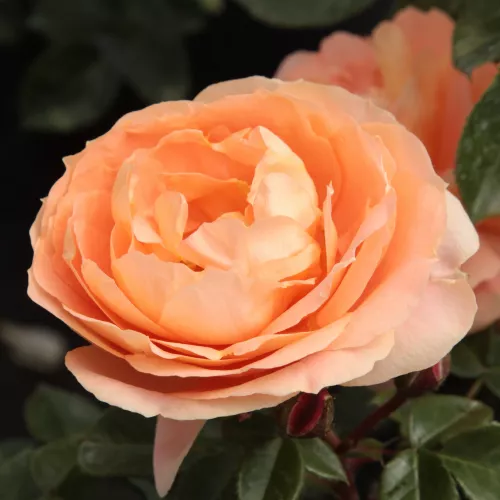
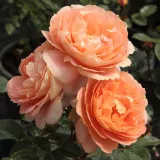
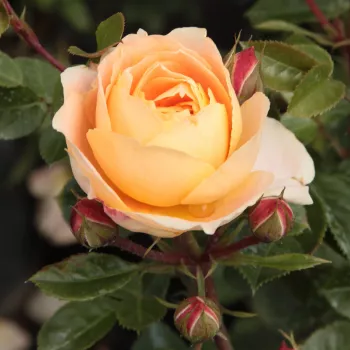
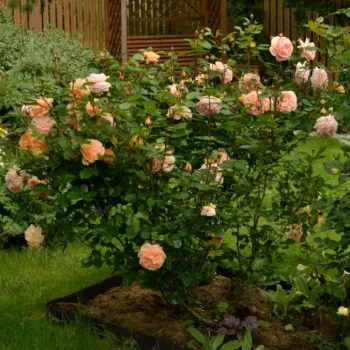
Apricot clusters of full, cup-shaped blooms give Schöne vom See® a classic cottage feel while its bushy habit and glossy foliage stay neat with minimal input, even in gardens where heavy soils mean you must manage drainage carefully. Bred by Kordes for strong, reliable disease resistance, this compact floribunda keeps flowering in generous flushes through the season, fading from vivid peach-orange to soft salmon and cream for a gentle, evolving palette. On its own roots it settles securely and builds a long-lived, well-balanced bush with stable structure and the capacity to regenerate if ever cut back harder. In a typical family garden it offers dependable flowering with simple pruning options – light trims for shape, or a lower, annual cut if you prefer – making it an easy-going choice for front gardens, low hedges and mixed borders where you want the rose to “grow into” the overall garden picture.
Usage options
| Target area | Reasoning |
|---|
| Front garden focal shrub |
The compact 65–90 cm height and 45–65 cm spread create a tidy, well-filled bush that sits comfortably by a path or doorstep without overwhelming a small space. Its bushy structure and dark, glossy foliage keep the plant looking finished even between flushes of flower, supporting a smart front garden look for the beginner. |
| Low, easy-care flowering hedge |
Recommended distances of 35–40 cm allow you to form a low, continuous hedge that flowers repeatedly, yet is straightforward to maintain with one annual trim. Strong hardiness to about –25 °C and the ability to regrow well from own-root make this a reliable edging choice for small family plots and the time-poor. |
| Small bedding groups and drifts |
Planting 6–8 plants per m² lets you build dense, floriferous drifts, with each bush carrying clusters of large, double flowers. Over the first three years root, shoot and then full display develop steadily, giving a clear visual return in modest beds for the budget-conscious. |
| Cottage-style mixed border |
The shifting peach, salmon-pink and creamy tones blend easily with perennials and classic companions such as clematis, giving a relaxed, romantic effect. The warm-toned clusters sit well with traditional cottage schemes, yet the plant’s disciplined habit suits smaller borders for the style-focused. |
| Low-maintenance family play garden |
High resistance to black spot, powdery mildew and rust means fewer chemical interventions and less time spent clearing damaged leaves, especially helpful in busy family gardens. The plant keeps a robust frame with moderate prickles that are manageable around paths for the cautious. |
| Containers and large patio pots |
The compact, bushy habit adapts well to a substantial container of at least 40–50 litres, where roots have room to establish and anchor securely. Good disease resistance helps the plant cope in pots, particularly in wetter, more exposed urban positions for the balcony-owner. |
| Neat around-the-house borders |
Its measured size and strong bush structure simplify pruning choices: you can lightly shape it or cut it back lower in late winter without risking the plant’s long-term form, as own-root growth steadily rebuilds a dense outline perfect for non-specialists. |
| Coastal or exposed suburban sites |
Robust framework, glossy foliage and reliable hardiness support planting where wind and wet weather can otherwise mar display, providing a stable, low hedge or group with limited pampering and suiting gardens that often struggle with wetter, heavier soils for the practical. |
Styling ideas
- Doorstep welcome – Plant a pair flanking the front door with low lavender for scent and soft contrast, giving an elegant, easy-care greeting for visitors – ideal for appearance-conscious homeowners.
- Cottage ribbon – Run a narrow line along a front path and weave in catmint or hardy geraniums, using the warm apricot clusters as a continuous floral thread – perfect for lovers of classic cottage charm.
- Peach border – Combine with cream roses, apricot foxgloves and soft grasses to create a gentle, tonal border where the colour fade of each bloom adds depth – suited to gardeners planning coordinated palettes.
- Family hedge – Form a low flowering boundary around a lawn, backed with evergreen shrubs for year-round structure and seasonal colour that asks little in return – good for busy young families.
- Patio feature – Grow one plant in a 50-litre terracotta pot with trailing thyme at the rim, placing it near seating for close-up enjoyment of the colour transitions – attractive for balcony and courtyard gardeners.
Technical cultivar profile
| Property | Data |
|---|
| Name and registration |
Floribunda bed rose from the MärchenRosen® collection; registered as KORbylosang, marketed as Schöne vom See® by Kordes with ARS exhibition name identical. |
| Origin and breeding |
Bred in Germany by Tim-Hermann Kordes (2001) from seedling × seedling; introduced after 2014 by W. Kordes’ Söhne with EU PBR 2013/2230 and US PP application in 2014. |
| Awards and recognition |
Highly decorated show rose with Baden-Baden Goldene Rose grand prize, multiple gold and silver medals in Europe, and Children’s Choice Award in Buenos Aires, confirming garden and exhibition merit. |
| Growth and structural characteristics |
Compact, bushy shrub 65–90 cm tall and 45–65 cm wide, with dense, dark green glossy foliage and moderate prickles; forms a balanced, rounded outline suitable for beds, borders and low hedging. |
| Flower morphology |
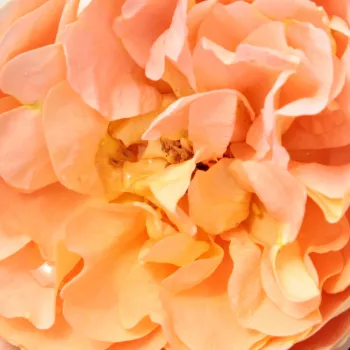
Large, cup-shaped, double flowers with 26–39 petals, produced in clusters on floribunda-type inflorescences; strongly remontant with a generous second flush and regular repeat through the season. |
| Colour data and phenology |
Intense peach-orange with golden sheen in bud, shading to salmon-pink and pastel cream as blooms age; ARS apricot, RHS 24A outer and 22A inner, with good colour retention before gentle fading. |
| Fragrance and aroma |
Fragrance is very weak and barely noticeable, so the variety is chosen primarily for its colour effect, flower form and garden performance rather than for scent or aromatic uses. |
| Hip characteristics |
Limited hip set expected due to double flowers; when formed, hips are small, spherical, and orange-red, around 7–11 mm diameter, adding occasional discreet autumn interest without seeding aggressively. |
| Resistance and winter hardiness |
Rated resistant to black spot, powdery mildew and rust, with RHS H7 hardiness and performance to approximately –26 to –23 °C, suiting most UK regions including colder inland and exposed gardens. |
| Horticultural recommendations |
Tolerant, low-maintenance shrub suited to small beds, hedges and containers; plant 35–60 cm apart depending on use, in well-drained but moisture-retentive soil, prune annually to maintain size and vigour. |
Schöne vom See® offers compact bushy growth, strong disease resistance and warm apricot clusters on a durable own-root framework, making it a tasteful long-term choice for uncomplicated British gardens.