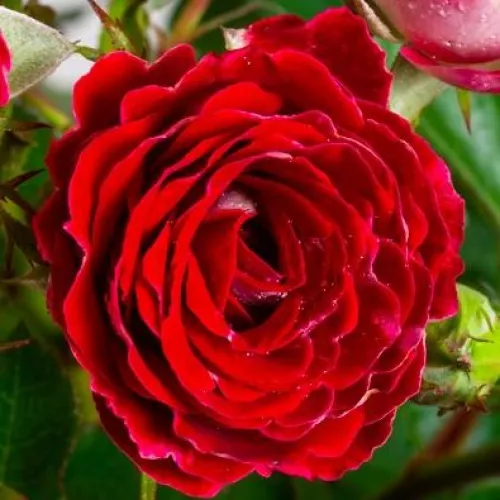
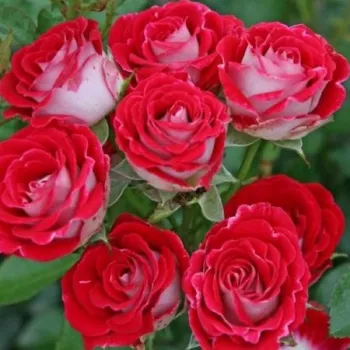
The inner surfaces of the petals are a full, velvety raspberry‑pink, while their outer sides show a silvery‑cream shade. - flowerbed floribunda rose - very weak, barely noticeable scented rose - delicate, sweet, rose-like character
– Abundant repeat flowering from summer to autumn.
– Compact, bushy habit for neat flowerbeds.
– Striking raspberry to cream bicolour blooms.
– Good heat and drought tolerance in summer.
– Barely thorny shoots for easier handling.
– Special feature: ADR-certified for reliable garden performance.
Season-spanning – Customer-centred focus
pharmaROSA® ORIGINAL 2-litre own-root potted rose
19,00 £
Unfortunately, we are currently unable to ship to the United Kingdom; we only deliver to countries within the European Union. For more information, please contact us!
3(4683)
Schöne Koblenzerin ® bedding rose – KORburox
This compact floribunda brings colour, order and cottage-garden charm to the average British front garden without demanding complex care. Schöne Koblenzerin ® forms a neat, bushy shape with glossy foliage and semi-double clusters that renew themselves throughout the season, keeping beds looking tidy as spent blooms fall cleanly. The velvety raspberry and cream-white flowers are particularly effective in small groups, edging paths or under windows where strong structure and reliable repeat-flowering matter more than perfume. Own-root plants settle steadily and are capable of quiet regrowth after harsher winters, supporting a long-lived planting that fits busy lives. With good heat tolerance and a reassuring response to typical British rain and wind, this variety copes well in exposed suburban spots. Expect a gentle development arc: the first year focuses on roots, the second on shoots, and by the third you enjoy full ornamental impact with minimal effort.
Schöne Koblenzerin® in full bloom, showing velvety raspberry-pink flowers with cream-toned outer petals.
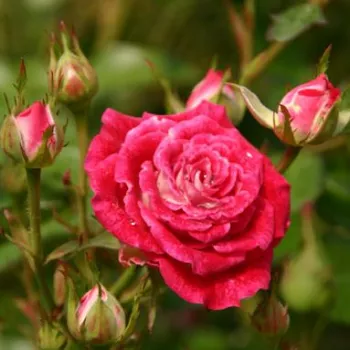
Schöne Koblenzerin® in the freshly opened stage, showing raspberry-pink inner petals and silvery cream outer sides.
Schöne Koblenzerin ® in cup-shaped, semi-double bloom.
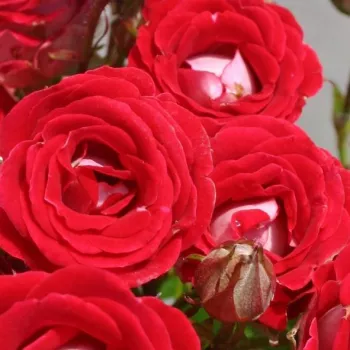
Schöne Koblenzerin® bud in deep raspberry red with a silvery edge.
Usage options
Target area
Reasoning
Front-garden flower beds along paths or drives
The upright, compact habit keeps front beds looking organised, with clusters of raspberry-cream blooms that refresh themselves as old flowers drop, reducing deadheading and keeping the display neat for those who prefer simple routines – ideal for the busy homeowner
Low hedging or edging for borders
Regular spacing at 35–40 cm creates a low, structured edge that reads clearly from the pavement, while medium maintenance needs and own-root resilience make it a dependable line of colour without complex pruning schemes – well suited to the practical gardener
Small groups of 3–5 plants in mixed cottage borders
Flowering in generous clusters across the season, it slots naturally among perennials and cottage classics, providing repeat colour that ties the border together year after year without dominating, especially useful where long-term stability matters – perfect for the cottage-style enthusiast
Specimen rose in compact beds or feature spots
As a single shrub at 60–85 cm, its bushy, glossy foliage and changing raspberry-to-cream blooms provide all-season interest in limited space, while own-root growth supports gradual maturation rather than short-lived impact – reassuring for the small-garden owner
Containers and large patio planters
The tidy size and upright form adapt well to a 40–50 litre pot on terraces or by front doors, and good heat tolerance helps it cope with sun-warmed paving, provided watering is regular, easing care for those who like roses close to the house – convenient for the patio gardener
Family gardens needing safe, low-prickle planting
The barely thorny stems offer a gentler option near play areas or paths, while the dense foliage and modest height keep the plant visually solid but not overbearing, allowing children and pets to pass nearby with fewer snags – appreciated by the family-focused owner
Season-long colour in modest maintenance schemes
Reliable remontant flowering with abundant second flushes and self-cleaning blooms delivers months of colour for those who mainly water and occasionally feed, providing visual reward without weekly attention, even when gardening time is limited – ideal for the time-poor beginner
Exposed suburban or coastal-leaning sites
Good heat tolerance and a steady response to breezy, changeable weather allow this rose to perform in typical British suburban spots, where some shelter is given by houses but wind and showers are frequent, keeping borders consistent and reassuring – suited to the urban front-gardener
Styling ideas
Cottage Ribbon – Plant in a loose line along a front path and intersperse with soft perennials like Gypsophila for a relaxed yet tidy edge – for lovers of informal cottage charm.
Patio Focus – Use a single shrub in a 50 litre terracotta pot by the front door, underplant with low herbs to emphasise its compact, upright form – for small-space homeowners.
Colour Block – Mass 5–6 plants in a square bed for a simple block of raspberry-cream colour that looks ordered even with minimal shaping – for those who prefer structured displays.
Soft Hedge – Create a child-friendly, low hedge along a lawn edge, making use of the low prickliness and bushy growth to mark boundaries without harsh lines – for family gardens.
Season Bridge – Mix with Liatris and calamint so the self-cleaning roses carry the eye while perennials weave through, giving evolving yet coherent colour – for design-conscious beginners.
Technical cultivar profile
Parameter
Data
Name and registration
Schöne Koblenzerin ® is a floribunda bed rose, registered as KORburox, introduced for garden use and exhibition as a flowerbed floribunda and shrub rose type.
Origin and breeding
Bred by Tim-Hermann Kordes at W. Kordes' Söhne, Germany, from unknown parents; bred in 1999, registered in 2009 and released commercially in Germany in 2011.
Awards and recognition
Holds the ADR 2009 award, indicating tested garden performance, overall health and ornamental value under Central European conditions without intensive chemical plant protection.
Growth and structural characteristics
Compact, upright, bushy shrub reaching about 60–85 cm high and 50–75 cm wide, with dense, glossy medium-green foliage and very few thorns, suitable for beds, borders and containers.
Flower morphology
Bears small, semi-double, cup-shaped flowers, typically 13–25 petals, in cluster-flowered trusses; remontant with an abundant second flush and good natural drop of spent blooms.
Colour data and phenology
Raspberry cream-white blooms with ARS rb and RHS 155C, 60A tones; colour opens velvety raspberry-pink, then lightens through pale pink to cream, fading more slowly in cooler weather.
Fragrance and aroma
Fragrance is very weak, with a delicate, sweet, rose-like character that is barely noticeable in the garden, making it better suited where colour and habit are higher priorities than scent.
Hip characteristics
Occasionally forms small spherical hips, about 5–8 mm in diameter, coloured orange-red; hips are not a dominant ornamental feature but may add discrete late-season interest.
Resistance and winter hardiness
Rated H7 and USDA zone 6b, tolerating around −21 to −18 °C; disease resistance is medium, with average tolerance to black spot, powdery mildew and rust, needing monitoring in damp seasons.
Horticultural recommendations
Prefers sunny positions; plant at 35–40 cm in groups, 65 cm as a specimen, at 5–6 plants/m²; moderate maintenance with occasional plant protection and regular watering in prolonged dry spells.
Schöne Koblenzerin ® offers compact, low-prickle growth, self-cleaning, season-long colour and the quiet durability of an own-root rose, making it a thoughtful choice for relaxed, long-term planting.
Flower Colour Description:
The inner surfaces of the petals are a full, velvety raspberry‑pink, while their outer sides show a silvery‑cream shade.
Closed Bud:
Deep raspberry red with a delicate silvery-edged border.
Newly Opened Flower:
The inner petals are an intense raspberry-pink, the outer faces a pale, silvery cream colour.
Full Bloom:
Velvety flowers in raspberry and pink tones, with a subtle silvery lightening at the edges of the petals.
Before Fading:
The raspberry hue fades to a pale pink, then to cream, with a delicate silvery sheen.
Colour Fading Description:
As the bloom opens the velvety raspberry–pink gradually fades to pale pink and then to cream; in cool weather the fading is slower.
Our product is a rose grown with pharmaROSA®’s unique cultivation technology!
2-litre, own-root, potted rose.
With a shoot system appropriate to the season.
With a root system that thoroughly permeates the growing medium.
Quality compliant with the requirements of the E.N.A. (European Nurserystock Association).
Supplied in unique packaging that prevents damage.
Can be planted during frost-free periods.
True-to-variety rose bush with a unique identifier.
The pharmaROSA® own-root potted rose is a well-rooted plant that supports reliable establishment when planted and cared for properly, so it can be planted whenever the soil is not frozen.
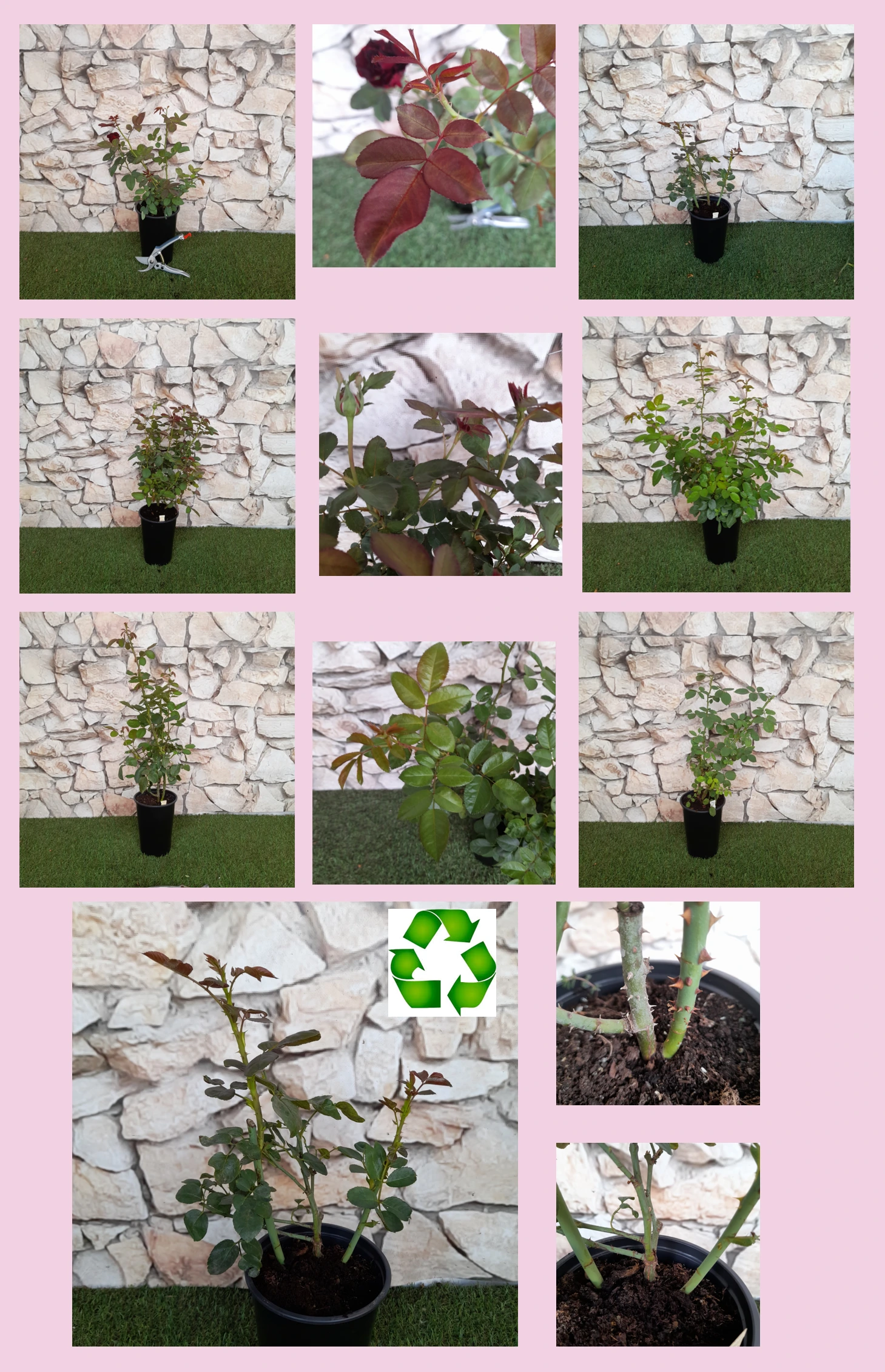
Crop overview: several varieties and growth stages in a short crop section.Shoot system: intensive growth of fresh basal shoots on a young plant.Root system: demonstration of a vigorous root system permeating the growing medium, by removing the pot.Balance: mature plant with root system and shoots in harmony with each other.
Information about the videos
The video series is not a “seasonal showcase”; it illustrates the essence of pharmaROSA® own-root cultivation in a tangible way: how the plant is built up, what the root system is like and how the shoot system regenerates. The recordings were therefore made at different times and with plants at various stages of development, so mixed foliage levels and differing stages of growth may appear in the videos. They are not a ‘sample’ of the batch dispatched, but a visual explanation of how the technology works. The current condition of the rose available to order — typical for the given period and similar to what you can expect to receive in the parcel — is shown in the upper part of the product page.
Pages for private customers Garden roses for the family garden, with minimal care → ORIGINAL® Premium garden roses – instant impact, a truly showpiece garden → EXTRA® Pages for professionals and private customers Roses for public spaces – large areas, sustainable maintenance → NATURAL® Roses for projects – hedge and row planting, fast implementation → RAPID® For professional partners only Production – propagation material for garden roses, wholesale → NEONATAL®
Company details
PharmaRosa Ltd. Company registration number: 01-09-717479 VAT number: 13075314-2-43 Plant health registration no.: HU130721 Bank account (IBAN): HU85117631891388688400000000 BIC (SWIFT): OTPVHUHB Bank name: OTP Bank Nyrt.