A uniformly pale, slightly candy‑toned pink predominates. A slightly more muted, powdery tone is visible on the petal undersides. - floribunda bedding rose - very faint, barely noticeable scented rose - sweet, rose-scented
– Romantic light-pink clusters in abundance.
– Bushy habit with dense, glossy foliage.
– Reliable repeat flowering through the season.
– Hardy to around –20 °C, RHS H7 rated.
– Compact bedding rose for beds and containers.
– Special feature: Two-tone petals evoke soft cherry-blossom mist.
Soil-friendly approach – Clean lines
pharmaROSA® ORIGINAL 2-litre own-root potted rose
21,20 £
Unfortunately, we are currently unable to ship to the United Kingdom; we only deliver to countries within the European Union. For more information, please contact us!
4(6051)
SAKURAGASUMI – light pink bedding floribunda rose - Suzuki
The softly clouded pink of Sakura-Gasumi creates a romantic haze of blossom that suits classic front gardens and small cottage-style beds. Its bushy, well-furnished habit builds into a balanced shrub, giving reliable shape without intricate pruning – an easy choice for busy gardeners who still want a tidy, flowering look. Clustered, cup-shaped blooms appear in generous flushes through the season, their light, sweet perfume and two-tone petals bringing a subtly elegant focus to paths, driveways and around-the-house borders. As an own-root rose it matures steadily into a long-lived, stable plant, forming its permanent framework where you place it for years of dependable performance. In a typical family garden it copes well with unsettled weather, from drizzle to blustery showers, offering reassuringly reliable colour even in changeable coastal-style conditions. Ideal for 40–50 litre patio containers or as a low hedge, it knits attractively into mixed plantings while remaining manageable to care for. Think of its development in simple terms: roots in the first year, stronger top growth in the second, and full ornamental value from the third, giving you time to enjoy how it gently matures into your garden.
Freshly opened Sakuragasumi bloom in soft blush pink.
Usage options
Target area
Reasoning
Front garden focal bed
The tidy, bushy habit and softly coloured clusters make this floribunda ideal for a small, central bed in a front garden where you want instant cottage character without complex design. It gives a composed, rounded outline that remains attractive between flower flushes, helping the planting feel settled and balanced from the street side, especially for beginners.
Low flowering hedge along a path or drive
Planted at the recommended spacing, Sakura-Gasumi forms a low, coherent line that reads as a single, airy pink cloud in bloom, yet stays narrow enough not to overpower a path or driveway. The moderate height and dense foliage give visual enclosure without turning into a solid wall, so maintenance stays practical and clipping or pruning can remain light for homeowners.
Mixed cottage border with perennials
The light, porcelain-pink flowers combine beautifully with white and blue cottage perennials, echoing a traditional British border feel. Its repeat-flowering clusters fill gaps between perennial peaks, so the border never looks bare after early-season highlights. The rounded structure anchors looser companions, keeping the scheme cohesive for style-focused gardeners.
Small group planting in compact beds
Groups of 3–5 plants create an even “cloud” of blossom and foliage that looks designed, not fussy, in small square or rectangular beds. This approach is forgiving of minor spacing inaccuracies and makes deadheading and feeding straightforward, because you are caring for one coherent unit rather than many scattered individuals, ideal for busy.
Patio container in 40–50 litre pots
In a sufficiently large container, the bushy framework and medium vigour of Sakura-Gasumi adapt well to life on a terrace or small patio, where you can enjoy the bloom detail at close range. A 40–50 litre pot gives enough volume for roots and moisture, making watering more forgiving and helping the plant cope calmly with wind and rain for urban balconies.
Around-the-house ornamental strip planting
Along house walls or fences, this variety gives structured greenery and colour without pushing too high or outwards, so windows and access remain clear. Own-root growth allows the shrub to rebuild if pruned harder after a few years, supporting a long-lived, tidy line that still feels soft and welcoming for long-term planning.
Simple family garden rose bed
In an average family garden, a single-species bed of Sakura-Gasumi is easy to understand and maintain: one feeding routine, one pruning approach, one look. Medium disease resistance and moderate water needs mean that, with basic care, the roses respond reliably year after year, suiting those who want dependable flowers without specialist techniques for families.
Informal edging to lawns or play areas
Used as an informal edging, the moderate spread and height define the edge of a lawn or play space without making it feel hemmed in. The soft colour reads as friendly rather than formal, while the sturdy, own-root base helps the plants withstand the occasional knock or ball, supporting long-term structure in active gardens for relaxed users.
Styling ideas
Cottage-curve border – Plant Sakura-Gasumi in a gentle curve with catmint and white foxgloves to evoke a soft cottage edge to a front lawn – ideal for lovers of traditional, romantic gardens.
Pink-entry focus – Flank your front door with two 40–50 litre pots of Sakura-Gasumi underplanted with trailing ivy for a neat, welcoming entrance – suited to homeowners wanting impact with minimal upkeep.
Soft-hedge ribbon – Create a low, flowering ribbon along a path using a simple row of plants, keeping other elements green and uncluttered – perfect for those who like clean lines with a gentle feel.
Family-friendly frame – Use a loose rectangle of Sakura-Gasumi around a small seating area, pairing with low grasses for movement – good for families seeking a calm, easy-going outdoor room.
Pastel-mix bed – Combine Sakura-Gasumi with pale salvia, white obedient plant and soft pink diascia for a pastel tapestry that flowers over a long season – suited to style-focused but time-poor gardeners.
Technical cultivar profile
Parameter
Data
Name and registration
Floribunda bedding rose, registered as Sakura-Gasumi and traded as Sakuragasumi Bedding rose Sakura-Gasumi; shrub rose exhibition class, light pink, own-root in a 2-litre container.
Origin and breeding
Bred by Seizo Suzuki at Keisei Rose Nursery, Japan, from ‘Fabergé’ × polyantha-origin seedling; bred and registered in 1988 and introduced commercially in 1990.
Growth and structural characteristics
Bushy shrub 80–160 cm high and 90–180 cm wide with dense, glossy dark green foliage and moderate prickles; medium vigour, forming a rounded, well-furnished garden bush over time.
Flower morphology
Large, double, cup-shaped clusters with 26–39 petals on floribunda-style trusses; remontant with plentiful second flush, though many spent blooms need manual removal due to medium self-cleaning.
Colour data and phenology
Light pink (RHS 65C outer, 65D inner) with porcelain and raspberry nuances; blooms show two-tone pink and creamy-white eye before fading to powdery, peach-salmon tones with darkening stamens.
Fragrance and aroma
Sweet, rose-scented character but very faint and often barely noticeable in normal garden conditions; selected primarily for ornamental flower effect rather than for strong perfume or cutting use.
Hip characteristics
Produces few hips due to double flowers; where formed, hips are small, spherical, 5–9 mm in diameter, bright red and decorative in close view but not typically a major landscape feature.
Resistance and winter hardiness
Hardy to approximately –21 to –18 °C (RHS H7, Swedish zone 3, USDA 6b); medium resistance to black spot, powdery mildew and rust; tolerates typical UK summers with regular watering.
Horticultural recommendations
Best in sunny beds, borders or large containers; plant 80–90 cm apart for hedging and bedding; prefers well-drained soil, moderate feeding and periodic deadheading and disease monitoring.
SAKURAGASUMI offers soft, romantic colour, a balanced bushy habit and long-lived, own-root reliability, making it a thoughtful choice if you seek a gentle but dependable rose for everyday garden enjoyment.
Flower Colour Description:
A uniformly pale, slightly candy‑toned pink predominates. A slightly more muted, powdery tone is visible on the petal undersides.
Closed Bud:
Pale, cool baby-pink with delicate raspberry tips.
Newly Opened Flower:
Porcelain–blush pink base, with a subtler raspberry‑to‑carmine blush at the petal edges.
Full Bloom:
Two-tone effect with a vivid pink edge and an extensive, creamy-white centre (eye), golden stamens and marbled lightening on some petals.
Before Fading:
The pink dulls and fades to a salmon-powder hue, the centre fades to creamy white, the stamens darken to ochre-brown.
Colour Fading Description:
During opening the pink edge may briefly become more vivid, then the flower fades to a peach–powder tone, while the centre pales to cream-white.
Pollinator Attraction:
With a tea‑hybrid habit and fully double flowers that conceal the stamens, it generally attracts fewer pollinating insects because the flower form (simple/semi‑double/double) and reduced stamen accessibility limit pollen and nectar access.
Pollinator-Friendly Rating:
Its double flowers mostly enclose the stamens, making it primarily an ornamental variety
Heat and Drought Tolerance Description:
Tolerates heat moderately; generally performs consistently with regular watering and does not favour prolonged drought.
Our product is a rose grown with pharmaROSA®’s unique cultivation technology!
2-litre, own-root, potted rose.
With a shoot system appropriate to the season.
With a root system that thoroughly permeates the growing medium.
Quality compliant with the requirements of the E.N.A. (European Nurserystock Association).
Supplied in unique packaging that prevents damage.
Can be planted during frost-free periods.
True-to-variety rose bush with a unique identifier.
The pharmaROSA® own-root potted rose is a well-rooted plant that supports reliable establishment when planted and cared for properly, so it can be planted whenever the soil is not frozen.
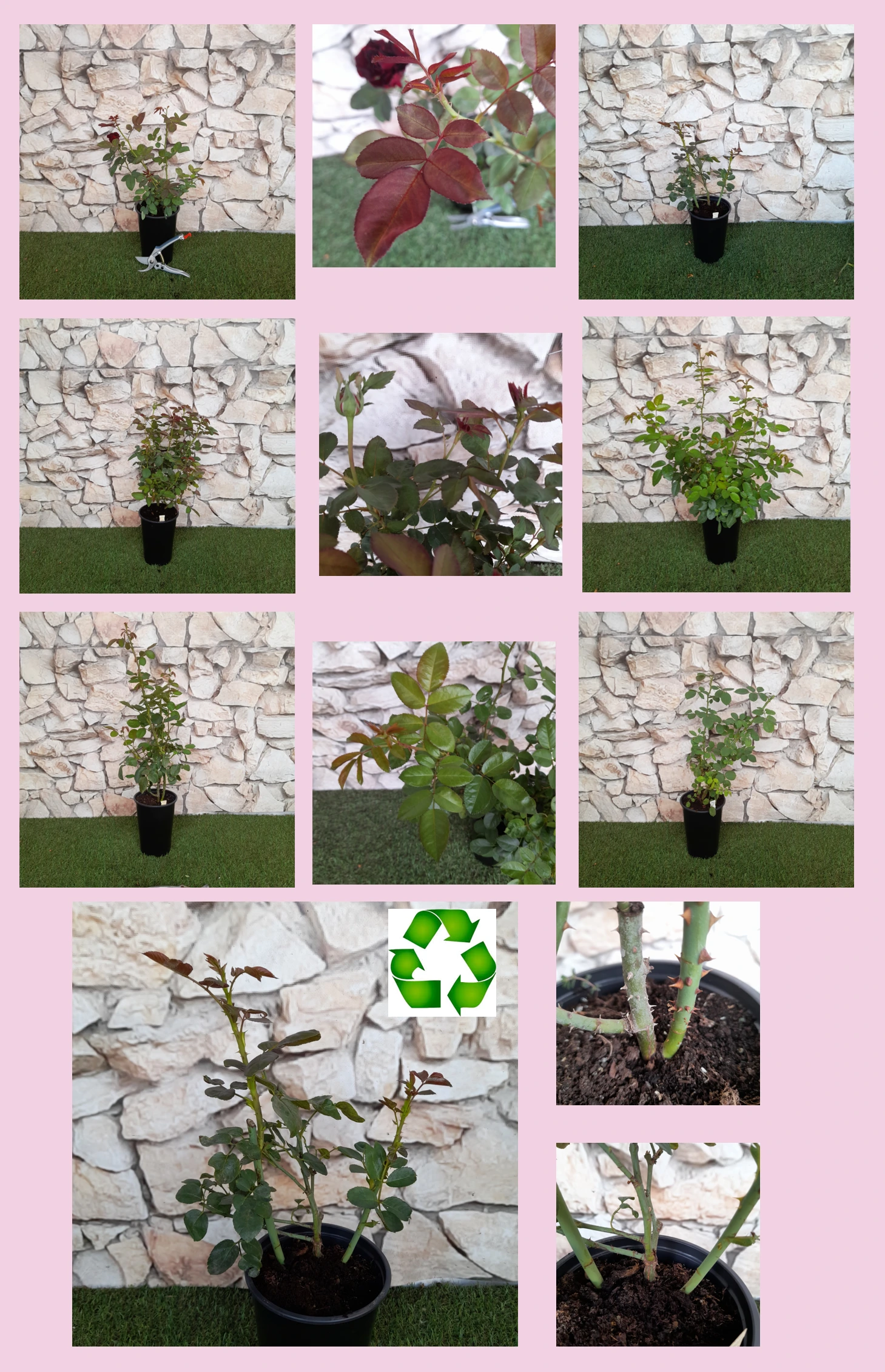
Crop overview: several varieties and growth stages in a short crop section.Shoot system: intensive growth of fresh basal shoots on a young plant.Root system: demonstration of a vigorous root system permeating the growing medium, by removing the pot.Balance: mature plant with root system and shoots in harmony with each other.
Information about the videos
The video series is not a “seasonal showcase”; it illustrates the essence of pharmaROSA® own-root cultivation in a tangible way: how the plant is built up, what the root system is like and how the shoot system regenerates. The recordings were therefore made at different times and with plants at various stages of development, so mixed foliage levels and differing stages of growth may appear in the videos. They are not a ‘sample’ of the batch dispatched, but a visual explanation of how the technology works. The current condition of the rose available to order — typical for the given period and similar to what you can expect to receive in the parcel — is shown in the upper part of the product page.
Pages for private customers Garden roses for the family garden, with minimal care → ORIGINAL® Premium garden roses – instant impact, a truly showpiece garden → EXTRA® Pages for professionals and private customers Roses for public spaces – large areas, sustainable maintenance → NATURAL® Roses for projects – hedge and row planting, fast implementation → RAPID® For professional partners only Production – propagation material for garden roses, wholesale → NEONATAL®
Company details
PharmaRosa Ltd. Company registration number: 01-09-717479 VAT number: 13075314-2-43 Plant health registration no.: HU130721 Bank account (IBAN): HU85117631891388688400000000 BIC (SWIFT): OTPVHUHB Bank name: OTP Bank Nyrt.