Pure, even golden‑yellow shade with a glossy finish. - flowerbed floribunda rose - strong, noticeably scented rose - sweetly spicy aroma
– Strong, sweetly spicy fragrance in bloom
– Rich golden-yellow colour that hardly fades
– Reliable repeat flowering with abundant clusters
– Medium disease resistance and winter hardy to H7
– Versatile: bedding, hedges, containers, cut flowers
– Special feature: Awarded Golden Rose at Rose Hills International Rose Trials (2016).
In harmony with nature – Safe long-term
pharmaROSA® ORIGINAL 2-litre own-root potted rose
18,20 £
Unfortunately, we are currently unable to ship to the United Kingdom; we only deliver to countries within the European Union. For more information, please contact us!
3(3449)
WEKMAJUCHI – golden-yellow bedding floribunda rose – Bédard
Sunshine clusters of golden blooms make this floribunda an easy choice for neat, tidy front gardens and relaxed cottage borders where you want dependable colour rather than complicated care. Its bushy, medium-height growth quickly fills its space, while the good self-cleaning flowers keep the plant looking fresh without constant deadheading. The colour stays remarkably stable, with barely any fading, so beds and edging lines hold their design impact even through summer showers and blustery spells that bring wind and rain off the coast. Strong, sweetly spicy fragrance adds classic rose character close to paths and doors, and the floriferous clusters are excellent for cutting. As an own-root rose, it builds a long-lived, balanced bush that is easy to maintain and rejuvenate over time, following a natural rhythm of Year 1 roots, Year 2 shoots, Year 3 full impact in the garden, giving you a reliable, low-stress feature for family spaces.
Pre-fading blooms of Doris Day in saturated golden yellow.
Doris Day shows its long-lasting golden-yellow colour with only minimal fading.
Usage options
Target area
Reasoning
Front garden bedding
The bushy, medium-height habit and naturally rounded outline make this rose ideal for smart but unfussy front-garden beds. Good self-cleaning keeps the bed presentable between visits, with spent blooms dropping cleanly rather than hanging on. The strong, sweetly spicy scent greets you at the gate without demanding expert care, suiting those who want classic roses with minimal fuss for busy beginners
Small cottage-style group planting
Planted in groups of three to five, the even, golden-yellow clusters create a glowing block of colour that blends easily with perennials and traditional cottage favourites. The shade hardly fades, so it holds its place among softer tones without washing out in midsummer sun. This predictable colour performance makes border planning simpler for aesthetics-focused owners
Low-maintenance edging and paths
The balanced spread and medium density foliage form a defined edge without becoming leggy, helping you frame paths and driveways in a straightforward way. Good self-cleaning reduces the need for constant deadheading to keep the line neat, while regular pruning once a year is usually enough to maintain shape. This supports a smart, “plant it and it works” look for time-poor gardeners
Mixed borders with shrubs and perennials
The versatile floribunda form sits comfortably mid-border, weaving between companion plants such as heuchera, lythrum or Russian sage. Its reliable repeat flowering brings recurring highlights of colour, while own-root growth allows the bush to adapt gradually to soil conditions and moisture levels, settling into a stable, long-term presence. This gives confidence when planning enduring schemes for long-view planners
Containers and large patio pots
In a 40–50 litre or larger container, the compact yet generous flowering habit provides a strong vertical accent without overwhelming small terraces. The strong fragrance is easily appreciated near seating areas, and self-cleaning flowers help keep the pot looking cared-for between light tidy-ups. With sensible watering during dry spells, it remains a reliable choice for urban balcony users
Weather-exposed family gardens
Clusters of medium-sized blooms and sturdy growth cope well with changeable British weather, retaining their clear colour with minimal fading even after rain and blustery days typical of gardens that experience frequent strong breezes and heavier showers. The medium disease resistance allows for straightforward care routines and occasional preventative treatments, striking a practical balance for coastal homeowners
Cutting for indoor vases
The floribunda’s clustered stems produce multiple, very double blooms with a refined cup shape and strong, sweetly spicy scent, ideal for informal bunches. Medium-length stems are easy to cut without spoiling the plant’s outline, and regular picking encourages further flowering. This brings the garden experience indoors in a simple, rewarding way for home decorators
Long-term feature planting
As an own-root rose with a solid, bushy frame, this cultivar is well suited to long-lived positions such as near entrances, seating areas or focal beds, where a dependable, repeated display is needed year after year. Its ability to regenerate from the base and maintain a balanced shape reduces the risk of unsightly gaps, supporting a durable, low-anxiety choice for low-maintenance seekers
Styling ideas
Golden-edged path – Plant in a loose double row along a front path, underplanted with low heuchera for contrast, creating a tidy, fragrant welcome – ideal for busy householders.
Cottage glow – Combine small groups with lythrum and hardy geraniums in a mixed border for a soft cottage look, using the stable yellow flowers as a constant colour anchor – perfect for cottage-garden enthusiasts.
Patio focal pot – Grow a single plant in a 50 litre terracotta pot beside a bench, with trailing thyme at the base, for easy-care scent and colour near seating – suited to compact patio owners.
Sunrise corner bed – Mass-plant three to five shrubs in a corner bed, backed by taller shrubs, to form a glowing golden “sunrise” focus that needs only annual pruning – good for novice gardeners.
Family front border – Mix with Russian sage and ornamental grasses along a drive or front fence, creating a robust, wind-tolerant strip that looks good between light maintenance visits – great for family gardens.
Technical cultivar profile
Property
Data
Name and registration
Floribunda bed rose, registered as WEKmajuchi, marketed as Wekmajuchi – golden-yellow bedding floribunda rose – Bédard; also exhibited under the name Doris Day in floribunda classes.
Origin and breeding
Bred by Christian Bédard (USA) in 2011 from ‘Julie Newmar’ × ‘Julia Child’; introduced by Weeks Wholesale Rose Grower, Inc. in the USA in 2015 after 2013 registration.
Awards and recognition
Received the Golden Rose award at the Rose Hills International Rose Trials in 2016, indicating strong ornamental merit and reliable garden performance in trial conditions.
Growth and structural characteristics
Bushy, medium-height shrub reaching around 120–160 cm in both height and spread, with medium-density dark green foliage and dense prickling; forms a solid, rounded, bed-filling framework.
Flower morphology
Very double, cup-shaped blooms with over 40 petals, produced in clusters on floribunda-style stems; medium size (around 1.5–2.75 in) and remontant, with abundant repeat flushes in season.
Colour data and phenology
Pure, glossy golden-yellow flowers (RHS 14B outside, 14A inside), opening bright and even, with minimal fading; colour remains saturated through the bloom’s life for consistent bed impact.
Fragrance and aroma
Strong, sweetly spicy fragrance readily noticeable at close range, especially useful along paths or near seating; dense petal formation prioritises ornamental and scent value over pollinator access.
Hip characteristics
Occasional spherical hips, 16–24 mm in diameter, maturing to orange-red shades (RHS 28A–30C); decorative in autumn but not usually a dominant feature in standard garden use.
Resistance and winter hardiness
Hardy to approximately –21 to –18 °C (RHS H7, USDA 6b); tolerates heat with regular watering. Medium disease resistance, notably good against powdery mildew, with moderate black spot and rust.
Horticultural recommendations
Best in sunny positions with well-drained soil; moderate maintenance with regular feeding and annual pruning. Suitable for beds, edging, containers, cut flowers, and solitary or park plantings.
WEKmajuchi offers long-lasting golden-yellow clusters, good self-cleaning, strong fragrance and durable own-root growth, making it a dependable choice for relaxed but refined family gardens—well worth considering for your next planting.
Detailed product attributes
Product Identification Data
Product Name:
WEKMAJUCHI – golden-yellow bedding floribunda rose - Bédard
Product Type:
pharmaROSA® ORIGINAL - 2-litre own-root potted rose
Foliage:
The variety's foliage has medium density; the leaves' surface characteristics are not clearly classifiable and their colour is a dark green shade.
Pollinator Attraction:
Double (as opposed to simple or semi‑double) blooms with 40+ petals have limited appeal to pollinators because the dense petal form hides the stamens and restricts access to nectar and pollen.
Our product is a rose grown with pharmaROSA®’s unique cultivation technology!
2-litre, own-root, potted rose.
With a shoot system appropriate to the season.
With a root system that thoroughly permeates the growing medium.
Quality compliant with the requirements of the E.N.A. (European Nurserystock Association).
Supplied in unique packaging that prevents damage.
Can be planted during frost-free periods.
True-to-variety rose bush with a unique identifier.
The pharmaROSA® own-root potted rose is a well-rooted plant that supports reliable establishment when planted and cared for properly, so it can be planted whenever the soil is not frozen.
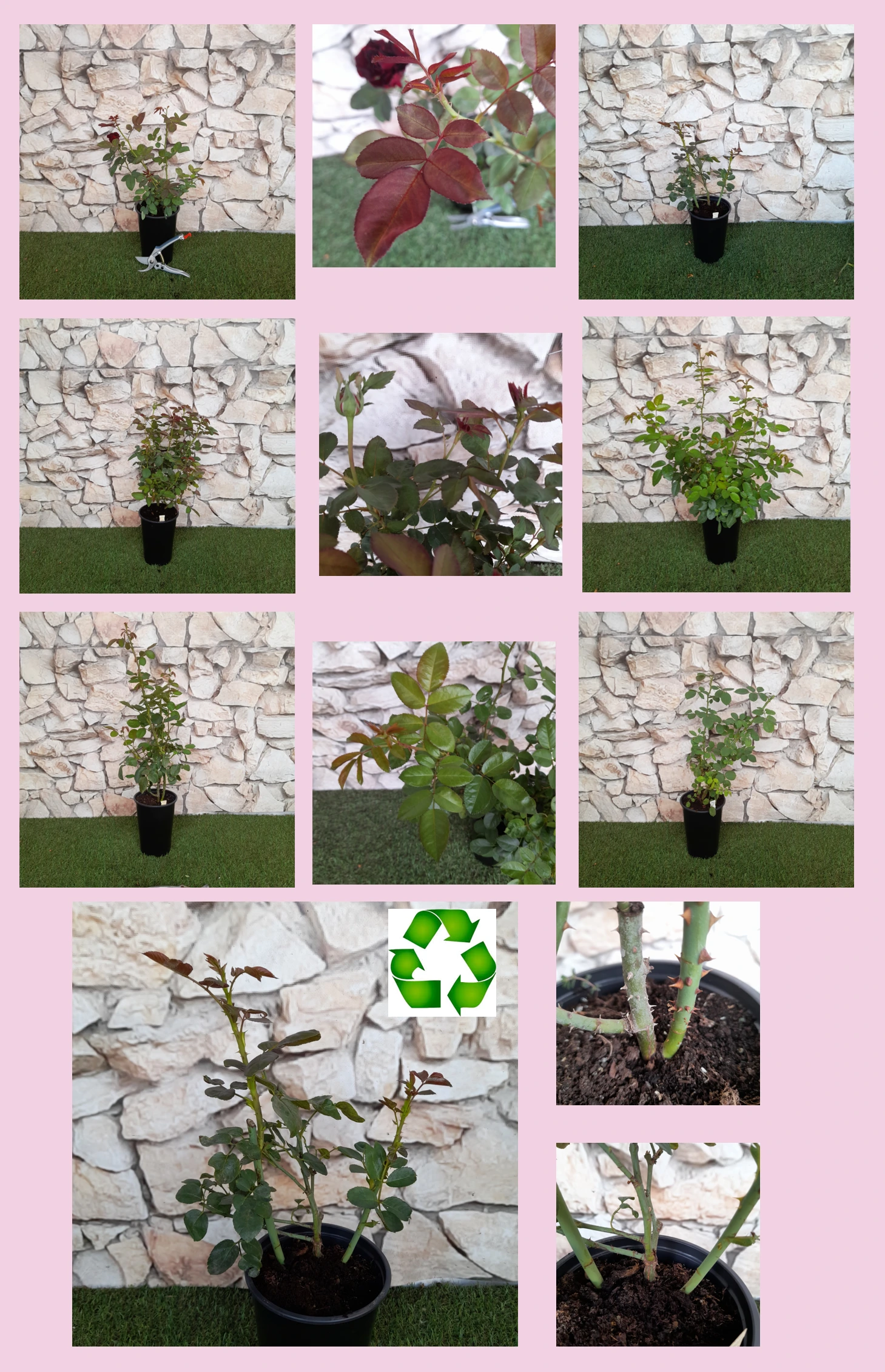
Crop overview: several varieties and growth stages in a short crop section.Shoot system: intensive growth of fresh basal shoots on a young plant.Root system: demonstration of a vigorous root system permeating the growing medium, by removing the pot.Balance: mature plant with root system and shoots in harmony with each other.
Information about the videos
The video series is not a “seasonal showcase”; it illustrates the essence of pharmaROSA® own-root cultivation in a tangible way: how the plant is built up, what the root system is like and how the shoot system regenerates. The recordings were therefore made at different times and with plants at various stages of development, so mixed foliage levels and differing stages of growth may appear in the videos. They are not a ‘sample’ of the batch dispatched, but a visual explanation of how the technology works. The current condition of the rose available to order — typical for the given period and similar to what you can expect to receive in the parcel — is shown in the upper part of the product page.
Pages for private customers Garden roses for the family garden, with minimal care → ORIGINAL® Premium garden roses – instant impact, a truly showpiece garden → EXTRA® Pages for professionals and private customers Roses for public spaces – large areas, sustainable maintenance → NATURAL® Roses for projects – hedge and row planting, fast implementation → RAPID® For professional partners only Production – propagation material for garden roses, wholesale → NEONATAL®
Company details
PharmaRosa Ltd. Company registration number: 01-09-717479 VAT number: 13075314-2-43 Plant health registration no.: HU130721 Bank account (IBAN): HU85117631891388688400000000 BIC (SWIFT): OTPVHUHB Bank name: OTP Bank Nyrt.