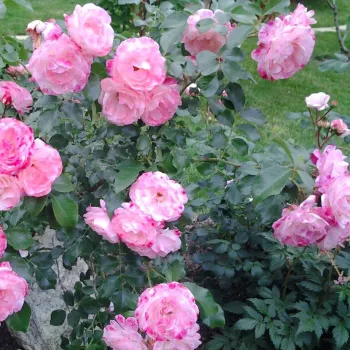
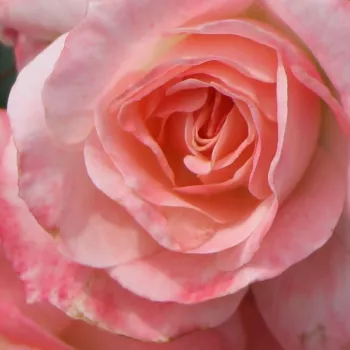
ROSENSTADT FREISING ® – white-pink bedding floribunda rose - Kordes
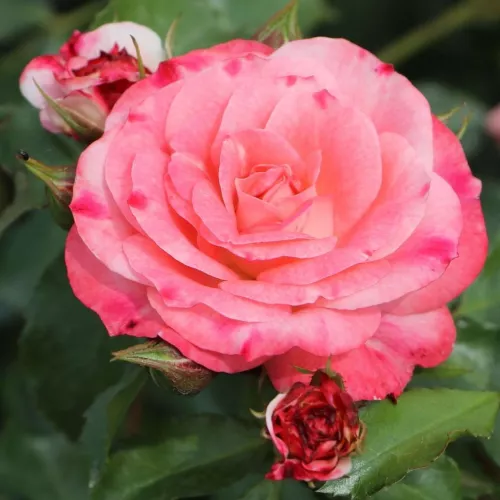
This floribunda rose brings reliability and visual impact to the typical family garden, offering naturally tidy growth with low day-to-day maintenance. Its upright, bushy structure and dense dark green foliage create a neat framework that suits front gardens, edging and smaller beds, even where winds and rain are frequent along exposed streets or coastal plots. The semi-double, cupped blooms open repeatedly in generous flushes, giving a long flowering season from an early age, while its good disease resistance keeps foliage attractive without complex spraying regimes. Own-root production supports long-term garden longevity, forming a balanced shrub that regenerates well after pruning or harsh weather. Clusters of white blooms with carmine-red edging and pink speckles create a bright cottage-style display that pairs beautifully with perennials in mixed borders or small planting groups. Its self-cleaning habit means most spent blooms fall away on their own, supporting a consistently tidy look with minimal deadheading. Over time, you can expect a natural development arc: stronger root growth in the first year, more structural shoots in the second, and full ornamental value by the third. Semi-double, pollen-rich flowers also offer gentle pollinators interest in a busy family setting without demanding specialist care.
Usage options
| Target area |
Reasoning |
| Front garden feature shrub |
The upright habit and dense, glossy foliage form a naturally structured shrub that anchors a small front garden without overshadowing windows. Its long-season flowering means reliable colour by the door with only light annual pruning – ideal for the style-focused homeowner |
| Low-maintenance bedding and edging |
Good disease resistance and a self-cleaning habit reduce routine tasks, so beds and edging stay neat even if you miss a few weekends in the garden. This supports a “plant it and let it work” approach that suits the time-poor beginner |
| Small group planting in family borders |
Planting 3–5 shrubs in a loose group creates an even white-and-pink display that reads clearly from the street and from indoor windows. Regular repeat flowering keeps borders lively across summer, rewarding the keen but busy hobby-gardener |
| Cottage-style mixes with perennials |
The patterned petals and medium-sized clusters mix easily with phlox, lychnis or airy grasses, echoing classic cottage borders in compact spaces. The consistent colour and form simplify combining plants for the aesthetically minded urbanite |
| Informal low hedge or boundary strip |
Its moderate height and upright, branching habit make a soft, flowering line along paths, drives or low fences. Own-root growth forms a stable hedge that recovers well from pruning and occasional knocks, reassuring the practical family |
| Containers and large patio planters |
In a 40–50 litre or larger container, the bushy structure and steady repeat flowering give a strong vertical accent for patios or terraces. The tidy, self-cleaning clusters keep hard surfaces looking cared-for with little effort for the busy city-dweller |
| Pollinator-friendly mixed plantings |
Semi-double flowers with exposed stamens offer accessible pollen that draws bees into even small urban plots. Integrated among other flowering plants, it contributes to a more animated, wildlife-aware garden for the environmentally conscious gardener |
| Robust planting for exposed or coastal gardens |
Good disease resistance and weather-tolerant blooms help maintain a clean, healthy look even where wind-driven rain and damp conditions quickly tire less robust roses, supporting those managing challenging plots householder |
Styling ideas
- Front-border focus – Place 3 plants in a gentle curve by the front path, underplant with low lavender or catmint to frame the white-and-red blooms – ideal for kerb-appeal-conscious homeowners
- Cottage cluster – Group 5 roses with pink phlox and white campanulas for a soft-textured, traditional look in a modest bed – perfect for lovers of informal cottage charm
- Patio statement – Plant a single shrub in a 50-litre terracotta pot with trailing thyme at the rim for a neat, vertical accent – suited to balcony and terrace gardeners
- Soft hedge – Line a drive or path at 50 cm intervals, letting plants knit into a low, flowering boundary – a good choice for families wanting gentle structure without fencing
- Wildlife ribbon – Thread a row through a mixed border with salvias and ornamental grasses to create a pollinator-friendly strip – appealing to environmentally minded, biodiversity-focused gardeners
Technical cultivar profile
| Property |
Data |
| Name and registration |
Rosenstadt Freising ® (Heckenzauber®), floribunda bedding rose, registered as KORcoptru; ARS exhibition name Rosenstadt Freising, shrub rose exhibition category within the Heckenzauber® collection. |
| Origin and breeding |
Bred by Tim-Hermann Kordes (Germany) from ‘Coppelia ’76’ × Flower Carpet®, bred 1993 and introduced 2003 by W. Kordes’ Söhne; combines carpet rose resilience with floribunda bedding performance. |
| Awards and recognition |
ADR award 1996; multiple European trial honours including silver medals at Rome, Monza and Kortrijk (2002), gold at Geneva (2003) and Certificate of Merit at Hradec Králové (2007). |
| Growth and structural characteristics |
Upright, bushy shrub 100–140 cm high and 65–95 cm wide, with dense, dark green, glossy foliage and moderate prickles; forms a full, balanced bush suitable for beds, hedging and specimen use. |
| Flower morphology |
Semi-double, cupped flowers with 13–25 petals, medium sized (approx. 4–7 cm), produced in clusters; remontant with abundant second and later flushes, and generally good self-cleaning of spent blooms. |
| Colour data and phenology |
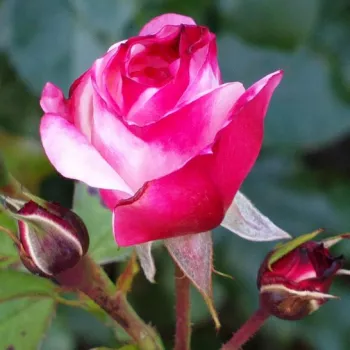
Predominantly white petals with carmine-red margins and fine pink speckling; colours lighten in strong sun as pink edges fade, yet the overall white-pink effect remains decorative through successive flushes. |
| Fragrance and aroma |
No noticeable fragrance; visual impact and flowering performance are the main features. Semi-double form with visible stamens offers a moderately pollinator-friendly display in mixed ornamental plantings. |
| Hip characteristics |
Produces moderate numbers of small, spherical hips, 8–12 mm across, coloured vivid orange-red; hips add a subtle seasonal accent in late season without significantly affecting flowering performance. |
| Resistance and winter hardiness |
Good overall disease resistance, notably to black spot and powdery mildew, with moderate rust sensitivity; hardy to around −21 to −18 °C (RHS H7, USDA 6b, Swedish zone 3) with dependable garden performance. |
| Horticultural recommendations |
Suited to beds, edging, parks, urban plantings and specimen roles; plant 50–90 cm apart depending on effect, maintain adequate watering in prolonged drought, and prune annually to preserve bushy form. |
ROSENSTADT FREISING ® offers reliable repeat flowering, neat self-cleaning clusters and strong disease resistance in a long-lived own-root form, making it a thoughtful, enduring choice for everyday British gardens.