ROSE-MARIE VIAUD – lilac rambler climbing rose - Igoult
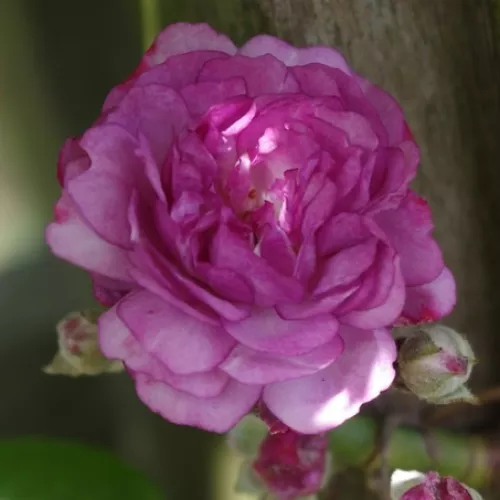
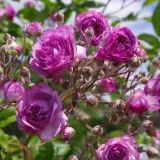
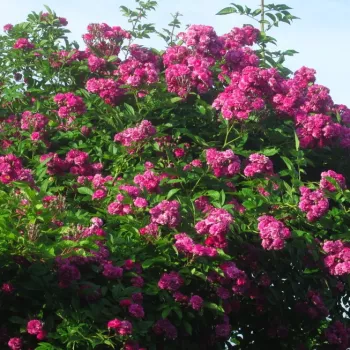
This historic rambler brings a curtain of lilac flowers to pergolas, walls and old fences, creating a soft, romantic cottage atmosphere in classic British gardens. Once established, its long, arching canes form a graceful screen that clothes structures from top to bottom, ideal where you want height without heavy visual bulk. The semi-double clusters appear in one impressive early-summer flush, covering the plant so densely that foliage almost disappears beneath the violet to pastel-lilac bloom display. Colour-mad gardeners will appreciate the way each cluster shifts tone as it ages, giving an ever-changing palette of mauve, purple and greyed lilac on the same plant. Its barely prickly stems make seasonal tying-in and light pruning more straightforward, even in tight front-garden spaces. As an own-root rose it builds a durable, well-anchored framework that copes reliably with wind and rain in exposed British spots, especially where good drainage is ensured on heavier soils. Given a season to root, a second to build structure and a third to reach full ornamental value, it matures into a long-lived, characterful feature for family gardens.
Usage options
| Target area | Reasoning |
|---|
| Statement pergola in a family garden |
Plant at the base of a sturdy pergola and allow the long, flexible canes to be trained overhead, creating a shaded tunnel of lilac flowers in early summer. Once the framework is built, only annual tying-in and basic plant protection are needed, suiting those who want a big visual impact from one main flowering. Recommended for beginners |
| Soft privacy screen along a boundary |
Use against a wire or post-and-rail fence to form a tall, airy screen that breaks up views without feeling heavy. Its height and moderate spread mean fewer plants are needed to cover long runs, and own-root growth helps it recover if pruned harder after flowering to keep boundaries tidy. Ideal for homeowners |
| Romantic cottage-style house wall |
Trained on horizontal wires, it lends a classic, country-house look with cascading clusters of purple to lilac blooms. Once the main structure is in place, annual pruning after flowering and occasional cleaning of spent clusters are usually sufficient, making it a good choice where charm matters more than continuous bloom. Suitable for cottage-gardeners |
| Arched entrance or gateway feature |
Planted either side of an arch, the long canes can be guided up and over to frame a garden entrance in one dramatic early-summer flush. Its once-a-year show is intense enough that even a small pair of plants makes the gateway feel special, while low thorniness keeps maintenance around paths more comfortable. Perfect for front-garden-owners |
| Partially shaded corners needing height |
This rambler tolerates partial shade, so it can brighten less sunny corners where repeat-flowering climbers may struggle. Given a reasonably cool, moist root run and regular feeding, it will still produce a curtain of blossom once a year, bringing colour to otherwise difficult spots in typical British back gardens. Helpful for urban-gardeners |
| Large container on patio with support frame |
In a minimum 40–50 litre container with good drainage and a strong obelisk or frame, it can be grown as a contained vertical accent. Own-root growth adapts to the restricted soil volume over time, and with consistent watering and feeding it rewards you with abundant flower trusses from a relatively small footprint. Attractive to balcony-owners |
| Naturalistic park or large garden planting |
In bigger spaces it can be allowed to scramble through old trees or robust shrubs, creating a romantic, semi-wild effect when it flowers. Its ability to renew from the base on its own roots supports long-term presence, while simple annual thinning after bloom keeps it from overwhelming neighbouring plants over the years. Suitable for park-owners |
| Exposed, windy coastal or open-site garden |
The long, pliable canes and own-root anchoring allow it to flex rather than snap in strong winds, making it a good choice for open, breezy sites if planted into improved, free-draining soil. Once established, the well-rooted base gives a stable wall of colour that copes with wet, blustery British weather. Reassuring for coastal-gardeners |
Styling ideas
- Pergola-drape – Train over a wooden pergola with underplanting of fountain grass and bluebeard for movement and late-summer colour – ideal for relaxed family entertainers
- Cottage-front – Pair on a house wall with white foxgloves and catmint below for a pastel, storybook entrance – suited to cottage-style enthusiasts
- Soft-screen – Run along a boundary with tall ornamental grasses to blur fences while keeping a light, airy line – good for privacy-seeking homeowners
- Patio-column – Grow in a large container around a metal obelisk, with low lavender or thyme at the base – perfect for space-conscious balcony or courtyard gardeners
- Woodland-edge – Let it climb into small trees at a garden edge, underplanted with spring bulbs for layered seasonal interest – appealing to naturalistic-planting lovers
Technical cultivar profile
| Parameter | Data |
|---|
| Name and registration |
Rose-Marie Viaud rambler climbing rose, trade name used in commerce; unregistered cultivar, verified authenticity for pharmaROSA ORIGINAL own-root production, climbing group with historical rambler character. |
| Origin and breeding |
Selected in France by M. Igoult around 1924 as an open-pollinated seedling of ‘Veilchenblau’; introduced by Hazlewood Bros. Pty. Ltd. to Australia in 1926 and subsequently distributed more widely. |
| Awards and recognition |
Certified in the Longwood Gardens 10-year Rose Trial, indicating tested garden performance over an extended period and recognition as a reliable variety under trial conditions. |
| Growth and structural characteristics |
Vigorous climbing rambler reaching approximately 3.6–5.5 m in height with 1.5–2.2 m spread; flexible, lightly armed canes and moderately dense, mid-green, slightly glossy foliage suited to training. |
| Flower morphology |
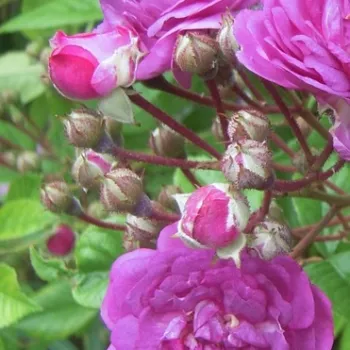
Semi-double, cup-shaped clusters, 13–25 petals per bloom, small-flowered (around 0.5–1.5 inches), produced in large trusses; non-remontant, giving one main, highly concentrated flowering flush per season. |
| Colour data and phenology |
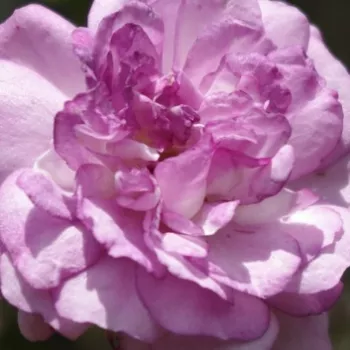
Cool purple to violet-lilac tones (RHS 79A outer, 76C inner) that fade through muted purple to pastel lilac-grey; overall effect is a soft, changing lilac curtain during the main early-summer flowering period. |
| Fragrance and aroma |
Fragrance is very weak and barely noticeable, so it should be chosen primarily for its colour effect and profusion of bloom rather than scent; no specific fragrance character has been documented for this cultivar. |
| Hip characteristics |
Produces sparse red, egg-shaped hips around 6–9 mm in diameter when pollination is successful; hips may appear scattered after flowering and can be left for seasonal interest or removed during pruning. |
| Resistance and winter hardiness |
Hardy to approximately –21 to –18 °C (RHS H7, USDA 6b, Swedish zone 3); disease resistance is modest with sensitivity to rust and medium susceptibility to powdery mildew and black spot, needing regular protection. |
| Horticultural recommendations |
Best on supports such as pergolas, fences or walls with sun to partial shade; plant at 170–280 cm spacing depending on use, in well-prepared soil with good drainage, and maintain consistent moisture and nutrition. |
ROSE-MARIE VIAUD offers a once-a-year curtain of lilac bloom, graceful height on pergolas or walls, and long-term stability from its own-root habit, making it a thoughtful choice for characterful family gardens.