Climbing and rambling roses

90-049-1
90-049-2

Rose-Marie Viaud

Climbing rose

- – M. Igoult

The overall effect is a cool-toned, muted violet–lilac shade that lightens as the flower ages. - rambler, climbing rose - very weak, barely noticeable scented rose - scent description not available

– Historic rambler with Longwood Gardens acclaim
– Abundant small clusters for dramatic coverage
– Elegant violet‑lilac tones, softly fading
– Barely prickly shoots for easier training
Natural renewal – Pollinator-friendly approach
Rose-Marie Viaud
pharmaROSA® ORIGINAL 2-litre own-root potted rose
21,00 £
Unfortunately, we are currently unable to ship to the United Kingdom; we only deliver to countries within the European Union. For more information, please contact us!
4 (5798)
facebook   twitter

ROSE-MARIE VIAUD – lilac rambler climbing rose - Igoult

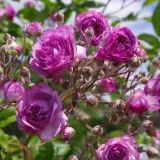
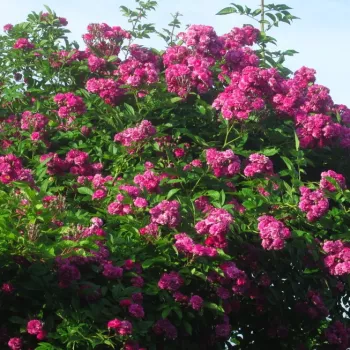
This historic rambler brings a curtain of lilac flowers to pergolas, walls and old fences, creating a soft, romantic cottage atmosphere in classic British gardens. Once established, its long, arching canes form a graceful screen that clothes structures from top to bottom, ideal where you want height without heavy visual bulk. The semi-double clusters appear in one impressive early-summer flush, covering the plant so densely that foliage almost disappears beneath the violet to pastel-lilac bloom display. Colour-mad gardeners will appreciate the way each cluster shifts tone as it ages, giving an ever-changing palette of mauve, purple and greyed lilac on the same plant. Its barely prickly stems make seasonal tying-in and light pruning more straightforward, even in tight front-garden spaces. As an own-root rose it builds a durable, well-anchored framework that copes reliably with wind and rain in exposed British spots, especially where good drainage is ensured on heavier soils. Given a season to root, a second to build structure and a third to reach full ornamental value, it matures into a long-lived, characterful feature for family gardens.


Usage options

Target areaReasoning
Statement pergola in a family garden Plant at the base of a sturdy pergola and allow the long, flexible canes to be trained overhead, creating a shaded tunnel of lilac flowers in early summer. Once the framework is built, only annual tying-in and basic plant protection are needed, suiting those who want a big visual impact from one main flowering. Recommended for beginners
Soft privacy screen along a boundary Use against a wire or post-and-rail fence to form a tall, airy screen that breaks up views without feeling heavy. Its height and moderate spread mean fewer plants are needed to cover long runs, and own-root growth helps it recover if pruned harder after flowering to keep boundaries tidy. Ideal for homeowners
Romantic cottage-style house wall Trained on horizontal wires, it lends a classic, country-house look with cascading clusters of purple to lilac blooms. Once the main structure is in place, annual pruning after flowering and occasional cleaning of spent clusters are usually sufficient, making it a good choice where charm matters more than continuous bloom. Suitable for cottage-gardeners
Arched entrance or gateway feature Planted either side of an arch, the long canes can be guided up and over to frame a garden entrance in one dramatic early-summer flush. Its once-a-year show is intense enough that even a small pair of plants makes the gateway feel special, while low thorniness keeps maintenance around paths more comfortable. Perfect for front-garden-owners
Partially shaded corners needing height This rambler tolerates partial shade, so it can brighten less sunny corners where repeat-flowering climbers may struggle. Given a reasonably cool, moist root run and regular feeding, it will still produce a curtain of blossom once a year, bringing colour to otherwise difficult spots in typical British back gardens. Helpful for urban-gardeners
Large container on patio with support frame In a minimum 40–50 litre container with good drainage and a strong obelisk or frame, it can be grown as a contained vertical accent. Own-root growth adapts to the restricted soil volume over time, and with consistent watering and feeding it rewards you with abundant flower trusses from a relatively small footprint. Attractive to balcony-owners
Naturalistic park or large garden planting In bigger spaces it can be allowed to scramble through old trees or robust shrubs, creating a romantic, semi-wild effect when it flowers. Its ability to renew from the base on its own roots supports long-term presence, while simple annual thinning after bloom keeps it from overwhelming neighbouring plants over the years. Suitable for park-owners
Exposed, windy coastal or open-site garden The long, pliable canes and own-root anchoring allow it to flex rather than snap in strong winds, making it a good choice for open, breezy sites if planted into improved, free-draining soil. Once established, the well-rooted base gives a stable wall of colour that copes with wet, blustery British weather. Reassuring for coastal-gardeners

Styling ideas

  • Pergola-drape – Train over a wooden pergola with underplanting of fountain grass and bluebeard for movement and late-summer colour – ideal for relaxed family entertainers
  • Cottage-front – Pair on a house wall with white foxgloves and catmint below for a pastel, storybook entrance – suited to cottage-style enthusiasts
  • Soft-screen – Run along a boundary with tall ornamental grasses to blur fences while keeping a light, airy line – good for privacy-seeking homeowners
  • Patio-column – Grow in a large container around a metal obelisk, with low lavender or thyme at the base – perfect for space-conscious balcony or courtyard gardeners
  • Woodland-edge – Let it climb into small trees at a garden edge, underplanted with spring bulbs for layered seasonal interest – appealing to naturalistic-planting lovers

Technical cultivar profile
ParameterData
Name and registration Rose-Marie Viaud rambler climbing rose, trade name used in commerce; unregistered cultivar, verified authenticity for pharmaROSA ORIGINAL own-root production, climbing group with historical rambler character.
Origin and breeding Selected in France by M. Igoult around 1924 as an open-pollinated seedling of ‘Veilchenblau’; introduced by Hazlewood Bros. Pty. Ltd. to Australia in 1926 and subsequently distributed more widely.
Awards and recognition Certified in the Longwood Gardens 10-year Rose Trial, indicating tested garden performance over an extended period and recognition as a reliable variety under trial conditions.
Growth and structural characteristics Vigorous climbing rambler reaching approximately 3.6–5.5 m in height with 1.5–2.2 m spread; flexible, lightly armed canes and moderately dense, mid-green, slightly glossy foliage suited to training.
Flower morphology Semi-double, cup-shaped clusters, 13–25 petals per bloom, small-flowered (around 0.5–1.5 inches), produced in large trusses; non-remontant, giving one main, highly concentrated flowering flush per season.
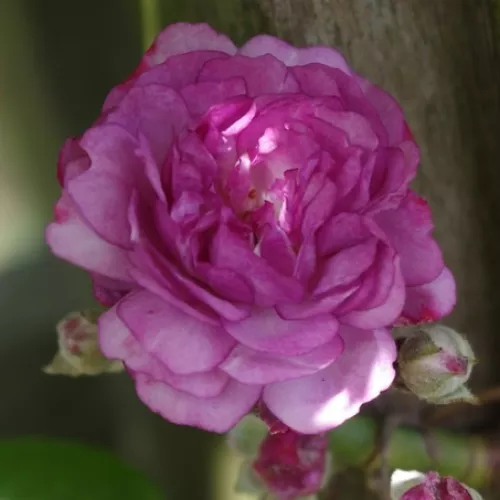
Colour data and phenology Cool purple to violet-lilac tones (RHS 79A outer, 76C inner) that fade through muted purple to pastel lilac-grey; overall effect is a soft, changing lilac curtain during the main early-summer flowering period.
Fragrance and aroma Fragrance is very weak and barely noticeable, so it should be chosen primarily for its colour effect and profusion of bloom rather than scent; no specific fragrance character has been documented for this cultivar.
Hip characteristics Produces sparse red, egg-shaped hips around 6–9 mm in diameter when pollination is successful; hips may appear scattered after flowering and can be left for seasonal interest or removed during pruning.
Resistance and winter hardiness Hardy to approximately –21 to –18 °C (RHS H7, USDA 6b, Swedish zone 3); disease resistance is modest with sensitivity to rust and medium susceptibility to powdery mildew and black spot, needing regular protection.
Horticultural recommendations Best on supports such as pergolas, fences or walls with sun to partial shade; plant at 170–280 cm spacing depending on use, in well-prepared soil with good drainage, and maintain consistent moisture and nutrition.

ROSE-MARIE VIAUD offers a once-a-year curtain of lilac bloom, graceful height on pergolas or walls, and long-term stability from its own-root habit, making it a thoughtful choice for characterful family gardens.
Detailed product attributes

Product Identification Data

Product Name: ROSE-MARIE VIAUD – lilac rambler climbing rose - Igoult
Product Type: pharmaROSA® ORIGINAL - 2-litre own-root potted rose
Cultivar Authenticity: Verified:03.05.2025
Cultivar Quality Rating: premium bronze
Item Number: [1399] 90-049 (14.02.2026) pharmarosa.co.uk

Name and Registration

Meaning of Cultivar Name: The name was given in honour of Rose‑Marie Viaud, daughter of nurseryman Georges Bruant and wife of Jean Viaud‑Bruant.
Cultivar Synonym: Rosemary Viaud
Original Trade Name: Rose-Marie Viaud
Current Trade Name: Rose-Marie Viaud Climbing rose Igoult
Rose Group: Rambler, Polyantha
Commercial Type: rambler, climbing rose
Commercial Group: Climbing rose
Exhibition Category: climbing rose
Collection: Climbing rose

Origin and Breeding

Initial Distributor: Hazlewood Bros. Pty. Ltd. (Australia, 1926)


Introduction Year: 1924 (France)
Registration Year: unregistered cultivar
Breeder: M. Igoult
Breeding Company / Institution: unknown / no data
Breeding Year: France, 1924
Parentage: 'Veilchenblau' open-pollinated seedling

Awards and Honours

Horticultural Ratings and Recommendations: Longwood Gardens 10-year Rose Trial – certified cultivar
Competition and Show Awards: Longwood Gardens 10-year rose trial – certified variety

Growth and Structural Characteristics

Height: 11.8-18ft (360-550 cm)
Spread: 4.9-7.2ft (150-220 cm)
Growth Habit: climbing
Foliage: The variety's foliage is moderately dense, with leaves that have a slightly glossy surface and a mid‑green shade.
Prickliness: barely prickly
Self-Cleaning Description: Some of the spent blooms remain on the plant and require subsequent cleaning.
Self-Cleaning Intensity: medium self-cleaning

Flower Morphology

Petal Count: 13-25
Flower Fullness: semi-double
Flower Shape: cup-shaped
Flower Size: S (0,5-1,5 in)
Inflorescence Type: cluster-flowered
Colour Code: ARS code: M RHS code: 79A (outer), 76C (inner)
Repeat Flowering: Non-remontant; flowers once.

Colour Data and Phenology

Colour: purple
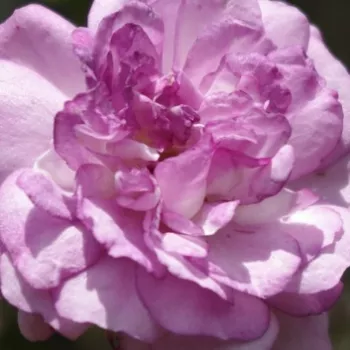
Flower Colour Description: The overall effect is a cool-toned, muted violet–lilac shade that lightens as the flower ages.
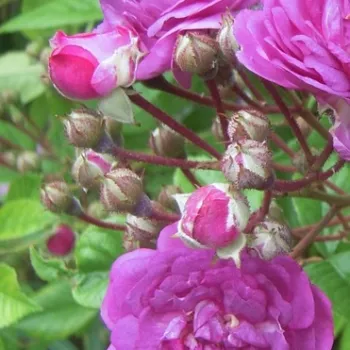
Closed Bud: Dark violet‑purple surface with a subtle bluish tinge.
Newly Opened Flower: Full, intense crimson‑purple exterior, slightly lighter inside with greyish‑mauve tones.
Full Bloom: Uniform purple, with the outer petal edges becoming paler.
Before Fading: Pastel lilac-grey tone, in places with a faint mauve tinge.
Colour Fading Description: As the bloom opens, the dark violet–purplish hue gradually fades to an even purple and then, just before the flower dies back, to a pastel lilac–grey.

Fragrance and Aroma

Fragrance Strength: very weak, barely noticeable scented rose
Fragrance Character: scent description not available
Pollinator Attraction: Semi-double (13–25 petals) — the semi-double flower form reduces access to the stamens, so the blooms provide limited attraction to pollinators.
Pollinator-Friendly Rating: Its semi-double flowers attract pollinators only to a limited extent, so it is primarily an ornamental variety.

Hip Characteristics

Hip Shape: egg shaped
Hip Colour: red
Hip Comment: Rose hip formation is expected to be sparse; red, egg-shaped hips 6–9 mm in diameter.

Resistance and Hardiness

Hardiness (°C): -21–-18 °C
Heat and Drought Tolerance Description: Performance declines in hot conditions; it does not tolerate prolonged drought.
Disease Resistance: sensitive
  • powdery mildew – medium
  • black spot – medium
  • rust – very sensitive

Horticultural Recommendations

Recommended Planting Distance: for mass planting 185 cm, for hedging 170 cm, as a specimen plant 280 cm
Planting Density: in square planting 0,3 plants/m², in hexagonal arrangement 0,3 plants/m²
Partial Shade Tolerance: suitable for partial shade
Maintenance Requirement: Maintenance requirement high; requires regular plant protection due to poor disease resistance.
Primary Uses: pergola, fence, wall, solitary specimen, park

Comments

Strengths: Natural renewal – Pollinator-friendly approach
Companion Plants: Liatris spicata 'Alba' - Dense blazing star Pennisetum alopecuroides - Fountain grass Caryopteris clandonensis 'Grand Bleu' - Bluebeard
Comment: The Veilchenblau bare‑root rose.
ROSE-MARIE VIAUD – lilac rambler climbing rose - Igoult
The overall effect is a cool-toned, muted violet–lilac shade that lightens as the flower ages. - rambler, climbing rose - very weak, barely noticeable scented rose - scent description not available
The rose webshop. - purple - rambler, climbing rose - Rose-Marie Viaud - (11.8-18ft (360-550 cm))
Inflorescence: cluster-flowered Height: 11.8-18ft (360-550 cm) Flower shape: cup-shaped Winter hardiness: 5b purple - Hazlewood Bros. Pty. Ltd. (Australia, 1926) rambler, climbing rose - Flower size: !- Flower size: !- - Height: 11.8-18ft (360-550 cm) Height: 11.8-18ft (360-550 cm) - Flower fullness: semi-double Rose-Marie Viaud - Roses in the garden | pharmaROSA® Original - premium bronze M. Igoult

We showcase the external appearance of the roses available for online purchase from our webshop.


Which product type is right for you?


Information

In what condition do we dispatch the rose from our online webshop?

Let us ask ourselves the question: What would I like to use the rose for?
Flower? – Location? – Screening? – Fragrance? – Height? – Breeder? – Rose hip?

Rose purchasing information
Methods of payment – Delivery charges – Delivery – Complaints handling

Care guide

Our product is a rose grown with pharmaROSA®’s unique cultivation technology!

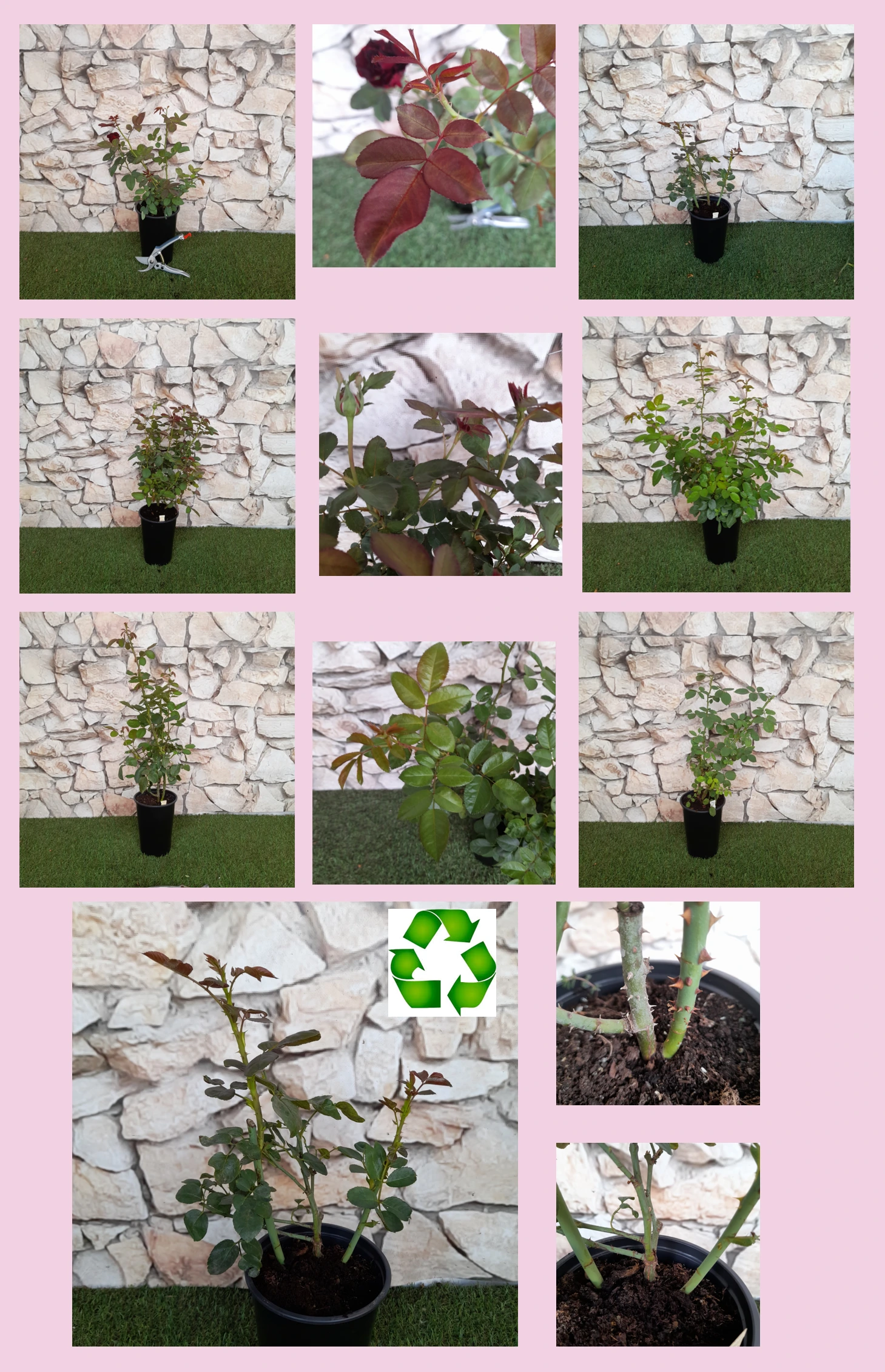
2-litre, own-root, potted rose.
With a shoot system appropriate to the season.
With a root system that thoroughly permeates the growing medium.
Quality compliant with the requirements of the E.N.A. (European Nurserystock Association).
Supplied in unique packaging that prevents damage.
Can be planted during frost-free periods.
True-to-variety rose bush with a unique identifier.

The pharmaROSA® own-root potted rose is a well-rooted plant that supports reliable establishment when planted and cared for properly, so it can be planted whenever the soil is not frozen.


Crop overview: several varieties and growth stages in a short crop section.
Shoot system: intensive growth of fresh basal shoots on a young plant.
Root system: demonstration of a vigorous root system permeating the growing medium, by removing the pot.
Balance: mature plant with root system and shoots in harmony with each other.

Information about the videos
The video series is not a “seasonal showcase”; it illustrates the essence of pharmaROSA® own-root cultivation in a tangible way: how the plant is built up, what the root system is like and how the shoot system regenerates. The recordings were therefore made at different times and with plants at various stages of development, so mixed foliage levels and differing stages of growth may appear in the videos. They are not a ‘sample’ of the batch dispatched, but a visual explanation of how the technology works. The current condition of the rose available to order — typical for the given period and similar to what you can expect to receive in the parcel — is shown in the upper part of the product page.

pharmarosa.atpharmarosa.compharmarosa.depharmarosa.ropharmarosa.sipharmarosa.skpharmarosa.hrpharmarosa.itpharmarosa.frpharmarosa.grpharmarosa.bepharmarosa.dkpharmarosa.nlpharmarosa.iepharmarosa.plpharmarosa.lupharmarosa.ptpharmarosa.espharmarosa.bgpharmarosa.ltpharmarosa.sepharmarosa.lvpharmarosa.eepharmarosa.fipharmarosa.rudarinarose.co.ukpharmarosa.cz

Product types

Pages for private customers
Garden roses for the family garden, with minimal care  → ORIGINAL®
Premium garden roses – instant impact, a truly showpiece garden  → EXTRA®
Pages for professionals and private customers
Roses for public spaces – large areas, sustainable maintenance  → NATURAL®
Roses for projects – hedge and row planting, fast implementation  → RAPID®
For professional partners only
Production – propagation material for garden roses, wholesale  → NEONATAL®

Company details

PharmaRosa Ltd.
Company registration number: 01-09-717479
VAT number: 13075314-2-43
Plant health registration no.: HU130721
Bank account (IBAN):
HU85117631891388688400000000
BIC (SWIFT): OTPVHUHB
Bank name: OTP Bank Nyrt.