Soft, pale pink base colour with a delicate peachy undertone. - climbing rose, climbing rose - very weak, barely noticeable scented rose - rose scented
– XL rosette blooms in soft pink‑peach tones.
– Strongly remontant with abundant repeat flowering.
– Compact climber, ideal for arches and pergolas.
– Good heat tolerance, suited to warmer spots.
– Award‑winning variety with proven garden merit.
– Special feature: Named to honour the 2014 Zülpich Garden Exhibition, linking garden beauty with local history.
Streamlined forms – Soil-friendly approach
pharmaROSA® ORIGINAL 2-litre own-root potted rose
19,30 £
Unfortunately, we are currently unable to ship to the United Kingdom; we only deliver to countries within the European Union. For more information, please contact us!
5(7844)
ROSE DE TOLBIAC® – pink climbing rose – Kordes
This romantic climbing rose combines pastel blooms with a classically rosette form, ideal for creating a soft, cottage-style vertical accent on fences, arches or house walls. Its remontant flowering habit ensures repeat displays, while the reliable climber growth reaches pergolas and screens within a few seasons, even in exposed sites with moist but well-drained soil helping in heavier clay areas. Own-root vigour supports a long-lived, balanced framework that can be trained with light, flexible pruning rather than complex shaping. XL flower size and fullness give a luxurious look from a modest planting, so you can enjoy generous impact from just one to three plants. With moderate care needs and good winter hardiness, it suits busy gardeners who still want a refined, structured feature in the front or back garden.
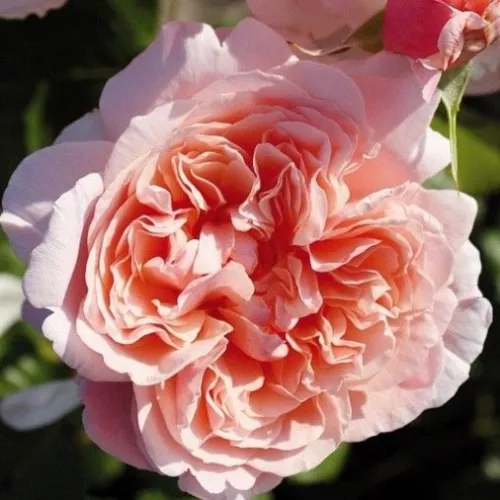
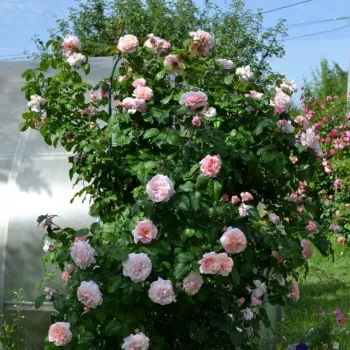
Rose de Tolbiac® in freshly opened bloom, showing soft pink petals with a warm peach centre.
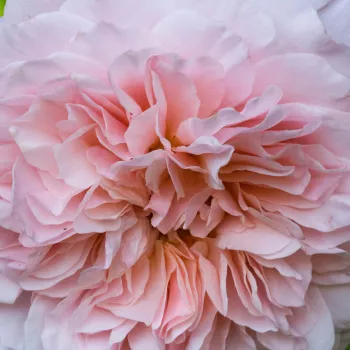
Rose de Tolbiac® shows very full, rosette-shaped blooms.
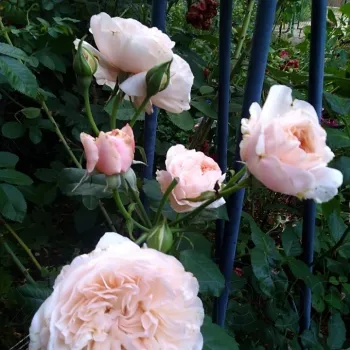
Rose de Tolbiac® showing its moderately dense, dark green foliage.
Usage options
Target area
Reasoning
Front-garden rose arch framing the entrance
The climbing habit and manageable 1.8–2.8 m height allow you to clothe a standard rose arch without overwhelming a small front garden. Strong, upright shoots quickly create a welcoming gateway with soft pink rosettes at eye level for beginners.
House wall or fence with limited depth of bed
The relatively narrow 60–100 cm spread means it fits shallow borders along paths, drives or walls, giving vertical colour where space is tight. Own-root growth builds a durable framework that copes well with training against trellis for homeowners.
Small cottage-style border centrepiece
Very full, XL rosette blooms in pastel pink-peach tones offer a classic cottage look from a single focal plant. Repeat flowering provides colour between perennials, while its moderate vigour is easy to keep in scale for cottage-gardeners.
Pergola or seating area backdrop
The height range allows gentle overhead cover on a low pergola, creating a romantic canopy of soft blooms. Good frost tolerance down to around -23 °C supports long-term structure around seating areas for planners.
Long, narrow boundary or privacy screen
Planted at hedge spacing, its climbing habit and moderate density foliage build a filtered, flowered screen rather than a heavy hedge. Own-root plants regenerate well after pruning or weather damage, sustaining the screen over many years for families.
Mixed border with perennials in partial shade
Tolerance of partial shade lets it flower reasonably well on east- or west-facing aspects, weaving soft pinks among perennials such as lady’s mantle and crocosmia. This helps brighten corners where many climbers sulk for urban-gardeners.
Feature container in a large patio pot
When grown in a sturdy 40–50 litre container with a support, its moderate growth is easier to manage than very vigorous climbers, giving a vertical accent on terraces or balconies; regular watering aids performance in warm, dry spells for balcony-owners.
Weather-exposed sites with ornamental focus
Good heat tolerance and resistance to black spot make it a practical choice where roses may face sun, wind and humid spells, provided drainage is sound; ideal for those wanting reliable flowers without intensive spraying for busy-owners.
Styling ideas
Romantic archway – Train along a narrow metal arch, underplant with lady’s mantle and soft grasses to frame a cottage-style path – ideal for front-garden romantics.
Pastel pergola – Cover a small pergola post, mixing with white clematis for layered blossom and filtered shade – suited to seating areas in family gardens.
Cottage column – Spiral it up a slim wooden pole, with crocosmia and blanket flower at the base for warm contrast – perfect for those wanting height in tight borders.
Soft screen – Plant in a row along a wire fence, combining with informal shrubs to create a semi-transparent pink privacy veil – good for overlooked urban plots.
Patio focal-point – Grow in a 50-litre terracotta pot with a simple obelisk, surrounding the base with herbs for a fragrant, easy-care terrace feature – attractive for busy beginners.
Technical cultivar profile
Parameter
Data
Name and registration
Climbing rose from the Klettermaxe® collection; registered as KORcaseipp, marketed as Rose de Tolbiac® Klettermaxe®. ARS exhibition name Rose de Tolbiac for show and competition use.
Origin and breeding
Bred in Germany in 1998 by Tim-Hermann Kordes from ‘KORkinteral’ × ‘KORpastato’. Introduced after 2014 by W. Kordes’ Söhne Rosenschulen GmbH & Co KG for garden and exhibition use.
Awards and recognition
Gold Medal and City of Zweibrücken Award at the Baden-Baden International New Rose Competition 2013, recognising ornamental value and garden performance among climbing roses.
Growth and structural characteristics
Climbing habit reaching around 180–280 cm high with 60–100 cm spread. Moderately dense, dark green, slightly glossy foliage and moderate prickliness; forms a trainable framework for arches, fences and walls.
Flower morphology
Very full, rosette-shaped blooms with more than 40 petals and XL size from about 9 cm diameter. Flowers are mostly solitary on stems, with strongly remontant behaviour and notably abundant second flushes.
Colour data and phenology
Soft pale pink with peach undertones; buds powder pink with peach tips, opening to pastel pink and warm centre, then fading towards cream, especially in strong sun; medium colour retention across successive flushes.
Fragrance and aroma
Light rose fragrance, rated very weak and barely noticeable in typical garden conditions. Primarily grown for its visual effect and flower form rather than for strong scent or aromatic harvest uses.
Hip characteristics
Hip set is usually sparse due to very double flowers; occasional spherical hips 20–30 mm, greyish-lilac to greyish-purple (RHS 183A), adding limited late-season interest where present.
Resistance and winter hardiness
Hardy to around -21 to -23 °C (H7, USDA 6a; Swedish Zone 3). Good heat tolerance, moderate drought resistance; black spot resistant, with moderate susceptibility to powdery mildew and rust in humid periods.
Horticultural recommendations
Well-suited to arches, pergolas, walls and fences with 70–140 cm spacing. Performs best in fertile, well-drained soil with regular watering and occasional plant protection; tolerates partial shade on east or west aspects.
ROSE DE TOLBIAC® offers pastel rosette blooms, repeat flowering and manageable climbing growth on a durable own-root framework, making it a refined long-term choice for arches, walls and pergolas that you may confidently consider.
Detailed product attributes
Product Identification Data
Product Name:
ROSE DE TOLBIAC® – pink climbing rose - Kordes
Product Type:
pharmaROSA® ORIGINAL - 2-litre own-root potted rose
Meaning of Cultivar Name:
The word "Tolbiac" is the Roman-era name of the town of Zülpich, and the cultivar was given this name in honour of the 2014 Zülpich Garden Exhibition.
Closed Bud:
The outer surface is powder pink with a slight peach-pink tip.
Newly Opened Flower:
The petals are pastel pink with a warm peach tone in the centre.
Full Bloom:
The outer petals are light pink, the inner surface displaying a soft peach-pink play of light.
Before Fading:
The silky pink fades to an almost creamy shade.
Colour Fading Description:
As the bloom opens, the pastel pink–peach tones gradually fade, becoming almost cream-coloured before the flower finishes; fading accelerates in strong sunlight.
Pollinator Attraction:
Its very double, globose blooms make nectar and pollen poorly accessible to pollinators, so the variety is only weakly attractive; bloom form (simple/semi‑double/double) and stamen accessibility strongly influence pollinator attraction.
Pollinator-Friendly Rating:
Its very double flowers conceal the stamens; primarily an ornamental variety.
Hip Comment:
Rose hip formation is expected to be limited due to the double flowers; occasionally it may produce globular, greyish‑purple (RHS 183A) rose hips 20–30 mm in diameter.
Our product is a rose grown with pharmaROSA®’s unique cultivation technology!
2-litre, own-root, potted rose.
With a shoot system appropriate to the season.
With a root system that thoroughly permeates the growing medium.
Quality compliant with the requirements of the E.N.A. (European Nurserystock Association).
Supplied in unique packaging that prevents damage.
Can be planted during frost-free periods.
True-to-variety rose bush with a unique identifier.
The pharmaROSA® own-root potted rose is a well-rooted plant that supports reliable establishment when planted and cared for properly, so it can be planted whenever the soil is not frozen.
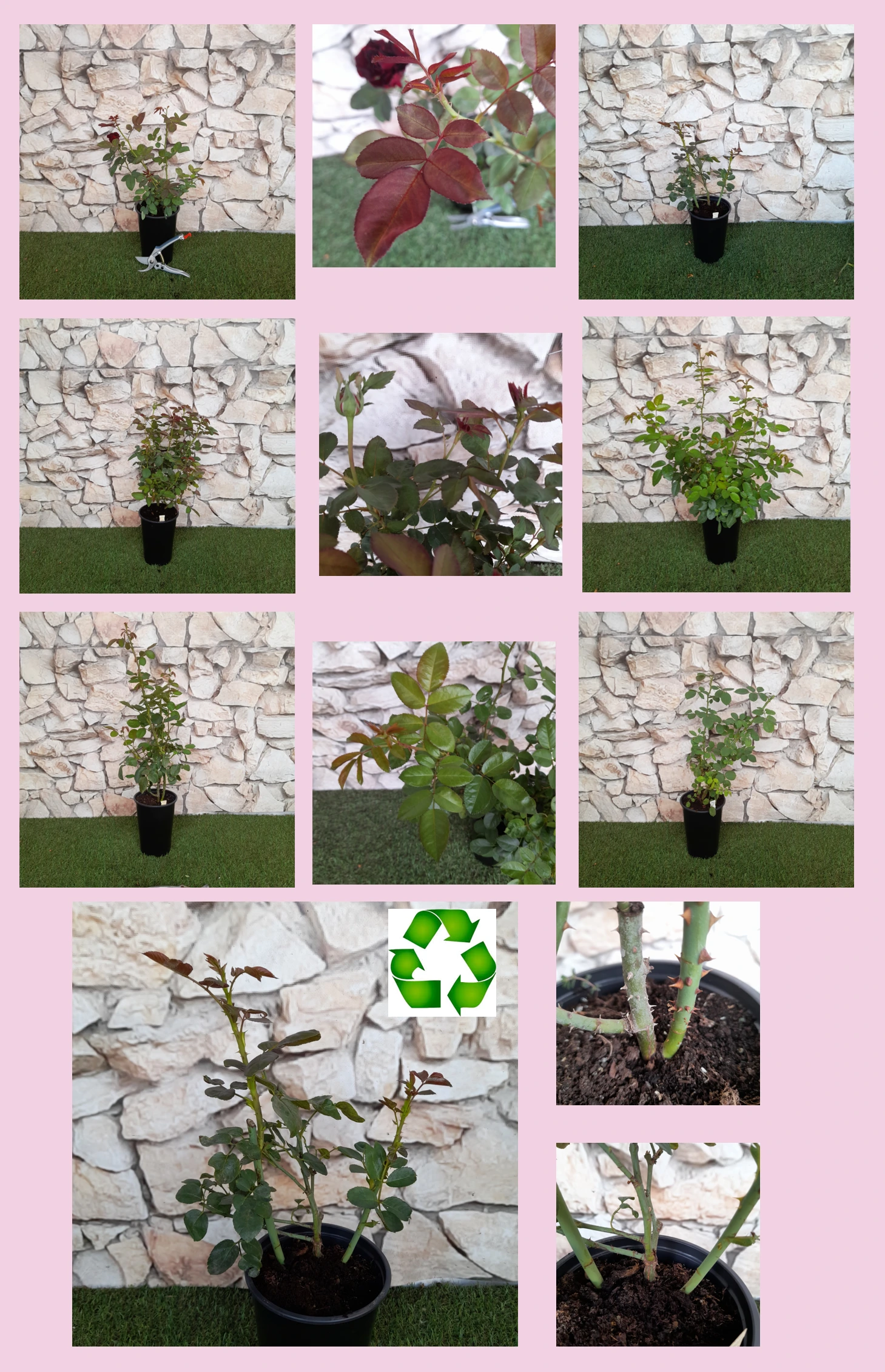
Crop overview: several varieties and growth stages in a short crop section.Shoot system: intensive growth of fresh basal shoots on a young plant.Root system: demonstration of a vigorous root system permeating the growing medium, by removing the pot.Balance: mature plant with root system and shoots in harmony with each other.
Information about the videos
The video series is not a “seasonal showcase”; it illustrates the essence of pharmaROSA® own-root cultivation in a tangible way: how the plant is built up, what the root system is like and how the shoot system regenerates. The recordings were therefore made at different times and with plants at various stages of development, so mixed foliage levels and differing stages of growth may appear in the videos. They are not a ‘sample’ of the batch dispatched, but a visual explanation of how the technology works. The current condition of the rose available to order — typical for the given period and similar to what you can expect to receive in the parcel — is shown in the upper part of the product page.
Pages for private customers Garden roses for the family garden, with minimal care → ORIGINAL® Premium garden roses – instant impact, a truly showpiece garden → EXTRA® Pages for professionals and private customers Roses for public spaces – large areas, sustainable maintenance → NATURAL® Roses for projects – hedge and row planting, fast implementation → RAPID® For professional partners only Production – propagation material for garden roses, wholesale → NEONATAL®
Company details
PharmaRosa Ltd. Company registration number: 01-09-717479 VAT number: 13075314-2-43 Plant health registration no.: HU130721 Bank account (IBAN): HU85117631891388688400000000 BIC (SWIFT): OTPVHUHB Bank name: OTP Bank Nyrt.