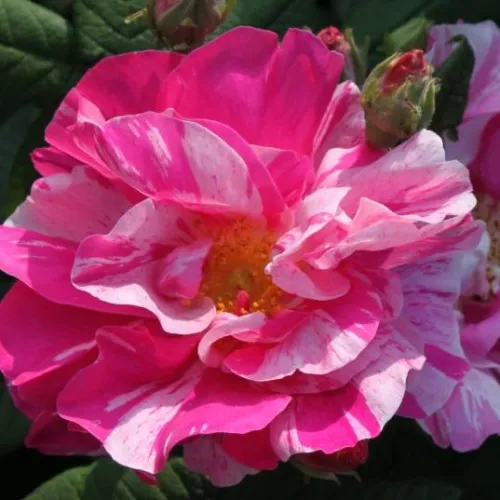
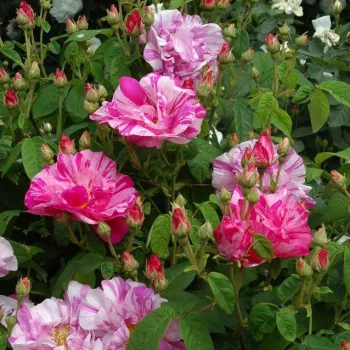
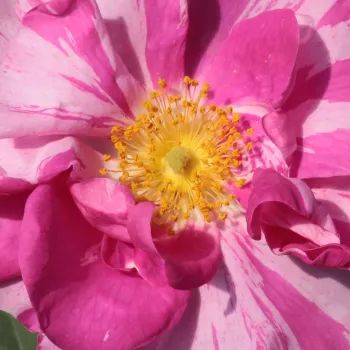
On a pale ivory ground, irregular vivid raspberry-pink streaks and spots run along the petals. - historic, gallica rose - medium-strength, well-scented rose - clean, Gallica-style rosy character
– Striking pink‑and‑white striped blooms.
– Medium, clean Gallica‑style fragrance.
– Compact shrub habit for beds and hedges.
– Hardy to approximately −30 °C, RHS H7.
– Barely thorny canes for easier handling.
– Special feature: Historic Gallica sport known since 1581, with exceptionally stable flower striping.
Neat arrangement – Transparent processes
pharmaROSA® ORIGINAL 2-litre own-root potted rose
21,20 £
Unfortunately, we are currently unable to ship to the United Kingdom; we only deliver to countries within the European Union. For more information, please contact us!
5(7138)
ROSA MUNDI – pink-and-white historic Gallica rose
This celebrated Gallica shrub brings centuries of rose-growing heritage into today’s family gardens, combining characterful striped flowers with a robust, compact habit that fits effortlessly into cottage-style borders and smaller spaces. Once established, it offers a short but spectacular summer display of large, semi-double, cupped blooms in ivory and raspberry-pink, with a clean, classic Gallica fragrance suited to traditional British front gardens. Own-root plants form a stable, long-lived bush that regenerates reliably after pruning, helping you enjoy the full effect as roots, then shoots, then the mature shrub structure develop over the first three seasons. Its moderate height and naturally tidy shape suit front-of-house beds and easy low hedges, even where you have heavier soils near the house, provided you give reasonable drainage and avoid standing waterlogging. Medium maintenance needs mean routine checks and simple care tasks rather than specialist rose knowledge, and the barely thorny stems make everyday access and light pruning straightforward. Flowering once in early summer, it earns its keep all year as a distinctive, structured feature that anchors small group plantings and mixed borders in classic English style.
Rosa Mundi shows semi-double, cupped blooms in a clustered flower form.
Usage options
Target area
Reasoning
Small front-garden feature bed
The compact yet substantial shrub form gives clear structure without overwhelming a modest front garden, and the once-a-year flush provides a memorable focal point by the door with only medium maintenance demands – ideal for the busy homeowner.
Cottage-style mixed border
Striped pink-and-white blooms and grey-green foliage blend seamlessly with perennials, while the own-root, long-lived nature allows the plant to settle and mature alongside other cottage favourites over many years – reassuring for the traditionalist gardener.
Low flowering hedge along a path or drive
Regular spacing at around 100 cm creates a neat, low hedge that frames paths with historic charm; the compact habit and moderate pruning needs keep upkeep simple for those wanting order without formal topiary – well suited to the practical planner.
Small group planting in a front border
Planting 3–5 bushes at the recommended distance forms a cohesive, billowing mass of early summer colour, while their manageable size and own-root resilience make long-term care straightforward – attractive for the aesthetic beginner.
Part-shaded side garden or north-east aspect
Suitability for partial shade allows you to use less sunny spots around the house, still achieving an effective historic rose display without competing for the brightest border spaces – a thoughtful choice for the space-conscious owner.
Naturalistic or informal garden edge
The softly mounding, compact habit and moderately dense foliage sit comfortably in informal, naturalistic schemes, giving a gentle transition between lawn and planted areas with only periodic shaping – appealing to the relaxed gardener.
Large container on patio or terrace (40–50 litres minimum)
In a substantial, well-drained container it forms a stable, long-lived specimen; own-root growth adapts to the pot and recovers well from pruning, provided watering is regular during warm dry spells – reassuring for the urban balcony-owner.
Planned long-term rose border
As an own-root historic shrub, it develops steadily from root establishment to full ornamental presence over the first few years, giving a durable backbone that responds well to simple, occasional renewal pruning – perfect for the long-range planner.
Styling ideas
COTTAGE TRIO – Combine with lavender and catmint for a soft, blue-purple underplanting that sets off the striped blooms – for lovers of classic cottage charm.
HISTORIC HEDGE – Plant a loose line along a front path, interspersed with low box or thrift for year-round edging – for homeowners seeking gentle structure.
SHADED CORNER – Use in part-shade with ferns and foxgloves to brighten awkward side gardens while keeping care simple – for gardeners making use of every spot.
MONOCHROME MIX – Pair with white roses and pale perennials to emphasise the raspberry striping without visual clutter – for design-conscious minimalists.
CONTAINER FOCAL POINT – Grow one plant in a 50-litre terracotta pot with trailing alyssum around the base – for balcony or patio owners wanting a single statement.
Technical cultivar profile
Parameter
Data
Name and registration
Historical Gallica shrub rose, known as Rosa Mundi; ARS exhibition name R. gallica versicolor; unregistered sport of Rosa gallica officinalis grown under a verified, premium-quality trade designation.
Origin and breeding
Natural striped sport of the old apothecary rose, Rosa gallica officinalis, recorded from at least the late sixteenth century; original breeder and exact date of selection unknown or undocumented.
Growth and structural characteristics
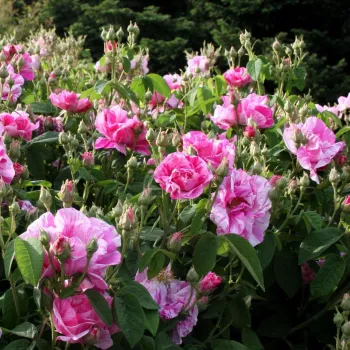
Compact, moderately dense shrub 85–130 cm high and 90–140 cm wide, with grey-green, matt foliage and relatively few prickles; forms a tidy, bushy outline suitable for beds, fronts and low hedging.
Flower morphology
Large, semi-double, cupped blooms with 13–25 petals, borne in small clusters; not remontant, flowering once in early summer, with moderate self-cleaning so some spent flower remnants may briefly remain.
Colour data and phenology
Ivory to pale rose ground with vivid raspberry-pink streaks and spots; striping shows best in cooler weather, lightening slightly in strong sun while retaining good overall colour definition throughout flowering.
Fragrance and aroma
Medium-strength traditional Gallica scent with a clean rosy character; noticeable at close range and around the bush in still weather, adding classic old-rose atmosphere to paths, seating areas and entrances.
Hip characteristics
Rose-hip set is generally sparse due to the modified blooms; occasionally small 10–16 mm ellipsoidal orange-red hips develop, adding modest seasonal interest without significant ornamental clutter.
Resistance and winter hardiness
Hardy to approximately −32 to −29 °C (RHS H7, USDA 4b, Swedish zone 5); medium resistance to black spot, mildew and rust, benefiting from basic hygiene and monitoring in humid, disease-prone seasons.
Horticultural recommendations
Suited to beds, edging, low hedges, naturalistic plantings and urban greens; plant at 100–180 cm spacing, ensure drainage in heavier soils, water reliably in hot, dry spells and prune lightly to maintain form.
ROSA MUNDI offers compact structure, distinctive historic striping and adaptable, own-root longevity, making it a thoughtful choice for gardeners seeking a characterful yet straightforward rose for long-term planting.
Detailed product attributes
Product Identification Data
Product Name:
ROSA MUNDI – pink-and-white historic Gallica rose
Product Type:
pharmaROSA® ORIGINAL - 2-litre own-root potted rose
Cultivar Synonym:
Rosa gallica versicolor; Versicolor; R. gallica variegata; La Panachée; La Villageoise; Provins Oeillet; Rosemonde; Garnet Striped Rose
Hip Comment:
Because of its mutated flower structure, rose-hip formation is rare; occasionally a 10–16 mm diameter, ellipsoidal, orange-red (RHS 37A) rose hip may develop.
Our product is a rose grown with pharmaROSA®’s unique cultivation technology!
2-litre, own-root, potted rose.
With a shoot system appropriate to the season.
With a root system that thoroughly permeates the growing medium.
Quality compliant with the requirements of the E.N.A. (European Nurserystock Association).
Supplied in unique packaging that prevents damage.
Can be planted during frost-free periods.
True-to-variety rose bush with a unique identifier.
The pharmaROSA® own-root potted rose is a well-rooted plant that supports reliable establishment when planted and cared for properly, so it can be planted whenever the soil is not frozen.
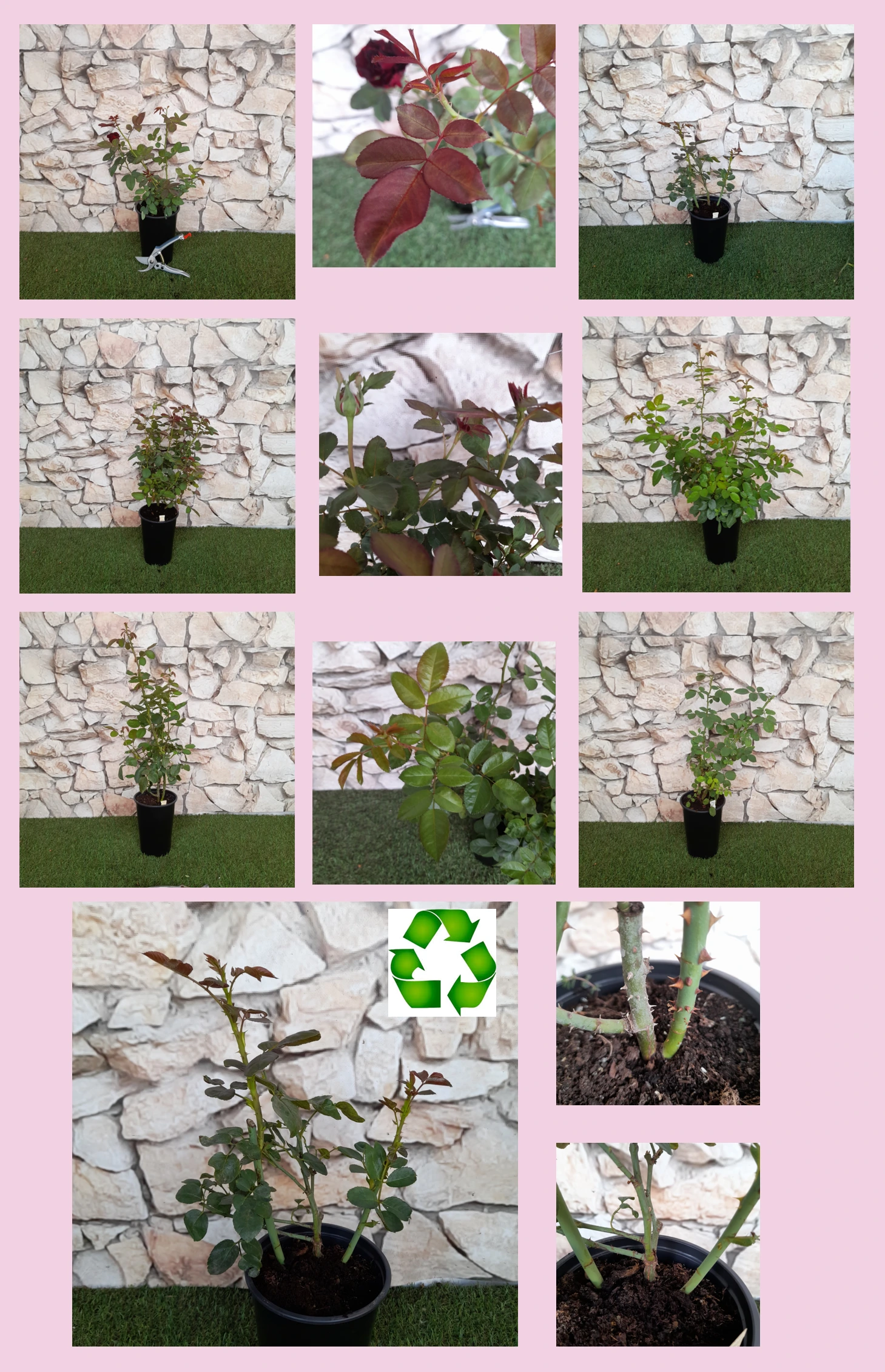
Crop overview: several varieties and growth stages in a short crop section.Shoot system: intensive growth of fresh basal shoots on a young plant.Root system: demonstration of a vigorous root system permeating the growing medium, by removing the pot.Balance: mature plant with root system and shoots in harmony with each other.
Information about the videos
The video series is not a “seasonal showcase”; it illustrates the essence of pharmaROSA® own-root cultivation in a tangible way: how the plant is built up, what the root system is like and how the shoot system regenerates. The recordings were therefore made at different times and with plants at various stages of development, so mixed foliage levels and differing stages of growth may appear in the videos. They are not a ‘sample’ of the batch dispatched, but a visual explanation of how the technology works. The current condition of the rose available to order — typical for the given period and similar to what you can expect to receive in the parcel — is shown in the upper part of the product page.
Pages for private customers Garden roses for the family garden, with minimal care → ORIGINAL® Premium garden roses – instant impact, a truly showpiece garden → EXTRA® Pages for professionals and private customers Roses for public spaces – large areas, sustainable maintenance → NATURAL® Roses for projects – hedge and row planting, fast implementation → RAPID® For professional partners only Production – propagation material for garden roses, wholesale → NEONATAL®
Company details
PharmaRosa Ltd. Company registration number: 01-09-717479 VAT number: 13075314-2-43 Plant health registration no.: HU130721 Bank account (IBAN): HU85117631891388688400000000 BIC (SWIFT): OTPVHUHB Bank name: OTP Bank Nyrt.