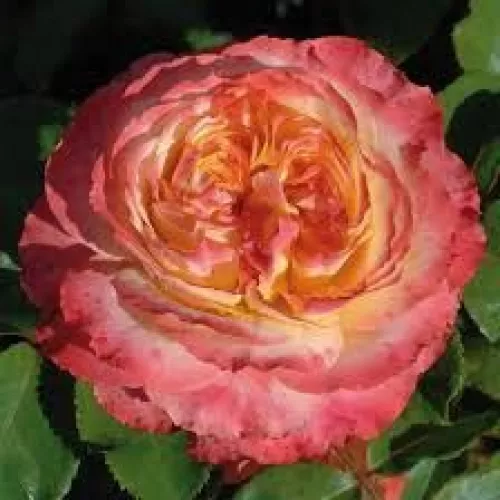
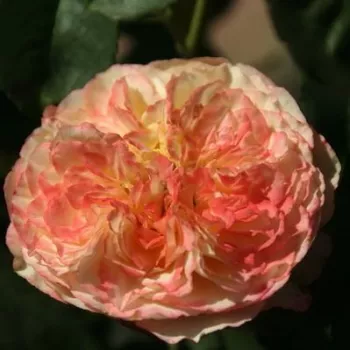
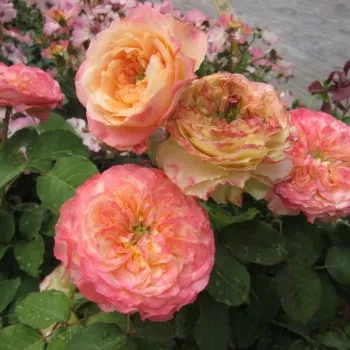
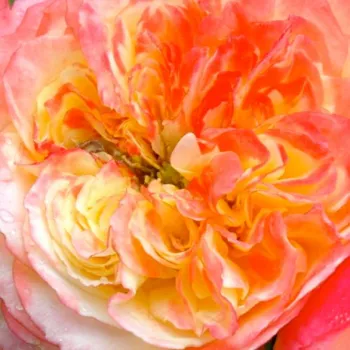
ROS'ODILE™ – yellow-pink flower-bed shrub rose – Les Provençelles®
In a typical British front garden where wind-blown showers and heavy soils are common, Ros’Odile™ offers an easy, reassuring way to enjoy classic cottage-style colour without complicated care. Its bushy, upright habit naturally forms a dense, tidy shrub that suits small beds and around-the-house borders, while the softly blended yellow-pink blooms bring a gentle, romantic feel from early summer onwards. As an own-root plant it settles in reliably, building a strong framework for a long ornamental lifespan, ready to regenerate if ever pruned harder or affected by weather. With moderate maintenance needs and dependable health, it fits busy routines yet still looks thoughtfully planned. Over time you can expect steady root establishment, then confident top growth, and by the third season a full, satisfying display of clustered flowers, giving you the sense that you simply planted it and it quietly works.
Usage options
| Target area | Reasoning |
|---|
| Front garden focal shrub |
The naturally bushy, upright habit creates a compact yet substantial shrub that anchors a small front garden without overwhelming the space. Its balanced height and spread make it easy to position beside a path or doorway for an immediate sense of structure and welcome, suiting homeowners seeking a coherent look with little planning, especially beginners. |
| Small flower bed in a family garden |
Medium-sized, cluster-flowered blooms in gentle yellow-pink tones provide continuous interest in modest beds, keeping the garden lively without demanding complex design. Plant 3–5 together for a softly rounded, floriferous mass that covers soil and reduces bare patches, ideal where families want reliable colour in a small area, appealing to time-poor. |
| Cottage-style mixed border |
The pastel, apricot-to-pink colour transition blends easily with perennials and herbs, echoing classic cottage garden borders. Its moderate height allows it to sit mid-border, weaving roses through salvia or sage without harsh contrasts. This creates an informal, layered planting that still appears intentional, attractive to lovers of romantic gardens. |
| Low-maintenance around-the-house planting |
Moderate maintenance needs and good black spot resistance make it suitable for foundations and side returns where routine attention can be limited. It copes well as a background shrub along walls or fences, shaping neatly with simple annual pruning, giving season-long interest for those preferring straightforward care, ideal for busy owners. |
| Long-term structural rose group (3–5 plants) |
As an own-root shrub it builds a durable framework that responds well to periodic renewal pruning, supporting long-term garden plans. Grouped plantings gradually knit together into a dense, cohesive mass of foliage and flowers, ensuring the bed ages gracefully rather than thinning, which works well for planners of enduring spaces, reassuring for long-term gardeners. |
| Urban front garden with challenging soils |
Its dense root and shoot system, developed from a well-rooted 2-litre plant, allows it to adapt to typical urban conditions if drainage is managed sensibly, handling typical British wet spells and heavier clay when set in improved soil or a raised bed. This makes it suitable for compact city plots with limited intervention from urbanites. |
| Wildlife-friendly ornamental corner |
Although heavily double, it still contributes structure, shelter and some hips, which modestly support garden wildlife while keeping a refined, ornamental feel. Combined with nectar-rich perennials, it forms part of a wildlife-aware planting that does not sacrifice visual polish, fitting those balancing nature support with neatness, particularly families. |
| Large patio container (40–60 litres) |
Its compact footprint and upright, dense branching suit a substantial container where roots have room in at least 40–50 litres of compost. This allows you to enjoy its gentle colour transitions and neat form on terraces or paved front gardens, where borders are limited, making roses feasible for space-conscious town-dwellers. |
Styling ideas
- Cottage Border Blend – Combine Ros’Odile™ with common sage and soft pinks for a relaxed, traditional cottage strip along a front path – ideal for lovers of classic village-garden atmospheres.
- Pastel Entrance Trio – Plant three shrubs in a shallow arc near the doorway, underplanted with low evergreen euonymus for year-round structure – suited to homeowners wanting tidy, welcoming kerb appeal.
- Soft Sunset Bed – Mix with white obedient plant and lavender-toned perennials so the yellow-pink flowers read as a gentle sunset glow – for gardeners drawn to calm, harmonious colour schemes.
- Family-Friendly Corner – Use a small group as a floral backdrop for a seating area, letting the dense habit disguise fences while hips offer seasonal interest – perfect for families seeking a cosy, low-fuss nook.
- Urban Pot Statement – Grow a single shrub in a 50–60 litre container with gravel mulch, pairing it with simple box or euonymus shapes nearby – appealing to busy urban residents wanting structure with minimal work.
Technical cultivar profile
| Parameter | Data |
|---|
| Name and registration |
Shrub rose from the Les Provençelles® collection; registered cultivar MASdile, marketed as Ros'Odile™ Les Provençelles® MASdile, exhibition category shrub rose for garden and landscape use. |
| Origin and breeding |
Bred in France in 2011 by Dominique Massad from ‘Monique Lestournelle’ × ‘Emilien Guillot’; introduced by Pétales de Roses and Les Chemins de la Rose for ornamental planting. |
| Growth and structural characteristics |
Bushy, erect shrub reaching about 100–140 cm in height and 70–90 cm spread; forms a dense, well-furnished framework with glossy mid-green foliage and moderate prickliness on the stems. |
| Flower morphology |
Medium-sized, cup-shaped clusters of very full flowers with 40+ petals; remontant, giving an initial flush then a generous repeat, suitable for beds and mixed plantings where continuity matters. |
| Colour data and phenology |
Yellow-pink bicolour: warm apricot-yellow centre with pink outer petals (RHS 14B outer, 36C inner); colour fades gently to pastel pink while retaining a soft, harmonious appearance in full sun. |
| Fragrance and aroma |
Very weakly scented rose with a discreet, fruity character; fragrance is barely noticeable in most garden situations, so value lies primarily in colour, form and overall plant structure. |
| Hip characteristics |
Produces moderate numbers of small, spherical red hips around 10–14 mm in diameter; hips add a light seasonal accent but are not the primary ornamental feature of the cultivar. |
| Resistance and winter hardiness |
Rated H7 and USDA zone 6b, hardy to about –21 to –18 °C; black spot resistance good, powdery mildew and rust moderate; tolerates heat but needs watering during extended dry periods. |
| Horticultural recommendations |
Prefers sunny sites with well-drained soil; spacing 55–100 cm depending on use, 2.4–2.7 plants/m² for massing; medium maintenance with occasional plant protection and straightforward annual pruning. |
Ros'Odile™ Les Provençelles® MASdile offers tidy bushy structure, soft yellow-pink flowering and durable own-root growth for long-term borders, making it a thoughtful choice if you would like a reliable, easy-going shrub rose.