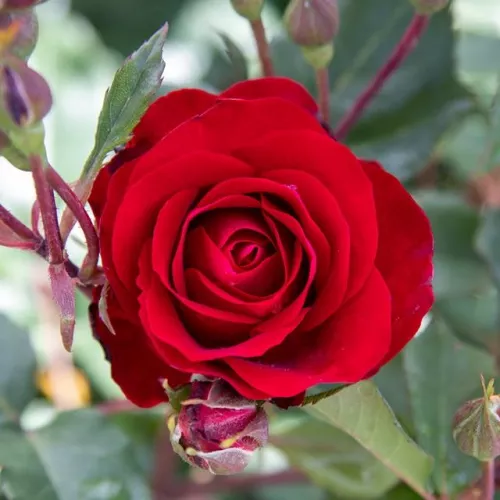
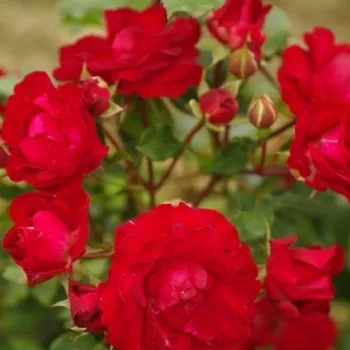
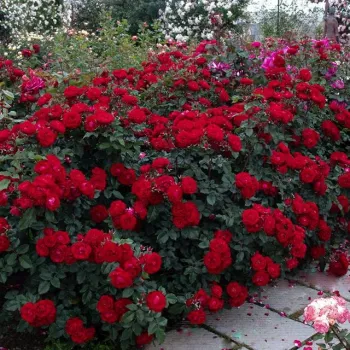
Deep, full, velvety red shade with a subtle dark tone. - floribunda bedding rose - scentless rose - no noticeable fragrance
– Intense velvety red blooms hold colour well.
– Compact, bushy habit for neat bedding.
– Reliable repeat flowering through the season.
– Premium gold quality, award-winning variety.
– Hardy to about –20 °C, suitable for UK.
– Special feature: Forms decorative red hips after flowering.
Customer-centric focus – Year-round
pharmaROSA® ORIGINAL 2-litre own-root potted rose
19,30 £
Unfortunately, we are currently unable to ship to the United Kingdom; we only deliver to countries within the European Union. For more information, please contact us!
4.5(6840)
RED SPOT® – red floribunda bedding rose - Barni
This compact floribunda offers reliable clusters of velvety red blooms from early summer into autumn, creating an immediate front-garden impact without demanding complex care. Its bushy, compact habit keeps borders tidy and well-shaped, ideal for small beds where space is at a premium. Medium maintenance means light deadheading and basic plant protection, yet it rewards you with season-long colour that holds well, barely fading even in strong sun. As an own-root plant it develops a long-lived, balanced bush that can regenerate from the base, building stability and dependable flowering year after year. In the first season it concentrates on roots, the second on stronger shoots, and by the third it reaches full ornamental value. Suitable for beds, borders and large containers, it fits effortlessly into classic cottage-style schemes and urban front gardens alike. It copes well in typical British conditions, even where breezy, exposed sites bring frequent showers and gusty winds.
Red Spot® in closed bud, showing a dark ruby red tip.
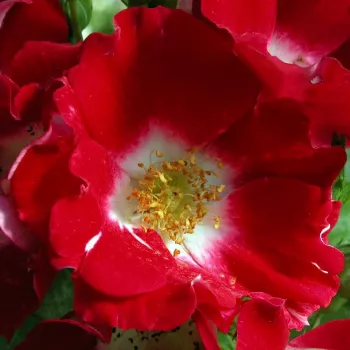
Red Spot® in the late flowering phase
Usage options
Target area
Reasoning
Small front-garden beds
The compact, bushy habit stays within 50–75 cm, making it easy to place in tight front-garden beds without overwhelming paths or windows. Clusters of velvety red flowers create clear visual structure with only moderate deadheading, giving fast success to the style-conscious beginner.
Classic cottage-style borders
Deep, full red clusters repeat through the season, echoing traditional cottage gardens while remaining manageable in size. The colour holds well, gently darkening rather than washing out, so mixed plantings retain depth and focus, especially valued by cottage-border enthusiasts.
Low rose bedding schemes
Regular cluster flowering and moderate maintenance needs make it ideal for low, formal rose beds or mixed bedding lines. Recommended planting distances allow you to achieve neat, even coverage with reliable flowering, appealing to gardeners seeking structured, low-height displays.
Containers and large pots (40–50 litres+)
Its compact height and dense foliage suit substantial containers, where a 40–50 litre or larger pot provides enough soil volume for steady growth. Repeating red blooms bring long-lasting patio colour with simple watering and feeding, attractive for balcony and terrace owners.
Mixed borders with perennials
Clustered, medium-sized flowers integrate well with cranesbills and low perennials, offering strong colour blocks without dominating neighbouring plants. The semi-double form adds texture and seasonal rhythm, ideal for those designing layered borders with balanced structure.
Family gardens with limited time
Moderate maintenance needs mean basic deadheading and occasional plant protection are usually sufficient, while self-cleaning helps keep the plant acceptable between visits. This suits busy households who still want dependable colour and a tidy look, especially time-pressed garden keepers.
Exposed or breezy sites
The compact framework and dense foliage help the plant hold its shape in wind, making it suitable for more open, breezy gardens where taller roses might rock or lean; this is reassuring for those planting in front gardens open to the street and frequent coastal breezes.
Long-term rose groupings
As an own-root floribunda, it forms a stable bush that can regenerate from the base if pruned harder in future seasons. This supports long-lived, low-hedge groupings or repeated accents in beds, a practical choice for planners of enduring rose borders.
Styling ideas
Doorway Welcome – plant a pair in large terracotta containers flanking the front door, underplanted with white alyssum for contrast – suited to homeowners wanting an immediate, tidy entrance focus.
Cottage Ribbon – line a short path with a staggered row, interspersed with Geranium macrorrhizum for soft edging and fragrance – ideal for lovers of informal, cottage-style front gardens.
Ruby Border Anchor – place groups of three within a mixed border of soft pinks and creams to create recurring red accents – perfect for gardeners building a coherent colour rhythm in modest spaces.
Patio Centrepiece – use a single plant in a 50-litre barrel-style container surrounded by seasonal bedding for a long-flowering focal point – good for balcony and terrace owners seeking easy yet striking colour.
Structured Bed – create a low rectangular rose bed using regular spacing for a clipped, formal effect, framed with box or dwarf lavender – best for those who enjoy geometric layouts and orderly planting.
Technical cultivar profile
Property
Data
Name and registration
Red Spot® floribunda bedding rose, bed rose group; registered as BARspot (BAR 6030), with ARS exhibition name Red Spot®, exhibition floribunda; fully authenticated premium garden cultivar.
Origin and breeding
Bred by Enrico Barni in Pistoia, Italy, introduced and first distributed by Rose Barni in 2007; accepted for registration by the American Rose Society in the same year.
Awards and recognition
Certificate of Merit at the Lyon International Rose Competition in 2008, recognising its ornamental performance and bedding value under trial conditions in a respected European rose show.
Growth and structural characteristics
Compact, bushy habit 50–75 cm high and 45–65 cm wide, with dense, mid-green slightly glossy foliage and moderate prickliness; forms a well-filled, low shrub suited to beds, fronts and containers.
Flower morphology
Semi-double, medium-sized cup-shaped blooms, 13–25 petals, borne in clusters; remontant with a generous second flush after the main summer flowering, providing repeated seasonal display in bedding schemes.
Colour data and phenology
Deep velvety red (RHS 187A outer, 187B inner), strong colour retention; cherry-red opening buds darken slightly to burgundy before fading, remaining intense and only moderately lightening even in strong sunlight.
Fragrance and aroma
No noticeable fragrance; this cultivar is selected primarily for colour and bedding performance rather than scent, with semi-double flowers offering moderate, but not exceptional, attraction for visiting pollinators.
Hip characteristics
Moderate production of small spherical red hips, around 6–10 mm in diameter, forming after flowering where spent blooms are not removed; offers modest seasonal interest without dominating the plant’s appearance.
Resistance and winter hardiness
Hardy to approximately –21 to –18 °C (RHS H7, USDA 6b, Swedish zone 3); average disease resistance with moderate susceptibility to mildew, black spot and rust, benefiting from standard protective care when needed.
Horticultural recommendations
Best in sunny positions; suitable for beds, borders and containers. Plant at 30–55 cm depending on use, with 8.2–9.4 plants/m² for mass effect; average heat and drought tolerance, needing water in extended dry spells.
RED SPOT® offers compact, long-lived clusters of velvety red flowers with manageable care on an own-root plant that settles securely over time, making it a considered choice for dependable colour in family gardens.
Detailed product attributes
Product Identification Data
Product Name:
RED SPOT® – red floribunda bedding rose - Barni
Product Type:
pharmaROSA® ORIGINAL - 2-litre own-root potted rose
Pollinator Attraction:
Semi-double flowers (13–25 petals) moderately attract pollinators, as their partly filled form and reduced accessibility of the stamens limit nectar and pollen exposure compared with simple blooms.
Pollinator-Friendly Rating:
Its semi-double flowers moderately attract pollinators, so it is at most a partially pollinator-friendly variety.
Our product is a rose grown with pharmaROSA®’s unique cultivation technology!
2-litre, own-root, potted rose.
With a shoot system appropriate to the season.
With a root system that thoroughly permeates the growing medium.
Quality compliant with the requirements of the E.N.A. (European Nurserystock Association).
Supplied in unique packaging that prevents damage.
Can be planted during frost-free periods.
True-to-variety rose bush with a unique identifier.
The pharmaROSA® own-root potted rose is a well-rooted plant that supports reliable establishment when planted and cared for properly, so it can be planted whenever the soil is not frozen.
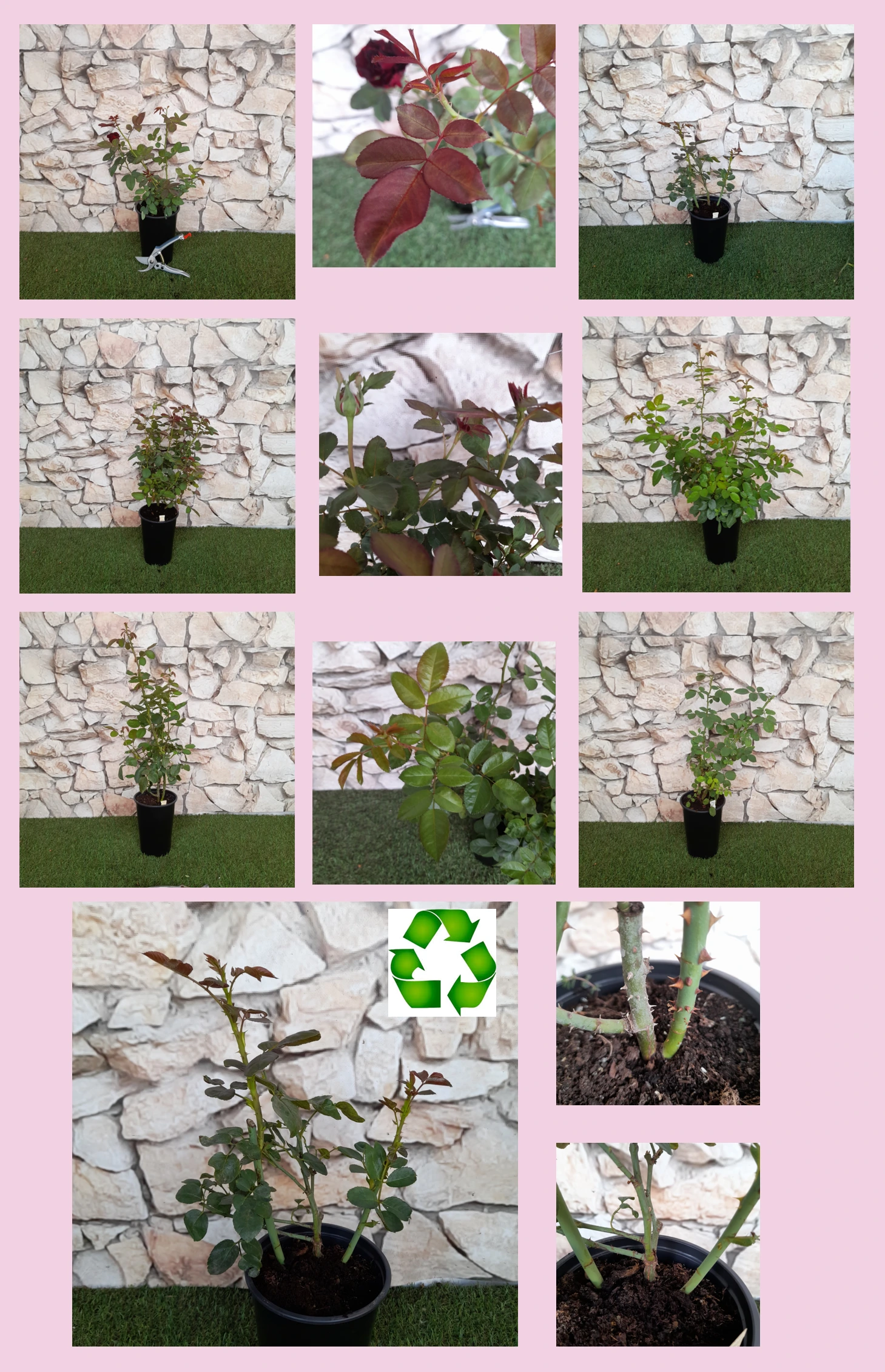
Crop overview: several varieties and growth stages in a short crop section.Shoot system: intensive growth of fresh basal shoots on a young plant.Root system: demonstration of a vigorous root system permeating the growing medium, by removing the pot.Balance: mature plant with root system and shoots in harmony with each other.
Information about the videos
The video series is not a “seasonal showcase”; it illustrates the essence of pharmaROSA® own-root cultivation in a tangible way: how the plant is built up, what the root system is like and how the shoot system regenerates. The recordings were therefore made at different times and with plants at various stages of development, so mixed foliage levels and differing stages of growth may appear in the videos. They are not a ‘sample’ of the batch dispatched, but a visual explanation of how the technology works. The current condition of the rose available to order — typical for the given period and similar to what you can expect to receive in the parcel — is shown in the upper part of the product page.
Pages for private customers Garden roses for the family garden, with minimal care → ORIGINAL® Premium garden roses – instant impact, a truly showpiece garden → EXTRA® Pages for professionals and private customers Roses for public spaces – large areas, sustainable maintenance → NATURAL® Roses for projects – hedge and row planting, fast implementation → RAPID® For professional partners only Production – propagation material for garden roses, wholesale → NEONATAL®
Company details
PharmaRosa Ltd. Company registration number: 01-09-717479 VAT number: 13075314-2-43 Plant health registration no.: HU130721 Bank account (IBAN): HU85117631891388688400000000 BIC (SWIFT): OTPVHUHB Bank name: OTP Bank Nyrt.