RAYMOND BLANC – pink nostalgia rose – Delbard
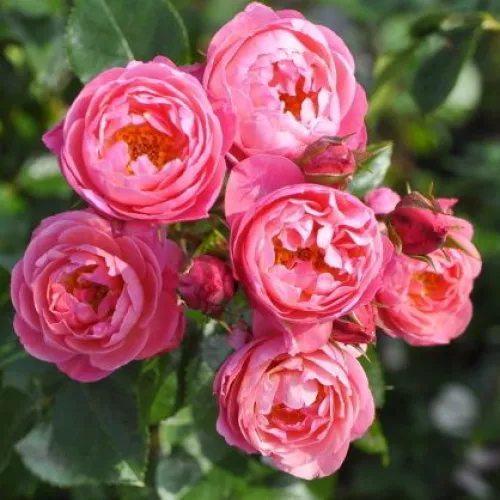
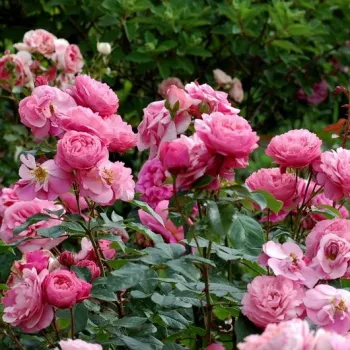
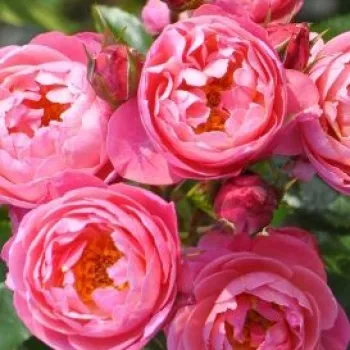
Romantic borders and classic cottage-style entrances suit Raymond Blanc perfectly, with its upright habit, dense dark foliage and large, globular blooms that repeat generously through the season. The rich pink flowers with silvery-edged fading make a feature of every flush, whether you plant a single specimen or a small group along a path. As an own-root shrub in a 2-litre pot, it settles steadily, giving you reliable structure and the reassurance that, with light annual pruning, you can shape it for beds, hedging or cutting. You can expect roots to establish first, then stronger shoots, followed by full ornamental value by the third year, building a lasting presence in an average family garden. In typical British conditions it copes well with exposed sites, giving good anchorage and steadiness in coastal winds and heavy weather. The strongly scented blooms are excellent for cutting, bringing nostalgic colour and perfume indoors, while moderate maintenance – mainly dead-heading and occasional protection – keeps its health and flowering performance satisfying even for time-pressed beginners.
Usage options
| Target area | Reasoning |
|---|
| Front garden focal shrub |
Its upright, bushy habit and dense dark foliage create an immediate focal point near the front door, offering a romantic welcome without taking too much ground space; own-root growth keeps the shape stable over many years for style-conscious homeowners. |
| Classic cottage-style bed |
Repeated flushes of rich pink, globular blooms give that nostalgic look associated with cottage gardens, combining well with airy perennials and low hedging while needing only moderate care and dead-heading for cottage-style enthusiasts. |
| Small groups in mixed borders |
Planted in groups of three to five at the recommended spacing, Raymond Blanc forms a coherent, upright block of colour and structure that knits mixed borders together yet remains easy to manage for busy gardeners. |
| Cutting patch in family gardens |
The large, double, long-lasting blooms with strong fragrance are ideal for home-cut bouquets, and the remontant habit ensures a good supply of stems across the season for fragrance-loving beginners. |
| Low informal hedge |
Regular, upright growth and medium height allow you to form a loose flowering hedge along paths or boundaries; own-root plants re-shoot reliably if cut back hard, supporting long-term, low-input planners. |
| Feature rose by patios or seating areas |
Planted close to a terrace or bench, the strong scent and richly shaded flowers can be enjoyed at close quarters, while moderate disease resistance and straightforward care suit relaxation-focused families. |
| Containers and large pots (40–50 litres+) |
In a generously sized container with good drainage, its upright habit and repeat blooms perform well, giving colour on balconies or paved front gardens, even where exposure to wind requires a sturdily anchored shrub for urban residents. |
| Accent planting in lawn or gravel |
Used as a solitary specimen in a small lawn circle or gravel area, Raymond Blanc provides vertical interest, romantic colour and a long-lived presence from its own-root base with only periodic pruning for design-minded owners. |
Styling ideas
- Cottage Duo – Combine Raymond Blanc with sweet alyssum edging for a low, scented froth that softens paths and beds – ideal for lovers of traditional cottage approaches.
- Evergreen Frame – Plant in front of compact cherry laurel to give glossy green backing to the pink blooms – suited to those wanting year-round structure.
- Soft Pink Drift – Mix with Virginia obedient plant and other pale perennials for a harmonious, layered pink border – perfect for colour-coordinated garden planners.
- Entrance Accent – Use a pair in large containers flanking a front door for a romantic welcome and long flowering window – good for townhouses and small front gardens.
- Cutting Corner – Group several plants with other fragrant roses to create a small cutting and scent area – appealing to home florists and bouquet enthusiasts.
Technical cultivar profile
| Parameter | Data |
|---|
| Name and registration |
Romantic shrub rose from the Chefs' Roses collection; registered as DELnado, marketed as Raymond Blanc Chefs' Roses DELnado; ARS exhibition name Club Camif. |
| Origin and breeding |
Bred by Georges Delbard in France before 2003, registered in 2003 and introduced in 2007; developed within the Romantica line, emphasising nostalgic flower form and garden performance. |
| Growth and structural characteristics |
Upright shrub reaching about 100–150 cm high and 70–100 cm wide, with dense, glossy dark green foliage and moderate prickliness, forming a well-filled, vertical garden presence. |
| Flower morphology |
Large, double flowers with 26–39 petals, globular to pompon-shaped and usually borne in clusters; remontant habit with an especially generous second flush in suitable conditions. |
| Colour data and phenology |
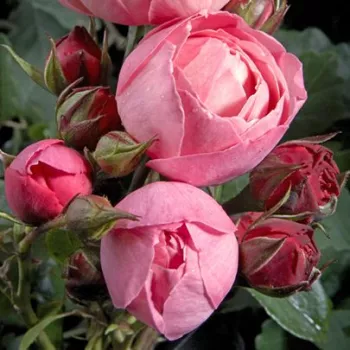
Vibrant rich pink blooms (RHS 62C outer, 62B inner) opening from darker mauve buds; colour gradually softens to pale pink with delicate silvery edging as flowers age on the plant. |
| Fragrance and aroma |
Classed as a strongly scented, long-lasting rose; fragrance character details are not documented, but the perfume is clearly noticeable and valued for cutting and seating areas. |
| Hip characteristics |
Hip set is generally slight; if present, hips are small ellipsoid fruits about 8–13 mm in diameter, coloured red (RHS 46A), with limited ornamental impact compared with the blooms. |
| Resistance and winter hardiness |
Moderate disease resistance to powdery mildew, black spot and rust; best in sunny, airy sites. Hardy to around –21 to –18 °C (RHS H7, USDA 6b, Swedish zone 3) with normal garden care. |
| Horticultural recommendations |
Suited to beds, mixed borders, hedging and cutting; prefers full sun and regular watering in dry spells. Plant at 55–100 cm spacing depending on use, and dead-head to encourage rebloom. |
Raymond Blanc Chefs' Roses DELnado offers richly coloured, strongly scented blooms, reliable repeat flowering and a long-lived, own-root shrub form that suits gardeners seeking a romantic yet practical choice they can enjoy for years.