QUEEN ELIZABETH – pink bedding grandiflora rose - Lammerts
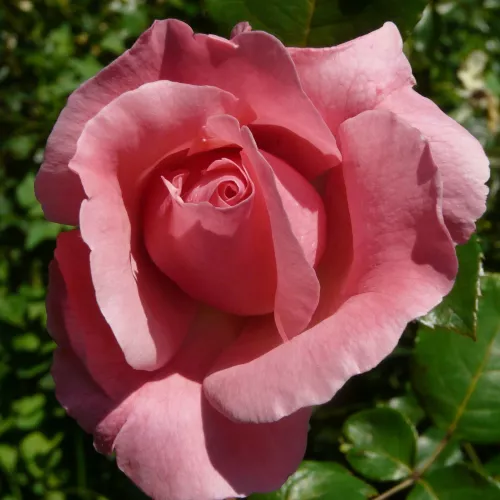
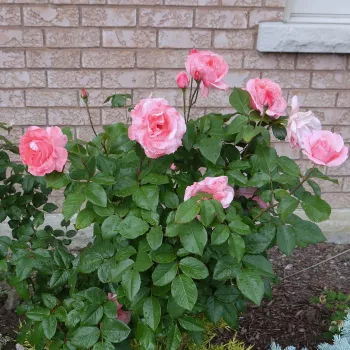
This classic grandiflora brings reliable elegance and poised height to the family garden, forming a tall, upright bush that frames windows, paths and front boundaries with mid-pink blooms. Its remontant flowering gives flush after flush through summer, while the double, cupped flowers have a refined, mildly sweet scent that suits everyday use and occasional cutting for the house. On its own roots, it develops a strong framework and root system that underpins long-term longevity with steady ornamental value. Over time, its glossy dark foliage and moderate self-cleaning combine for an overall tidiness that fits low-effort, classic front gardens, even where you must manage heavier soils and ensure dependable drainage in wet spells. With basic care, it builds from first-season establishment to increasingly branched flowering stems and, by the third year, a fully developed, imposing presence in beds, borders and mixed plantings.
Usage options
| Target area |
Reasoning |
| Front garden focal rose |
The tall, upright habit and pure mid-pink blooms create an immediate focal point in even a small front garden, rising above low shrubs or perennials without overwhelming the space, rewarding beginners who want impact from a single well-chosen rose for homeowners |
| Classic rose border backbone |
At 180–260 cm high with dense, dark green foliage, this variety forms a vertical backbone in mixed or pure rose borders, giving structure behind lower plants while its own-root vigour slowly builds a stable, long-lived clump that suits patient gardeners |
| Small group planting (3–5 plants) |
Planted in small groups at the recommended spacing, the repeat-flowering, cupped blooms read as a coherent pink mass, ideal where you want a tidy, formal-looking bed that flowers reliably through summer with only routine deadheading needed by beginners |
| Informal hedge or boundary line |
Used at closer spacing, its upright habit and glossy foliage can form an informal flowering hedge, bringing seasonal privacy and colour along a drive or front fence, while own-root resilience supports gradual thickening with years of use for families |
| Feature rose in cottage-style mix |
The soft pink colour and classic grandiflora form sit comfortably with cottage-garden companions such as salvias, coneflowers or catmint, giving vertical accents and cuttable stems without demanding complex pruning plans from relaxed gardeners |
| Cutting and vase use from the garden |
Large, double flowers with long, straight stems make this rose well suited to occasional home cutting, giving elegant, mid-pink bunches while the plant continues to produce new buds for outdoor display, which appeals to aesthetically minded owners |
| Statement rose in a large container |
In a substantial container of at least 40–50 litres, this variety can anchor a patio or front step, its tall stems and recurrent flowering providing height and colour, provided watering and feeding are kept regular by space-conscious urban gardeners |
| Long-term structural planting in challenging sites |
Suited to long-term positions where you can improve heavier soil and ensure good water run-off, this own-root rose steadily forms a deep, anchoring root system and enduring framework, maturing into a dependable, tall feature for pragmatic front-garden owners |
Styling ideas
- COTTAGE COLUMN – Plant as a tall accent amid nepeta, hardy geraniums and lavender to create a gentle height step in a cottage-style front border – ideal for lovers of classic, romantic planting.
- FORMAL DRIFT – Use three plants in a shallow arc in front of evergreen yew or box for a neat, rose-led composition – suited to those who prefer tidy, structured gardens with minimal complexity.
- PATIO STATEMENT – Grow one plant in a 50-litre terracotta pot flanked by low herbs for a welcoming, upright feature by the front door – perfect for small-space and urban gardeners.
- SOFT SCREEN – Line a side path with evenly spaced plants, underplanting with hardy groundcovers, to create a light, flowering privacy screen – good for families wanting gentle enclosure without heavy hedging.
- PINK HARMONY – Combine with white sagebrush, Hidcote St John’s wort and purple coneflower for a balanced mix of pinks, silvers and golds – appealing to design-conscious homeowners seeking easy, colour-coordinated borders.
Technical cultivar profile
| Parameter |
Data |
| Name and registration |
Grandiflora bedding rose; registered cultivar name ‘Queen Elizabeth’, widely traded under Queen Elizabeth Bedding rose Queen Elizabeth; ARS exhibition name Queen Elizabeth. |
| Origin and breeding |
Bred by Walter Edward Lammerts in the United States in 1951 from ‘Charlotte Armstrong’ × ‘Floradora’; introduced 1954 by Jackson & Perkins, from Armstrong Nurseries. |
| Awards and recognition |
Highly decorated classic: Portland Gold Medal 1954, AARS winner 1955, ARS Gold Medal 1957, Golden Rose of The Hague 1968, WFRS Hall of Fame and World’s Favourite Rose 1979. |
| Growth and structural characteristics |
Tall, upright grandiflora, typically 180–260 cm high and 70–110 cm wide, with dense, glossy dark green foliage and moderate prickliness, forming a strong, long-lived framework on own roots. |
| Flower morphology |
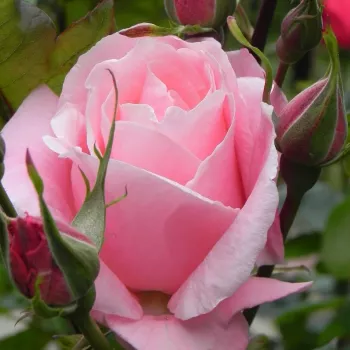
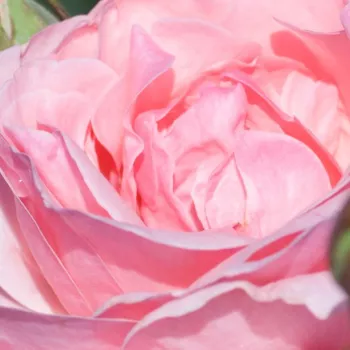
Large, double, cupped flowers with 26–39 petals, usually in clusters; remontant, with a strong second flush and repeat blooms across the season, giving both border presence and cutting stems. |
| Colour data and phenology |
Uniform mid-pink with delicate silvery sheen; buds deep pink, opening to mid-pink then fading to light, pearlescent pink, with colour holding better in cooler conditions than in intense sun. |
| Fragrance and aroma |
Mild, sweet fragrance of restrained strength, noticeable at close range without dominating nearby seating areas, making it pleasant for paths and entrances rather than strongly scented corners. |
| Hip characteristics |
Produces moderate numbers of small, ovoid, orange-red hips 12–18 mm across, adding discrete late-season interest if spent flowers are left rather than deadheaded in late summer. |
| Resistance and winter hardiness |
Rated H7, hardy to about −26 to −23 °C and USDA 5b; black spot resistance good, powdery mildew and rust moderate; tolerates summer heat if watered during extended dry periods. |
| Horticultural recommendations |
Best in full sun with improved, free-draining soil; moderate maintenance with some deadheading and plant protection; suitable for bedding, hedging, specimen use and park or estate planting. |
QUEEN ELIZABETH offers tall structure, recurrent mid-pink flowering and proven longevity, and in own-root form it establishes into a dependable, long-term garden feature worth choosing with confidence.