PUCCINI – pink-white park rose - Lens
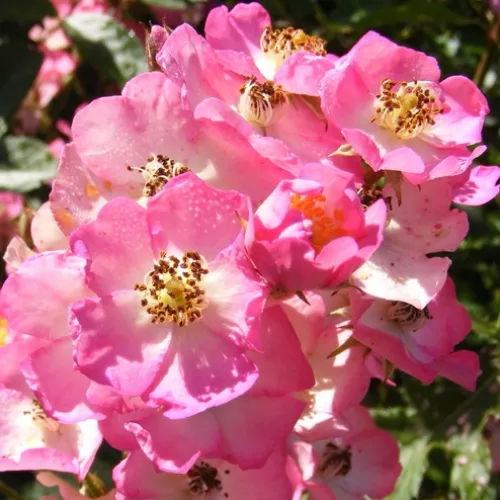
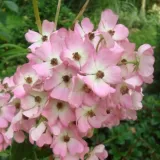
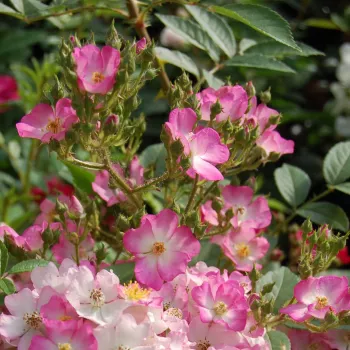
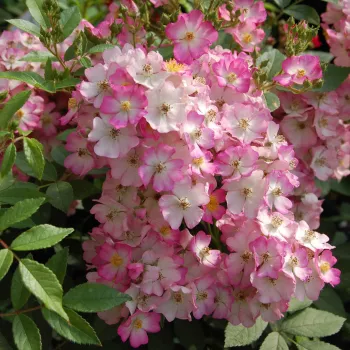
This elegant shrub rose offers reliable flowering from early summer well into autumn, carrying clouds of soft pink clusters that fade gently to cream-white for a classic cottage-garden look with minimal effort. Its naturally bushy, compact habit makes it easy to place in small front gardens or tighter borders where you want neat structure and balanced growth without constant pruning. Bred for strong health, it shows impressive resistance to common rose diseases, which helps maintain fresh foliage and reduces the need for spraying in typical British family gardens. As an own-root plant, it settles in steadily and keeps its shape long term, offering dependable structure and enduring ornamental value. Over time it develops into a dense, lightly thorned shrub that also carries bright red hips, adding seasonal interest well beyond the main flowering period. You can expect a natural progression – first consolidating its roots, then building up shoots, and by the third year delivering its full garden presence. Its open single flowers are excellent for bees and other pollinators, while the stable shrub form copes well in ordinary garden soils, even in areas exposed to frequent wind and rain along the coast, provided drainage is reasonable and consistent. Ideal for relaxed mixed planting schemes or low‑input hedging, it offers a quietly graceful answer when you want a rose that simply fits in and works. Thoughtful planting distances also mean straightforward planning when you are setting out beds or informal rows.
Usage options
| Target area |
Reasoning |
| Front garden focal shrub |
The bushy, compact habit (around 55–90 cm high) makes this variety ideal as a modest focal point by a path, gate or bay window where space is limited. Its season-long clusters of pink-white flowers provide reliable interest without demanding intricate pruning, giving early success for the beginner. |
| Low-maintenance rose hedge |
Planted at 40 cm intervals, Puccini forms a soft, semi-formal hedge with dense foliage that reads as a continuous band of blossom in summer. Strong disease resistance means you can maintain a tidy, flowering boundary with only basic yearly trimming, well suited to the time-pressed homeowner. |
| Cottage-style mixed border |
The light, airy flower clusters and pastel colouring blend beautifully with perennials and grasses, creating a relaxed cottage feel rather than a rigid rose bed. Its repeat-flowering habit keeps colour running through the border, rewarding even minimal deadheading for the style-conscious gardener. |
| Pollinator-friendly planting strip |
Single to semi-double blooms with exposed stamens provide easy access for bees and other insects, ensuring the plant contributes actively to garden biodiversity. The long flowering season offers nectar over many weeks, fitting well into wildlife-friendly schemes favoured by the environmentally aware buyer. |
| Mass planting in park-style beds |
At recommended spacings of 50 cm for blocks or 4–5 plants/m², Puccini forms a low, even shrub layer with a soft pink veil of blossom. Its robust health and low intervention needs make it a climate-conscious choice for larger planting areas managed by the practical planner. |
| Seasonal interest with hips |
Moderate crops of bright red, spherical hips extend the display into autumn, giving colour and structure after the main flowering finishes. This makes the shrub a good choice where you want value across several seasons without complex care, appealing to the all-year-round enthusiast. |
| Coastal or exposed family gardens |
A sturdy, moderately tall shrub with dense foliage anchors well in typical garden soils and tolerates exposed conditions, suiting front gardens that face the wind. It is particularly useful where you want roses to cope with frequent coastal rain and gusts, reassuring the weather-conscious owner. |
| Own-root, long-term border structure |
As an own-root plant, Puccini develops a stable, balanced framework that regenerates well from the base, making it forgiving of different pruning styles and minor mistakes. Over several years it settles into a dependable structural shrub, ideal for long-lived borders planned by the forward-thinking planner. |
Styling ideas
- Cottage-edge drift – Plant in a loose row with lamb’s ear and low nepeta to soften a path edge, letting the pastel flowers mingle for a gentle cottage look – ideal for nostalgic front-garden lovers
- Pastel pollinator band – Combine with salvia, verbena and airy grasses to create a buzzing pollinator strip that still looks refined from the street – for eco-conscious but style-aware homeowners
- Soft privacy hedge – Use close spacing for a flowering, shoulder-height screen that defines boundaries without feeling heavy or formal – suited to families wanting discrete separation
- Season-spanning island bed – Centre Puccini in a small lawn island with crocosmia and late perennials so flowers give way to hips and seedheads – for those seeking interest beyond midsummer
- Compact structure mix – Interplant with low evergreens and spring bulbs so the rose provides summer shape and bloom while other plants carry early and winter interest – perfect for small, busy gardens
Technical cultivar profile
| Parameter |
Data |
| Name and registration |
Shrub rose, Hybrid Musk, registered as LENmos and marketed as Puccini – pink-white park rose; American Rose Society exhibition name Puccini used internationally for shows. |
| Origin and breeding |
Bred by Louis Lens, Lens Roses, Belgium, from Rosa luciae magonc × (‘Ballerina’ × ‘Robin Hood’); bred 1982 and introduced in 1984 for garden and landscape use. |
| Awards and recognition |
Golden Rose at Kortrijk in 1985 and Grande Rose du Siècle at Lyon in 1985, reflecting strong performance and ornamental value in trial conditions. |
| Growth and structural characteristics |
Bushy, slightly thorny shrub reaching about 55–90 cm in height and 55–95 cm spread, with very dense, lightly glossy light-green foliage giving a full, well-clothed appearance. |
| Flower morphology |
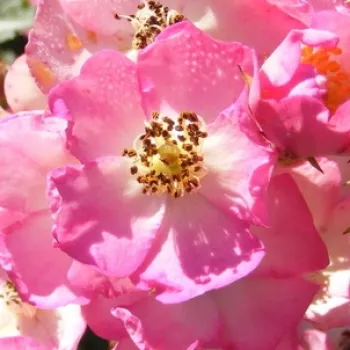
Single to semi-double, flat flowers with 5–12 petals, small size (about 0.5–1.5 inches), carried in large, many-flowered clusters; remontant with a notably abundant second flush. |
| Colour data and phenology |
Delicate light pink petals with cream-white centre; soft pastel pink when opening, fading gradually to pale pinkish-white; RHS 65C outer, 155D inner; colour retention moderate over the bloom period. |
| Fragrance and aroma |
No noticeable fragrance; grown primarily for visual effect, floriferous clusters and pollinator value rather than scent, making it reliable where consistent flower display is the priority. |
| Hip characteristics |
Produces moderate quantities of bright red, spherical hips, around 12–20 mm in diameter, developing in autumn and adding colour and wildlife interest once the main flowering is over. |
| Resistance and winter hardiness |
Good overall disease resistance with reported resistance to powdery mildew, black spot and rust; winter hardy approximately to –18 to –15 °C (RHS H6), suitable for many UK regions. |
| Horticultural recommendations |
Plant at 40–75 cm depending on hedge, mass or specimen use; prefers well-drained garden soil, regular moisture and light annual pruning; own-root habit supports long-term, low-input maintenance. |
PUCCINI – pink-white park rose - Lens offers long-season cluster flowering, strong disease resistance and durable own-root structure for easy, lasting garden impact, making it a thoughtful choice when planning a relaxed family border.