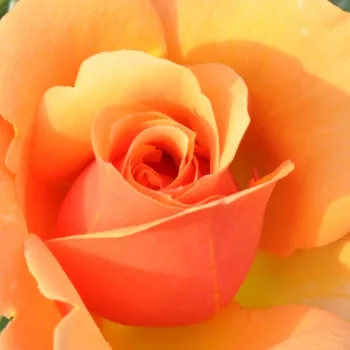
Uniform bright orange shade with a subtle golden tinge. - hybrid tea rose - mild, subtly scented rose - pleasant, floral character
– Warm orange blooms with golden sheen.
– Compact, upright habit for smaller spaces.
– Mild, pleasant floral fragrance in bloom.
– Good colour retention as flowers age.
– Hardy to around –29 °C, suitable for cold areas.
– Special feature: Ideal hybrid tea for borders and cutting, offering elegant, remontant blooms.
Everyday elegance – Continuous garden development
pharmaROSA® ORIGINAL 2-litre own-root potted rose
18,70 £
Unfortunately, we are currently unable to ship to the United Kingdom; we only deliver to countries within the European Union. For more information, please contact us!
4.5(6875)
PROF. KOWNAS – orange hybrid tea rose - Żyła
Elegant and dependable, PROF. KOWNAS brings refined, long-stemmed blooms to everyday gardens with a classic hybrid tea look that suits both borders and cutting. Its orange flowers open from rich buds into softly glowing, salmon-gold tones, holding their colour well even in unsettled British weather where good air movement helps in wetter, humid conditions. The plant forms a compact, upright bush with dense, dark green foliage that fits neatly into small front gardens and around-the-house beds, needing only basic deadheading and seasonal care. As an own-root rose it establishes securely and matures steadily, supporting a long garden life with reliable structure and simple, reassuring maintenance. Planted in fertile, well-drained soil and kept evenly watered, it offers a generous repeat-flowering habit for cutting and display, especially where you prefer a manageable, medium-height rose for classic borders. In larger containers of at least 50 litres it can serve as a focal point near a doorway or terrace, giving you exhibition-style blooms without greenhouse-level effort. Its remontant nature and moderate care needs make it particularly welcoming for improving beginners, while still rewarding detail-minded collectors who appreciate subtle fragrance and structured planting.
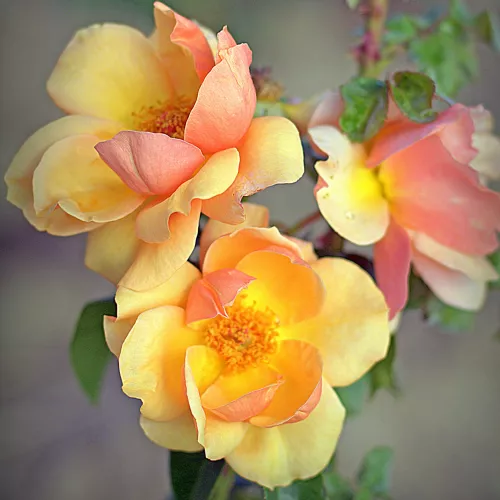
Prof. Kownas showing a cup-shaped, flat-opening bloom.
Closed bud of Prof. Kownas, showing a deep orange colour with a slight golden sheen.
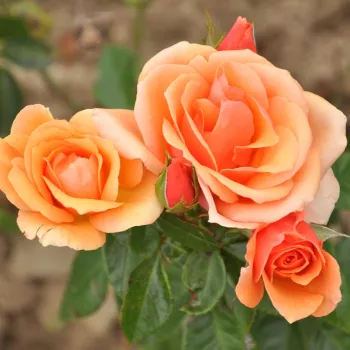
Prof. Kownas hybrid tea rose at full bloom.
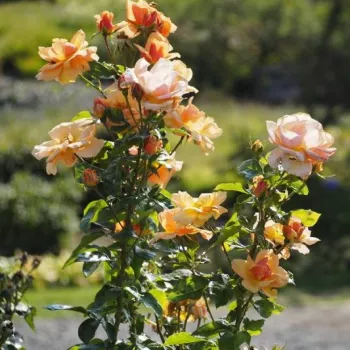
Glossy dark green foliage of Prof. Kownas rose, shown in the light.
Usage options
Target area
Reasoning
Front garden focal point
The upright, medium-height habit and dense, glossy foliage create a tidy, formal presence that sits comfortably by a front path or entrance, giving structured colour without dominating a small plot, ideal for the style-conscious homeowner.
Classic hybrid tea border
Strong, well-formed hybrid tea blooms on straight stems suit traditional rose borders where individual flowers are displayed clearly; the plant’s compact spread helps maintain orderly lines with modest pruning, suiting the organised planner.
Cutting and vase use
Solitary, medium-sized, double flowers with good colour retention are excellent for cutting; tidy stems slip easily into small arrangements, bringing a warm orange glow indoors with minimal fuss, appreciated by the practical arranger.
Small groups in cottage-style beds
Planting 3–5 bushes together at recommended spacing creates a low, repeat-flowering drift that blends well with perennials, while own-root stamina underpins long-term structure in mixed cottage schemes, encouraging the relaxed gardener.
Partially shaded side garden
Its tolerance of partial shade allows planting along side passages or between buildings where sun is patchy; this flexibility supports reliable flowering in typical British plots with mixed aspects, reassuring the space-limited urbanite.
Raised beds on heavier soils
In raised or well-drained beds it roots securely and copes better with wetter spells, giving a stable bush and consistent flowering in gardens with heavier clays and higher humidity, valuable for the weather-aware beginner.
Container near terrace or doorway
In a large 40–50 litre pot with regular watering and feeding, its compact size, remontant habit and neat outline provide a long-season accent close to seating areas, perfect for the style-focused balcony-owner.
Long-term specimen plant
Own-root growth supports gradual crown building and reliable regeneration after pruning, giving a single, well-shaped rose that improves over seasons when roots settle first, then shoots fill out, then full ornamental effect develops, rewarding the patient collector.
Styling ideas
Cottage-duo – Combine with creeping phlox at the front of a bed for a soft, low, pastel carpet beneath upright orange blooms – ideal for romantic front-garden enthusiasts
Sunny-border – Set in a narrow border with silver foliage perennials to highlight the golden-orange flowers and neat habit – suited to organised, low-maintenance planners
Doorstep-accent – Grow in a 50+ litre terracotta pot flanking a front door for a welcoming, vertical splash of colour – perfect for busy urban homeowners
Cutting-corner – Plant a short row solely for cutting, paired with airy sweet alyssum to soften the base – attractive for home florists who like fresh vases
Structured-mix – Weave among aromatic herbs such as spearmint in a raised bed, letting glossy foliage contrast with looser planting – appealing to sensory-garden creators
Technical cultivar profile
Parameter
Data
Name and registration
Hybrid tea rose cultivar PROF. KOWNAS (Żyła), commercial hybrid tea type with orange flowers; registered trade name used for garden and cut-flower purposes, exhibition hybrid tea classification.
Origin and breeding
Bred by Stanisław Żyła (Poland) from (Crepe de Chine × Marina) × Rinacor; registration dated 1994, with wider introduction reported from 1996, breeding institution data not documented.
Growth and structural characteristics
Compact, upright bush 70–95 cm tall and 40–55 cm wide, moderately thorny shoots and dense, dark green, glossy foliage, forming a well-filled, vertical accent suitable for smaller borders and beds.
Flower morphology
Medium-sized, double, cup-shaped blooms with 26–39 petals, opening rather flat on solitary stems; repeat-flowering (remontant) with a generous second flush given reasonable nutrition and deadheading.
Colour data and phenology
Bright orange flowers with a golden tinge (RHS 24A/23B), buds deep orange, ageing through salmon-rose and pastel-gold tones; colour holds well, then softens gently as blooms mature on the plant.
Fragrance and aroma
Mild, pleasant floral fragrance, noticeable at close range without being overpowering; suitable near paths, entrances or seating where a light scent is preferred rather than a heavy, dominant perfume.
Hip characteristics
Hip set usually low due to double flowers; occasional small, spherical orange-red hips 12–17 mm in diameter may form late season, generally of minor ornamental impact in typical garden use.
Resistance and winter hardiness
Hardy to approximately −29 to −26 °C (RHS H7, USDA 5a); disease resistance moderate with good black spot resistance but some susceptibility to powdery mildew and rust, needing routine monitoring and care.
Horticultural recommendations
Best in fertile, well-drained soil with full sun or partial shade; medium maintenance with regular watering in drought, feeding and deadheading; spacing from 25–50 cm depending on hedging, mass or specimen use.
PROF. KOWNAS offers compact hybrid tea elegance, good winter hardiness and repeat flowering on a long-lived own-root framework; consider it if you would like a reliable orange rose that settles in gracefully over time.
Detailed product attributes
Product Identification Data
Product Name:
PROF. KOWNAS – orange hybrid tea rose - Żyła
Product Type:
pharmaROSA® ORIGINAL - 2-litre own-root potted rose
Pollinator Attraction:
Its strongly double (fully filled) bloom form, which often conceals or restricts access to the stamens, makes it poorly attractive to pollinating insects.
Pollinator-Friendly Rating:
Double-flowered variety, pollinator-friendly: limited, attracts few pollinators
Our product is a rose grown with pharmaROSA®’s unique cultivation technology!
2-litre, own-root, potted rose.
With a shoot system appropriate to the season.
With a root system that thoroughly permeates the growing medium.
Quality compliant with the requirements of the E.N.A. (European Nurserystock Association).
Supplied in unique packaging that prevents damage.
Can be planted during frost-free periods.
True-to-variety rose bush with a unique identifier.
The pharmaROSA® own-root potted rose is a well-rooted plant that supports reliable establishment when planted and cared for properly, so it can be planted whenever the soil is not frozen.
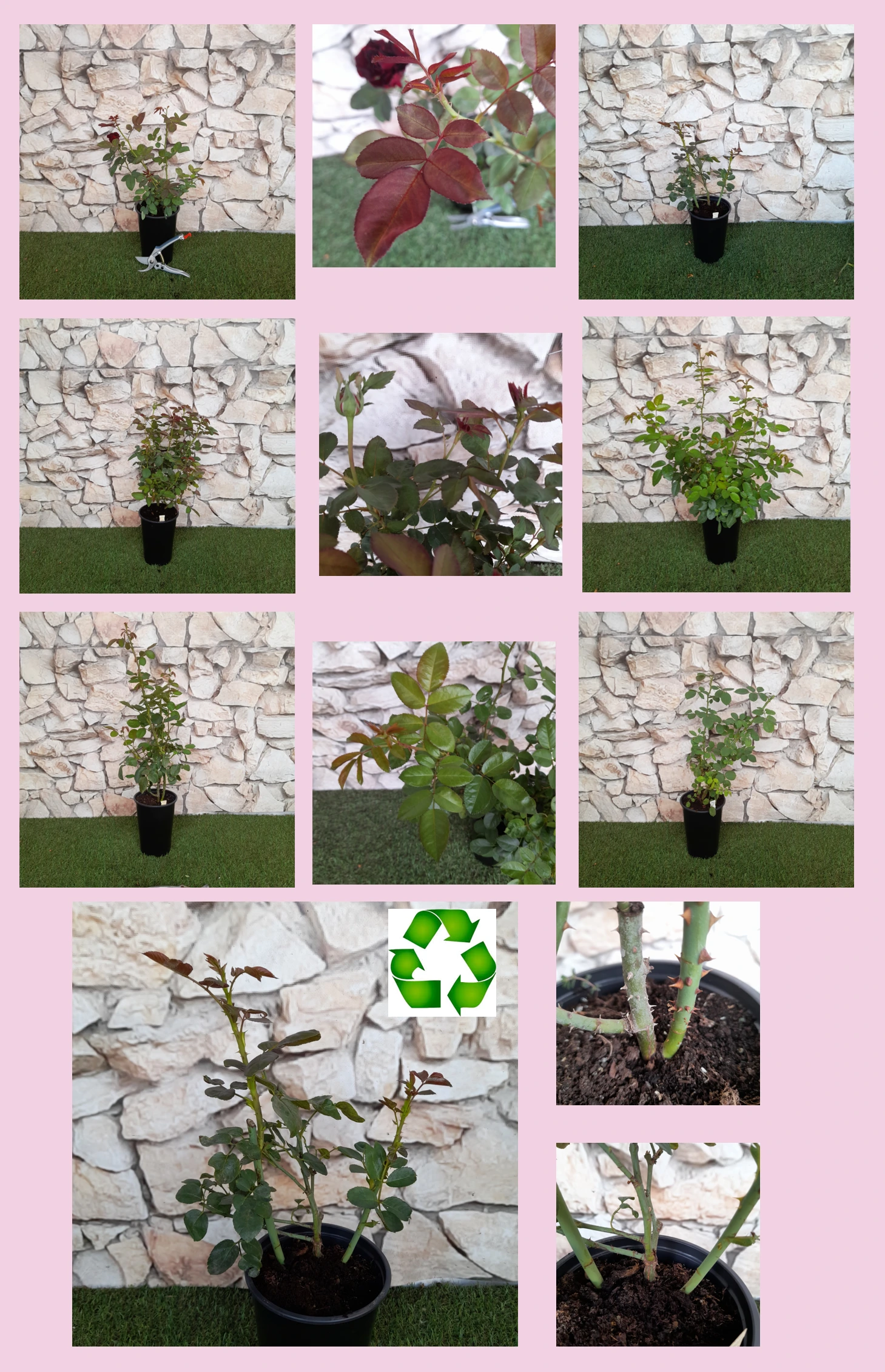
Crop overview: several varieties and growth stages in a short crop section.Shoot system: intensive growth of fresh basal shoots on a young plant.Root system: demonstration of a vigorous root system permeating the growing medium, by removing the pot.Balance: mature plant with root system and shoots in harmony with each other.
Information about the videos
The video series is not a “seasonal showcase”; it illustrates the essence of pharmaROSA® own-root cultivation in a tangible way: how the plant is built up, what the root system is like and how the shoot system regenerates. The recordings were therefore made at different times and with plants at various stages of development, so mixed foliage levels and differing stages of growth may appear in the videos. They are not a ‘sample’ of the batch dispatched, but a visual explanation of how the technology works. The current condition of the rose available to order — typical for the given period and similar to what you can expect to receive in the parcel — is shown in the upper part of the product page.
Pages for private customers Garden roses for the family garden, with minimal care → ORIGINAL® Premium garden roses – instant impact, a truly showpiece garden → EXTRA® Pages for professionals and private customers Roses for public spaces – large areas, sustainable maintenance → NATURAL® Roses for projects – hedge and row planting, fast implementation → RAPID® For professional partners only Production – propagation material for garden roses, wholesale → NEONATAL®
Company details
PharmaRosa Ltd. Company registration number: 01-09-717479 VAT number: 13075314-2-43 Plant health registration no.: HU130721 Bank account (IBAN): HU85117631891388688400000000 BIC (SWIFT): OTPVHUHB Bank name: OTP Bank Nyrt.