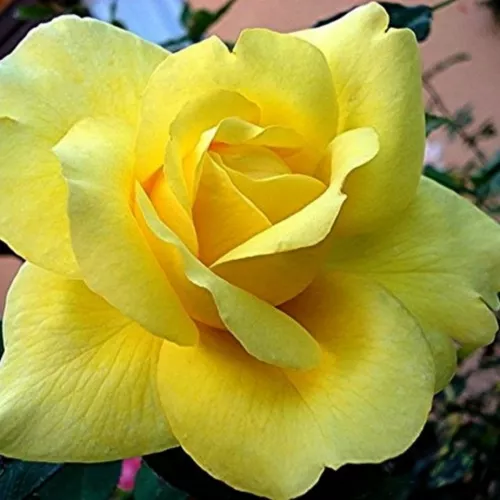
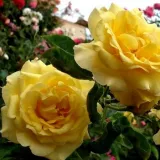
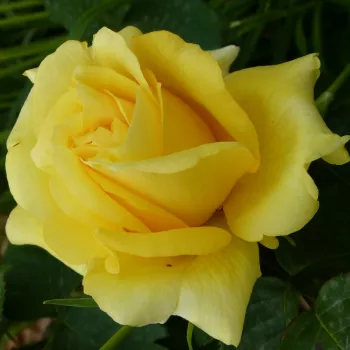
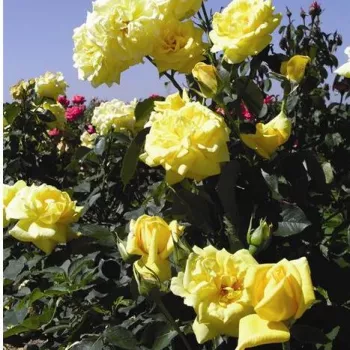
President Armand Zinsch™ hybrid tea rose
This premium yellow hybrid tea from the Great Fragrances collection gives you classic, high-centred blooms on an upright, well-shaped bush that fits beautifully into small British front gardens. Its lemony raspberry fragrance is rich and garden-filling, ideal beside paths or near seating where you pass by every day. Large, fully double flowers appear singly on strong stems, giving reliable repeat flowering through the season with a second flush that is also abundantly decorative. As an own-root plant, it matures into a stable, long-lived feature that regenerates well after pruning and needs only medium care. Given reasonable drainage, it copes well in typical heavy garden soils and breezy spots near the house, even where winds and showers regularly sweep in from the coast. Plant in sun, allow it time to form its framework – roots in the first year, top growth in the second, then full ornamental value by the third.
Usage options
| Target area | Reasoning |
|---|
| Front garden focal point |
The upright habit and bright yellow, high-centred blooms create a formal yet welcoming feature beside paths, front doors or bay windows. Planted as a single specimen, it offers clear structure without overwhelming a small space, ideal for visually tidy, fragrant entrances for the homeowner. |
| Small border groups (1–3 shrubs) |
Planted in loose triangles at around 90 cm, the dense foliage and repeat-flowering habit form a compact, coherent block of colour that works well in modest borders. The consistent height keeps the line neat, suiting those who want order without complex design for the beginner. |
| Cutting patch and garden vases |
Long, straight stems with solitary, high-centred blooms are ideal for cutting, while the very strong fragrance fills rooms from just a few stems. You gain regular flowers for indoor use without needing a dedicated cutting garden, which appeals to scent-lovers arranging flowers for the family. |
| Cottage-style mixes with perennials |
The clear yellow flowers pair beautifully with soft whites and mauves, and the dark, slightly glossy foliage anchors frothier companions such as gypsophila or low-growing candytuft. It gives a reliable vertical accent without fussy care, helpful in relaxed beds for the cottage-gardener. |
| Feature rose near seating or terrace |
The very strong, fresh lemony-raspberry fragrance is at its best where you sit or walk past regularly. A single well-placed plant by a bench or patio corner can perfume the whole area, rewarding modest attention with daily sensory enjoyment for the scent-seeker. |
| Neat rose hedge or path lining |
At 45–55 cm spacing, the upright form and dense foliage knit into a low, structured line that defines paths or separates garden areas. With medium maintenance and straightforward pruning, it stays tidy without elaborate shaping, suiting practical layout needs for the planner. |
| Mixed bed in exposed, showery sites |
The firm stems, compact build and good root anchoring as an own-root shrub help it stand up to breezy, rain-prone conditions around houses, making it dependable in typical British weather with gusty, wet spells near coastal-influenced areas for the coastal gardener. |
| Large containers near doors or patios |
In a 40–50 litre or larger pot with good drainage, its upright habit, repeat blooms and strong scent give high impact in a confined footprint. Own-root growth helps it fill the container evenly over the years, attractive for balcony, courtyard or hardstanding use for the urbanite. |
Styling ideas
- Classic-front-door – Place one on each side of a path in 40–50 litre pots, underplanted with low white alyssum, for a neat, scented welcome – ideal for time-pressed homeowners.
- Cottage-ribbon – Thread along a border with lavender and catmint, letting yellow blooms rise above a blue-mauve haze – fitting for cottage-garden enthusiasts.
- Sunny-specimen – Give a single plant centre stage in a small lawn bed with a simple bark mulch ring – perfect for beginners wanting one standout rose.
- Scented-seating – Position near a favourite bench with soft grasses and dwarf gypsophila to catch evening fragrance – suited to those who relax outdoors after work.
- Cutting-corner – Group three plants by a shed or fence, edged with evergreen candytuft, to provide regular, perfumed stems for the house – attractive for home florists.
Technical cultivar profile
| Parameter | Data |
|---|
| Name and registration |
Hybrid tea rose, registered as DELzinsch, marketed as President Armand Zinsch™ – Great Fragrances – DELzinsch; ARS exhibition name President Armand Zinsch, yellow hybrid tea for garden and cutting. |
| Origin and breeding |
Bred by Georges Delbard in France before 1998 from ‘Épidor’ × ‘O Sole Mio’; introduced by Delbard Pépinières et Roseraies / Georges Delbard SA in 2001 as a fragrant yellow hybrid tea. |
| Awards and recognition |
Holder of a Gold Medal from the Belfast International Rose Trials (2001), confirming its ornamental and garden performance, especially for bloom form, colour and notable fragrance quality. |
| Growth and structural characteristics |
Upright bush 85–120 cm high and 50–70 cm wide, with dense, dark green, slightly glossy foliage and moderate prickles; forms a compact, well-branched shrub suitable for borders and specimen use. |
| Flower morphology |
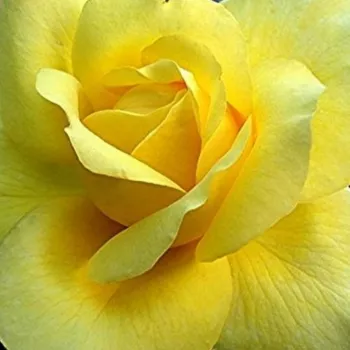
Large, double, high-centred blooms with 26–39 petals, typically borne singly on stems; classic cut-rose form with pointed buds and good repeat flowering, including an abundant second flush in season. |
| Colour data and phenology |
Radiant yellow flowers, ARS dy; RHS 14A outer and 12A inner petals. Colour opens strong golden-yellow, then softly lightens at the edges to lemon-cream while remaining clear and bright until petals drop. |
| Fragrance and aroma |
Very strong, garden-filling scent with a fresh lemony-raspberry, rosy character; best appreciated near paths, seating and open windows, and well suited to use as a fragrant cut flower indoors. |
| Hip characteristics |
Due to full double flowers, fruit set is generally low; where formed, hips are small, egg-shaped, around 10–14 mm, developing an orange-red colour that can add a discreet late-season accent. |
| Resistance and winter hardiness |
Rated H7, hardy approximately to −21 to −18 °C; disease resistance medium overall, with moderate susceptibility to powdery mildew, black spot and rust, requiring occasional preventive or corrective care. |
| Horticultural recommendations |
Best in full sun with fertile, well-drained soil; medium maintenance, including deadheading and pruning. Recommended spacing: 55 cm for mass, 45 cm for hedge, 90 cm for specimens; 3.3–3.8 plants/m² in groups. |
President Armand Zinsch™ rewards you with intensely fragrant, bright yellow blooms, a compact upright habit and dependable repeat flowering, while its own-root form supports long-term garden structure and easy care – an excellent choice to consider.