PORTOROŹ – orange bedding floribunda rose – Proll
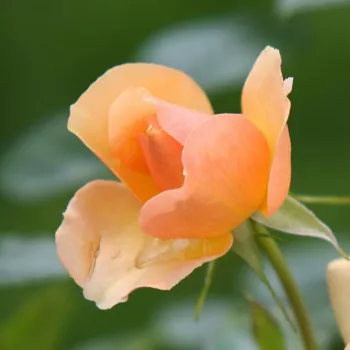
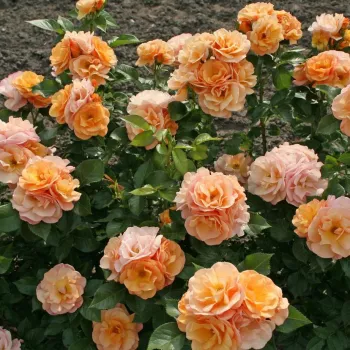
Colour and glow define Portoroź in the border, with warm orange blooms that soften to peach over time, bringing cottage charm to compact beds and small front gardens. Its upright habit and glossy dark foliage create a tidy, structured look that suits low-maintenance planting in busy family spaces. Bred by Kordes and ADR-recognised, it offers reassuring reliability for hobby gardeners who want dependable flowering rather than demanding show plants. Heat-tolerant and coping well with moderate dry spells, it stays attractive even when summers bring drought and intermittent watering. As an own-root rose it establishes steadily, building a resilient, renewing framework for a long garden lifespan. In a typical UK setting, you see roots settling in the first year, fuller shoots and shape in the second, and confident, abundant flowering by the third—ideal when you want to plant it once and enjoy it. For more creative borders, it teams beautifully with classic perennials in cottage-style mixes without needing complicated care.
Usage options
| Target area |
Reasoning |
| Front garden focal bed by the path |
Portoroź forms a neat, upright floribunda bush, reaching about 95–125 cm with a 60–85 cm spread, so it reads clearly from the pavement without overwhelming a small space. This defined structure makes it easy to position as a focal point or in a short row beside the front path, giving a sense of order and intention in typical British front gardens. Plant 1–3 bushes at 60–90 cm spacings for a simple, confident effect that still feels soft and welcoming for beginners. |
| Small cottage-style mixed border |
The warm orange-to-peach flower colour harmonises beautifully with the soft pinks, purples and creams commonly used in cottage borders, while the semi-double, cup-shaped blooms add a relaxed, informal feel. Because it repeats well with a generous second flush, the colour notes reappear through the season, tying together perennials and grasses without complex succession planning. A good choice if you want the “cottage look” with less trial-and-error for style-conscious. |
| Low-maintenance family back garden border |
Portoroź carries an ADR award, indicating strong garden performance and dependable growth in everyday conditions, so it suits families who cannot spend every weekend tending roses. Moderate disease resistance and only medium maintenance needs mean you can focus on basic care—watering in dry spells and occasional feeding—rather than constant spraying or specialist pruning. Over time the own-root framework supports reliable regrowth, helping busy households keep a tidy border with minimal effort for time-poor. |
| Sunny or lightly shaded side-of-house strip |
This rose tolerates partial shade, so it can still flower and hold its colour in those side strips that receive sun for only part of the day. The glossy, moderately dense foliage remains attractive between flushes, so even when blooms are fewer the plant contributes structure and greenery instead of leaving a bare gap. Ideal for narrow, overlooked spaces where you want a presentable, forgiving shrub rather than a demanding showpiece for practical. |
| Heat-exposed front or south-facing border |
With very good tolerance to heat and the ability to cope with moderate drought, Portoroź is well suited to south-facing, reflective situations near paving, brick or gravel. It will still need watering during prolonged dry spells, but its resilience reduces the risk of scorch or collapse if you cannot attend to it daily in summer. This makes it reassuring for urban and suburban drives and frontages that can become quite hot for urban. |
| Easy-care flowering hedge or low divider |
The recommended 50–60 cm planting distances and upright habit allow Portoroź to form a low, semi-formal hedge or boundary line along paths, parking bays or play areas. Repeating plants down a line creates a rhythm of orange-peach blooms and dark green foliage, giving visual structure without harshness and requiring only straightforward annual trimming. A simple solution if you want a soft, flowering divider rather than hard landscaping for homeowners. |
| Large patio container near seating |
Planted in a container of at least 40–50 litres, this rose offers generous summer colour and a mild, fresh-fruity fragrance close to where you sit, while the upright form keeps it compact enough for terraces. Own-root plants adapt well to pot culture, building a stable shape as roots fill the volume, provided regular watering and feeding are given in the growing season. A good way to enjoy classic rose character on balconies and paved areas for balcony-owners. |
| Small-group planting for colour rhythm in borders |
Using 3–5 plants in a loose drift at the front or mid-border allows the clustered, mandarin-orange flowers to create repeating accents that guide the eye through the garden. The colour lightens to peach in strong light yet retains good overall impact, so the group remains effective from a distance even through mixed weather and changeable British summers with wind and rain. Particularly useful when you want a reliable, low-fuss colour theme that holds the border together for planners. |
Styling ideas
- Cottage-curve – Plant Portoroź in a gently curving front-bed line with lavender and soft pink campanulas to echo its warm orange-peach tones – ideal for lovers of relaxed cottage entrances.
- Sunset-drift – Group 3–5 bushes with coral achilleas and dusky salvias so their repeated flowering builds a low, glowing band of colour – suited to those wanting impact without complex planting plans.
- Patio-focus – Grow one plant in a 50-litre terracotta pot near seating, underplanted with trailing thyme for scent and neat ground cover – perfect for small-plot and balcony gardeners seeking easy colour.
- Family-divider – Create a low hedge along a play lawn using evenly spaced Portoroź, softened with airy baby’s breath to keep boundaries gentle rather than stark – good for families needing soft structure.
- Warm-contrast – Set Portoroź against dark green evergreens and purple coneflowers so the vibrant orange blooms stand out and still look tidy when not in full flush – for design-conscious owners wanting simple drama.
Technical cultivar profile
| Parameter |
Data |
| Name and registration |
Floribunda bed rose marketed as Portoroź Heckenzauber® KORsisbenga; ARS exhibition name Portorož; bush rose category; commercial type floribunda bedding rose within the Heckenzauber® collection. |
| Origin and breeding |
Bred by Thomas Proll for W. Kordes in Germany; parentage not disclosed. Registered as KORsisbenga in 2012 and introduced in 2014, continuing the modern Kordes focus on robust garden performance. |
| Awards and recognition |
Holds the prestigious ADR award (2013), indicating strong garden worthiness, reliable flowering and resilience under low-input trial conditions, plus multiple international awards in the Award Winner category. |
| Growth and structural characteristics |
Upright, bushy floribunda reaching about 95–125 cm high and 60–85 cm wide, with moderately dense, glossy dark green foliage and moderate prickliness, forming a compact, clearly defined shrub for beds and borders. |
| Flower morphology |
Semi-double, cup-shaped blooms with 17–25 petals, usually borne in clusters on branching stems. Large-flowered for a bedding floribunda, around 2.75–3.95 inches across, with reliable remontant repeat through the season. |
| Colour data and phenology |
Bright, warm orange with peach undertones; buds deep orange-red, opening to mandarin-orange and maturing to peach-pink with salmon edges. Colour holds well, fading gently in stronger sun rather than washing out. |
| Fragrance and aroma |
Mild yet noticeable fresh, fruity fragrance that suits seating areas without becoming overpowering. Semi-double form allows partial pollinator access, offering some wildlife interest alongside ornamental performance. |
| Hip characteristics |
Produces small hips in moderate quantities, usually up to 5 mm in diameter, adding subtle seasonal detail but not a dominant ornamental feature, and rarely interfering with the overall flowering display. |
| Resistance and winter hardiness |
Very good heat and moderate drought tolerance; hardy approximately to -21 to -18 °C (USDA 6b, RHS H7). Disease resistance moderate overall, with rust resistance and moderate susceptibility to black spot and mildew. |
| Horticultural recommendations |
Suited to beds, borders, hedges and slopes at 50–90 cm spacing; density around 2.8–3.2 plants/m². Medium maintenance; benefits from basic feeding, watering in dry spells and occasional plant protection when needed. |
PORTOROŹ offers warm, glowing colour, reliable repeat flowering and an upright, easy-care shape on a long-lived own-root framework; a thoughtful choice if you want a dependable, good-looking rose that quietly earns its place.