PLAISANTERIE – pink park rose – Lens
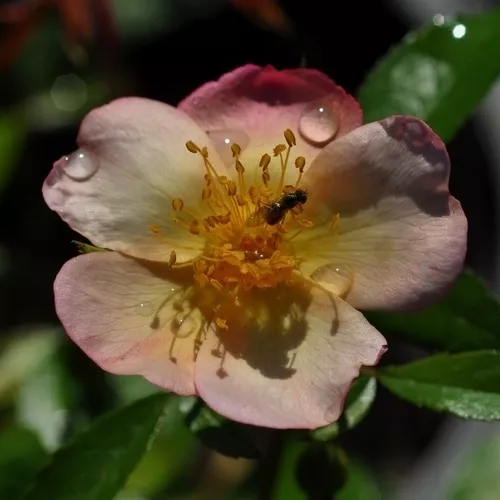
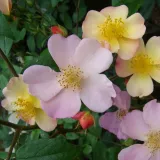
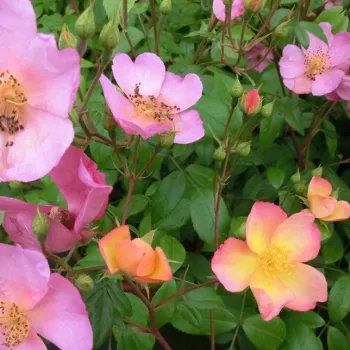
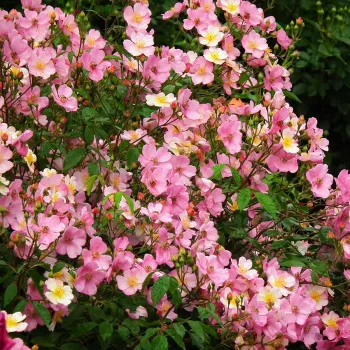
Colour and movement define Plaisanterie, a playful shrub rose whose small, single blooms shift from orange buds through yellow to pink and purple, giving your garden a lively, ever-changing display over a long season. Trained as a loose climber on a fence, arch or obelisk, its moderately dense, bronze‑green foliage and cascades of clusters create a soft cottage‑style screen that suits typical British front gardens. As an own‑root plant in the pharmaROSA® ORIGINAL 2‑litre pot, it settles in steadily and, with the natural rhythm of year one for roots, year two for framework and year three for full impact, develops into a durable, regenerating rose that copes well with exposed sites where strong winds and frequent rain demand reliable anchoring and structure. Although it appreciates thoughtful care, its good self‑cleaning clusters reduce deadheading, leaving more time to enjoy the evolving palette of colour in a relaxed family garden.
Usage options
| Target area | Reasoning |
|---|
| Front-garden focal shrub |
The constantly changing flowers from orange buds to pink-purple tones provide eye-catching interest right by the pavement, while the moderately dense bronze-green foliage frames doors and paths. Self-cleaning blooms keep the plant looking neat between visits from a thoughtful beginner. |
| Cottage-style fence or low pergola |
Its climbing habit and flexible shoots make it well suited to light training along wires or a modest pergola, creating a soft, informal screen that echoes traditional cottage gardens without needing the scale of a full climber, ideal for space-conscious homeowners. |
| Mixed border with perennials |
The airy structure and small single flowers blend easily with perennials such as garden phlox or loosestrife, allowing companion plants to shine while the rose adds height and colour rhythm, which is attractive for design-focused gardeners. |
| Specimen near seating or terrace |
Planted as a solitary feature at the recommended wider spacing, Plaisanterie forms an open, arching framework that shows off its colour transitions and ornamental hips, rewarding those who enjoy watching seasonal change from a nearby bench, especially reflective owners. |
| Loose flowering hedge |
Used at hedge spacing, it creates a semi-transparent barrier with repeating clusters of blooms that soften boundaries without feeling heavy, while own-root growth builds a stable, long-lived line that appeals to long-term planning families. |
| Large container by an entrance |
In a minimum 40–50 litre container, it can be trained up a compact support to frame a doorway or patio, with good self-cleaning reducing upkeep close to the house, which suits busy urban residents. |
| Wall planting in partial shade |
Its tolerance of partial shade and remontant flowering allow enjoyable colour against a house wall or garden outbuilding, even where sun hours are limited, offering reassuring performance for light-challenged plot-holders. |
| Ornamental feature in exposed gardens |
The shrub’s size, flexible canes and own-root stability make it a good candidate for spots where wind and rain are frequent, giving a resilient, anchored presence without complex structures, valuable for coastal and open-site gardeners. |
Styling ideas
- Cottage-arch – Train Plaisanterie over a light metal arch with loose climbers and self-seeding annuals at its feet for a relaxed, shifting entrance – ideal for romantic front-garden enthusiasts.
- Perennial-weave – Thread its flexible canes through taller perennials like garden phlox so rose clusters float among summer flowers – suited to colour-loving border planners.
- Bronze-contrast – Highlight its bronze-tinged foliage with cool blues and whites, such as nepeta and white campanula, to emphasise the warm-pink blooms – appealing to lovers of refined palettes.
- Hedgerow-glow – Combine a loose line of Plaisanterie with ornamental grasses for a semi-wild, glowing summer hedge that still feels ordered – perfect for informal family gardens.
- Terrace-frame – In a 50-litre pot with an obelisk, use it to frame a seating area, underplanting with low herbs that enjoy similar care – attractive for balcony and courtyard owners.
Technical cultivar profile
| Parameter | Data |
|---|
| Name and registration |
Shrub, Hybrid Musk park rose; registered as LENtrimera, traded as Plaisanterie – pink park rose – Lens; ARS exhibition name Plaisanterie for show and competition use. |
| Origin and breeding |
Bred by Louis Lens (Lens Roses NV, Belgium) from ‘Trier’ × Rosa chinensis ‘Mutabilis’; bred 1988, introduced and registered in 1996, distributed by Lens Roses and Louis Lens N.V. |
| Awards and recognition |
Recognised as a classic shrub rose at the Mother Lode Rose Society show in 2001, reflecting its interest for exhibition as a show shrub and for collectors of hybrid musk types. |
| Growth and structural characteristics |
Vigorous, climbing shrub 150–210 cm high and 170–230 cm wide, moderately thorny, with moderately dense, slightly glossy green-bronze foliage; suited to training on supports or as a large, informal shrub. |
| Flower morphology |
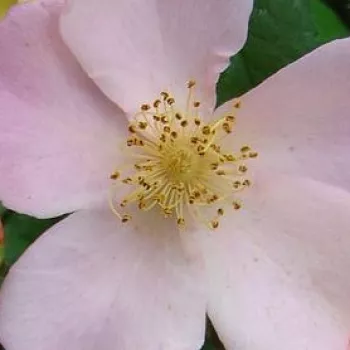
Small, flat, single flowers with 5–12 petals, borne in clusters; remontant with abundant second flush; self-cleaning habit means most spent blooms fall naturally, reducing the need for continual deadheading. |
| Colour data and phenology |
Pink rose with ARS PB, RHS 54A–54B; buds vibrant orange, opening yellowish-pink, deepening to pink and purplish tones as blooms age, with generally poor colour retention yet a lively, changing display. |
| Fragrance and aroma |
No noticeable fragrance; grown mainly for its variable flower colours, airy clusters and textural effect in the garden rather than scent, making placement flexible near seating or paths without overpowering aromas. |
| Hip characteristics |
Produces moderate quantities of bottle-shaped hips, 8–12 mm across, in orange-red tones, extending ornamental interest into autumn and providing subtle seasonal structure once the main flowering period eases. |
| Resistance and winter hardiness |
Hardy to approximately –21 to –18 °C (RHS H7, USDA 6b, Swedish zone 3); disease-prone, particularly very sensitive to powdery mildew and rust, with moderate black spot resistance, so regular protection is recommended. |
| Horticultural recommendations |
Best with thoughtful, regular care: protect from fungal diseases, water in dry periods to support repeat flowering, and allow room at recommended spacings; suitable for partial shade, fences, walls, borders and cutting. |
PLAISANTERIE offers playful colour changes, self-cleaning clusters and adaptable shrub-climbing form on a long-lived own-root framework, making it a characterful choice if you enjoy tending roses and planning your garden for the long term.