PIROUETTE – red-and-white bedding floribunda rose - Lens
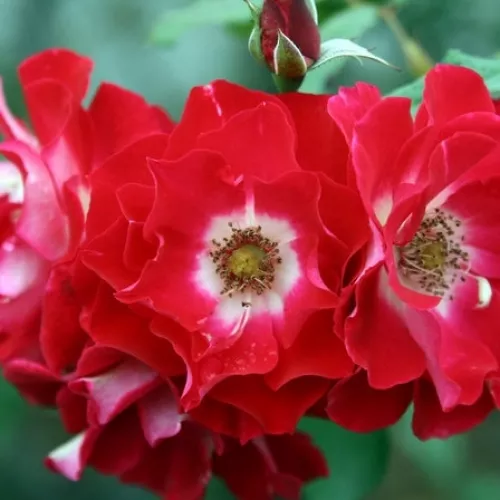
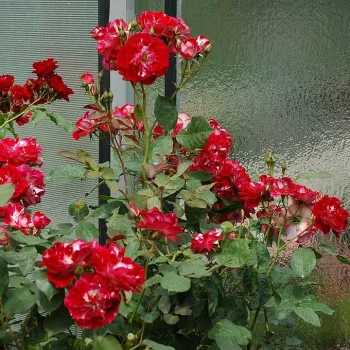
This rose brings a touch of ballet to family gardens, with clusters of red-and-white blooms that keep performing from early summer into autumn. Its upright, medium-sized habit fits neatly into front gardens, beds and borders without overwhelming neighbouring plants, while dense foliage helps to anchor the planting visually all season. Semi-double flowers with exposed stamens are naturally pollinator-friendly, so you can enjoy colour while supporting bees in small urban plots. As an own-root plant it develops steadily, giving reassuring longevity and reliable regrowth if winter or pruning are occasionally harsher than planned. Over time you will notice a simple rhythm: first year for roots, second year for shoots, third year for full garden presence. In typical British conditions it copes well when planted in a sunny position with reasonable drainage on heavier clay, settling into an easy-care, cottage-style display without complex upkeep.
Usage options
| Target area |
Reasoning |
| Front garden focal bed by the path |
The upright but compact structure creates a clear, welcoming feature in small front gardens, giving visible height without shading windows. At around 120–160 cm, it forms a defined shrub that helps frame entrances and driveways while remaining proportionate to typical suburban plots, ideal for visually minded beginners. |
| Cottage-style mixed border with perennials |
Its strong bicolour flowers stand out among softer cottage plants, and the remontant flowering keeps colour returning through the season. The shrub form slots easily between perennials without demanding complicated pruning, making it well suited to relaxed cottage mixes for time-poor homeowners. |
| Small group planting in front of the house |
Planted in groups of three to five at the recommended spacings, it creates a cohesive, low-maintenance bed with repeating colour and balanced height. Own-root growth gradually knits plants together into a stable, long-lived display that suits practical, design-conscious families. |
| Urban and suburban container planting |
In a large container of at least 40–50 litres, the upright habit and dense foliage give strong vertical interest on terraces or paved front gardens. Regular moisture and feeding are usually enough to keep it performing, making it attractive for busy city-dwellers. |
| Pollinator-friendly family garden corner |
Semi-double, cluster-flowered blooms with readily accessible stamens provide nectar and pollen over a long season, drawing bees and other insects. This natural pollinator appeal adds life and movement to child-friendly gardens without extra effort from environmentally aware gardeners. |
| Colour-contrast feature on heavier soils |
The clear red-and-white petals remain striking even under overcast skies, and when planted in a raised or improved bed it copes well with typical British heavier soils and seasonal wet spells, especially where attention has been given to good drainage, reassuring cautious buyers. |
| Low hedge or loose boundary line |
Planted at hedge spacing, the upright habit and mid-green foliage form a gently structured boundary. Repeating bicolour clusters break up the line with seasonal interest, giving soft definition between lawn, drive and neighbours’ plots for style-conscious owners. |
| Feature shrub in a small ornamental lawn bed |
Used as a single specimen in a circular or square lawn bed, it offers a long flowering window with minimal shaping needed. The own-root base encourages steady rebuilding after harder pruning, supporting long-term structure for confident yet practical enthusiasts. |
Styling ideas
- Cottage Contrast – Pair with lavender, nepeta and daisies so the red-and-white blooms pop against soft blues and whites, using the upright habit as a gentle vertical accent – ideal for cottage-style lovers.
- Front-Door Welcome – Plant three shrubs in a shallow arc by the path, underplanted with low catmint, for a tidy, repeat-flowering greeting that stays in scale with smaller front gardens – ideal for busy homeowners.
- Pollinator Drift – Weave through clumps of echinacea and salvias so bees move easily between open clusters, combining long flowering with wildlife value – ideal for nature-focused families.
- Terrace Statement – Grow one plant in a 50-litre clay pot with trailing thyme at the rim to showcase the dense foliage and bicolour flowers as a simple, structural feature – ideal for balcony and patio gardeners.
- Soft Hedge Line – Line a path or lawn edge with staggered plants, infilling with hardy geraniums to blur the base and highlight the vertical, shrub-like rhythm – ideal for design-conscious beginners.
Technical cultivar profile
| Parameter |
Data |
| Name and registration |
Floribunda shrub rose registered as LENwil, marketed as Pirouette Bedding rose LENwil, a bed rose type suitable for ornamental planting in private and public gardens. |
| Origin and breeding |
Bred by Louis Lens in Belgium around 1983, introduced by Lens Roses in 1984, representing the classic Lens breeding line for reliable, decorative garden and landscape floribundas. |
| Awards and recognition |
Bronze medal at IGA Baden-Baden 1983 and Silver medal at Kortrijk International Rose Competition 1985, demonstrating proven ornamental value under European trial conditions. |
| Growth and structural characteristics |
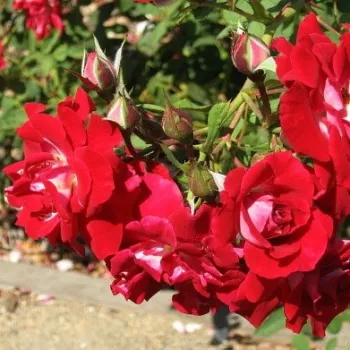
Upright shrub 120–160 cm high and 75–105 cm wide with dense, matt, mid-green foliage and moderate prickles, forming a well-filled, medium-sized bush for beds, borders and feature spots. |
| Flower morphology |
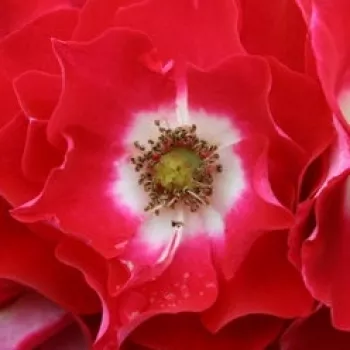
Semi-double, cupped, cluster-flowered blooms with 13–25 petals, medium-sized at 4–7 cm, remontant with notably abundant second flush, providing regular waves of colour throughout summer. |
| Colour data and phenology |
Striking red and white bicolour; fiery red inner petals with white reverses, maturing to raspberry pink and creamy white while retaining contrast, maintaining good colour even as flowers age. |
| Fragrance and aroma |
Mild, fresh fruity fragrance detectable at close range; semi-double clusters with accessible stamens are moderately attractive to pollinators, adding sensory and ecological value in family gardens. |
| Hip characteristics |
Produces moderate numbers of small, 8–12 mm bottle-shaped orange-red hips with ornamental value in late season, extending interest beyond flowering where spent blooms are not removed. |
| Resistance and winter hardiness |
Rated H6 with approximate hardiness to about −15 to −12 °C; disease resistance medium to common fungal problems, benefiting from standard preventive care in humid or high-pressure areas. |
| Horticultural recommendations |
Best in sunny positions with well-prepared soil; recommended spacings from 55–100 cm depending on use, suitable for beds, parks, containers and urban plantings with moderate maintenance. |
PIROUETTE offers eye-catching red-and-white clusters, an upright shrub form and dependable, own-root longevity, making it a reassuring choice for those planning a lasting, low-fuss rose feature in the garden.