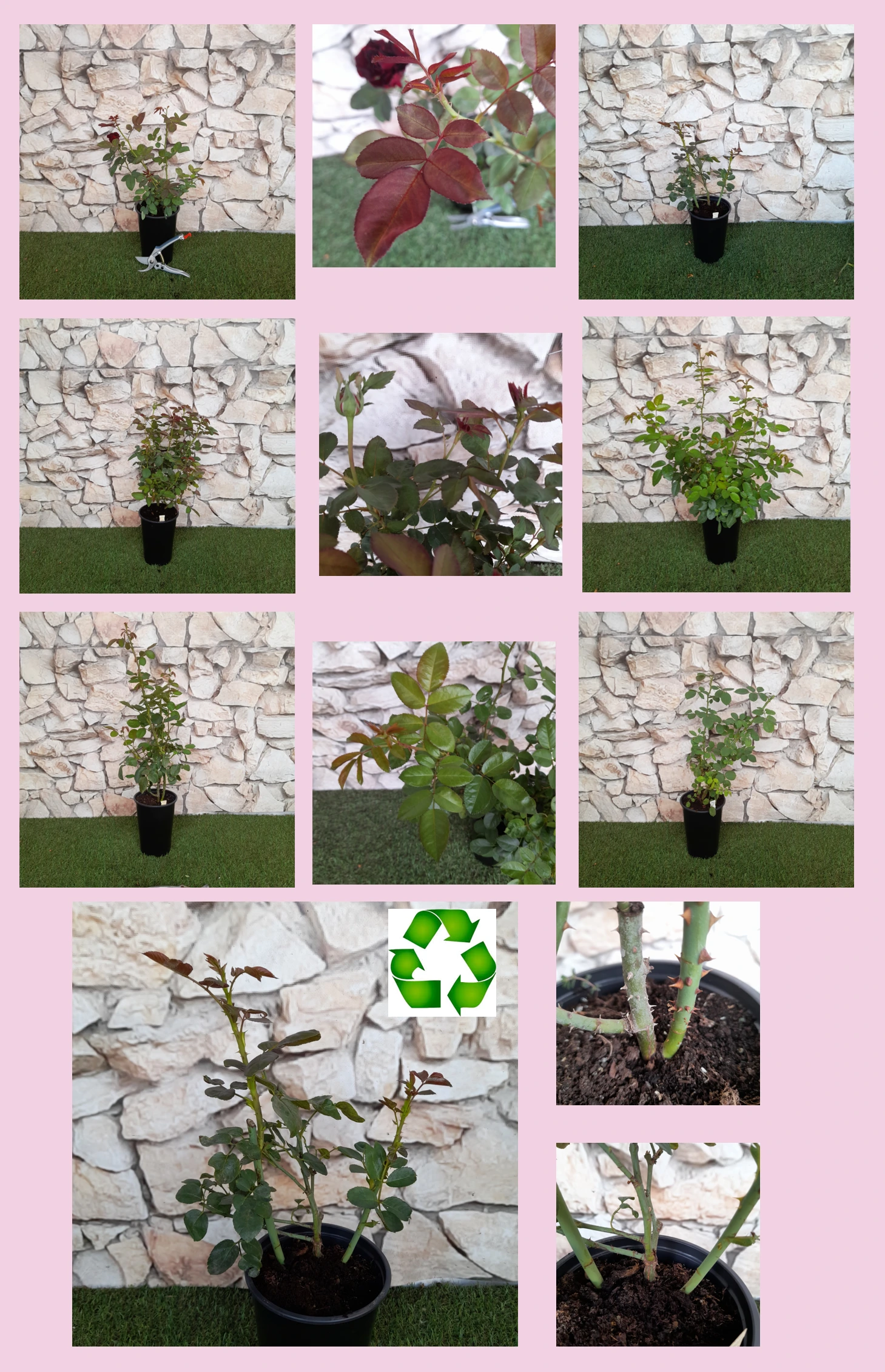
Piros Climbing rose Tantau – ruby-red, fragrant climber for easy structure
With its rich ruby-red blooms and strong perfume, Piros Climbing rose Tantau brings classic romance to pergolas, arches and house walls while remaining reassuringly reliable and straightforward to manage in an everyday family garden. This semi-double, cup-shaped climber flowers repeatedly through the season, giving a long display of colour from newly opened buds to slightly softened raspberry-red blooms, all held against mid-green, slightly glossy foliage. Own-root plants establish steadily and build a long-lived framework, offering lasting structure even in breezier gardens where roses must cope with wind and wet weather near the coast. Medium vigour makes it easier to train onto fences and pillars without overwhelming a small front garden, while its moderate care needs suit busy owners who still want a beautifully scented feature by the door. In a typical planting arc, it focuses first on root anchoring, then on stronger shoots, reaching full ornamental value by about the third year for dependable coverage, abundant flowering and enduring fragrance in a welcoming British cottage-style setting.
Usage options
| Target area | Reasoning |
|---|
| Front-garden arch or porch entrance |
Piros Climbing rose Tantau has a moderate, manageable climbing habit, so it clothes an arch or porch frame without becoming unmanageable in a smaller front garden. Repeat flowering ensures a welcoming flush of ruby-red colour and perfume near the front door for many months, giving reliable impact with ordinary, once-a-year pruning for beginners |
| House wall or fence in a family garden |
The medium height and spread make this climber ideal for training along wires on a sunny wall or boundary fence, forming a long-lived framework that can be renewed from its own roots over time. Regular but simple trimming after main flushes is usually enough to keep it neat, while the good colour retention means the ruby-red display stays striking against brick or render for homeowners |
| Pergola, pillar or rose archway |
Its climbing habit and semi-double, cup-shaped flowers lend themselves perfectly to vertical structures, where the strong, pronounced scent is appreciated at head height. Medium-density foliage and clustered blooms build a classic rose tunnel feel without creating an over-heavy canopy, provided the supports are sturdy and tying-in is done once or twice a year by enthusiasts |
| Small group planting in cottage-style borders |
Planting 2–3 Piros together along a fence or at the back of a narrow bed quickly builds a continuous flowering curtain of ruby-red, especially effective with simple companion plants like blue salvias or airy grasses. The strongly remontant habit ensures a generous second flush, so the group keeps contributing colour and scent right through summer for cottage-gardeners |
| Family seating area or outdoor dining corner |
The strong fragrance and rich, velvety-looking petals make this climber an excellent choice near terraces or seating, where its scent can be enjoyed in the evening. Because it is supplied as a well-rooted, own-root plant, it settles gradually into the soil and forms a stable, resilient base that responds well to routine feeding and watering by busy-owners |
| Cutting for scented indoor arrangements |
Medium-sized, semi-double blooms with a strong perfume are very suitable for cutting a few stems for vases, bringing the deep ruby-red colour and scent indoors. Regularly taking cut stems also helps stimulate new flowering shoots, so light home cutting can work hand-in-hand with simple, informal pruning for decorators |
| Mixed border with grasses and perennials |
Clustered blooms and moderate foliage density pair attractively with airy companions such as Mexican feather grass and blue-flowering perennials, giving a relaxed but intentional scheme. Semi-double, open-centred flowers offer some value to bees, adding gentle pollinator interest without needing complex management beyond seasonal feeding and deadheading by nature-lovers |
| Exposed or breezier garden positions |
Once established, this climber forms a reasonably well-anchored framework and copes reliably with typical British wind and rain, provided soil drainage is sensible and the support is solid and well fixed, helping it deal confidently with blustery, rain-lashed coastal conditions for coastal-gardeners |
Styling ideas
- Porch Welcome – Train Piros over a small metal or wooden arch at your front door, underplanting with lavender for a classic scented entrance – ideal for homeowners wanting immediate kerb appeal.
- Cottage Screen – Run it along a low fence with salvias and catmint at the base to create a soft, semi-transparent boundary – suited to cottage-gardeners who prefer informal structure.
- Ruby Pergola – Grow it up two or three pergola posts, teamed with airy grasses like Stipa tenuissima for movement and contrast – perfect for families who relax and dine outside.
- Scented Corner – Use a single plant on a pillar beside a bench, with pots of herbs nearby, to make an intimate, fragrant retreat – good for busy owners seeking one easy focal point.
- Cutting Nook – Plant by a path with access for snipping stems, backed by hydrangeas or foxgloves, to create a small cutting-and-display spot – appealing to decorators who enjoy indoor flowers.
Technical cultivar profile
| Characteristic | Data |
|---|
| Name and registration |
Piros Climbing rose Tantau is a large-flowered climbing rose in the Climbing rose collection, marketed as a red climber for garden use; it is supplied here as an own-root, 2-litre container plant. |
| Origin and breeding |
Discovered by pharmaROSA® and introduced in 2022 via PharmaRosa® Ltd. (Hungary); detailed breeder and parentage data are not available, but selection focused on garden performance. |
| Growth and structural characteristics |
Climbing growth habit, typically 200–300 cm high with 80–130 cm spread; moderate vigour, medium-density, mid-green foliage and moderate prickliness make it suitable for trained structures. |
| Flower morphology |
Semi-double, cup-shaped blooms with 13–25 petals, produced in clusters on medium-length stems; strongly remontant, delivering an abundant second flush and further scattered blooms. |
| Colour data and phenology |
Deep ruby-red flowers with velvety sheen; RHS 46B inner and outer petals, colour holding well then softening slightly to raspberry-red before petal drop, giving a long, vivid display. |
| Fragrance and aroma |
Strongly scented, with a pronounced rose fragrance of classic character; ideal for locations where perfume can be appreciated at close quarters, such as arches, pergolas and seating areas. |
| Hip characteristics |
Produces modest numbers of small hips, about 0–4 mm in diameter; these can add subtle seasonal interest in late season if spent blooms are not removed for continuous flowering. |
| Resistance and winter hardiness |
Rated to around –26 to –23 °C (USDA 5b, RHS H7); disease resistance is moderate, with average tolerance to powdery mildew and rust, benefiting from standard feeding and monitoring. |
| Horticultural recommendations |
Best in sunny positions with reasonable drainage; plant 140–150 cm apart for hedging or mass, 250 cm as specimen; requires regular pruning, feeding and routine health checks for best display. |
Piros Climbing rose Tantau offers repeat ruby-red flowering, strong scent and manageable climbing growth on a long-lived own-root framework, making it a thoughtful choice for gardeners seeking a reliable vertical rose.