Climbing and rambling roses

52-660-1
52-660-2

Phyllis Bide

Climbing rose

- – S. Bide & Sons

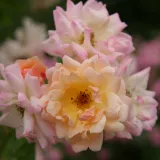
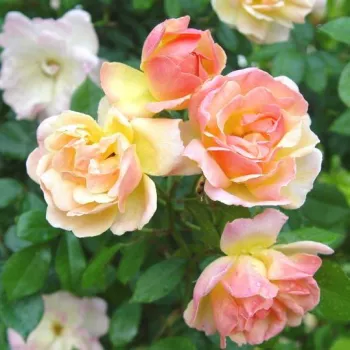
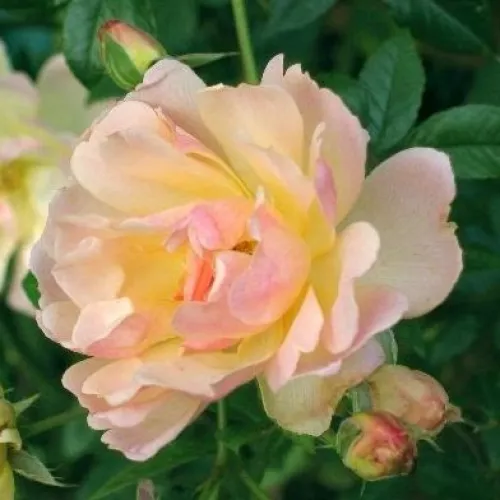
Delicate peach and pink tones with a slight yellowish tint. The outer edges of the petals show a faint pink blush. - climber, climbing rose - very weak, barely noticeable scented rose - soft character

– Pastel peach‑pink clusters with creamy centres.
– Reliable repeat flowering with abundant flushes.
– Elegant climber for arches, pergolas and walls.
– Good heat and temporary drought tolerance.
– RHS Award of Garden Merit quality assurance.
Special feature: Sparsely thorned canes ease training and maintenance.
Consistent quality – Value-based choice
Phyllis Bide
pharmaROSA® ORIGINAL 2-litre own-root potted rose
22,90 £
Unfortunately, we are currently unable to ship to the United Kingdom; we only deliver to countries within the European Union. For more information, please contact us!
5 (7133)
facebook   twitter

PHYLLIS BIDE – apricot-pink climbing rose - Bide

Easy-care and charming, Phyllis Bide is a compact climbing rose that brings cottage colour to pergolas, arches and walls without demanding advanced know-how. Its fresh peach-pink clusters repeat flower generously through summer, even in British weather with occasional humidity and changeable conditions. With medium maintenance needs and a naturally moderate, manageable size, it fits neatly into typical front gardens and around-the-house borders. Own-root growth means long-term stability, with the plant steadily building a durable framework that can regenerate after pruning or winter damage. Over time it adapts well to your soil and care routine, supporting a long lifespan and reliable display. In its first year it focuses on roots, in the second on stronger shoots, and by the third it reveals its full ornamental value as a well-furnished climber for family gardens.


Usage options

Target areaReasoning
Pergola or arch in a small family garden The moderate climbing height and relatively sparse thorns make Phyllis Bide easier to train over a pergola or arch than many more vigorous ramblers, creating a pastel tunnel of colour without overwhelming the structure; a reassuring choice for the cautious beginner.
Front-garden wall or house facade Its repeat-flowering, clustered blooms provide welcoming colour along a wall or facade through much of the season, while medium maintenance and own-root resilience keep care tasks manageable for busy households; ideal for time-pressed homeowners.
Family seating area backdrop The soft, very light fragrance and delicate peach-pink shades give a gentle, unobtrusive backdrop beside patios or seating, adding romance without overpowering the space, well suited to those who value calm outdoor rooms and relaxed gardeners.
Classic cottage-style mixed border Semi-double, small blooms in loose clusters blend naturally with perennials and traditional companions like lavender, offering an old-fashioned cottage feel while still repeating well after the first flush; attractive for lovers of classic style.
Part-shaded side passage or alley Tolerance of partial shade allows planting in side passages or along north-east aspects where sun is limited, still giving a useful flowering display and foliage cover in spots that challenge fussier roses; practical for urban gardens.
Exposed, sunny fence line Good heat and temporary drought tolerance help this climber cope with sun-exposed fences, provided basic watering is given during prolonged dry spells, supporting reliable flowering even where summers are warm; reassuring for low-intervention owners.
Feature specimen on a freestanding support Used as a specimen on an obelisk or tall post, its glossy mid-green foliage and pastel colour shifts from salmon bud to creamy fade create season-long interest, while own-root growth ensures a long-lived, regenerating framework for patient collectors.
Raised bed or improved soil in heavy ground In UK gardens with heavier soils, planting into a raised or well-drained bed helps roots establish a stable base that supports long-term structure and flowering, even where winters are cold and damp, aiding those on challenging sites.

Styling ideas

  • Cottage-arch – Train Phyllis Bide over a narrow metal arch with lavender and catmint at the base for a romantic cottage entrance – ideal for lovers of soft, pastel schemes.
  • Warm-facade – Combine it on a house wall with cream climbing roses and white clematis for a gentle, sun-washed look – suited to homeowners wanting a calm, coordinated palette.
  • Pastel-pergola – Use it on a small pergola, underplanting with hardy geraniums and soft grasses for a relaxed seating corner – perfect for families who enjoy informal outdoor rooms.
  • Side-passage – Let it soften a part-shaded side fence with Vinca minor groundcover for low, neat greenery – helpful for busy gardeners taming awkward in-between spaces.
  • Feature-obelisk – Grow it as a specimen on an obelisk in a 50‑litre container with dwarf lavender for edging – attractive for balcony or courtyard gardeners wanting vertical interest.

Technical cultivar profile
PropertyData
Name and registration Phyllis Bide is a climbing polyantha rose offered as a climber for garden use; it is an unregistered variety used under its long-established, widely recognised trade and exhibition name.
Origin and breeding Bred in the United Kingdom by S. Bide & Sons from ‘Perle d’Or’ × ‘Gloire de Dijon’, introduced in 1924 via Grandes Roseraies du Val de Loire, reflecting classic early twentieth-century breeding.
Awards and recognition Holds the Royal Horticultural Society’s Award of Garden Merit, indicating dependable garden performance, sound health and ornamental value under typical UK conditions when given reasonable care.
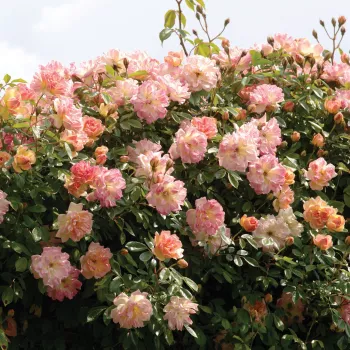
Growth and structural characteristics A medium-sized climber reaching about 240–380 cm in height and 140–240 cm spread, with moderately dense, glossy mid-green foliage, sparsely thorned shoots and a flexible, trainable climbing habit.
Flower morphology Semi-double blooms with around 13–25 petals are produced in clusters of small, flat flowers, offering an abundant first flush followed by strong repeat flowering and an additional generous late-season display.
Colour data and phenology Buds open deep salmon-pink with yellow tints, maturing to peach-pink with creamy yellow centres, then fading to creamy white with a light pink blush, with colour holding reasonably well in normal sun.
Fragrance and aroma The scent is very weak, with only a soft, barely noticeable fragrance under warm, still conditions, so the rose is chosen primarily for its colour effect, form and repeat-flowering rather than perfume.
Hip characteristics Occasionally forms small, spherical orange-red hips about 8–12 mm across, adding modest late-season interest but not generally produced in large quantities or used as a principal ornamental feature.
Resistance and winter hardiness Shows moderate resistance to powdery mildew, black spot and rust, with best results under balanced feeding and air movement, and is hardy to approximately −21 to −18 °C (RHS H7, USDA zone 6b).
Horticultural recommendations Suited to pergolas, arches, fences and walls at 165–300 cm spacing; tolerates partial shade and temporary drought, responding well to occasional pruning, feeding and watering during extended dry spells.

PHYLLIS BIDE – apricot-pink climbing rose - Bide offers repeat pastel flowering, compact climbing growth and long-term own-root resilience, making it a thoughtful choice if you seek a reliable, gentle climber for everyday garden enjoyment.
Detailed product attributes

Product Identification Data

Product Name: PHYLLIS BIDE – apricot-pink climbing rose - Bide
Product Type: pharmaROSA® ORIGINAL - 2-litre own-root potted rose
Cultivar Authenticity: Verified:20.06.2025
Cultivar Quality Rating: premium silver
Item Number: [634] 52-660 (14.02.2026) pharmarosa.co.uk

Name and Registration

Meaning of Cultivar Name: The name is a female given name.
Original Trade Name: Phyllis Bide
Current Trade Name: Phyllis Bide Climbing rose Bide
Rose Group: Climber, Polyantha
Commercial Type: climber, climbing rose
Commercial Group: Climbing rose
Exhibition Category: exhibition; cl polyantha
Collection: Climbing rose

Origin and Breeding

Initial Distributor: Grandes Roseraies du Val de Loire (France)
Registration Year: unregistered variety
Breeder: S. Bide & Sons
Breeding Company / Institution: S Bide & Sons Ltd (Surrey, United Kingdom)
Breeding Year: United Kingdom, 1923
Parentage: ‘Perle d’Or’ × ‘Gloire de Dijon’

Awards and Honours

Horticultural Ratings and Recommendations: RHS Award of Garden Merit
Competition and Show Awards: Royal Horticultural Society – Award of Garden Merit (AGM)

Growth and Structural Characteristics

Height: 7.9-12.5ft (240-380 cm)
Spread: 4.6-7.9ft (140-240 cm)
Growth Habit: climbing
Foliage: The variety has moderately dense foliage. The leaves are glossy and mid-green in colour, with a reddish tinge on new shoots.
Prickliness: sparsely thorned
Self-Cleaning Description: No data available on self-cleaning.
Self-Cleaning Intensity: No data on self-cleaning strength.

Flower Morphology

Petal Count: 13-25
Flower Fullness: semi-double flowered
Flower Shape: flat
Flower Size: S (0,5-1,5 in)
Inflorescence Type: clustered
Colour Code: ARS code: ab RHS code: 18C, 14B
Repeat Flowering: Remontant, with an abundant second flowering.

Colour Data and Phenology

Colour: peach-pink
Flower Colour Description: Delicate peach and pink tones with a slight yellowish tint. The outer edges of the petals show a faint pink blush.

Closed Bud: Deep salmon-pink with a slightly yellowish tint at the tip.
Newly Opened Flower: Soft yellowish-peach base, with a pinkish blush appearing on the edges of the outer petals.
Full Bloom: Pastel peach-pink, with a creamy yellow tone in the centre and a delicate pink haze at the edges.
Before Fading: Fading to creamy white, speckled with a barely perceptible pink blush.
Colour Fading Description: The flowers lighten from yellowish–pink to creamy white; in strong sunlight they fade more quickly.

Fragrance and Aroma

Fragrance Strength: very weak, barely noticeable scented rose
Fragrance Character: soft character
Pollinator Attraction: Its flowers attract pollinators only to a limited extent, as double or semi‑double forms reduce stamen accessibility and thus decrease insect attraction.
Pollinator-Friendly Rating: Due to its semi-double blooms, it can be considered at best partially pollinator-friendly.

Hip Characteristics

Hip Shape: spherical
Hip Colour: orange-red
Hip Comment: Occasionally produced, 8–12 mm in diameter, spherical, orange-red rose hips.

Resistance and Hardiness

Hardiness (°C): -21–-18 °C
Heat and Drought Tolerance Description: Tolerates heat and temporary drought well; requires watering during prolonged drought.

Disease Resistance: moderate
  • powdery mildew – moderate
  • black spot – moderate
  • rust – moderate

Horticultural Recommendations

Recommended Planting Distance: for mass planting 180 cm, for hedging 165 cm, as a specimen 300 cm
Planting Density: square planting 0,3 plants/m², hexagonal arrangement 0,4 plants/m²
Partial Shade Tolerance: suitable for partial shade
Maintenance Requirement: Maintenance requirement medium; occasionally requires pest and disease control.

Primary Uses: pergola, fence, arches, wall, specimen

Comments

Strengths: Consistent quality – Value-based choice
Companion Plants: Vinca minor - lesser periwinkle Lavandula angustifolia - lavender Wisteria sinensis - Chinese wisteria
Comment: Drought-tolerant.
PHYLLIS BIDE – apricot-pink climbing rose - Bide
Delicate peach and pink tones with a slight yellowish tint. The outer edges of the petals show a faint pink blush. - climber, climbing rose - very weak, barely noticeable scented rose - soft character
The rose webshop. - peach-pink - climber, climbing rose - Phyllis Bide - (7.9-12.5ft (240-380 cm))
Inflorescence: clustered Height: 7.9-12.5ft (240-380 cm) Flower shape: flat Winter hardiness: 6b peach-pink - Grandes Roseraies du Val de Loire (France) climber, climbing rose - Flower size: !- Flower size: !- - Height: 7.9-12.5ft (240-380 cm) Height: 7.9-12.5ft (240-380 cm) - Flower fullness: semi-double flowered Phyllis Bide - Roses in the garden | pharmaROSA® Original - premium silver S. Bide & Sons

We showcase the external appearance of the roses available for online purchase from our webshop.


Which product type is right for you?


Information

In what condition do we dispatch the rose from our online webshop?

Let us ask ourselves the question: What would I like to use the rose for?
Flower? – Location? – Screening? – Fragrance? – Height? – Breeder? – Rose hip?

Rose purchasing information
Methods of payment – Delivery charges – Delivery – Complaints handling

Care guide

Our product is a rose grown with pharmaROSA®’s unique cultivation technology!

2-litre, own-root, potted rose.
With a shoot system appropriate to the season.
With a root system that thoroughly permeates the growing medium.
Quality compliant with the requirements of the E.N.A. (European Nurserystock Association).
Supplied in unique packaging that prevents damage.
Can be planted during frost-free periods.
True-to-variety rose bush with a unique identifier.

The pharmaROSA® own-root potted rose is a well-rooted plant that supports reliable establishment when planted and cared for properly, so it can be planted whenever the soil is not frozen.


Crop overview: several varieties and growth stages in a short crop section.
Shoot system: intensive growth of fresh basal shoots on a young plant.
Root system: demonstration of a vigorous root system permeating the growing medium, by removing the pot.
Balance: mature plant with root system and shoots in harmony with each other.

Information about the videos
The video series is not a “seasonal showcase”; it illustrates the essence of pharmaROSA® own-root cultivation in a tangible way: how the plant is built up, what the root system is like and how the shoot system regenerates. The recordings were therefore made at different times and with plants at various stages of development, so mixed foliage levels and differing stages of growth may appear in the videos. They are not a ‘sample’ of the batch dispatched, but a visual explanation of how the technology works. The current condition of the rose available to order — typical for the given period and similar to what you can expect to receive in the parcel — is shown in the upper part of the product page.

pharmarosa.compharmarosa.co.ukpharmarosa.ropharmarosa.skpharmarosa.depharmarosa.sipharmarosa.czpharmarosa.atpharmarosa.hrpharmarosa.frpharmarosa.espharmarosa.bepharmarosa.nlpharmarosa.dkpharmarosa.lupharmarosa.iepharmarosa.grpharmarosa.bgpharmarosa.lvpharmarosa.ltpharmarosa.plpharmarosa.itpharmarosa.sepharmarosa.eepharmarosa.fipharmarosa.rupharmarosa.pt

Product types

Pages for private customers
Garden roses for the family garden, with minimal care  → ORIGINAL®
Premium garden roses – instant impact, a truly showpiece garden  → EXTRA®
Pages for professionals and private customers
Roses for public spaces – large areas, sustainable maintenance  → NATURAL®
Roses for projects – hedge and row planting, fast implementation  → RAPID®
For professional partners only
Production – propagation material for garden roses, wholesale  → NEONATAL®

Company details

PharmaRosa Ltd.
Company registration number: 01-09-717479
VAT number: 13075314-2-43
Plant health registration no.: HU130721
Bank account (IBAN):
HU85117631891388688400000000
BIC (SWIFT): OTPVHUHB
Bank name: OTP Bank Nyrt.