| Front garden focal point |
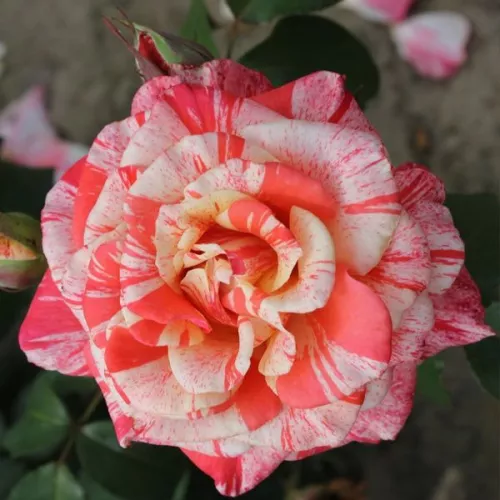
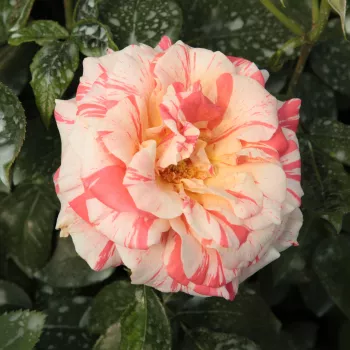
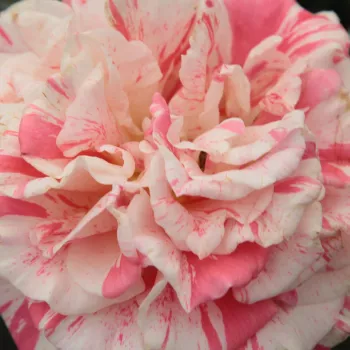
Used as a single specimen near the entrance or along a path, PHILATELIE™ draws the eye with its distinctive raspberry-red and white marbled blooms. The upright structure stays tidy, so it does not overwhelm small front gardens, while own-root growth supports a long-lived, well-shaped bush with minimal complicated care, ideal for a confident, welcoming frontage for the style-conscious. |
| Small border in family gardens |
In a short border beside lawns or patios, the medium-tall, upright habit slots easily between perennials without shading everything around it. Regular repeat flowering gives reliable colour through the season, without needing advanced pruning techniques, so families can enjoy a classic hybrid tea look while keeping maintenance to simple annual trimming and basic feeding, suiting busy-owners. |
| Cutting patch for home vases |
The high-centred, pointed flowers are bred for cutting, providing long-stemmed blooms that hold form well in vases. Planting a small group at 50 cm spacing gives a steady supply of exhibition-style flowers for the house, while the own-root base recovers strongly after cutting, so the plants remain productive year after year with straightforward seasonal care for home-florists. |
| Accent in cottage-style mixes |
Among wallflowers, herbaceous perennials and soft grasses, the bold red-and-white striping offers a lively counterpoint to softer cottage tones. Its medium maintenance needs fit mixed beds where you prefer not to fuss over individual plants, while the stable upright frame adds a touch of formality that stops cottage plantings feeling chaotic, attractive to cottage-gardeners. |
| Raised bed or improved clay border |
Where heavy clay or compacted soil is a concern, planting PHILATELIE™ into a raised or well-improved bed helps roots establish and keeps water moving away from the crown during wet, windy spells, supporting consistent health and flowering. Once settled, its own-root framework provides steady, repeat display with routine care only, reassuring for problem-soils. |
| Row planting for low rose hedge |
Planted at about 40 cm centres, PHILATELIE™ forms a loose, low hedge with evenly spaced, upright stems and regular striped blooms along the line. This layout works well to edge drives or divide garden areas, while the uniform height and habit make annual pruning simple and forgiving, suiting gardeners who like order but prefer low-input upkeep for neat-borders. |
| Feature planting in 50–60 L containers |
Grown in a large 50–60 litre container with quality compost, this rose becomes a movable feature for paved front gardens or terraces. The upright structure and solitary, showy blooms read clearly from a distance, and care boils down to steady watering, feeding and a light winter prune, enabling an easy, controllable display for courtyard-owners. |
| Long-term rose investment bed |
In a dedicated rose bed, PHILATELIE™ repays thoughtful siting and routine monitoring with durable performance: own-root growth promotes regeneration from the base, while medium disease resistance supports long-term structure without excessive spraying, giving gardeners a sense of security that their planning effort leads to lasting reward for committed-keepers. |