Hybrid tea rose

52-792-1
52-792-2

Philatelie™

Hybrid tea rose

MACcastlet – Samuel Darragh McGredy IV.

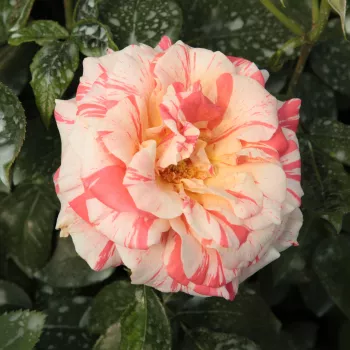
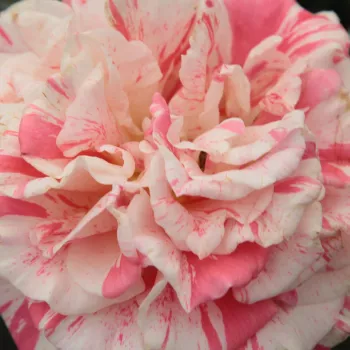
It is characterised by a pronounced contrast between vivid raspberry-red and snow-white stripes. - hybrid tea rose - very weak, barely noticeable scented rose - slightly sweet character

– Striking raspberry-red and snow-white stripes.
– Elegant high-centred blooms for cutting.
– Upright, refined habit for specimen planting.
– Medium disease resistance, hardy to H7.
– Abundant remontant flowering season-long.
Special feature: Limited hip set with decorative orange-red hips in some seasons.
Thoughtful garden investment – Committed owners
Philatelie™
pharmaROSA® ORIGINAL 2-litre own-root potted rose
21,00 £
Unfortunately, we are currently unable to ship to the United Kingdom; we only deliver to countries within the European Union. For more information, please contact us!
4 (5818)
facebook   twitter

PHILATELIE™ – red-white hybrid tea rose - McGredy

Striped blooms of PHILATELIE™ bring a distinctly ornamental accent to small British gardens, combining classic hybrid tea elegance with reliable remontant flowering for season-long colour in modest beds and borders. Its upright habit makes it straightforward to position as a specimen near paths or front doors, while medium maintenance needs stay manageable for time-pressed growers even where rain and wind demand careful drainage and sturdy anchoring. As an own-root plant it settles gradually, forming a balanced bush that can regenerate from its base and offer a long lifespan with consistent performance. With adequate moisture and feeding, you can plant this 2-litre rose with confidence and expect a natural progression from root-building to stronger shoots and then full impact in later seasons, suiting beginners and collectors who value dependable garden structure.


Usage options

Target area Reasoning
Front garden focal point Used as a single specimen near the entrance or along a path, PHILATELIE™ draws the eye with its distinctive raspberry-red and white marbled blooms. The upright structure stays tidy, so it does not overwhelm small front gardens, while own-root growth supports a long-lived, well-shaped bush with minimal complicated care, ideal for a confident, welcoming frontage for the style-conscious.
Small border in family gardens In a short border beside lawns or patios, the medium-tall, upright habit slots easily between perennials without shading everything around it. Regular repeat flowering gives reliable colour through the season, without needing advanced pruning techniques, so families can enjoy a classic hybrid tea look while keeping maintenance to simple annual trimming and basic feeding, suiting busy-owners.
Cutting patch for home vases The high-centred, pointed flowers are bred for cutting, providing long-stemmed blooms that hold form well in vases. Planting a small group at 50 cm spacing gives a steady supply of exhibition-style flowers for the house, while the own-root base recovers strongly after cutting, so the plants remain productive year after year with straightforward seasonal care for home-florists.
Accent in cottage-style mixes Among wallflowers, herbaceous perennials and soft grasses, the bold red-and-white striping offers a lively counterpoint to softer cottage tones. Its medium maintenance needs fit mixed beds where you prefer not to fuss over individual plants, while the stable upright frame adds a touch of formality that stops cottage plantings feeling chaotic, attractive to cottage-gardeners.
Raised bed or improved clay border Where heavy clay or compacted soil is a concern, planting PHILATELIE™ into a raised or well-improved bed helps roots establish and keeps water moving away from the crown during wet, windy spells, supporting consistent health and flowering. Once settled, its own-root framework provides steady, repeat display with routine care only, reassuring for problem-soils.
Row planting for low rose hedge Planted at about 40 cm centres, PHILATELIE™ forms a loose, low hedge with evenly spaced, upright stems and regular striped blooms along the line. This layout works well to edge drives or divide garden areas, while the uniform height and habit make annual pruning simple and forgiving, suiting gardeners who like order but prefer low-input upkeep for neat-borders.
Feature planting in 50–60 L containers Grown in a large 50–60 litre container with quality compost, this rose becomes a movable feature for paved front gardens or terraces. The upright structure and solitary, showy blooms read clearly from a distance, and care boils down to steady watering, feeding and a light winter prune, enabling an easy, controllable display for courtyard-owners.
Long-term rose investment bed In a dedicated rose bed, PHILATELIE™ repays thoughtful siting and routine monitoring with durable performance: own-root growth promotes regeneration from the base, while medium disease resistance supports long-term structure without excessive spraying, giving gardeners a sense of security that their planning effort leads to lasting reward for committed-keepers.

Styling ideas

  • Classic-approach – Plant three PHILATELIE™ in a triangle with low box edging to frame the striped blooms as a formal focal point – for homeowners wanting a smart yet manageable front garden.
  • Cottage-blend – Weave single plants between wallflowers and soft pink or white perennials so the bold striping punctuates looser textures – for lovers of relaxed cottage borders.
  • Patio-feature – Grow one rose in a 50–60 litre terracotta pot with trailing thyme or ivy at the base to soften the rim – for small-plot or balcony gardeners needing portable structure.
  • Cutting-line – Arrange a straight row beside a path to harvest long-stemmed blooms easily without trampling other plants – for those who enjoy regularly bringing garden roses indoors.
  • Vertical-partner – Place PHILATELIE™ in front of a light-flowering climber such as Hydrangea petiolaris so the upright rose contrasts with a soft vertical backdrop – for designers seeking layered depth in narrow beds.

Technical cultivar profile
Parameter Data
Name and registration Hybrid tea rose, registered as MACcastlet and marketed as PHILATELIE™. Belongs to the hybrid tea group, with exhibition hybrid tea and cut-flower suitability recognised in specialist circles.
Origin and breeding Bred by Samuel Darragh McGredy IV in New Zealand from Tournament of Roses × Port Ludlow. Introduced in 2000 via Rosen-Union e.G. after code registration in 1989.
Growth and structural characteristics Upright bush 110–150 cm high and 60–90 cm wide, with moderately dense, dark green, leathery foliage and moderate prickliness. Forms a clear vertical accent suitable for borders and specimen roles.
Flower morphology Large, double, high-centred blooms with 20–30 petals, borne mostly singly on stems. Strongly remontant, with an abundant second flush that maintains ornamental value through the main season.
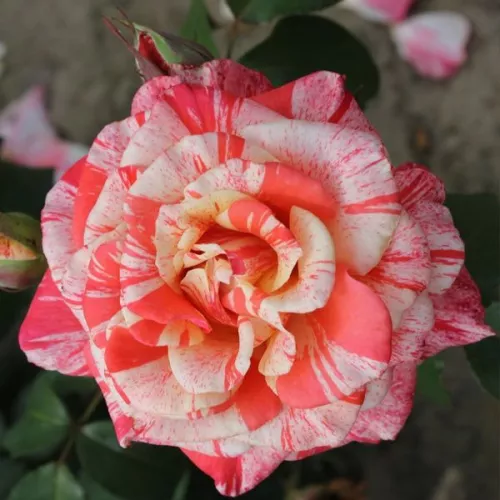
Colour data and phenology Distinct raspberry-red and snow-white striping; ARS colour code RB, RHS 46A outer and 155D inner. Contrast remains strong as flowers open, later softening as red pales and white warms slightly.
Fragrance and aroma Very weak fragrance with a slightly sweet character; scent is present but discreet, so the variety is chosen mainly for its visual effect rather than for strong perfume in the garden.
Hip characteristics Rose hip set is generally limited due to the double flower form, but occasional spherical orange-red hips 12–17 mm in diameter may appear, adding minor late-season interest.
Resistance and winter hardiness Hardy to about −26 to −23 °C (RHS H7, USDA 5b, Swedish zone 4). Medium overall disease resistance, with good resistance to powdery mildew and black spot, and moderate susceptibility to rust.
Horticultural recommendations Best in sunny positions with well-drained, fertile soil and regular watering during drought. Recommended spacings: 50 cm for mass plantings, 40 cm for hedges, 75 cm when used as a single specimen.

PHILATELIE™ offers distinctive striped blooms, a tidy upright habit and durable own-root growth, making it a thoughtful, easy-care addition for gardeners planning a long-lived rose feature.

Detailed product attributes

Product Identification Data

Product Name: PHILATELIE™ – red-white hybrid tea rose - McGredy
Product Type: pharmaROSA® ORIGINAL - 2-litre own-root potted rose
Cultivar Authenticity: Verified:07.03.2025
Cultivar Quality Rating: premium bronze
Item Number: [444] 52-792 (14.02.2026) pharmarosa.co.uk

Name and Registration

Meaning of Cultivar Name: The word "Philatelie" refers to stamp collecting.
Cultivar Synonym: Crazy Spire
Original Trade Name: Philatelie
Current Trade Name: Philatelie™ Hybrid tea rose MACcastlet
Rose Group: Hybrid Tea
Commercial Type: hybrid tea rose
Commercial Group: Hybrid tea rose
Exhibition Category: exhibition hybrid tea; cut flower
Collection: Hybrid tea rose

Origin and Breeding

Initial Distributor: Rosen -Union e.G. (Germany)
Registration Year: 1989 (MACcastlet code registration)
Breeder: Samuel Darragh McGredy IV.
Breeding Company / Institution: McGredy Roses International (Auckland, New Zealand)
Breeding Year: -, 1989
Parentage: Tournament of Roses × Port Ludlow

Growth and Structural Characteristics

Height: 3.6-4.9ft (110-150 cm)
Spread: 2-3ft (60-90 cm)
Growth Habit: upright
Foliage: The variety has moderately dense foliage with leathery leaves in a dark green colour.
Prickliness: moderately thorny
Self-Cleaning Description: No data on self-cleaning.
Self-Cleaning Intensity: No data available on self-cleaning strength.

Flower Morphology

Petal Count: 20-30
Flower Fullness: double flowered
Flower Shape: high-centred, pointed-budded (cut-flower rose type)
Flower Size: L (2,75-3,95 in)
Inflorescence Type: solitary
Colour Code: ARS code: RB RHS code: 46A (outer), 155D (inner)
Repeat Flowering: Remontant, its second flowering is also abundant.

Colour Data and Phenology

Colour: red-white
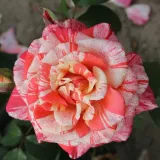
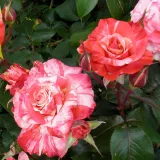
Flower Colour Description: It is characterised by a pronounced contrast between vivid raspberry-red and snow-white stripes.
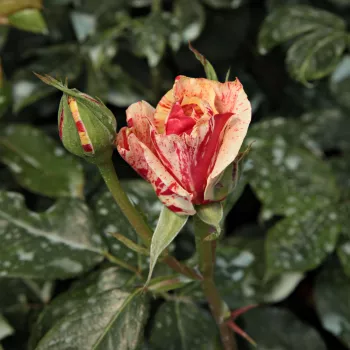
Closed Bud: A deep raspberry-red base shows thin, irregular white stripes.
Newly Opened Flower: The outer petals are predominantly raspberry red, while the inner surfaces display pronounced white stripes.
Full Bloom: The petals display an even red-and-white marbling, with colours that are intense and pure.
Before Fading: The red hue fades, and the white streaks take on a slight cream tinge.
Colour Fading Description: As the bloom opens the red–white contrast generally remains intense; before the flowers fade the red shade becomes paler and the white stripes take on a slight cream tint.

Fragrance and Aroma

Fragrance Strength: very weak, barely noticeable scented rose
Fragrance Character: slightly sweet character
Pollinator Attraction: Its double flower form makes it less attractive to pollinators, as the double (telt) structure and reduced accessibility of the stamens limit insects’ access to nectar and pollen.
Pollinator-Friendly Rating: Double-flowered, attracts few pollinators, so is primarily ornamental.

Hip Characteristics

Hip Shape: spherical
Hip Colour: orange-red
Hip Comment: Rose hip formation is expected to be limited due to the double flowers; occasionally it produces spherical, orange-red hips 12–17 mm in diameter.

Resistance and Hardiness

Hardiness (°C): -26–-23 °C
Heat and Drought Tolerance Description: Generally tolerates heat well; requires irrigation during prolonged drought.
Disease Resistance: medium
  • powdery mildew – resistant
  • black spot – resistant
  • rust – medium

Horticultural Recommendations

Recommended Planting Distance: for mass planting 50 cm, for hedging 40 cm, as a specimen 75 cm
Planting Density: square planting 4,2 plants/m², hexagonal arrangement 4,8 plants/m²
Partial Shade Tolerance: Prefers a sunny spot
Maintenance Requirement: Maintenance requirement medium; occasionally requires pest and disease control.
Primary Uses: border, cut flower, specimen

Comments

Strengths: Thoughtful garden investment – Committed owners
Companion Plants: Clematis terniflora - sweet autumn clematis Erysimum cheiri - wallflower Hydrangea petiolaris - climbing hydrangea
Comment: -
PHILATELIE™ – red-white hybrid tea rose - McGredy
It is characterised by a pronounced contrast between vivid raspberry-red and snow-white stripes. - hybrid tea rose - very weak, barely noticeable scented rose - slightly sweet character
Online rose order - red-white - hybrid tea rose - Philatelie™ - (3.6-4.9ft (110-150 cm))
Inflorescence: solitary Height: 3.6-4.9ft (110-150 cm) Flower shape: high-centred, pointed-budded (cut-flower rose type) Winter hardiness: 6b red-white - Rosen -Union e.G. (Germany) hybrid tea rose - Flower size: !- Flower size: !- - Height: 3.6-4.9ft (110-150 cm) Height: 3.6-4.9ft (110-150 cm) - Flower fullness: double flowered Philatelie™ - Roses in the garden | pharmaROSA® Original - premium bronze Samuel Darragh McGredy IV.

We showcase the external appearance of the roses available for online purchase from our webshop.


Which product type is right for you?


Information

In what condition do we dispatch the rose from our online webshop?

Let us ask ourselves the question: What would I like to use the rose for?
Flower? – Location? – Screening? – Fragrance? – Height? – Breeder? – Rose hip?

Rose purchasing information
Methods of payment – Delivery charges – Delivery – Complaints handling

Care guide

Our product is a rose grown with pharmaROSA®’s unique cultivation technology!

2-litre, own-root, potted rose.
With a shoot system appropriate to the season.
With a root system that thoroughly permeates the growing medium.
Quality compliant with the requirements of the E.N.A. (European Nurserystock Association).
Supplied in unique packaging that prevents damage.
Can be planted during frost-free periods.
True-to-variety rose bush with a unique identifier.

The pharmaROSA® own-root potted rose is a well-rooted plant that supports reliable establishment when planted and cared for properly, so it can be planted whenever the soil is not frozen.


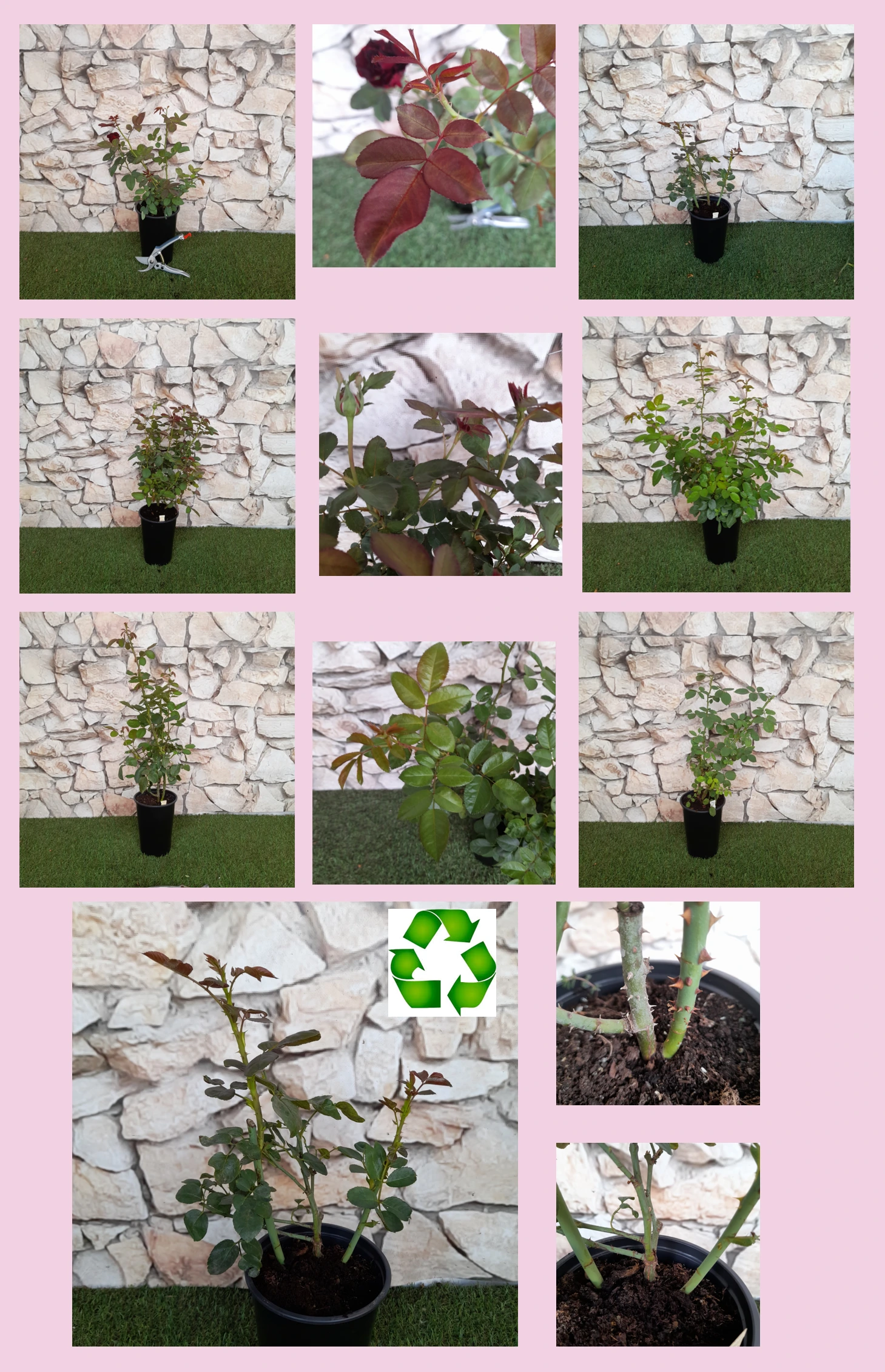
Crop overview: several varieties and growth stages in a short crop section.
Shoot system: intensive growth of fresh basal shoots on a young plant.
Root system: demonstration of a vigorous root system permeating the growing medium, by removing the pot.
Balance: mature plant with root system and shoots in harmony with each other.

Information about the videos
The video series is not a “seasonal showcase”; it illustrates the essence of pharmaROSA® own-root cultivation in a tangible way: how the plant is built up, what the root system is like and how the shoot system regenerates. The recordings were therefore made at different times and with plants at various stages of development, so mixed foliage levels and differing stages of growth may appear in the videos. They are not a ‘sample’ of the batch dispatched, but a visual explanation of how the technology works. The current condition of the rose available to order — typical for the given period and similar to what you can expect to receive in the parcel — is shown in the upper part of the product page.

pharmarosa.dkpharmarosa.compharmarosa.co.ukpharmarosa.atpharmarosa.bgpharmarosa.plpharmarosa.hrpharmarosa.sipharmarosa.grpharmarosa.czpharmarosa.itpharmarosa.depharmarosa.skpharmarosa.frpharmarosa.bepharmarosa.lupharmarosa.ropharmarosa.espharmarosa.nlpharmarosa.iepharmarosa.ltpharmarosa.sepharmarosa.lvpharmarosa.eepharmarosa.fipharmarosa.rupharmarosa.pt

Product types

Pages for private customers
Garden roses for the family garden, with minimal care  → ORIGINAL®
Premium garden roses – instant impact, a truly showpiece garden  → EXTRA®
Pages for professionals and private customers
Roses for public spaces – large areas, sustainable maintenance  → NATURAL®
Roses for projects – hedge and row planting, fast implementation  → RAPID®
For professional partners only
Production – propagation material for garden roses, wholesale  → NEONATAL®

Company details

PharmaRosa Ltd.
Company registration number: 01-09-717479
VAT number: 13075314-2-43
Plant health registration no.: HU130721
Bank account (IBAN):
HU85117631891388688400000000
BIC (SWIFT): OTPVHUHB
Bank name: OTP Bank Nyrt.