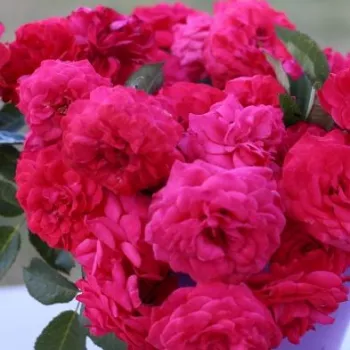
PÉTILLANTE DE SAINT-GALMIER – raspberry-pink bedding polyantha rose - Ducher
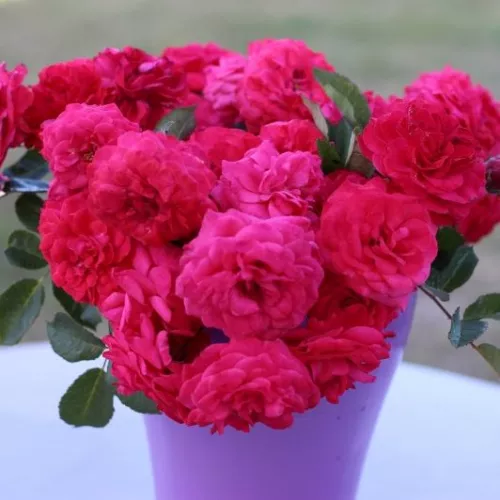
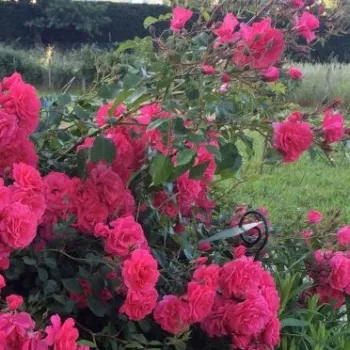
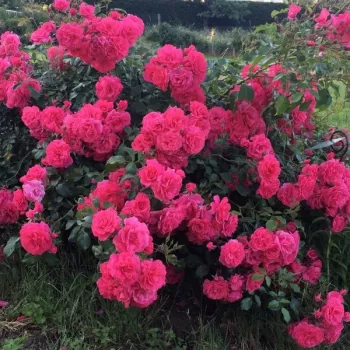
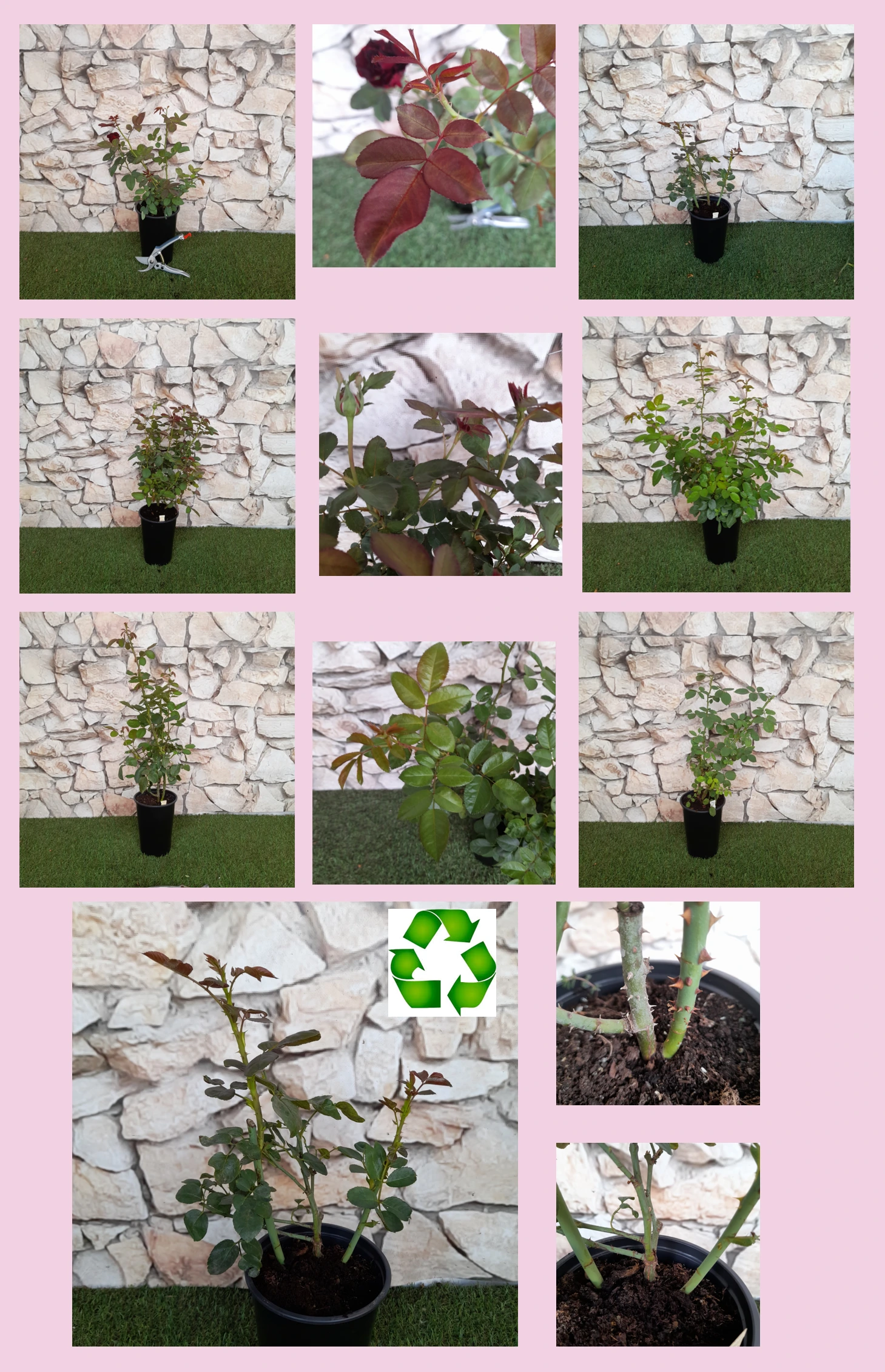
This modern polyantha brings a vibrant sweep of raspberry-pink colour to everyday gardens, building a naturally bushy shrub that fits easily into classic British front borders and cottage-style beds. Clusters of cupped, double blooms appear in generous flushes from early summer, with especially abundant remontant flowering later in the season for steady visual impact around the house. As an own-root plant, it knits in strongly and endures, helping create a long-lived, low-fuss structure in family gardens where time is limited but you still want an ordered, colourful outlook. Over the first seasons it moves gently from root establishment to fuller top growth and then to its mature ornamental presence, giving you a reassuring, predictable development in small to medium beds. It copes well with typical British conditions, including heavier soils when planted with reasonable drainage, making it a practical choice for busy gardeners seeking reliable colour in front gardens, narrow borders or informal hedging. With medium maintenance needs and no fussy pruning requirements, it delivers a relaxed yet neat display that feels “planted and it works” year after year in a real family setting.
Usage options
| Target area |
Reasoning |
| Front garden bed beneath windows |
The compact, bushy habit and medium height make this rose ideal under front windows, giving vibrant raspberry-pink colour without blocking light. Repeating clusters of flowers create a welcoming, tidy look with limited upkeep for busy homeowners |
| Small mixed cottage border |
Its natural shrub form and steady repeat flowering weave easily among cottage staples such as lady’s mantle and yarrow, providing structure and depth of colour without complicated pruning. It suits relaxed, slightly informal borders for classic-style gardeners |
| Low flowering hedge along a path |
Planted at hedge spacing, the dense foliage and moderate prickliness form a soft, protective edge that still looks friendly and ornamental. Recurrent clusters of blooms guide the eye along paths or driveways, working well for family-garden owners |
| Feature group of 3–5 in a small lawn island |
Grouped in a small island bed, its bushy outline and rich raspberry tones create a defined focal point that does not overwhelm an average-sized garden. The own-root form builds a durable, rejuvenating clump over time, suiting long-term planners |
| Around-the-house ornamental strip |
Along house walls or fences, it offers colour and cover without demanding intricate care, and copes well where soil is improved and drainage is thought through on heavier ground. This supports reliable flowering for practical homeowners |
| Border with moderate-maintenance planting scheme |
With a medium maintenance requirement and moderate disease resistance, it sits comfortably in schemes where you are willing to give occasional checks and light pest control, but not intensive care. This balance suits realistic beginners |
| Large container on terrace or patio (40–50 litres minimum) |
In a suitably sized container, its naturally rounded growth and medium height provide a solid, long-season presence near seating areas. The modest fragrance is offset by strong colour, giving a neat, easy-to-reach display for urban balcony-gardeners |
| Colour accent in mixed shrub planting |
Among evergreen structure plants such as box, its vivid raspberry-pink clusters punch out highlights without becoming leggy or unruly, thanks to its balanced shrub form and repeat flowering. This makes it a dependable accent for design-conscious owners |
Styling ideas
- Cottage cluster – Plant in a group of three with lady’s mantle and yarrow to echo traditional cottage borders – ideal for homeowners who like soft, romantic planting that stays relatively easy to manage
- Formal frontage – Use as a low hedge along the front boundary, underplanted with low groundcovers, to frame the property smartly – suited to those wanting an ordered, classic look without complex pruning
- Raspberry focus – Create a small island bed of 5 plants in lawn, edged with box or similar evergreens, for a vivid focal point – perfect for gardeners seeking strong colour from a simple layout
- Patio statement – Grow one plant in a 40–50 litre pot near seating, combining with subtle foliage plants, for compact but long-season interest – good for busy urban gardeners with limited ground space
- Pathside rhythm – Repeat at intervals along a garden path so each bush forms a colourful waypoint, linking house and garden – attractive for families wanting structure and colour guiding daily routes
Technical cultivar profile
| Parameter |
Data |
| Name and registration |
PÉTILLANTE DE SAINT-GALMIER, flowerbed polyantha rose, commercial bed rose type; current trade name used by Roseraie Ducher. No separate registered cultivar name is documented in the available data. |
| Origin and breeding |
Bred by Fabien Ducher at Roseraie Ducher, Charly, France. Introduced in 2020 as a modern polyantha flowerbed shrub rose; parentage is not recorded in accessible sources. |
| Growth and structural characteristics |
Bushy, naturally rounded shrub reaching about 85–115 cm high and 65–95 cm wide, with dense, mid-green slightly glossy foliage and moderate thorniness, suitable for beds, low hedges and mixed borders. |
| Flower morphology |
Cupped, double blooms with approximately 26–39 petals, produced in clusters on branching stems. Medium flower size, about 4–7 cm, with good repeat flushes and an especially abundant second flowering period. |
| Colour data and phenology |
Raspberry-pink colour range; buds deep crimson-pink, opening bright raspberry-red then ageing to saturated raspberry-pink and finally a softer pink with bluish-red tinge. Colour retention medium under garden conditions. |
| Fragrance and aroma |
Very weak, discreet fragrance, often barely perceptible in normal garden use; not primarily chosen for scent but for its visual effect and repeat flowering habit in family and ornamental plantings. |
| Hip characteristics |
Limited hip set due to double flowers; when present, small globular hips around 6–10 mm, red (RHS 53A). Hip display is occasional and generally not a primary ornamental feature of this cultivar. |
| Resistance and winter hardiness |
Hardy to approximately −21 to −18 °C, RHS H7, USDA zone 6b, Swedish zone 3. Disease resistance moderate to powdery mildew, black spot and rust, requiring occasional monitoring and timely treatment. |
| Horticultural recommendations |
Recommended planting distances: 55 cm for mass plantings, 50 cm for hedges, 90 cm for solitary use. Medium maintenance level, with occasional pest and disease control and standard feeding for repeat flowering. |
PÉTILLANTE DE SAINT-GALMIER offers rich raspberry-pink clusters, a naturally bushy, long-lived own-root habit and reliable repeat flowering, making it a thoughtful choice when you want enduring colour with manageable care.