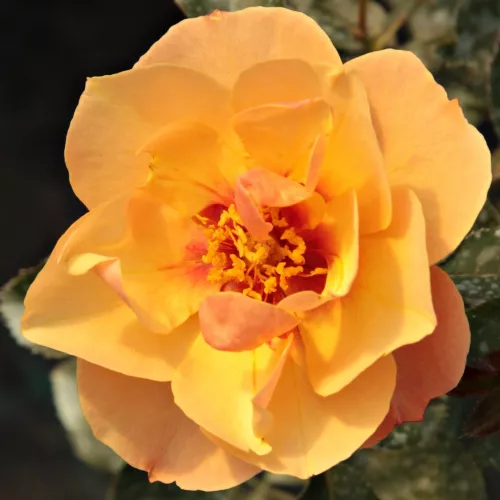
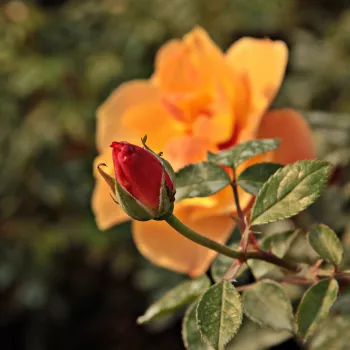
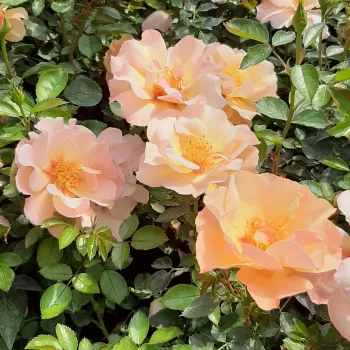
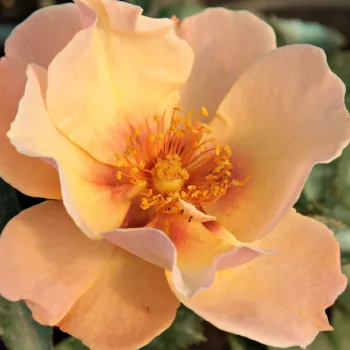
Vivid orange base colour, with a reddish-orange central blotch on the inner surface of the petal. - flowerbed shrub rose - very weak, barely noticeable scented rose - delicately rose-like character
– Compact, bushy shrub for neat flowerbeds.
– Striking vivid orange blooms with red eye.
– Reliable remontant flowering through the season.
– Glossy, dense grey‑green foliage effect.
– Hardy to around –25 °C, suitable for cold sites.
– Special feature: Hybrid Hulthemia persica look with modern, bright bedding impact.
Proportional arrangement – Uniform growth
pharmaROSA® ORIGINAL 2-litre own-root potted rose
18,70 £
Unfortunately, we are currently unable to ship to the United Kingdom; we only deliver to countries within the European Union. For more information, please contact us!
3.5(5695)
Persian Sun™ bedding rose – VISpersun
PersianSuncompactorangeclustersremontantglossyeasy-care Persian Sun™ brings a warm, modern twist to classic front gardens with its vivid orange blooms and distinctive reddish central eye, forming a tidy, compact shrub that fits perfectly into smaller British plots and cottage-style beds. Clustered flowers appear repeatedly from early summer, giving reliable colour as the plant gradually knits into the border, while its balanced, bushy habit keeps maintenance straightforward and visual impact high. As an own-root rose it develops steadily for the long term, forming strong roots in the first year, building bushy top growth in the second, and reaching full ornamental effect by the third, even in gardens where you occasionally face strong winds and heavy rain from more exposed locations.
Persian Sun™ showing vivid orange, single flowers with a reddish-orange eye spot.
Persian Sun™ shows a flat, single-flowered bloom form with a vivid orange colour and reddish-orange eye.
Usage options
Target area
Reasoning
Front-garden feature by the path
The compact, bushy habit and moderate height keep Persian Sun™ neatly in scale with low walls, paths and driveways, providing a bright, welcoming band of orange without overwhelming the space or requiring complex shaping – reassuring for beginners
Small flowerbed or mixed border
Its floribunda clusters and repeat flowering give recurring accents of warm colour among perennials and shrubs, while the rounded form fills gaps efficiently so you can achieve a full, composed look with just a few plants – ideal for busy-owners
Low informal hedge or edging row
Planting at the recommended spacing creates a coherent, low hedge with even height and proportional growth, useful for subtly defining garden rooms or drive edges while staying easier to manage than taller hedge species – well suited to tidy-gardeners
Accent in cottage-style planting
The vivid orange blooms with a contrasting eye provide a lively counterpoint to softer cottage plants, echoing traditional borders but with a contemporary colour twist; the simple flower form adds texture without fuss for style-focused
Urban or small family garden bed
The compact spread and manageable height help this rose slot into tight city plots and modest family gardens, where dependable, remontant flowering offers a reliable display despite limited time and space – reassuring for time-poor
Raised bed or improved clay border
Its balanced root-to-shoot growth responds well when planted into well-drained, improved soil in raised beds or loosened heavy clay, rewarding basic preparation with even structure and steady performance – a practical option for clay-gardeners
Container on terrace or patio (large pot)
Grown in a 40–50 litre container with regular watering, its compact, bushy framework and repeated clusters create a long-season focal point near seating areas, while own-root resilience helps it recover well from routine pruning – convenient for patio-owners
Long-term bed or park-style planting
Once established, own-root growth gives a durable shrub that can regenerate from the base if cut back, maintaining shape and flowering over many years with modest care, even where occasional strong winds and heavy rain test structure – ideal for long-view
Styling ideas
Cottage Glow – weave Persian Sun™ through pink verbena and airy annuals for a relaxed cottage look with bright orange accents – for lovers of soft, romantic gardens
Warm Welcome – line a short front path with evenly spaced shrubs to form a low, glowing ribbon of colour – for homeowners wanting instant kerb appeal
Terrace Focus – plant one shrub in a 50 litre tub with grey-leaved companions to highlight the glossy foliage and vivid flowers – for balcony and patio decorators
Family Border – mix with hardy perennials in a simple, repeat pattern so colour and structure return each year without redesign – for busy family gardeners
Compact Contrast – set Persian Sun™ against evergreen backgrounds to showcase its orange clusters and neat form – for those preferring clean, contemporary lines
Technical cultivar profile
Parameter
Data
Name and registration
Floribunda (Hybrid Hulthemia persica) bed rose; registered as VISpersun, marketed as Persian Sun™ bedding rose VISpersun; ARS exhibition name Persian Sun; shrub-type flowerbed rose.
Origin and breeding
Hybrid of ‘Alissar, Princess of Phoenicia’ × ‘Julia Child’; bred by Martin Vissers in Belgium, 2015; introduced and first distributed by Jan Spek Rozen BV in the Netherlands the same year.
Growth and structural characteristics
Compact, bushy shrub 75–105 cm high and 65–95 cm wide, with dense, grey-green, glossy foliage and moderate prickles; medium self-cleaning, some spent blooms remaining until removed.
Flower morphology
Single to semi-double blooms with 5–12 petals, medium-sized clusters on each stem; flat form, remontant habit with a notably abundant second flush, providing repeated display through the season.
Colour data and phenology
Vivid orange with a reddish-orange central blotch; ARS code OB, RHS 23A outer, 40A inner; colour lightens slightly in strong sun, with deeper contrast in cooler weather and a softer, lighter orange as blooms age.
Fragrance and aroma
Very weak fragrance, perceived only at close range; a delicately rose-like character rather than a strong perfume, making it suitable where visual effect is preferred over scent sensitivity issues.
Hip characteristics
Forms few hips; where present, they are small, spherical, 6–10 mm, in orange-red shades, adding a discreet seasonal detail without significantly affecting the plant’s overall ornamental impact.
Resistance and winter hardiness
Hardy to approximately –26 to –23 °C (RHS H7, USDA 5b, Swedish Zone 4); moderate heat and drought tolerance, needing watering in prolonged dry spells; disease resistance moderate, with some black spot susceptibility.
Horticultural recommendations
Best in sunny sites with well-drained soil; medium maintenance with occasional plant protection; spacing 50–90 cm depending on use, at 3.3–3.8 plants/m² for mass planting or hedging, wider for specimen effect.
Persian Sun™ offers compact, proportional growth, vivid repeat-flowering clusters and durable own-root performance that settles in for years of easy colour, making it a thoughtful choice for understated, dependable garden structure.
Detailed product attributes
Product Identification Data
Product Name:
PERSIAN SUN™ – orange flower-bed shrub rose - Vissers
Product Type:
pharmaROSA® ORIGINAL - 2-litre own-root potted rose
Pollinator Attraction:
Attraction to pollinators is limited because the flower form (single/semi‑double/double) and reduced stamen accessibility hinder insect access.
Pollinator-Friendly Rating:
Despite its simple flowers, it attracts pollinators only to a limited extent, so its pollinator-friendliness is limited.
Our product is a rose grown with pharmaROSA®’s unique cultivation technology!
2-litre, own-root, potted rose.
With a shoot system appropriate to the season.
With a root system that thoroughly permeates the growing medium.
Quality compliant with the requirements of the E.N.A. (European Nurserystock Association).
Supplied in unique packaging that prevents damage.
Can be planted during frost-free periods.
True-to-variety rose bush with a unique identifier.
The pharmaROSA® own-root potted rose is a well-rooted plant that supports reliable establishment when planted and cared for properly, so it can be planted whenever the soil is not frozen.
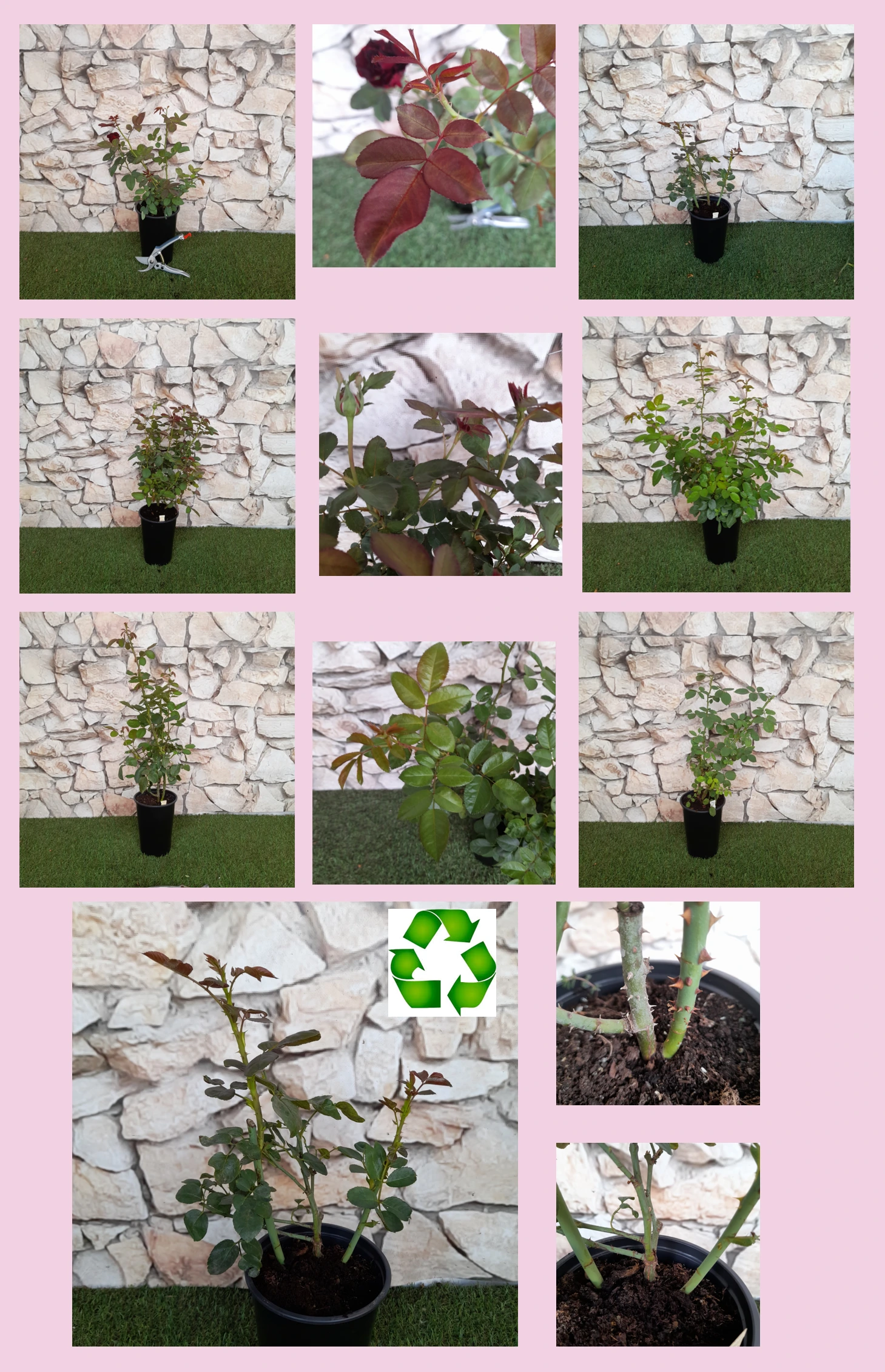
Crop overview: several varieties and growth stages in a short crop section.Shoot system: intensive growth of fresh basal shoots on a young plant.Root system: demonstration of a vigorous root system permeating the growing medium, by removing the pot.Balance: mature plant with root system and shoots in harmony with each other.
Information about the videos
The video series is not a “seasonal showcase”; it illustrates the essence of pharmaROSA® own-root cultivation in a tangible way: how the plant is built up, what the root system is like and how the shoot system regenerates. The recordings were therefore made at different times and with plants at various stages of development, so mixed foliage levels and differing stages of growth may appear in the videos. They are not a ‘sample’ of the batch dispatched, but a visual explanation of how the technology works. The current condition of the rose available to order — typical for the given period and similar to what you can expect to receive in the parcel — is shown in the upper part of the product page.
Pages for private customers Garden roses for the family garden, with minimal care → ORIGINAL® Premium garden roses – instant impact, a truly showpiece garden → EXTRA® Pages for professionals and private customers Roses for public spaces – large areas, sustainable maintenance → NATURAL® Roses for projects – hedge and row planting, fast implementation → RAPID® For professional partners only Production – propagation material for garden roses, wholesale → NEONATAL®
Company details
PharmaRosa Ltd. Company registration number: 01-09-717479 VAT number: 13075314-2-43 Plant health registration no.: HU130721 Bank account (IBAN): HU85117631891388688400000000 BIC (SWIFT): OTPVHUHB Bank name: OTP Bank Nyrt.