PAULII – white wild rose – Paul
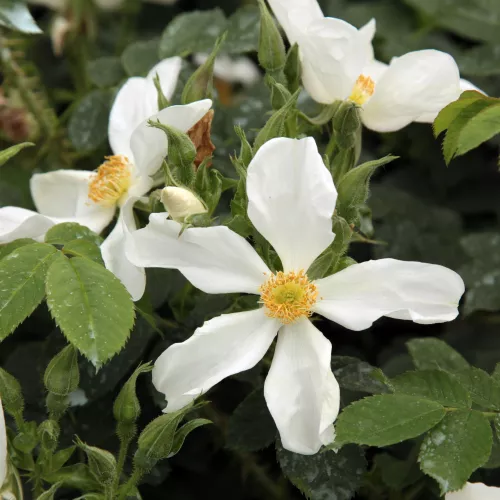
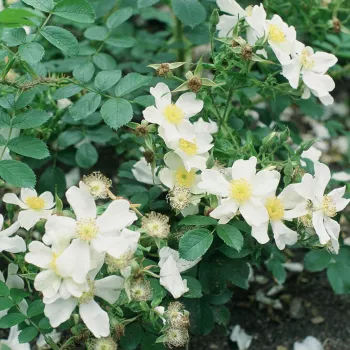
This historic botanical rose brings a distinctive, low, spreading habit that naturally carpets the ground with snow-white summer bloom, thriving even in exposed gardens where persistent wind and rain demand dependable plants. Its bushy form and arching shoots create a flowing, informal outline that suits classic cottage approaches, edging paths, softening fences or filling a sunny bank. Once planted, it asks for remarkably little: robust health, strong winter hardiness and very good disease resistance keep routine tasks to a minimum, while its once-a-year flowering creates a concentrated display that feels effortlessly natural. As an own-root shrub, it matures steadily and lives for decades, rebuilding from the base if ever cut back hard and holding its shape without constant pruning, a reassuring choice when you want structure you can almost forget about. Year by year you see the pattern: first the roots settle, then the framework expands, and by the third season the plant fills its space with stable ornamental presence. Decorative red hips follow the snow-white flowers, bringing another quiet season of interest and reinforcing its role as a long-term, easy-care feature in a balanced, family-friendly garden. Choose it for groundcover, allow room for its spreading habit, enjoy the historic character and durable health, and rely on this resilient, low, long-lived rose to settle into the garden and simply get on with its job.
Usage options
| Target area | Reasoning |
|---|
| Low-maintenance groundcover in a family front garden |
The naturally spreading, bushy habit and dense thorny framework allow this rose to knit into a wide, weed-suppressing groundcover with very little intervention, ideal where you want tidy cover without regular clipping or deadheading, especially for a beginner. |
| Loose, informal hedge along paths or driveways |
Planted at hedge spacing, its arching shoots create a flowing, informal barrier that discourages unwanted passage, frames the garden with white summer flowers and red hips, and remains structurally reliable year after year for a time-pressed homeowner. |
| Historic or cottage-style mixed border focal shrub |
Its botanical character, dowager-class show pedigree and simple white flowers suit traditional British cottage mixes, adding an authentic, slightly wild note that partners well with perennials while still behaving predictably for a heritage-rose enthusiast. |
| Urban bank or slope for stabilising and covering soil |
The wide spread and strong root system help clothe awkward banks or edges, reducing erosion and visual clutter; once established it tolerates modest drought and exposure, fitting urban plots where maintenance visits are infrequent for a busy city gardener. |
| Park or large family lawn edge specimen |
As a single specimen given ample room, its broad, low mound makes a distinctive outline that anchors a lawn edge without needing complex pruning, offering a seasonal white flush and hips but remaining essentially self-sufficient for a low-input gardener. |
| Robust planting in exposed or windy sites |
With proven cold hardiness and good tolerance of challenging weather, this rose suits coastal or open situations where rain and wind test less robust shrubs, offering reliable structure and flowering with minimal fuss for a practical garden owner. |
| Long-lived structural planting in family gardens |
Being on its own roots, the shrub rebuilds from the base if ever cut back hard, avoiding graft issues and providing decades of steady presence, an asset when designing beds you do not wish to replant often for a long-term planner. |
| Extensive planting in public or shared green spaces |
This rose combines once-a-year flowering, strong disease resistance and low upkeep, making it economical for mass planting where reliability matters more than complex colour schemes, an excellent option for the maintenance-conscious organiser. |
Styling ideas
- Cottage-hedge – Line a front boundary with a loose row of plants, underplanting with low catmint and hardy geraniums for a soft, traditional cottage frame – for lovers of gentle, old-fashioned structure.
- White-bank – Use on a sunny slope, interspersed with cypress spurge and pigeon scabious to create an airy, wildflower feel over a stable, woody base – for gardeners taming awkward changes in level.
- Family-edge – Place a single broad shrub at the corner of a lawn with sweet alyssum at its feet, giving children a seasonal landmark that needs little attention – for busy households seeking easy charm.
- Historic-corner – Combine with brick edging, lavender and traditional perennials to evoke an early 20th‑century rose garden mood, letting the once-flowering display mark midsummer – for admirers of period-style planting.
- Green-space-drift – Plant in wide, irregular drifts in shared courtyards or communal greens, relying on its strength and disease resistance for long-term cover – for managers creating durable, low-service landscapes.
Technical cultivar profile
| Parameter | Data |
|---|
| Name and registration |
Rosa paulii, botanical rose from the Botanical rose collection; commercial wild rose type, exhibited as ‘Paulii’ in dowager (historical) classes; unregistered cultivar used under long-established trade names. |
| Origin and breeding |
Bred by George Paul Jr., Paul & Son (Cheshunt, United Kingdom), introduced 1903; complex hybrid involving Rosa arvensis, Rosa rugosa and Rosa wichuraiana, reflecting early 20th‑century British species-cross work. |
| Awards and recognition |
Recognised in American rose shows as a dowager rose; awarded American Rose Society Dowager Rose Queen (1998–2001) and multiple “Genesis” awards at district level between 1999 and 2014, confirming its historic value. |
| Growth and structural characteristics |
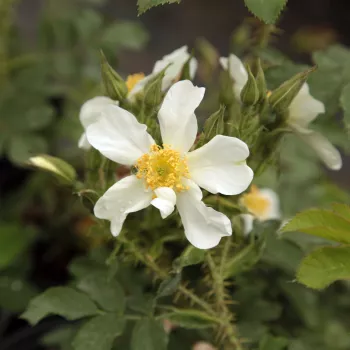
Low, bushy, spreading shrub 70–130 cm high and 210–390 cm across; moderately dense, matte mid-green foliage; densely thorned shoots that form a wide, ground-hugging framework ideal for groundcover and informal hedges. |
| Flower morphology |
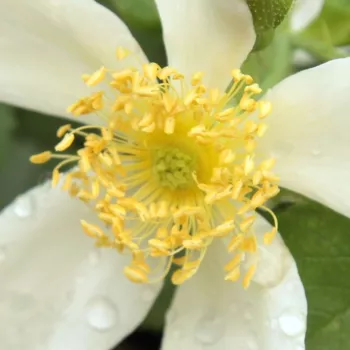
Single, flat, cluster-flowered blooms with 5–12 petals; small flowers (0.5–1.5 in) borne freely in season; not remontant, providing one main flowering period; spent petals fall naturally, reducing deadheading requirements. |
| Colour data and phenology |
Flowers open ivory with a creamy blush, quickly becoming pure snow-white; later petals fade to translucent white with a slight beige edge; ARS white, RHS NN155C/NN155D; colour retention modest but visually fresh in mass. |
| Fragrance and aroma |
Light, pleasantly spicy scent, noticeable at close range rather than across the garden; fragrance is restrained but adds a gentle traditional character when blooms are viewed and enjoyed from nearby seating or paths. |
| Hip characteristics |
Produces small, spherical hips 18–26 mm across, bright red (RHS 43A), following flowering; hips add seasonal autumn interest and can extend the plant’s decorative value in hedges, mixed borders and more naturalistic schemes. |
| Resistance and winter hardiness |
Very hardy shrub, rated RHS H7 and USDA 5a, tolerating approximately −29 to −26 °C; good heat and moderate drought tolerance, with strong resistance to black spot, powdery mildew and rust in typical garden conditions. |
| Horticultural recommendations |
Suitable for groundcover, hedging, park and urban plantings; prefers sun to partial shade; low maintenance with wide spacing recommended; best in well-drained soil, with own-root plants offering long service life and resilience. |
PAULII offers broad, easy-care groundcover, strong disease resistance and long-lived own-root reliability, making it a thoughtful choice when you want a historic white rose that simply settles in and performs.