PAUL NOËL – salmon-pink rambler climbing rose - Tanne
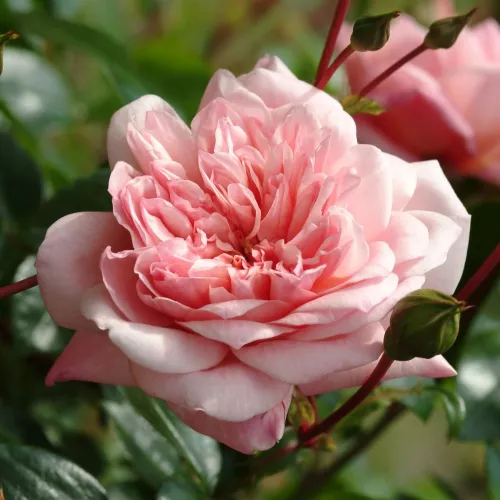
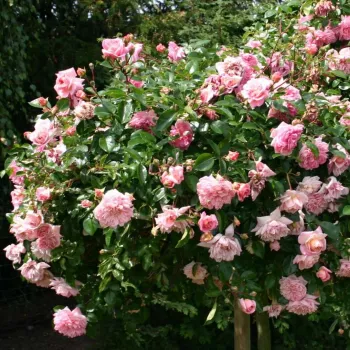
This historic rambler brings a soft, romantic cascade of salmon-pink flowers to arches, fences and house walls, combining generous bloom with dependable hardiness and a strong, fruity fragrance. As an own-root pharmaROSA® ORIGINAL plant, it establishes securely and builds a long-lived framework that responds well to simple, occasional pruning, suiting typical British front gardens where raised beds or improved soil help manage heavier ground and wet weather. The dense, mid-green foliage clothes its climbing stems from low down, giving a lush backdrop to the rosette-shaped blooms that repeat modestly after the main summer display. Over the first few seasons it settles in steadily – roots in the first year, stronger shoots in the second and full ornamental impact by around the third – after which its graceful coverage and Award of Garden Merit reliability make it a reassuring choice for beginners and enthusiasts alike.
Usage options
| Target area | Reasoning |
|---|
| Front-garden arch or pergola |
Reaches 3–5 m with flexible canes that train easily over arches and pergolas, giving soft salmon-pink curtains of bloom and dense leaf cover for privacy close to the house; suits those wanting classic structure with manageable care for the family gardener. |
| South- or west-facing house wall |
Climbing habit and glossy foliage create a generously clothed façade, while its hardiness to around –23 °C makes it reliable in most UK regions; good for those wanting long-term seasonal interest without replanting for the homeowner. |
| Partial-shade cottage side path |
Tolerates partial shade, so it can flower along side passages or between buildings where sun is limited, softening boundaries with pastel tones and scent; helpful for maximising awkward spaces for the urban gardener. |
| Fence or boundary screening |
Vigorous growth and dense leaf canopy give effective visual screening along fences or between gardens, with medium maintenance needs that mainly involve tying in and an annual tidy; ideal as a living screen for the busy household. |
| Feature rose in cottage-style border |
Historic character, rosette flowers and fading salmon-pink tones sit beautifully with traditional perennials, providing a romantic vertical accent that returns year after year; a natural choice for lovers of classic design in the cottage gardener. |
| Medium to large container (40–50 L+) |
In a substantial container with support, it offers height and fragrance on patios or terraces, while own-root vigour helps long-term performance where border space is limited; suits flexible layouts for the balcony-patio owner. |
| Low-input, chemical-sparing rose area |
Moderate disease resistance and an AGM rating support a chemical-sparing approach, with routine hygiene and occasional treatments usually sufficient, even in wetter, fungus-prone districts for the eco-conscious gardener. |
| Relaxed, naturalistic rose corner |
Occasional small orange-red hips and a slightly informal habit can be allowed to develop over time, especially where soil has been improved to cope with heavier conditions, giving characterful structure for the creative beginner. |
Styling ideas
- Romantic archway – Train PAUL NOËL over a metal or wooden arch with lady’s mantle and creeping baby’s-breath at the base for a soft, billowing entrance – ideal for cottage-style enthusiasts.
- Soft screening – Use along a boundary fence with cherry laurel in the background to create layered, year-round cover and seasonal colour – suitable for privacy-focused families.
- Cottage mix – Combine with traditional perennials in pastel tones, letting its historic form and repeat flushes anchor a relaxed, English-border feel – perfect for lovers of classic gardens.
- Patio statement – Grow in a 50 L container with an obelisk, pairing with low herbs and grasses to bring height and scent to a small terrace – great for space-conscious urban owners.
- Shady side charm – Run it along a part-shaded path wall with light, airy companions to brighten difficult aspects – appealing to gardeners wanting impact in tricky spots.
Technical cultivar profile
| Parameter | Data |
|---|
| Name and registration |
Paul Noël (also marketed as PAUL NOËL – salmon-pink rambler climbing rose - Tanne); rambler-type climbing rose for exhibition and garden use; unregistered cultivar in the ARS sense. |
| Origin and breeding |
Raised in France around 1910 by Rémi Tanne from Rosa wichuraiana × ‘Monsieur Tillier’; introduced in 1912 and distributed by Rémi Tanne as a vigorous garden rambler. |
| Awards and recognition |
Holds the Royal Horticultural Society Award of Garden Merit, indicating proven performance, reliability and ornamental value under typical UK garden conditions with appropriate basic care. |
| Growth and structural characteristics |
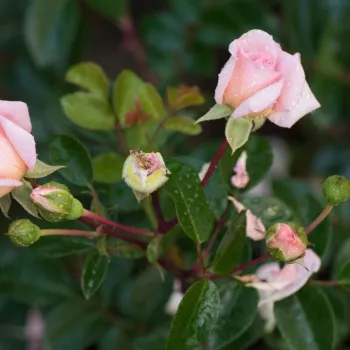
Strong climbing growth reaching about 3.2–5.2 m high and 2.8–4.5 m wide, with moderately thorny canes and dense, mid-green, glossy foliage forming an effective leafy framework. |
| Flower morphology |
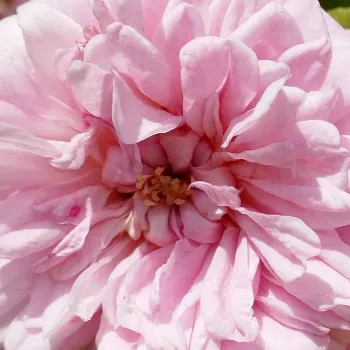
Medium-sized, double rosette blooms with around 26–39 petals, produced in corymbose clusters; main early-summer flush followed by lighter remontant flowering through the season. |
| Colour data and phenology |
Warm salmon-pink blooms with a soft yellowish tinge, opening bright then gently fading to pastel pink and creamy tones; good colour retention even in strong sun across the flowering period. |
| Fragrance and aroma |
Strong, clearly noticeable scent with a fresh, fruity character, especially marked in the main flowering flush; primarily ornamental rather than intended for culinary or cosmetic use. |
| Hip characteristics |
Occasional small ovoid rose hips, about 6–10 mm, developing orange-red by late season; modest in number but adding a discreet, naturalistic accent in informal plantings. |
| Resistance and winter hardiness |
Hardy to approximately –26 to –23 °C (RHS H7, USDA 5b), with moderate resistance to black spot, mildew and rust; benefits from good air circulation and basic preventive care. |
| Horticultural recommendations |
Best on supports such as arches, pergolas, walls or fences; plant around 2.1–3.85 m apart, in improved soil, with regular tying-in, annual pruning and irrigation during prolonged drought. |
PAUL NOËL offers fragrant salmon-pink cascades, reliable hardiness and adaptable training on arches or walls, while its own-root form supports long-term, low-fuss growth; a thoughtful choice if you want enduring charm with manageable care.