Miniature / dwarf rose

53-292-1
53-292-2

Pascaline

Mini - dwarf rose

LENpas – Louis Lens

Pure cool white tone without creamy undertones. - dwarf, miniature rose - medium strength, well-scented rose - delicate, honeyed aroma

– Compact, upright mini rose for small spaces.
– Snow‑white, double blooms with pearlescent sheen.
– Medium, honeyed fragrance for added charm.
– Reliable repeat flowering, blooms in flushes.
– Good hardiness to about –20 °C, medium disease resistance.
Special feature: Awarded Honour Diploma at Rose Salon, Paris (1984).
Secure long-term – Supported by real photos
Pascaline
pharmaROSA® ORIGINAL 2-litre own-root potted rose
21,10 £
Unfortunately, we are currently unable to ship to the United Kingdom; we only deliver to countries within the European Union. For more information, please contact us!
4.5 (6612)
facebook   twitter

Pascaline – miniature white rose for neat, easy-care planting

Miniature Pascaline forms a compact, upright bush that stays neatly within 30–40 cm, making it ideal for small front gardens and containers where you want reliable shape without constant clipping. Its snow-white double blooms repeat generously in clusters through the season, creating a refined, cool-toned accent that pairs beautifully with cottage-style perennials. The flowers are well-scented with a gentle, honeyed fragrance, adding an elegant note along paths and near seating areas. As an own-root plant in a 2-litre pot, it settles steadily and can regenerate from its own base over time, supporting a long-lived, stable display. Dense, grey-green foliage and sparse prickles make it straightforward to maintain in busy family gardens. Its good black-spot resistance helps it keep an attractive leaf canopy even in wetter, wind-exposed areas near the house. In its first year it concentrates on roots, then builds bush and flower in year two, with full ornamental effect by year three. Suitable for both borders and pots of at least 40–50 litres, it offers quietly dependable performance without demanding specialist care.


Usage options

Target area Reasoning
Front garden edging Its naturally compact, upright 30–40 cm habit creates a low, even edging that frames paths and driveways without flopping or overgrowing neighbouring plants. Ideal when you want a tidy look that still feels soft and flowery, even with only light annual pruning and basic feeding, for the busy urban gardener.
Small containers and terrace pots The dwarf size and dense branching make Pascaline easy to keep in shape in patio containers of 40–50 litres or more, where its white clusters brighten steps, balconies and roof terraces. Because it is supplied as a robust own-root plant, it anchors well in compost, copes with seasonal repotting, and offers manageable deadheading and watering routines for the space-conscious homeowner.
Classic cottage-style mixed border Cool white, fully double blooms slot effortlessly into cottage mixes, softening stronger colours and repeating through summer to knit the border together. Its restrained height allows you to plant it in front of taller perennials and ornamental grasses, giving a layered effect without shading. Minimal specialist rose care is needed beyond basic feeding and occasional pest checks, fitting the aesthetics-focused beginner.
Neat, low-maintenance white scheme With pure white flowers that hold their colour and fade very little, Pascaline is well suited to monochrome or cool-toned designs along house walls and around entrances. The colour stays crisp even in variable British light, while medium maintenance means you mainly monitor for common problems and trim once a year, suiting the time-poor gardener.
Family garden beds near paths and seating Medium-strength, honeyed fragrance and small, plentiful blooms add charm at close range without overwhelming small spaces. The compact stature keeps flowers at eye and hand level for children and adults, while sparse prickles make everyday contact easier. The own-root structure supports gradual thickening of the bush, helping it recover after harder pruning if needed by the practical family gardener.
Wind- and rain-exposed front plots Its low, sturdy framework and dense leaf cover are naturally less likely to rock or snap in wind, and the small blooms cope well with showers without becoming sodden. Good black-spot resistance helps the plant retain an attractive canopy even in wetter, breezier coastal or street-side settings, supporting those with challenging conditions.
Repeat-flowering accent in small groups Planted in groups of three to five at around 30 cm spacing, Pascaline quickly reads as a single, richly flowering cushion of white. Remontant, abundant second flushes extend the display well into late season, giving continuous interest from a modest planting area and rewarding even basic watering and feeding by the cost-conscious homeowner.
Long-term structural planting in small gardens As an own-root rose, Pascaline develops its permanent framework gradually in your soil, adapting to local conditions and reshooting from the base if individual stems age or are pruned out. This helps maintain a compact, balanced outline and floral performance across many seasons with simple annual maintenance, giving confidence to the long-term planner.

Styling ideas

  • Front-door focus – Line the path to your doorway with short runs of Pascaline for a clean white ribbon of flowers, teamed with low lavender or catmint – ideal for the house-proud owner.
  • Container accent – Plant Pascaline in a 40–50 litre pot with trailing thyme around the rim to create a compact, fragrant feature beside seating – perfect for balcony and terrace users.
  • Cottage mix – Weave small groups among coneflowers and airy grasses such as switchgrass to add white highlights that repeat through summer – suited to lovers of relaxed cottage style.
  • White-and-green calm – Combine Pascaline with hostas, ferns and grey-leaved perennials for a restrained, low-contrast palette along north- or east-facing walls – good for those seeking a calm, ordered look.
  • Family-friendly strip – Use as a low hedge along play-lawn edges, underplanted with hardy groundcovers, to give flowers at child height without an overbearing hedge – helpful for young-family gardens.

Technical cultivar profile
Parameter Data
Name and registration Miniature, dwarf rose; registered as LENpas, traded as Pascaline Mini - dwarf rose LENpas, ARS exhibition name Pascaline, part of the Mini - dwarf rose collection.
Origin and breeding Bred by Louis Lens, Lens Roses N.V. in Belgium, from an unknown seedling × (‘New Penny’ × ‘Jour de Fête’); introduced and registered in 1984 by Lens Roses.
Awards and recognition Honour Diploma at the Rose Salon, Paris in 1984, confirming its value as an exhibition miniature and its reliable ornamental qualities for discerning rose enthusiasts.
Growth and structural characteristics Compact, upright plants 30–40 cm high and wide with dense, grey-green, matt foliage and sparse prickles; forms a neat, rounded miniature bush suitable for edging and container use.
Flower morphology Small, double, cup-shaped blooms 0.5–1.5 inches across, with 26–39 petals in clustered inflorescences; reliably remontant with an abundant second flowering later in the season.
Colour data and phenology Pure, cool white flowers (ARS W, RHS 155D outer, 155C inner) with minimal fading; buds show a slight green tinge, and petals can appear faintly translucent and pearlescent at the edges before full opening.
Fragrance and aroma Medium-strength, honeyed fragrance that is noticeable at close range without dominating nearby seating; double blooms partly conceal stamens, so it is mainly ornamental rather than a pollinator magnet.
Hip characteristics Occasionally sets small, spherical orange-red hips around 5–7 mm in diameter, adding modest late-season detail but not produced heavily enough to be a primary decorative feature.
Resistance and winter hardiness Hardy to about −21 to −18 °C (RHS H7, Swedish zone 3, USDA 6b); medium general disease resistance with good black-spot resistance and medium susceptibility to powdery mildew and rust.
Horticultural recommendations Prefers sunny positions in well-drained soil; medium maintenance with occasional pest and disease checks; spacing 25–50 cm depending on use, 11–13 plants/m² for mass planting or hedging, also effective in containers.

Pascaline offers compact growth, repeat white flowering and a gentle fragrance on a durable own-root plant, making it a sensible, long-term addition wherever you would like easy, refined colour.

Detailed product attributes

Product Identification Data

Product Name: PASCALINE – white dwarf-mini rose - Lens
Product Type: pharmaROSA® ORIGINAL - 2-litre own-root potted rose
Cultivar Authenticity: Verified:24.10.2025
Cultivar Quality Rating: premium bronze
Item Number: [1349] 53-292 (14.02.2026) pharmarosa.co.uk

Name and Registration

Meaning of Cultivar Name: The name is a diminutive form referring to the white Pascali rose.
Original Trade Name: Pascaline
Current Trade Name: Pascaline Mini - dwarf rose LENpas
Rose Group: Miniature
Commercial Type: dwarf, miniature rose
Commercial Group: Mini - dwarf rose
Exhibition Category: exhibition miniature
Collection: Mini - dwarf rose

Origin and Breeding

Initial Distributor: Lens Roses (Belgium)
Breeder: Louis Lens
Breeding Company / Institution: Lens Roses N.V. (Belgium)
Breeding Year: Belgium, 1984
Parentage: unknown seedling × (‘New Penny’ × ‘Jour de Fête’)

Growth and Structural Characteristics

Height: 1-1.3ft (30-40 cm)
Spread: 1-1.3ft (30-40 cm)
Growth Habit: compact, upright
Foliage: The variety has dense foliage. The leaves have a matt surface and a grey-green hue.
Prickliness: sparsely thorny
Self-Cleaning Description: No information on self‑cleaning.
Self-Cleaning Intensity: No data on self-cleaning strength.

Flower Morphology

Petal Count: 26-39
Flower Fullness: double flowered
Flower Size: S (0,5-1,5 in)
Inflorescence Type: clustered
Colour Code: ARS code: W RHS code: 155D (outer), 155C (inner)
Repeat Flowering: Remontant; its second flowering is also abundant.

Colour Data and Phenology

Colour: white
Flower Colour Description: Pure cool white tone without creamy undertones.
Closed Bud: White with a pale green tinge towards the tip.
Newly Opened Flower: Pure white, with a barely noticeable greenish tinge at the base of the outer petals.
Full Bloom: Uniform snow-white with no colour variation.
Before Fading: White, slightly translucent towards the edges, with a pearlescent sheen.
Colour Fading Description: The colour holds well and fades very little.

Fragrance and Aroma

Fragrance Strength: medium strength, well-scented rose
Fragrance Character: delicate, honeyed aroma
Pollinator Attraction: Based on descriptions, its very double, many‑petalled bloom form and reduced accessibility of the stamens make it less attractive to pollinators.
Pollinator-Friendly Rating: Its double flowers partially conceal the stamens, so it only attracts pollinators to a limited extent and is primarily an ornamental cultivar.

Hip Characteristics

Hip Shape: spherical
Hip Colour: orange-red
Hip Comment: Occasionally produced, spherical orange-red rose hips 5–7 mm in diameter.

Resistance and Hardiness

Hardiness (°C): -21–-18 °C
Heat and Drought Tolerance Description: No data are available on heat–drought tolerance.
Disease Resistance: medium
  • powdery mildew – medium
  • black spot – resistant
  • rust – medium

Horticultural Recommendations

Recommended Planting Distance: for mass planting 30 cm, for hedging 25 cm, as a specimen plant 50 cm
Planting Density: in square planting 11,1 plants/m², in hexagonal arrangement 12,8 plants/m²
Partial Shade Tolerance: Preferably for a sunny location
Maintenance Requirement: Maintenance requirement: medium; occasional pest and disease control required.
Primary Uses: container, cut flower, flower bed, border

Comments

Strengths: Secure long-term – Supported by real photos
Companion Plants: Calamintha nepeta ‘Blue Cloud Strain’ - Lesser calamint Panicum virgatum 'Sangria' - Switchgrass Echinacea 'Big Kahuna' - Coneflower
Comment: -
PASCALINE – white dwarf-mini rose - Lens
Pure cool white tone without creamy undertones. - dwarf, miniature rose - medium strength, well-scented rose - delicate, honeyed aroma
The rose webshop. - white - dwarf, miniature rose - Pascaline - (1-1.3ft (30-40 cm))
Inflorescence: clustered Height: 1-1.3ft (30-40 cm) Flower shape: cup Winter hardiness: 6b white - Lens Roses (Belgium) dwarf, miniature rose - Flower size: !- Flower size: !- - Height: 1-1.3ft (30-40 cm) Height: 1-1.3ft (30-40 cm) - Flower fullness: double flowered Pascaline - Roses in the garden | pharmaROSA® Original - premium bronze Louis Lens

We showcase the external appearance of the roses available for online purchase from our webshop.


Which product type is right for you?


Information

In what condition do we dispatch the rose from our online webshop?

Let us ask ourselves the question: What would I like to use the rose for?
Flower? – Location? – Screening? – Fragrance? – Height? – Breeder? – Rose hip?

Rose purchasing information
Methods of payment – Delivery charges – Delivery – Complaints handling

Care guide

Our product is a rose grown with pharmaROSA®’s unique cultivation technology!

2-litre, own-root, potted rose.
With a shoot system appropriate to the season.
With a root system that thoroughly permeates the growing medium.
Quality compliant with the requirements of the E.N.A. (European Nurserystock Association).
Supplied in unique packaging that prevents damage.
Can be planted during frost-free periods.
True-to-variety rose bush with a unique identifier.

The pharmaROSA® own-root potted rose is a well-rooted plant that supports reliable establishment when planted and cared for properly, so it can be planted whenever the soil is not frozen.


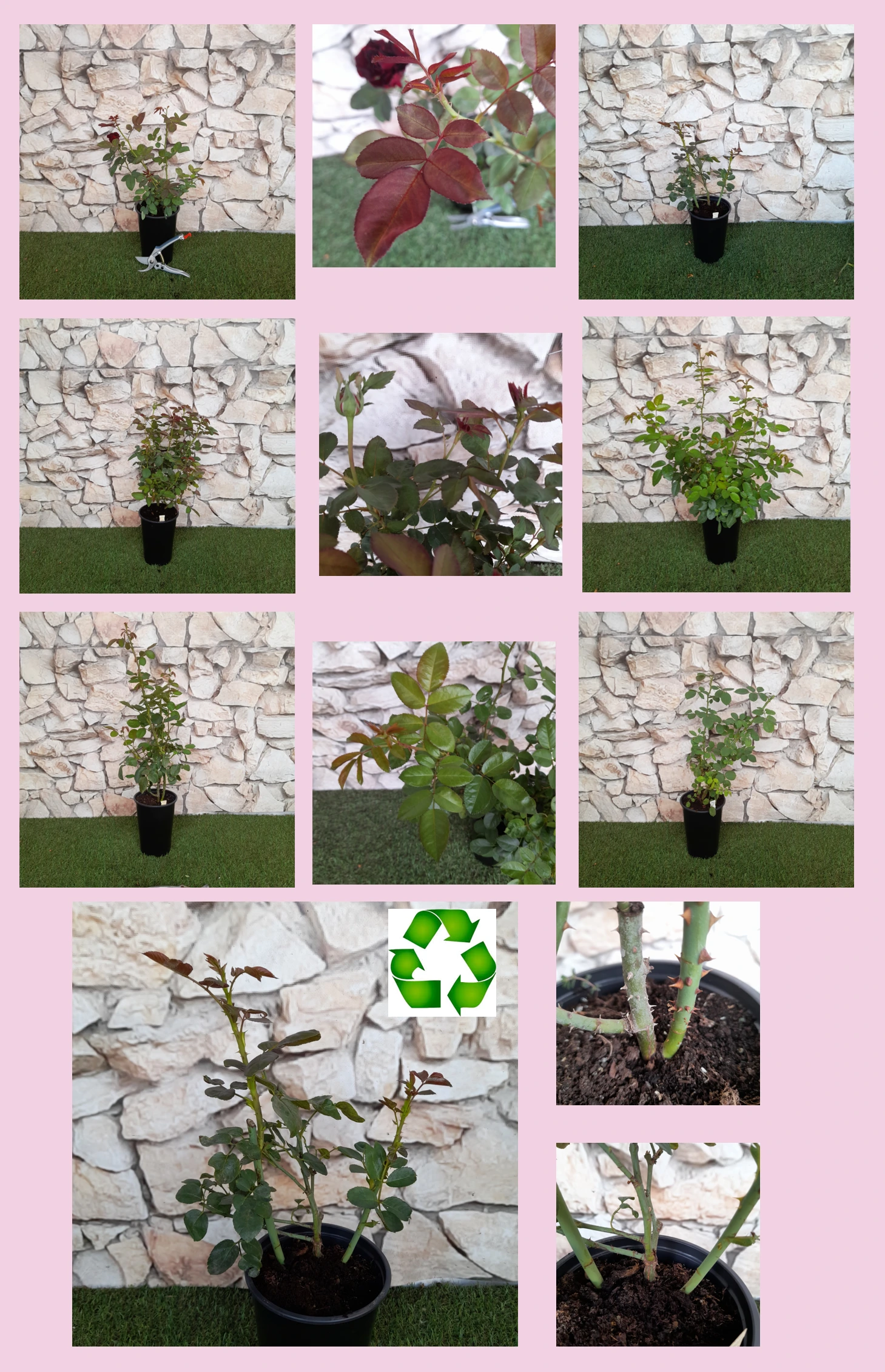
Crop overview: several varieties and growth stages in a short crop section.
Shoot system: intensive growth of fresh basal shoots on a young plant.
Root system: demonstration of a vigorous root system permeating the growing medium, by removing the pot.
Balance: mature plant with root system and shoots in harmony with each other.

Information about the videos
The video series is not a “seasonal showcase”; it illustrates the essence of pharmaROSA® own-root cultivation in a tangible way: how the plant is built up, what the root system is like and how the shoot system regenerates. The recordings were therefore made at different times and with plants at various stages of development, so mixed foliage levels and differing stages of growth may appear in the videos. They are not a ‘sample’ of the batch dispatched, but a visual explanation of how the technology works. The current condition of the rose available to order — typical for the given period and similar to what you can expect to receive in the parcel — is shown in the upper part of the product page.

pharmarosa.compharmarosa.atpharmarosa.czpharmarosa.depharmarosa.ropharmarosa.sipharmarosa.skpharmarosa.hrpharmarosa.itpharmarosa.frpharmarosa.grpharmarosa.bepharmarosa.dkpharmarosa.nlpharmarosa.iepharmarosa.plpharmarosa.lupharmarosa.ptpharmarosa.espharmarosa.bgpharmarosa.ltpharmarosa.sepharmarosa.lvpharmarosa.eepharmarosa.fipharmarosa.rudarinarose.co.uk

Product types

Pages for private customers
Garden roses for the family garden, with minimal care  → ORIGINAL®
Premium garden roses – instant impact, a truly showpiece garden  → EXTRA®
Pages for professionals and private customers
Roses for public spaces – large areas, sustainable maintenance  → NATURAL®
Roses for projects – hedge and row planting, fast implementation  → RAPID®
For professional partners only
Production – propagation material for garden roses, wholesale  → NEONATAL®

Company details

PharmaRosa Ltd.
Company registration number: 01-09-717479
VAT number: 13075314-2-43
Plant health registration no.: HU130721
Bank account (IBAN):
HU85117631891388688400000000
BIC (SWIFT): OTPVHUHB
Bank name: OTP Bank Nyrt.